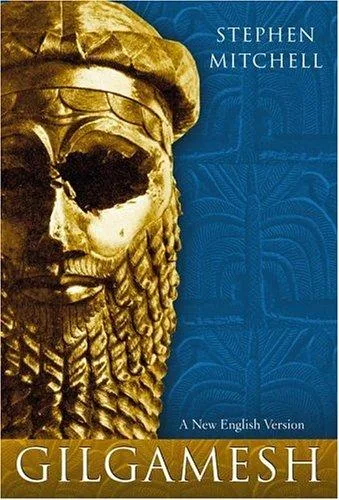
Gilgamesh
 72
72

Gilgamesh
Stephen Mitchell's 2004 rendition of the *Epic of Gilgamesh* strips away much of the academic overlay often found in scholarly translations, offering a more fluid and accessible narrative. Mitchell's strength lies in his ability to render the ancient text with a contemporary resonance, making the emotional core of Gilgamesh's grief and existential dread palpable. The translation effectively highlights the epic's foundational position in literature, predating many familiar Western narratives. However, this very accessibility can sometimes feel like a simplification. The profound, sometimes unsettling, strangeness of the original cuneiform texts, particularly in passages concerning the gods or the more visceral descriptions of Enkidu's transformation, might be smoothed over for a modern audience. For instance, the depiction of the great flood, while present, doesn't carry the same stark, almost bureaucratic authority as in some other interpretations. Despite this, the translation succeeds in presenting the epic as a coherent and compelling story of friendship, loss, and the human confrontation with oblivion. It offers a vital entry point for those encountering this ancient masterpiece.
📝 Description
72
Stephen Mitchell's 2004 translation brings to life the Epic of Gilgamesh, one of the world's oldest surviving literary works.
This translation recounts the adventures of Gilgamesh, the king of Uruk, and his friend Enkidu. Their exploits, including a battle with Humbaba and a fight against the Bull of Heaven, form the story's center. After Enkidu dies, Gilgamesh searches for eternal life. This quest leads him across the world to Utnapishtim, the survivor of a great flood.
The Epic of Gilgamesh originated in ancient Mesopotamia. Earliest versions date to the early second millennium BCE, with the most complete text compiled by Sîn-leqi-unninni around the 12th century BCE. Found on clay tablets in Nineveh, this epic predates Homer's works by centuries. Its rediscovery in the 19th century offered new insight into Bronze Age Mesopotamian culture, religion, and ideas about kingship and life.
The text addresses basic human concerns. It looks at friendship, loss, and the fear of death. Gilgamesh's search for immortality highlights the human condition and the search for meaning in the face of mortality. The epic questions what it means to be human and the nature of legacy.
The Epic of Gilgamesh is a foundational text for understanding early Mesopotamian cosmology and theology. It depicts a world where gods interact directly with humans, influencing events and human destiny. The narrative touches upon themes of creation, the flood, and the afterlife, which resonate within esoteric traditions that seek to understand the divine order and humanity's place within it. Gilgamesh's quest for immortality can be seen as an early articulation of the spiritual yearning for transcendence and knowledge of the eternal.
💡 Why Read This Book?
• Understand the roots of Western narrative: Gain insight into the storytelling structures and archetypes that shaped subsequent epics, beginning with the Sumerian city of Uruk over 4,000 years ago. • Explore primal existential questions: Confront themes of mortality, friendship, and the search for meaning as Gilgamesh grapples with the death of his companion Enkidu. • Connect with ancient Mesopotamian worldview: Discover the religious beliefs and societal values of a civilization that produced one of the world's earliest literary works, as depicted through its gods and heroes.
⭐ Reader Reviews
Honest opinions from readers who have explored this book.
❓ Frequently Asked Questions
When was the Epic of Gilgamesh first written down?
The most complete version of the Epic of Gilgamesh was compiled by the scribe Sîn-leqi-unninni around the 12th century BCE, though earlier Sumerian poems form its basis, dating back to the early second millennium BCE.
What is the primary theme of the Epic of Gilgamesh?
The central themes revolve around the human condition, particularly the confrontation with mortality, the value of friendship, the search for meaning, and the tension between civilization and the wild.
Who was Enkidu in the Epic of Gilgamesh?
Enkidu was a wild man created by the gods to challenge Gilgamesh. He becomes Gilgamesh's closest friend and companion, and his death is the catalyst for Gilgamesh's quest for immortality.
What role do the gods play in Gilgamesh's story?
The gods in the epic are powerful, often capricious beings who intervene in human affairs. They create Enkidu, send the Bull of Heaven, and decree Enkidu's death, influencing Gilgamesh's fate and his understanding of his own mortality.
What is significant about the city of Uruk in the epic?
Uruk is Gilgamesh's domain and the setting for much of the epic's action. Its massive walls symbolize civilization and order, contrasting with the wildness of Enkidu and the challenges Gilgamesh faces outside its boundaries.
How does Gilgamesh's quest for immortality end?
Gilgamesh ultimately fails to achieve physical immortality, learning from Utnapishtim that true immortality lies in the legacy of one's deeds and the enduring impact of civilization, represented by the walls of Uruk.
🔮 Key Themes & Symbolism
The Quest for Immortality
Gilgamesh's profound grief over Enkidu's death propels him on a desperate search for eternal life. This quest leads him to Utnapishtim, the sole survivor of a divine flood, who recounts his own story and offers Gilgamesh a different perspective on enduring existence. The epic questions whether true immortality lies in defying death or in the lasting impact of one's actions and the legacy of civilization, symbolized by Uruk's great walls.
Friendship and Love
The bond between Gilgamesh and Enkidu is central to the epic, transforming both characters. Initially enemies, their friendship becomes a source of strength, courage, and profound emotional connection. Enkidu's death devastates Gilgamesh, highlighting the deep human need for companionship and the unbearable pain of loss, driving the narrative's exploration of existential angst.
Civilization vs. Nature
The epic contrasts the ordered, civilized world of Uruk, with its king and its monumental architecture, against the wild, untamed natural world represented by Enkidu in his early state. Enkidu's taming through contact with Shamhat symbolizes the integration of nature into civilization, yet the wildness and primal forces remain a potent element throughout Gilgamesh's adventures.
The Nature of Kingship
Gilgamesh begins as an arrogant, tyrannical ruler, oppressing his people. His experiences, particularly his friendship with Enkidu and his subsequent confrontation with his own mortality, lead to a maturation of his character. The epic explores the responsibilities of leadership, the balance between power and justice, and the eventual recognition of a king's human vulnerability.
💬 Memorable Quotes
Direct passages from the work, attributed to the author.
“I have come to fear death, so I wander the land searching.”
— This statement captures Gilgamesh's existential terror and the driving force behind his quest. It highlights the universal human fear of oblivion and the desperate measures one might take when confronted with the inevitability of death.
“The gods are clothed in majesty, but human beings are counted only in days.”
— This observation underscores the fundamental difference between the divine and mortal realms within the epic's cosmology. It emphasizes the finite nature of human life and the gods' apparent indifference to human suffering and mortality.
“What will be my fate? I will die, and will I not then be like Enkidu?”
— This poignant question reveals Gilgamesh's deep-seated fear of oblivion and his identification with his deceased friend. It shows his struggle to accept his own mortality, seeing it as a terrifying descent into nothingness mirroring Enkidu's fate.
💡 Key Ideas
Editorial paraphrase of the work's core concepts — not direct quotes.
Enkidu, what is the meaning of this? I have been overcome by a strange weakness. My body is weak, my heart is heavy.
This paraphrase captures Gilgamesh's initial despair and disorientation following Enkidu's death. It reflects his struggle to comprehend the finality of loss and his own vulnerability, marking a turning point in his journey from powerful king to mortal seeker.
The wise man does not set his heart on the things that are fleeting.
This philosophical reflection, likely a paraphrase of Utnapishtim's counsel, suggests a path toward acceptance. It advises focusing on enduring values rather than transient pleasures or fears, pointing toward a different form of 'immortality' through wisdom and legacy.
🌙 Esoteric Significance
Tradition
While not originating from a singular defined esoteric lineage in the modern sense, the Epic of Gilgamesh is foundational to the study of comparative mythology and ancient spiritual thought. Its themes of initiation, confronting mortality, and seeking hidden knowledge align with archetypal patterns found in various esoteric traditions, including Hermeticism and Gnosticism, which often explore the soul's journey through trials and the pursuit of enlightenment beyond the material world.
Symbolism
The cedar forest, guarded by Humbaba, represents the untamed natural world and a place of primal power, a symbolic threshold Gilgamesh must conquer. The great flood myth, a recurring motif in Mesopotamian and later traditions, symbolizes divine judgment and cosmic renewal, a potent archetype of destruction and rebirth. The walls of Uruk symbolize enduring civilization, order, and human achievement against the chaos of nature and the finality of death.
Modern Relevance
Contemporary depth psychology, particularly the work of Carl Jung and his followers, frequently references Gilgamesh's archetypal journey as a model for individuation and the confrontation with the shadow self. Modern mythopoetic writers and spiritual explorers continue to draw on the epic's themes of friendship, loss, and the search for meaning as relevant paradigms for understanding the human psyche and its existential challenges in the 21st century.
👥 Who Should Read This Book
• Students of comparative mythology and ancient literature: Gain direct access to one of the earliest and most influential epic poems, understanding its narrative structure and thematic precursors. • Individuals exploring existential themes: Engage with Gilgamesh's profound struggle against mortality and his search for lasting meaning following profound loss. • Readers interested in the origins of storytelling: Discover the foundational elements of narrative, heroism, and human relationships that have echoed through millennia of literature.
📜 Historical Context
The Epic of Gilgamesh emerged from the fertile crescent of Mesopotamia, its origins tracing back to Sumerian poems from the early 2nd millennium BCE. The most complete surviving version, attributed to the scribe Sîn-leqi-unninni around the 12th century BCE, was discovered in the ruins of Ashurbanipal's library at Nineveh. This epic predates Homer by centuries, offering outstanding insight into Bronze Age Mesopotamian civilization, its polytheistic religious beliefs, and its conceptions of kingship, heroism, and the human condition. Its rediscovery in the mid-19th century by archaeologists like Austen Henry Layard profoundly altered the academic landscape, challenging established chronologies of literature and demonstrating the sophistication of ancient Near Eastern cultures. It provided a crucial counterpoint to the perceived centrality of biblical narratives in the history of ancient thought.
📔 Journal Prompts
Gilgamesh's fear of death, its impact on his actions.
The transformation of Gilgamesh through his friendship with Enkidu.
Reflections on the symbolism of Uruk's walls.
The meaning of the flood narrative in the context of mortality.
Enkidu's journey from wild man to civilized companion.
🗂️ Glossary
Uruk
An ancient Sumerian city, considered one of the first major urban centers. In the epic, it is Gilgamesh's kingdom and a symbol of civilization and human achievement.
Enkidu
A wild man created by the gods to challenge Gilgamesh. He becomes Gilgamesh's devoted companion, and his death triggers Gilgamesh's quest for immortality.
Humbaba
The monstrous guardian of the Cedar Forest, whom Gilgamesh and Enkidu defeat. He represents the untamed forces of nature and a significant trial for the heroes.
Utnapishtim
The immortal survivor of the great flood, whom Gilgamesh seeks out for knowledge of eternal life. He represents wisdom gained through extreme experience.
Bull of Heaven
A celestial beast sent by the goddess Ishtar to punish Gilgamesh. Its defeat signifies a defiance of divine authority and a challenge to cosmic order.
Shamhat
A temple prostitute who civilizes Enkidu by introducing him to human culture and sexuality, marking his transition from wildness to society.
Sîn-leqi-unninni
The scribe credited with compiling the most complete version of the Epic of Gilgamesh on clay tablets around the 12th century BCE.
🔮 Readers Also Liked
Browse all →








More by Stephen Mitchell, Mitchell, Stephen
All books →
More Free Occult Philosophy Books
View all →