The Napping House (La Casa Adormecida)
 78
78

The Napping House (La Casa Adormecida)
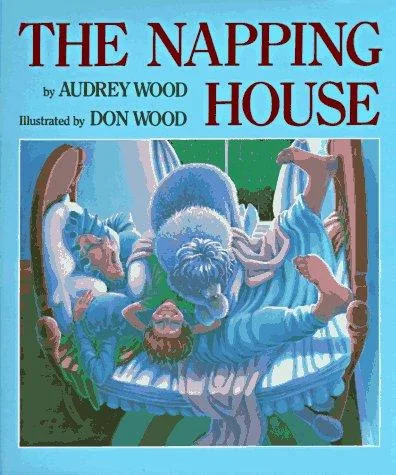
Audrey and Don Wood's "The Napping House" is a masterclass in cumulative narrative, a deceptively simple premise that builds with hypnotic regularity. The strength lies in its precise execution; each added character and creature intensifies the palpable sense of drowsiness, creating a visual and textual crescendo that is both amusing and subtly profound. The limitation, if one can call it that, is its singular focus. While effective, the relentless accumulation of sleep offers little variation in thematic exploration. The passage detailing the grandmother, the dog, the cat, the mouse, and finally the flea succumbing to sleep, each described with diminishing energy, is particularly effective in demonstrating this escalating inertia. It's a book that understands the power of repetition and the quiet weight of shared experience.
This is a precisely calibrated exercise in narrative momentum.
📝 Description
78
Audrey and Don Wood's 2016 book builds a house of sleep, one creature at a time.
Published in 2016 by Audrey and Don Wood, The Napping House constructs a dwelling where an escalating chain of events leads to overwhelming somnolence. The narrative meticulously details this descent into sleep, beginning with a drowsy inhabitant and gradually accumulating individuals and creatures. Each new arrival succumbs to the pervasive inertia, adding to the dense, layered accumulation within the single house. The story's architecture appeals to those who appreciate subtle, cumulative storytelling and the way one being's state directly influences others. It offers younger audiences rhythm and repetition, while older readers find a contemplation of shared states of being.
The book's structure echoes earlier cumulative tales found in folklore, where elements build sequentially. The Woods modernize this approach with a distinct visual and textual rhythm, different from older, often more didactic stories. The primary concept is the 'chain of slumber,' a metaphor for how a single state can propagate through a system. This demonstrates a form of sympathetic resonance, where the sleep of one character triggers the same state in another, creating a larger circle of dormancy.
While The Napping House is a contemporary work, its narrative echoes ancient forms of cumulative tales and cyclical storytelling. The tradition of stories where elements are added sequentially, building to a climax, can be traced back to oral traditions. The Woods' approach modernizes this structure, presenting a form of sympathetic resonance. This can be viewed esoterically as a demonstration of how collective states of consciousness can propagate, influencing individuals within a shared space or tradition.
💡 Why Read This Book?
• Understand the principle of cumulative narrative by observing how the Woods build tension and atmosphere through sequential addition, a technique also used in early 19th-century folklore compilations. • Experience the concept of sympathetic resonance as depicted through the spreading sleep, a phenomenon that echoes esoteric ideas of energetic contagion and shared states. • Appreciate the nuanced portrayal of interconnectedness, where the state of one entity, like the flea, directly impacts the entire system, including the grandmother, by the book's conclusion.
⭐ Reader Reviews
Honest opinions from readers who have explored this book.
❓ Frequently Asked Questions
When was The Napping House first published?
The Napping House was first published in 2016 by Audrey Wood and Don Wood. This edition marked their collaborative return to the narrative style they are known for.
What is the main theme of The Napping House?
The central theme is the escalating, cumulative effect of sleep spreading through a household, illustrating interconnectedness and sympathetic resonance among its inhabitants.
Who are the authors of The Napping House?
The book was written and illustrated by Audrey Wood and Don Wood, a renowned husband-and-wife team celebrated for their children's literature.
Is The Napping House a translation of an older story?
While the narrative structure of cumulative tales has ancient roots, The Napping House itself is an original work by Audrey and Don Wood, first published in 2016.
What makes the storytelling in The Napping House unique?
Its uniqueness lies in the meticulously built chain of events, where each character and creature succumbing to sleep adds to the overall inertia and atmosphere.
What kind of imagery can I expect in The Napping House?
Readers can expect warm, detailed illustrations that visually capture the increasing drowsiness and the cozy, cluttered environment of the napping house.
🔮 Key Themes & Symbolism
Cumulative Narrative Structure
The book exemplifies a cumulative narrative, a form found in various folk traditions, where elements are added sequentially to build momentum. In "The Napping House," this structure is used to create a palpable sense of growing inertia and shared somnolence. Each character and creature added to the scene—from the grandmother to the flea—intensifies the atmosphere, showcasing how a collective state can emerge from individual occurrences. This methodical layering draws parallels to certain meditative practices that build focus through repetition and gradual immersion.
Sympathetic Resonance
The core of the story demonstrates sympathetic resonance, a concept explored in various esoteric traditions. The sleep that overtakes one inhabitant directly influences the next, creating a ripple effect throughout the house. This illustrates how energetic states can be transmitted and amplified within a closed system, a principle that underpins ideas of collective consciousness and energetic contagion. The book visually represents how the inertia of one can lead to the inertia of many, a subtle exploration of interconnectedness.
The Weight of Inertia
"The Napping House" explores the concept of inertia, not just physically but also energetically and psychologically. The pervasive sleep represents a profound state of stillness and passivity that engulfs the entire household. This can be interpreted esoterically as a descent into a state of deep rest or even a metaphorical death of active consciousness, preceding a potential awakening or rebirth, a common motif in cyclical spiritual narratives. The accumulation of sleepers emphasizes the pervasive nature of this state.
Interconnectedness of Beings
The narrative fundamentally highlights the interconnectedness of all beings within a shared space. From the human grandmother to the smallest flea, each is subject to the same overwhelming influence. This underscores a holistic view where the state of the whole is intrinsically linked to the state of its parts, and vice versa. This theme appeals to philosophies that emphasize unity and the absence of true separation between living entities, a central to many mystical traditions.
💬 Memorable Quotes
Direct passages from the work, attributed to the author.
“There was a dark, quiet house...”
— This opening sets a tone of stillness and containment, establishing the physical and atmospheric boundaries for the narrative's unfolding events. It primes the reader for a story focused on interiority and passive states.
“The dog was dreaming, the cat was purring, the mouse was twitching...”
— This sequence illustrates the initial, individual states of the household's non-human occupants, hinting at the pervasive somnolence before it fully takes hold. It shows the subtle signs of sleep beginning its work.
“Everyone in the house was fast asleep.”
— This is the narrative's central accumulating statement, representing the zenith of the cumulative effect. It signifies the complete engulfment of the household in a shared state of deep rest.
“The little flea was still awake.”
— This serves as the narrative's pivot point. The smallest element, initially unaffected, becomes the catalyst for the eventual disruption of the pervasive sleep, highlighting the significance of even the seemingly insignificant.
“But the little flea, who was awake, gave a little jump.”
— This action, originating from the sole awake entity, initiates the reversal of the narrative's core state. It demonstrates how a single, active impulse can disrupt widespread passivity.
🌙 Esoteric Significance
Tradition
While "The Napping House" is not explicitly aligned with a specific esoteric tradition like Hermeticism or Kabbalah, its narrative structure and thematic elements can be interpreted through a Gnostic or even Alchemical lens. The descent into a collective, passive state can be seen as a form of 'nigredo' or dissolution, a necessary stage before potential transformation. The interconnectedness of all beings, from human to insect, mirrors the Gnostic concept of a unified divine spark present in all creation, regardless of form.
Symbolism
The 'house' itself functions as a microcosm, a contained universe representing the individual psyche or a small community. The 'sleep' symbolizes a state of unconsciousness, ignorance, or a dissolution of ego boundaries, common in spiritual dormancy. The 'flea,' as the smallest and initially unaffected creature, can represent the persistent spark of consciousness or divine essence that, even in its minuteness, holds the potential to disrupt widespread inertia and initiate awakening.
Modern Relevance
Contemporary thinkers and practitioners interested in collective consciousness, mindfulness, and the propagation of energetic states find resonance in "The Napping House." Its depiction of how one state can influence many aligns with modern discussions in fields like social psychology and quantum entanglement. Artists and writers exploring themes of interconnectedness and the power of subtle influences continue to draw inspiration from its unique narrative architecture and thematic depth.
👥 Who Should Read This Book
• Aspiring writers and illustrators interested in cumulative narrative techniques, learning how to build momentum and atmosphere through sequential storytelling, similar to early 19th-century folklore. • Readers fascinated by esoteric concepts of interconnectedness and sympathetic resonance, exploring how individual states can influence a collective, as depicted in the escalating sleep. • Parents and educators seeking engaging stories for young children that employ rhythm, repetition, and a clear narrative arc, while also offering subtle thematic depth about shared experiences.
📜 Historical Context
Published in 2016, "The Napping House" by Audrey and Don Wood arrived in a literary landscape where cumulative tales for children were well-established, yet the Woods brought a distinctive artistic and narrative flair. Their work builds upon a tradition dating back centuries, echoing the rhythmic, repetitive structures found in oral folklore and early collections like those by the Brothers Grimm in the early 19th century. While not directly engaging with esoteric philosophy, its narrative structure of escalating inertia and interconnectedness taps into themes that have been explored within various mystical traditions. Unlike more didactic or morally explicit tales of earlier eras, the Woods' approach prioritizes atmosphere and the sheer momentum of the narrative, creating a subtly profound effect. The book's reception was positive, celebrated for its engaging storytelling and distinctive illustration style, distinguishing it from more overtly educational children's literature of the period.
📔 Journal Prompts
The chain of slumber initiated by the grandmother and extending to the flea.
The pervasive stillness of the house before the flea's jump.
The interconnectedness represented by the sleeping inhabitants.
The role of the smallest creature, the flea, in disrupting inertia.
The transition from collective sleep to the awakening.
🗂️ Glossary
Cumulative Narrative
A storytelling technique where elements, characters, or events are added sequentially, building upon what has come before to create a rhythmic, often escalating, effect. This is a common feature in folk tales and children's literature.
Sympathetic Resonance
A concept suggesting that one object can be set into vibration by the vibrations of another, often at a distance. In narrative, it refers to how the state or emotion of one character can influence or spread to others.
Inertia
The tendency of an object to resist changes in its state of motion. In this context, it refers to the pervasive state of sleep and stillness that affects all inhabitants of the house.
Microcosm
A miniature representation of a larger system or world. In this book, the house functions as a microcosm of a larger interconnected reality.
Nigredo
In alchemy, the first stage of the Great Work, often symbolized by blackness, representing dissolution, chaos, and the breakdown of the old form prior to transformation.
Flea
A small, wingless, parasitic insect. In the narrative, it represents the smallest element within the system, initially awake and later acting as a catalyst.
Somnolence
A state of being drowsy or sleepy. The book meticulously details the progression and pervasiveness of this state throughout the household.
🔮 Readers Also Liked
Browse all →









More by Audrey Wood, Don Wood
All books →

More Free Occult Philosophy Books
View all →