Rosicrucian Magic, Kabbalah, and Tarot
 72
72

Rosicrucian Magic, Kabbalah, and Tarot
Mari Silva's "Rosicrucian Magic, Kabbalah, and Tarot" attempts a broad synthesis of significant Western esoteric streams. The initial section on Rosicrucianism offers a competent overview, particularly its detailed examination of symbolic correspondences, though it occasionally feels like a survey rather than a deep dive. The subsequent Kabbalah and Tarot component is more practically oriented, providing a usable framework for interpreting the cards through a Kabbalistic lens. A strength lies in the author's effort to connect these often-compartmentalized systems, suggesting underlying unities. However, the work's ambition sometimes outstrips its execution; the historical context of Rosicrucianism, for instance, could benefit from more nuanced engagement with primary source debates beyond general occultism. A limitation is the lack of original scholarship, relying instead on synthesizing existing material. The book particularly shines when discussing the astrological attributions within Kabbalistic Tarot, a section that offers clear, actionable advice. Ultimately, it serves as a useful, if not groundbreaking, introduction for those seeking to map the intersections of these mystical paths.
📝 Description
72
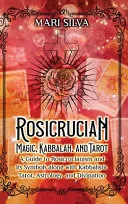
Mari Silva's 2023 book examines Rosicrucian magic, Kabbalah, and Tarot.
This volume examines two distinct yet related esoteric traditions: Rosicrucian magic and the Kabbalistic Tarot. The first section details Rosicrucianism, connecting it to occultism, Jewish mysticism, Hermeticism, and Christian Gnosticism. It seeks to explain the symbolic language that unites these spiritual paths.
The second part focuses on the Kabbalistic Tarot. It covers its use in divination and its connections to astrology, serving as a guide to its predictive and symbolic aspects. The book is intended for students of Western esoteric philosophy and practice, especially those interested in Rosicrucianism and its historical ties to other mystical currents. Tarot and Kabbalah enthusiasts will find practical applications and theoretical explanations, particularly regarding how these systems integrate.
The book emerges from a long history of interest in Western esoteric traditions, particularly the revival seen in the late 19th and early 20th centuries. Rosicrucian manifestos appeared in the early 17th century, and Kabbalistic studies gained prominence in Europe from the Renaissance onward. Figures like Eliphas Lévi and the Hermetic Order of the Golden Dawn were influential during this later resurgence. Silva's work engages with these historical currents, noting commonalities and differences within the Western esoteric field.
💡 Why Read This Book?
• Gain a foundational understanding of Rosicrucian symbolism and its historical connections to Hermeticism and Gnosticism, as detailed in the "Rosicrucian Magic and Symbols" section. • Learn practical methods for applying Kabbalistic principles to Tarot divination, drawing on the detailed explanations of the Tree of Life and its correspondences presented in the "Kabbalah and Tarot" chapters. • Discover the astrological significance embedded within the Kabbalistic Tarot, offering a unique interpretive layer for both the cards and celestial influences, as explored in the divination and astrology segments.
⭐ Reader Reviews
Honest opinions from readers who have explored this book.
❓ Frequently Asked Questions
What is the primary focus of the Rosicrucian section in "Rosicrucian Magic, Kabbalah, and Tarot"?
The Rosicrucian section primarily focuses on Rosicrucianism as a key component of the Western Esoteric tradition, exploring its symbols and its historical and philosophical connections to occultism, Jewish mysticism, Hermeticism, and Christian Gnosticism.
How does the book connect Kabbalah and Tarot?
The book connects Kabbalah and Tarot by presenting the Kabbalistic Tarot as a system where the Major Arcana cards correspond to the Sephiroth on the Tree of Life, offering a framework for divination and spiritual understanding.
Is "Rosicrucian Magic, Kabbalah, and Tarot" suitable for beginners?
Yes, the book is suitable for beginners interested in esoteric studies, offering introductory explanations of complex systems like Rosicrucianism and Kabbalistic Tarot, making it accessible for those new to these subjects.
What are the practical applications of the "Kabbalah and Tarot" part of the book?
The practical applications include using the Kabbalistic Tarot for divination, understanding its astrological significations, and applying its symbolic language for personal insight and spiritual growth.
When was "Rosicrucian Magic, Kabbalah, and Tarot" first published?
The book, "Rosicrucian Magic, Kabbalah, and Tarot," by Mari Silva, was first published on February 10, 2023.
Does the book discuss Hermeticism in relation to Rosicrucianism?
Yes, the work explores the similarities and interconnections between Rosicrucianism and Hermeticism, highlighting shared philosophical underpinnings within the Western Esoteric tradition.
🔮 Key Themes & Symbolism
Western Esoteric Tradition
This theme explores the interconnectedness of various streams within Western esotericism. It examines how Rosicrucianism shares foundational principles and symbolic language with occultism, Jewish mysticism (Kabbalah), Hermeticism, and Christian Gnosticism. The work highlights the symbolic systems and philosophical dialogues that define this rich lineage, suggesting a unified approach to spiritual knowledge that transcends individual disciplines. The exploration focuses on uncovering the common threads and distinct expressions within this historical and mystical framework.
Kabbalistic Tarot Symbolism
This theme centers on the integration of Kabbalistic cosmology with the Tarot. It details the correspondence between the Major Arcana cards and the Sephiroth on the Kabbalistic Tree of Life, offering a framework for understanding the cards' deeper meanings. The section elucidates how this structure aids in divination and provides insights into spiritual development, exploring the symbolic language that links the microcosm of the cards to the macrocosm of universal energies.
Rosicrucian Mysticism and Symbols
This theme looks at the core tenets and symbolic repertoire of Rosicrucianism. It investigates the historical and philosophical underpinnings of this tradition, drawing comparisons with related esoteric schools. The focus is on understanding the symbolic language used within Rosicrucian teachings to convey spiritual truths and magical principles. The work aims to illuminate how these symbols offer pathways to knowledge and transformation for the dedicated seeker within the Western esoteric context.
Divination and Astrology
This theme addresses the practical applications of esoteric knowledge, particularly through Tarot divination and astrology. It outlines methods for using the Kabbalistic Tarot for predictive purposes and personal guidance, integrating astrological significations to enhance interpretation. The aim is to provide readers with tools to understand the interplay of celestial influences and symbolic systems, fostering a deeper connection to the forces that shape human experience and destiny.
💬 Memorable Quotes
Direct passages from the work, attributed to the author.
“The Western Esoteric tradition reveals a profound similarity between Rosicrucianism and other mystical paths.”
— This statement highlights the book's central thesis: that seemingly distinct esoteric systems like Rosicrucianism, Kabbalah, and Hermeticism are not isolated but share common symbolic languages and philosophical goals.
“Kabbalistic Tarot offers a map of the soul's journey through the Sephiroth.”
— This interpretation emphasizes the practical and spiritual utility of the Kabbalistic Tarot, portraying it as a tool for self-understanding and navigating spiritual development via the structure of the Tree of Life.
“Astrology provides a cosmic framework for interpreting the symbolic energies of the Tarot.”
— This highlights the synergy between astrological principles and Tarot divination as presented in the book, suggesting that celestial timings and influences can deepen the insights gained from a Tarot reading.
💡 Key Ideas
Editorial paraphrase of the work's core concepts — not direct quotes.
Symbols are the language through which esoteric traditions communicate their deepest secrets.
This quote underscores the importance of symbolic interpretation within esoteric studies, suggesting that understanding symbols is key to unlocking the wisdom embedded within traditions like Rosicrucianism and Kabbalah.
The study of magic involves understanding the hidden correspondences that bind the universe.
This paraphrase points to the book's exploration of magical philosophies, emphasizing the concept of 'as above, so below' and the underlying network of connections within the cosmos that magic seeks to influence.
🌙 Esoteric Significance
Tradition
This work situates itself firmly within the Western Esoteric Tradition, acting as a synthesis rather than a primary source. It draws heavily from Hermeticism, Kabbalah, and Rosicrucianism, highlighting their interconnections. The book functions as an introductory guide, aiming to bridge the gap between these complex systems for a modern audience. It departs from purely academic approaches by focusing on practical applications and symbolic interpretation, aligning with the pedagogical goals of many esoteric schools that emerged from the late 19th-century revival.
Symbolism
Key symbols explored include the Tree of Life, central to Kabbalah, which is mapped onto the Tarot's Major Arcana to reveal correspondences between divine emanations and archetypal images. Rosicrucian symbols, often related to alchemy and Christian mysticism, are presented as keys to understanding spiritual transformation and cosmic order. The Tarot cards themselves, particularly the Major Arcana, are treated as potent symbolic archetypes, representing stages of spiritual journey and fundamental forces within the universe.
Modern Relevance
Contemporary practitioners of Tarot divination and students of Kabbalah frequently reference and build upon the symbolic frameworks established in works like this. The book's approach to integrating various esoteric traditions appeals to modern spiritual seekers who explore eclectic paths. Thinkers and practitioners interested in comparative mysticism, symbolic analysis, and practical occultism can find value in its synthesis, contributing to ongoing discussions about the enduring relevance of these ancient systems in the digital age.
👥 Who Should Read This Book
• Students of Western Esotericism seeking to understand the relationships between Rosicrucianism, Kabbalah, and Tarot, particularly those interested in symbolic interpretation. • Tarot enthusiasts looking to deepen their practice by exploring the Kabbalistic underpinnings and astrological connections of the cards. • Individuals interested in comparative mysticism and the historical development of occult traditions, who wish to see how different streams of thought converge.
📜 Historical Context
The early 21st century, marked by the 2023 publication of Mari Silva's work, has seen a sustained popular and academic interest in Western esotericism, building on foundations laid in the late 19th century. This period witnessed the rise of figures like Helena Blavatsky and the Theosophical Society, which revitalized interest in Eastern philosophies alongside Western mystical traditions. Silva's book engages with this legacy, particularly concerning Rosicrucianism, Kabbalah, and Tarot. These subjects have a long intellectual history: Rosicrucian manifestos first appeared in the early 17th century, influencing subsequent Hermetic and alchemical thought. Kabbalah, with roots in medieval Jewish mysticism, saw significant dissemination in Europe from the Renaissance onwards, notably through figures like Christian Knorr von Rosenroth. The Tarot's integration into esoteric systems, particularly its link to Kabbalah, gained prominence in the late 19th century with occultists like Eliphas Lévi and the Hermetic Order of the Golden Dawn. While Silva's work synthesizes these elements for a contemporary audience, it operates within a discourse heavily shaped by earlier esoteric revivalists and scholars who sought to establish these traditions as legitimate fields of study.
📔 Journal Prompts
The Rosicrucian symbolism of light and transformation: how does it relate to your personal journey?
Kabbalistic correspondences between the Major Arcana and the Sephiroth: which pairing offers you the most insight?
Reflecting on the Hermetic principle of 'as above, so below' in the context of Rosicrucian magic.
What personal divination insights can be gained by combining Tarot readings with astrological attributions?
The role of symbols in bridging the gap between the seen and unseen worlds, as explored in Rosicrucianism.
🗂️ Glossary
Rosicrucianism
A mystical and esoteric tradition that emerged in Europe in the early 17th century, characterized by its symbolic teachings often related to alchemy, Christian mysticism, and Hermetic philosophy.
Kabbalah
A system of Jewish mysticism focused on understanding the divine nature and the structure of the universe, often represented through the Tree of Life (Sephiroth) and esoteric interpretations of religious texts.
Tarot
A deck of cards featuring symbolic imagery, traditionally used for divination, spiritual exploration, and as a tool for understanding psychological and cosmic principles.
Hermeticism
An ancient philosophical and religious tradition based on the purported teachings of Hermes Trismegistus, emphasizing wisdom, divine knowledge, and the interconnectedness of all things through principles like 'as above, so below'.
Gnosticism
A diverse set of religious and philosophical beliefs prevalent in the early centuries CE, characterized by the pursuit of spiritual knowledge (gnosis) as a means of salvation and often featuring a dualistic worldview.
Sephiroth
The ten divine emanations or attributes of God described in Kabbalistic cosmology, forming the structure of the Tree of Life, which is often mapped onto Tarot cards.
Divination
The practice of seeking knowledge of the future or the unknown by supernatural means, often through methods like Tarot reading, astrology, or scrying.