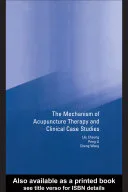
Mechanism of Acupuncture Therapy and Clinical Case Studies
 71
71

Mechanism of Acupuncture Therapy and Clinical Case Studies
Lily Cheung, Peng Li, and Cheng Wong's "Mechanism of Acupuncture Therapy and Clinical Case Studies" offers a solid, if somewhat dry, account of acupuncture's scientific underpinnings. The book's strength lies in its meticulous dissection of the physiological mechanisms, particularly its focus on the cardiovascular system, which is often under-explored in more traditional texts. The integration of clinical case studies is commendable, providing tangible examples of how theoretical knowledge translates into practice. However, the prose can be dense, and at times, the scientific explanations feel more like a technical manual than an engaging exploration. A specific passage detailing the effect of acupuncture on vasodilation, while informative, could have benefited from clearer contextualization within broader TCM theory. Despite its academic tone, the work serves as a valuable reference for those seeking a rigorous, science-informed perspective on acupuncture.
📝 Description
71
First published in October 2001, this volume examines acupuncture's mechanisms and presents clinical cases.
This book rigorously examines acupuncture, connecting scientific inquiry with Traditional Chinese Medicine (TCM) principles. It details the physiological mechanisms behind acupuncture, focusing on its cardiovascular effects. The work moves beyond theory to show practical application through extensive clinical case studies. It is written for practitioners and researchers in Western medicine and TCM who want a scientifically grounded understanding of acupuncture. Acupuncturists looking to deepen their knowledge of physiological processes, as well as physicians and scientists interested in integrating complementary therapies, will find it valuable. Medical history and comparative medicine students will also benefit.
The early 2000s saw increased scientific attention on complementary and alternative medicine. This book contributed to validating acupuncture during that period. It served as a resource for understanding research that quantified and explained acupuncture's effects using Western methods. The authors looked at the scientific basis that researchers like David Eisenberg began to promote.
Within the broader tradition of Traditional Chinese Medicine, this book grounds the practice of acupuncture in empirical investigation. It bridges the gap between the concept of bio-energetic pathways, such as Qi flow through meridians, and observable physiological and neurochemical responses. The authors relate these traditional concepts to functions within the circulatory and nervous systems, demonstrating how energetic principles can be practically applied in a clinical setting. This approach seeks to validate and explain a practice rooted in ancient philosophy through modern scientific lenses.
💡 Why Read This Book?
• Gain a scientific understanding of acupuncture's mechanisms, particularly its impact on the cardiovascular system, as detailed in the book's first section. • Learn to integrate scientific knowledge with Traditional Chinese Medicine concepts through the extensive clinical case studies presented by Cheung, Li, and Wong. • Appreciate the empirical basis for acupuncture, moving beyond anecdotal evidence to explore its physiological correlates, as first explored in the early 2000s.
⭐ Reader Reviews
Honest opinions from readers who have explored this book.
❓ Frequently Asked Questions
What is the primary focus of the "Mechanism of Acupuncture Therapy and Clinical Case Studies"?
The book primarily focuses on the scientific mechanisms of acupuncture, especially its relation to the cardiovascular system, and illustrates its practical application through detailed clinical case studies.
Who are the authors of this book?
The authors are Lily Cheung, Peng Li, and Cheng Wong. The book was first published on October 18, 2001.
Does the book explain the scientific basis of acupuncture?
Yes, the first section of the book is dedicated to explaining the scientific basis and mechanisms of acupuncture therapy, with a specific focus on its effects on the cardiovascular system.
What is the role of clinical case studies in the book?
The clinical case studies in the second section serve to demonstrate how scientific knowledge about acupuncture can be effectively integrated with traditional Chinese medicine concepts for therapeutic purposes.
Is this book suitable for beginners in acupuncture?
While informative, the book delves into scientific mechanisms and clinical case studies, suggesting it is more suited for practitioners, researchers, or students with some foundational knowledge of acupuncture or related medical fields.
When was "Mechanism of Acupuncture Therapy and Clinical Case Studies" originally published?
The book "Mechanism of Acupuncture Therapy and Clinical Case Studies" was first published on October 18, 2001.
🔮 Key Themes & Symbolism
Cardiovascular Integration
The work meticulously details the scientific mechanisms of acupuncture, with a distinct emphasis on its intricate relationship with the cardiovascular system. It explores how needle insertion and manipulation can influence blood flow, vascular tone, and cardiac function, moving beyond traditional energetic explanations to offer a physiological perspective. This focus provides a bridge for Western medical professionals to understand the potential impact of acupuncture on circulatory health.
Bridging Traditions
A central theme is the synthesis of empirical scientific data with the ancient principles of Traditional Chinese Medicine (TCM). The book illustrates how concepts like Qi and meridians can be understood and validated through modern physiological research. The clinical case studies are particularly effective in showing how this integration leads to robust and effective treatment strategies, demonstrating that science and tradition are not mutually exclusive.
Evidence-Based Practice
The book champions an evidence-based approach to acupuncture. By presenting scientific mechanisms alongside detailed case studies, it challenges the perception of acupuncture as purely empirical or anecdotal. It provides a framework for understanding how acupuncture works from a biological standpoint, encouraging its acceptance and integration into broader healthcare systems by grounding its practice in scientific inquiry.
Clinical Application
Beyond theoretical exploration, the text offers practical insights through its extensive collection of clinical case studies. These examples showcase the real-world efficacy of acupuncture in addressing various conditions, illustrating the direct application of the scientific principles discussed. They serve as a vital resource for practitioners looking to refine their techniques and understand the observable outcomes of acupuncture therapy.
💬 Memorable Quotes
Direct passages from the work, attributed to the author.
“The first section covers the scientific basis and mechanism of acupuncture, particularly in relation to the cardiovascular system.”
— This statement highlights the book's core scientific endeavor: to explain acupuncture's physiological effects, with a specific and notable focus on how it interacts with and influences the heart and blood vessels.
“The second section is devoted to clinical case studies, illustrating that scientific knowledge can be integrated with traditional concepts in Chinese medicine.”
— This points to the practical application and synthesis of information within the book. It emphasizes the successful merging of modern scientific understanding with established TCM theories, demonstrated through real-world patient examples.
“An informative and provocative text, this book describes the current status of knowledge and challenges scientists to better define acupuncture therapy.”
— This suggests the book aims not only to inform but also to stimulate further research and critical thinking within the scientific community regarding the precise definition and understanding of acupuncture's therapeutic actions.
“It is a useful reference.”
— This concise statement underscores the book's practical value. It positions the work as a reliable and accessible source of information for those seeking detailed knowledge on acupuncture mechanisms and applications.
“The work explores the scientific basis and mechanism of acupuncture therapy.”
— This is a direct assertion of the book's primary objective: to investigate and elucidate the underlying scientific principles that govern how acupuncture functions as a therapeutic modality.
🌙 Esoteric Significance
Tradition
While not strictly an esoteric text in the Western Hermetic or Kabbalistic sense, this work engages with the energetic principles that underpin many esoteric traditions, particularly those derived from East Asian philosophies. It bridges the empirical with the subtle, attempting to map the flow of Qi and meridians onto verifiable physiological systems. Its approach can be seen as an attempt to translate esoteric concepts into a scientific language, making them accessible to a broader, potentially skeptical, audience.
Symbolism
The concept of Qi, often translated as vital energy, is central. In many esoteric traditions, Qi represents the fundamental life force that animates all things. The meridians, as pathways for this energy, can be seen as symbolic representations of energetic circuitry within the body. The book's examination of these concepts through a scientific lens provides a modern interpretation, linking ancient symbolism to tangible biological functions and pathways.
Modern Relevance
Contemporary thinkers and practitioners in fields like integrative medicine, neuro-acupuncture, and psychosomatic healing often draw upon the mechanistic understanding presented in works like this. Researchers exploring the placebo effect, the neurobiology of pain, and mind-body connections find value in the book's efforts to provide scientific grounding for practices traditionally rooted in subtle energy concepts. It informs ongoing debates about the efficacy and mechanisms of non-pharmacological interventions.
👥 Who Should Read This Book
['• Medical researchers investigating the physiological basis of complementary therapies, seeking to understand how acupuncture interacts with the cardiovascular and nervous systems.', '• Acupuncturists and TCM practitioners who want to deepen their understanding of the scientific mechanisms behind their practice and integrate empirical data with traditional knowledge.', '• Students of comparative medicine and medical history interested in the confluence of Eastern and Western medical paradigms in the early 21st century.']
📜 Historical Context
The publication of "Mechanism of Acupuncture Therapy and Clinical Case Studies" in 2001 occurred during a central period for the integration of Traditional Chinese Medicine (TCM) into Western healthcare systems. The early 2000s witnessed a growing scientific interest in validating alternative therapies, spurred by figures like David Eisenberg whose research began to garner mainstream attention. This era was characterized by a push to understand TCM modalities like acupuncture through the lens of Western biomedical science, moving beyond purely philosophical or energetic explanations. The book emerged in this context, aiming to provide a rigorous, mechanism-based account that could satisfy the demands of empirical research. It offered a counterpoint to purely philosophical interpretations of acupuncture, contributing to a broader discourse that also included proponents of research into Qigong and other energetic practices, seeking to establish their legitimacy within a scientific framework.
📔 Journal Prompts
The cardiovascular system's response to acupuncture stimulation.
Integration of Qi concepts with neurochemical pathways.
Clinical case study analysis of acupuncture's efficacy.
Defining acupuncture therapy through empirical and traditional lenses.
The scientific validation of Traditional Chinese Medicine principles.
🗂️ Glossary
Qi
Often translated as vital energy or life force, Qi is a fundamental concept in Traditional Chinese Medicine representing the animating energy that flows through the body and the universe.
Meridians
In TCM, meridians are a network of channels or pathways through which Qi circulates throughout the body, connecting acupuncture points and internal organs.
Acupuncture Points
Specific locations on the body, often along meridians, where the skin's resistance is lower and where needles are inserted to stimulate physiological responses and regulate Qi flow.
Cardiovascular System
The system comprising the heart, blood vessels, and blood, responsible for circulating blood throughout the body to transport oxygen, nutrients, and hormones.
Neurochemical Pathways
The routes taken by nerve signals, involving the release and reception of chemical neurotransmitters, that form the basis of communication within the nervous system.
Traditional Chinese Medicine (TCM)
A comprehensive system of medical theory and practice developed in China over thousands of years, including acupuncture, herbal medicine, and dietary therapy.
Empirical Research
Research based on observation and experience rather than theory or pure logic, often involving experimentation and data collection to test hypotheses.