The Silver Penny
 81
81

The Silver Penny
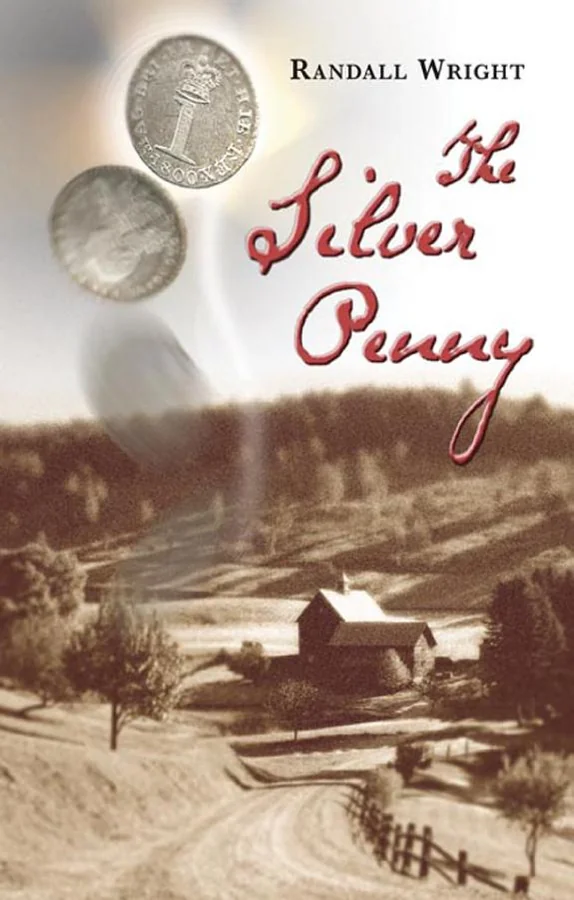
Randall Wright's "The Silver Penny" presents a curious entanglement of a broken limb, a peculiar coin, and a young boy's fate on a 19th-century farm. The premise, involving a hex to cure wanderlust, immediately sets a tone of folk magic intersecting with adolescent life. Wright excels in grounding the supernatural elements within the tangible reality of farm life, making the extraordinary feel strangely plausible. The relationship between Deb and the enigmatic red-haired boy is particularly well-drawn, hinting at deeper connections without explicit exposition. However, the narrative occasionally meanders, and the resolution of the coin's significance could benefit from more direct exploration. Despite this, the work offers a unique perspective on how seemingly minor events and objects can become focal points for profound personal change. The novel is a quiet exploration of fate's subtle workings.
📝 Description
81
Randall Wright's The Silver Penny, published in 2005, tracks a boy's summer on an 1800s farm.
Confined to his family's farm in the mid-1800s by a broken leg, eleven-year-old Jacob "Deb" Corey experiences a summer that expands beyond his physical limitations. His confinement coincides with the appearance of a rare silver coin and a mysterious boy with red hair. The story unfolds on the farm, grounding extraordinary events in a seemingly ordinary setting. This narrative is for readers who enjoy historical fiction with a speculative or metaphysical element. Those who appreciate stories about fate, hidden influences, and the way the mundane can conceal the extraordinary will find it engaging. It will also appeal to readers who like coming-of-age tales that subtly challenge conventional notions of reality and causality.
The story is set in the mid-1800s, a period of significant societal change and growing interest in spiritualism and alternative philosophies across America and Europe. This era saw the rise of movements like the Shakers and communal experiments, alongside a fascination with folklore and the occult. These interests often intertwined with religious dissent and early scientific inquiry. The rural American setting of the narrative places it in a cultural environment where folk magic and superstition frequently coexisted with established religious practices.
💡 Why Read This Book?
• Gain insight into the symbolic weight of common objects, as demonstrated by the central role of the silver penny in shaping Jacob Corey's summer. • Understand the practical application of folk magic within a narrative context, specifically through the hex performed by Jacob to address his wanderlust in the mid-1800s. • Experience a nuanced portrayal of fate and causality, exploring how an unexpected injury and encounters can become pivotal moments in a young person's life.
⭐ Reader Reviews
Honest opinions from readers who have explored this book.
❓ Frequently Asked Questions
What is the central conflict in The Silver Penny?
The central conflict involves eleven-year-old Jacob "Deb" Corey dealing with a broken leg while simultaneously becoming entangled with a mysterious red-haired boy and a rare silver coin, forcing him to confront his fate.
What historical period does The Silver Penny depict?
The novel is set in the mid-1800s, a time of significant societal change and interest in spiritualism in America.
What is the significance of the silver penny in the book?
The silver penny is presented as a rare artifact that appears to be entangled with Jacob's fate and the arrival of the mysterious boy, suggesting it holds symbolic or even causal power.
Who is the author of The Silver Penny?
The author is Randall Wright, with the book first published in 2005.
What kind of esoteric themes are explored in The Silver Penny?
The book explores themes of fate, causality, folk magic, and the influence of unseen forces on an individual's life, particularly through the narrative's mystical elements.
Where does the story of The Silver Penny take place?
The story is set on the family farm of Jacob "Deb" Corey during the mid-1800s.
🔮 Key Themes & Symbolism
Fate and Causality
The narrative of "The Silver Penny" probes how seemingly random events, like a broken leg or the appearance of a peculiar coin, can become important points of destiny. The hex performed by Jacob Corey to cure his wanderlust introduces the concept of actively seeking to alter one's path, suggesting a complex interplay between free will and predetermined outcomes. The presence of the silver coin acts as a tangible anchor for these explorations, hinting at external influences or synchronicity shaping Jacob's experience on the family farm in the mid-1800s.
Folk Magic and Ritual
The act of casting a hex, even for a personal ailment like wanderlust, positions folk magic as an accessible and potentially potent force within the story's world. This element suggests a belief system where intention and ritual can influence reality, operating alongside or beneath conventional societal norms. The narrative explores how such practices might intersect with everyday life, particularly in a rural setting where traditional beliefs can persist. The story implicitly questions the efficacy and consequences of such interventions.
The Mysterious Stranger
The introduction of the red-haired boy serves as a classic archetype of the catalyst or guide, appearing during a time of vulnerability for young Jacob. His mysterious nature and apparent connection to the silver penny suggest he may represent an external spiritual influence, a manifestation of fate, or even a symbolic aspect of Jacob's own journey. This figure prompts contemplation on the nature of encounters and how they can initiate profound personal transformations.
Artifacts of Power
The silver penny itself transcends its material value to become a potent symbol and potential instrument of change. Its rarity and its entanglement with Jacob's fate imply it is more than just currency; it may serve as a conduit for metaphysical energies, a marker of destiny, or a key to unlocking hidden potentials. The narrative uses the coin to explore how physical objects can become imbued with significant meaning and influence within an esoteric framework.
💬 Memorable Quotes
Direct passages from the work, attributed to the author.
“A rare silver coin and a mysterious red-haired boy seem entangled in eleven-year-old Jacob "Deb" Corey's fate...”
— This initial framing establishes the core mystical elements of the narrative: an artifact of perceived power and an enigmatic human presence converging to influence the protagonist's life.
“...when he is laid up with a badly broken leg on his family's farm in the mid-1800s, just after performing a hex to cure his wanderlust.”
— This highlights the juxtaposition of mundane suffering (a broken leg) with deliberate esoteric action (casting a hex), suggesting the narrative will explore how these seemingly disparate elements combine together.
“The boy's presence is intertwined with the enigmatic silver coin.”
— This emphasizes the interconnectedness of the key symbols and characters, hinting that their significance is amplified by their association with one another within the story's unfolding mystery.
💡 Key Ideas
Editorial paraphrase of the work's core concepts — not direct quotes.
The work explores the concept of destiny being influenced by unusual circumstances.
This paraphrase points to the novel's exploration of fate, suggesting that the events surrounding Jacob's injury and the coin's appearance are not random but part of a larger, potentially orchestrated, design.
A hex is performed to alter a perceived personal affliction.
This paraphrase focuses on the active use of folk magic within the narrative, showing a character attempting to directly manipulate spiritual forces to achieve a desired outcome.
🌙 Esoteric Significance
Tradition
While not explicitly tied to a single lineage, "The Silver Penny" draws from a broad Western esoteric tradition that includes elements of folk magic, animism, and a belief in synchronicity. Its focus on fate, symbolic artifacts, and the influence of seemingly uncanny encounters aligns with archetypal themes found in Hermeticism and Gnosticism, where the material world often conceals deeper spiritual realities or divine influences. The narrative departs from rigidly defined systems by grounding these concepts in a specific historical and personal context.
Symbolism
The central symbol is the 'silver penny,' likely representing not just monetary value but also purity, luck, or a spiritual key. Its rarity suggests it's an object imbued with unusual significance, potentially acting as a focal point for magical energies or a marker of destiny. The 'red-haired boy' functions as an archetypal figure – perhaps a spirit guide, a messenger of fate, or even a projection of Jacob's own burgeoning awareness. The 'broken leg' symbolizes a forced period of introspection and vulnerability, creating the necessary space for these esoteric elements to manifest.
Modern Relevance
Contemporary interest in narrative magic, folk traditions, and the power of symbols in personal development finds echoes in "The Silver Penny." Thinkers and practitioners exploring modern animism, the psychology of archetypes (as in Jungian analysis), and the concept of meaningful coincidence (synchronicity) might find resonance with the book's themes. It speaks to a modern desire to find the extraordinary within the ordinary, suggesting that even in a seemingly rationalized world, symbolic encounters and spiritual undercurrents remain potent forces.
👥 Who Should Read This Book
• Readers of historical fiction interested in speculative or metaphysical elements, particularly those set in rural 19th-century America. • Students of folklore and esoteric traditions seeking narratives that explore folk magic, symbolism, and the concept of fate in a fictional context. • Young adult readers who appreciate coming-of-age stories that incorporate elements of mystery, the uncanny, and personal discovery beyond the ordinary.
📜 Historical Context
Published in 2005, "The Silver Penny" is set in the mid-1800s, a period rich with spiritual and philosophical ferment. In America, this era saw the rise of movements like Transcendentalism, exemplified by figures such as Ralph Waldo Emerson and Henry David Thoreau, who explored individual intuition and a connection to nature. Simultaneously, spiritualism gained significant traction, with séances and mediumship becoming widespread phenomena, alongside various communal living experiments rooted in utopian ideals. This climate fostered an environment where folk beliefs, magic, and nascent scientific inquiry often coexisted, creating a fertile ground for narratives that blended the ordinary with the extraordinary. "The Silver Penny" taps into this historical undercurrent, positioning its rural setting as a space where such esoteric concerns could manifest, far from the intellectual centers, perhaps reflecting a broader cultural fascination with the unseen forces shaping lives, a fascination also explored by contemporaries like Nathaniel Hawthorne in his gothic tales.
📔 Journal Prompts
Jacob Corey's hex to cure wanderlust: Reflect on personal desires that seem difficult to overcome.
The symbolism of the silver penny: Consider objects in your life that hold unusual significance.
The arrival of the red-haired boy: Explore the impact of unexpected encounters on personal journeys.
The forced stillness of a broken leg: Contemplate periods of enforced rest and their potential for insight.
The mid-1800s rural setting: Imagine the interplay of folk beliefs and daily life in that era.
🗂️ Glossary
Hex
A form of folk magic, often considered a curse or spell, intended to inflict harm or influence events. In this context, it is used with a specific intention to alter a personal condition (wanderlust).
Wanderlust
A strong desire to travel and explore the world. In the narrative, it is presented as a condition that Jacob seeks to cure through esoteric means.
Mid-1800s
Refers to the period roughly between 1840 and 1860, a time of significant social, economic, and cultural change in America, including westward expansion and spiritual movements.
Silver Penny
A rare coin made of silver, presented in the narrative as an artifact potentially linked to fate and significant events.
Esoteric
Intended for or likely to be understood by only a small number of people with a specialized knowledge or interest; relating to the occult.
Farm
An area of land, including various structures, devoted primarily to agricultural processes with the primary aim of producing food and other goods through farming.
Fate
The development of events beyond a person's control, regarded as determined by a supernatural power; destiny.
This book appears in 1 collection
🔮 Readers Also Liked
Browse all →








From the “Talismans” Collection
View all →



More Free Occult Philosophy Books
View all →