Understanding the I Ching
 77
77

Understanding the I Ching
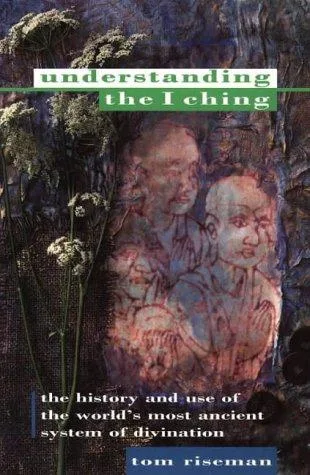
Tom Riseman’s *Understanding the I Ching* offers a methodical unpacking of a text that can easily overwhelm the uninitiated. Its strength lies in its systematic approach to the 64 hexagrams, presenting them with clarity rather than mystique. Riseman avoids the sensationalism that often surrounds divination, focusing instead on the philosophical currents. A limitation, however, is that while thorough, the prose can sometimes feel dense, demanding sustained reader attention. The section detailing the individual hexagrams, particularly the way it illustrates the progression of change within each, serves as a solid example of the book's analytical rigor. It successfully demystifies the *I Ching* for serious study. The work provides a grounded entry point for understanding this ancient oracle.
📝 Description
77
Tom Riseman's 1995 book examines the *I Ching*'s philosophical depth beyond simple divination.
Published in 1995, Tom Riseman's *Understanding the I Ching* offers a detailed look at the ancient Chinese text, known also as the Book of Changes. The book moves past basic fortune telling to consider the philosophical ideas and symbolic language that make up this classical oracle. Riseman explains the construction of the 64 hexagrams, how they are built from trigrams, and the interplay of yin and yang forces that shape their meanings.
This work is suitable for anyone interested in East Asian philosophical and divinatory traditions, particularly those who want a more thorough grasp of the *I Ching* than what common applications suggest. Students of religion, philosophy, and esoteric studies will find it valuable for engaging with a text that has influenced thinking for centuries. Those who practice contemplative arts may also benefit from its perspective on change and decision making.
The *I Ching*'s roots trace back to the Zhou Dynasty, and its philosophical interpretations have developed over millennia. By 1995, when Riseman's book appeared, the *I Ching* had a long history of translations and commentaries in the West, notably Richard Wilhelm's influential 1924 German version. Riseman's work fits into this ongoing dialogue, presenting a structured way to approach a text often seen as complex. It acknowledges the text's historical weight and its use as a tool for self reflection and understanding the flow of events.
💡 Why Read This Book?
• Gain a structured understanding of the 64 hexagrams and their underlying trigrams, moving beyond rote memorization to grasp the symbolic logic that informs the *I Ching*. • Explore the philosophical concepts of yin and yang as presented by Riseman, learning how their interplay illustrates the dynamic processes of change central to the text. • Appreciate the historical lineage of the *I Ching* as discussed in its context, understanding its place within Chinese thought and its reception by scholars like Richard Wilhelm.
⭐ Reader Reviews
Honest opinions from readers who have explored this book.
❓ Frequently Asked Questions
What is the historical significance of the I Ching?
The *I Ching*, or Book of Changes, has a history spanning over two millennia, originating in China during the Zhou Dynasty. It evolved from a divination manual to a foundational text of Chinese philosophy, influencing Confucianism and Taoism.
Who was Richard Wilhelm in relation to the I Ching?
Richard Wilhelm was a German sinologist whose 1924 translation of the *I Ching* into German, with a preface by Carl Jung, was instrumental in introducing the text to a Western audience.
What are the basic components of an I Ching hexagram?
An *I Ching* hexagram is composed of six lines, which can be either solid (yang) or broken (yin). These hexagrams are formed by combining two trigrams, each consisting of three lines.
How does the concept of yin and yang apply to the I Ching?
Yin (passive, dark) and yang (active, light) are fundamental forces whose dynamic interaction and transformation are represented in the changing lines of the hexagrams, illustrating the constant flux of the universe.
When was Tom Riseman's 'Understanding the I Ching' first published?
Tom Riseman's *Understanding the I Ching* was first published in 1995, offering a modern interpretation and systematic study of the ancient Chinese text.
What distinguishes this book from simpler divination guides?
Unlike basic guides, Riseman's work emphasizes the philosophical and symbolic depth of the *I Ching*, focusing on its structural components and the underlying principles of change rather than just predictive outcomes.
🔮 Key Themes & Symbolism
Hexagrammatic Structure
The book systematically breaks down the 64 hexagrams, the primary symbolic representations within the *I Ching*. It explains how each hexagram is formed from two trigrams and how the combination of yin and yang lines within them depicts specific archetypal situations or energies. This structural analysis provides a framework for understanding the text's vast symbolic language and its application in divination and philosophical reflection.
Yin and Yang Dynamics
Central to Riseman's interpretation is the principle of yin and yang, the complementary and opposing forces that drive all change. The work illustrates how the interplay of these forces, represented by broken and solid lines respectively, dictates the movement and transformation within each hexagram. Understanding this dynamic is presented as key to comprehending the *I Ching*'s view of cosmic and personal evolution.
Philosophical Underpinnings
Beyond its divinatory use, *Understanding the I Ching* explores the philosophical depth of the text. It examines how the *I Ching* offers a model for understanding the nature of reality, decision-making, and the cyclical patterns of existence. The work connects the ancient wisdom to broader questions of human experience and the search for balance and harmony in a constantly changing world.
The Book of Changes as Oracle
The book addresses the function of the *I Ching* as an oracle, detailing methods for consulting its wisdom. It emphasizes that the text is not merely for predicting the future but for offering guidance and perspective on present circumstances. The focus is on interpreting the hexagrams as reflections of underlying patterns, facilitating insight rather than dictating fate.
💬 Memorable Quotes
Direct passages from the work, attributed to the author.
“Understanding the interplay of yin and yang is fundamental to interpreting the hexagrams.”
— This highlights a core tenet discussed in the book, emphasizing that the balance and interaction between the passive (yin) and active (yang) principles are the engine driving the meanings and transformations depicted in the *I Ching*'s symbolic system.
“Each trigram serves as a building block for the more complex hexagrams.”
— This statement reflects the structural explanation provided, illustrating how the simpler, three-line trigrams are combined to form the six-line hexagrams, revealing a layered system of symbolic meaning.
“The text offers guidance for navigating life's transitions, not definitive answers.”
— This interpretation emphasizes the book's perspective on the *I Ching*'s purpose: to provide insight and direction during times of change, encouraging thoughtful engagement with circumstances rather than seeking simple predictions.
💡 Key Ideas
Editorial paraphrase of the work's core concepts — not direct quotes.
The hexagrams are not static pronouncements but dynamic images of change.
This paraphrase captures the essence of how the *I Ching* is presented in the book: not as fixed prophecies, but as fluid representations of evolving situations and energies that mirror the constant flux of life.
The oracle reflects the patterns of the universe as they manifest in human affairs.
This paraphrase conveys the book's approach to the *I Ching* as a mirror, suggesting that the wisdom contained within its hexagrams offers a macrocosmic view that can illuminate personal challenges and decisions.
🌙 Esoteric Significance
Tradition
While the *I Ching* is a foundational text of Chinese philosophy and divination, its integration into Western esoteric traditions is notable. It’s often studied within Hermetic, Neopagan, and New Age contexts, where its principles of change, balance, and cyclical time are seen as aligning with universal esoteric laws. Riseman’s work facilitates this by presenting the *I Ching* in a structured manner accessible to those outside traditional Chinese scholarship, allowing its symbolic language to be mapped onto broader esoteric frameworks.
Symbolism
Key symbols include the yin (broken line) and yang (solid line), representing fundamental dualities and the generative forces of the cosmos. The eight trigrams (e.g., Heaven, Earth, Thunder) are potent archetypal symbols, each associated with natural phenomena and human relationships. The 64 hexagrams, formed by combining trigrams, serve as complex symbolic matrices representing a vast spectrum of life situations and transformations, offering nuanced insights into cause and effect.
Modern Relevance
Contemporary practitioners in fields like transpersonal psychology, coaching, and systems thinking find value in the *I Ching*'s model of change and interconnectedness. Its emphasis on observing patterns, understanding timing, and adapting to circumstances speaks to modern challenges. Thinkers exploring non-linear causality and synchronicity often reference the *I Ching*, viewing it as an ancient system that speaks to the complexities of contemporary life and personal development.
👥 Who Should Read This Book
• Students of comparative philosophy and religion seeking to understand a core part of East Asian thought, gaining insights into concepts like yin-yang dynamics. • Individuals interested in divination and oracle systems who desire a methodical approach to the *I Ching*, moving beyond superficial interpretations to grasp its symbolic structure. • Practitioners of contemplative arts and personal development looking for a framework to understand change, decision-making, and the cyclical nature of life events.
📜 Historical Context
Tom Riseman’s *Understanding the I Ching* emerged in 1995, a period of sustained Western interest in Eastern philosophies and esoteric traditions. The *I Ching* itself had a long reception history in the West, notably amplified by Richard Wilhelm’s German translation and Carl Jung's endorsement in the 1920s, which framed it as a tool for psychological exploration. By the 1990s, numerous books on the subject catered to various levels of engagement, from beginner divination guides to scholarly analyses. Riseman’s work positioned itself within this discourse by offering a systematic and accessible exposition, distinguishing itself from purely predictive manuals and emphasizing the text's philosophical depth. It engaged with the ongoing academic and popular fascination with Chinese classical thought, a field also explored by scholars like Benjamin Schwartz, who published his important work *The World of Thought in Ancient China* in 1985, contributing to a broader understanding of the intellectual landscape from which the *I Ching* arose.
📔 Journal Prompts
The principle of yin and yang as a dynamic force.
How the structure of trigrams informs hexagram interpretation.
The *I Ching*'s representation of transition and transformation.
Applying hexagrammatic symbolism to a current life situation.
Reflecting on the *I Ching*'s role as an oracle for guidance.
🗂️ Glossary
I Ching
An ancient Chinese divination text, also known as the Book of Changes, composed of 64 hexagrams used for wisdom and guidance.
Hexagram
A symbol composed of six stacked horizontal lines, each either solid (yang) or broken (yin), representing a specific situation or archetype.
Trigram
A symbol composed of three stacked horizontal lines, either solid or broken, serving as a component of the hexagrams.
Yin
The passive, dark, receptive, and feminine principle in Chinese philosophy, represented by a broken line (--) in the I Ching.
Yang
The active, light, creative, and masculine principle in Chinese philosophy, represented by a solid line (—) in the I Ching.
Oracle
A person or agency considered to be a source of wise counsel or prophetic predictions inspired by a deity or supernatural phenomenon.
Divination
The practice of seeking knowledge of the future or the unknown by supernatural means, often through interpreting signs or symbols.
🔮 Readers Also Liked
Browse all →








More by Tom Riseman
All books →
More Free Occult Philosophy Books
View all →