The night is watching

 83
83

The night is watching
Heather Graham's *The Night Is Watching* attempts to capture the subtle tremors that suggest a reality beyond our immediate grasp. The strength of the novel lies in its atmospheric tension; Graham excels at creating a palpable sense of unease that permeates the narrative, effectively mirroring the book's central conceit that unseen forces are at play. However, the plot occasionally becomes entangled in its own metaphysical aspirations, leading to moments where the philosophical underpinnings feel more stated than organically developed. A particularly striking passage involves the protagonist's dawning realization that certain recurring dreams are not mere figments of imagination but echoes of shared psychic trauma. Ultimately, while the book offers an intriguing premise and a compelling mood, its execution sometimes struggles to fully realize its ambitious thematic scope.
📝 Description
83
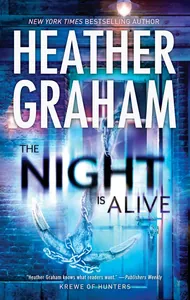
Heather Graham's 2013 novel, The Night Is Watching, examines how unseen forces shape human awareness.
Published in 2013, The Night Is Watching by Heather Graham is a speculative fiction novel that probes the nature of consciousness and reality. The story challenges ordinary views of existence through its plot and characters, suggesting that hidden influences affect human events and perception. Graham constructs a narrative where individual awareness interacts with deeper, unseen dynamics.
The book appeals to readers who enjoy philosophical fiction and existential questions. It is for those who like suspenseful stories that also prompt reflection on the self and its place in the universe. Readers who explore the unknown through fiction will find resonance in its thematic explorations of reality and perception.
Released in 2013, The Night Is Watching coincides with a growing public interest in consciousness studies and the philosophical implications of physics, topics explored by figures like Michio Kaku. The novel's focus on subjective experience and interconnectedness reflects contemporary discussions in neuroscience and psychology concerning altered states of awareness. It joins a literary lineage featuring authors such as Philip K. Dick and Ursula K. Le Guin, who also employed speculative fiction to investigate reality and identity.
💡 Why Read This Book?
• Gain a deeper understanding of the concept of 'shadow selves' as presented in the novel, and how Graham uses it to drive narrative tension. • Experience the unique atmosphere of existential questioning Graham cultivates, particularly through the narrative's engagement with dream logic and shared subconscious states. • Analyze the novel's exploration of collective consciousness, examining how it posits connections between individuals beyond conventional social or biological ties.
⭐ Reader Reviews
Honest opinions from readers who have explored this book.
❓ Frequently Asked Questions
What is the publication year of Heather Graham's 'The Night Is Watching'?
Heather Graham's 'The Night Is Watching' was first published in 2013, placing it within a contemporary wave of speculative fiction exploring consciousness.
Does 'The Night Is Watching' have supernatural elements?
While not overtly supernatural in a traditional sense, the novel explores phenomena that suggest forces beyond ordinary perception, focusing on psychological and existential dimensions rather than typical ghosts or spirits.
What are the main themes explored in 'The Night Is Watching'?
The book primarily delves into themes of consciousness, the nature of reality, collective subconscious, and the hidden aspects of the human psyche.
Is 'The Night Is Watching' part of a series?
Based on available information, 'The Night Is Watching' by Heather Graham is a standalone novel and does not appear to be part of a larger series.
What kind of reader would enjoy 'The Night Is Watching'?
Readers who appreciate philosophical science fiction, existentialist themes, and narratives that challenge perceptions of reality would likely find this book engaging.
Who is the author of 'The Night Is Watching'?
The author of 'The Night Is Watching' is Heather Graham, a prolific writer known for her work in suspense and paranormal romance, though this particular title leans towards speculative and philosophical fiction.
🔮 Key Themes & Symbolism
Perception and Reality
The work challenges the reader's assumptions about what constitutes reality by presenting scenarios where subjective experience and objective fact blur. It explores how individual perception, influenced by psychological states and potentially external forces, shapes one's understanding of the world. Graham uses narrative devices to suggest that what we perceive is not necessarily the entirety of what exists, hinting at layers of existence beyond ordinary sensory input. This theme is crucial in understanding the characters' evolving awareness and their struggle to orient themselves within a shifting existential landscape.
Collective Unconscious and Shared Experience
A significant aspect of the book is its engagement with the idea of a collective unconscious, a shared reservoir of human experience and archetypes. The narrative suggests that characters' individual struggles and insights might be echoes or manifestations of broader, interconnected psychic phenomena. This concept allows for plot elements where seemingly disparate individuals experience similar visions or intuitions, pointing towards a unified field of consciousness that transcends physical separation. The work posits this shared psychic space as a powerful, often unseen, influence on human behavior and destiny.
The Shadow Self
The novel frequently references the concept of the 'shadow self'—the unacknowledged or repressed aspects of an individual's personality. These darker, hidden elements are portrayed not merely as personal psychological issues but as potent forces that can impact both the individual and their environment. Graham uses these 'shadows' to create conflict and mystery, suggesting that confronting and integrating these hidden parts of the psyche is essential for true awareness and personal growth. The narrative implies that ignoring the shadow allows it to gain power and influence from the periphery.
The Unseen Influences
Central to *The Night Is Watching* is the exploration of forces and influences that operate beneath the surface of everyday life. These are not necessarily paranormal entities but subtle currents, predispositions, and interconnected webs of causality that guide events and shape destinies. The book invites contemplation on whether human lives are entirely self-directed or if they are subject to larger, more intricate patterns. This theme encourages a re-evaluation of agency and destiny, suggesting a universe far more complex and interconnected than commonly assumed.
💬 Memorable Quotes
Direct passages from the work, attributed to the author.
“We are all threads in a fabric we cannot fully see.”
— This reflects the concept of interconnectedness explored in the book. It implies that individual lives are part of a larger, complex whole, with unseen connections and influences shaping outcomes, much like individual threads contributing to a vast, intricate range.
“The darkness we fear often resides within us, waiting for recognition.”
— This speaks directly to the theme of the shadow self. It suggests that the anxieties and fears we project outwards or attribute to external sources may, in fact, originate from unacknowledged parts of our own psyche, requiring introspection for resolution.
“Some truths are not discovered, but remembered from a place before knowing.”
— This hints at a form of innate knowledge or collective memory, suggesting that certain insights or understandings are not learned but are rather recalled from a deeper, perhaps ancestral, layer of consciousness.
“The world is what we agree it is, until the agreement falters.”
— This highlights the subjective and socially constructed nature of reality. It implies that our shared consensus about how the world works is a fragile construct, and that when this consensus breaks down, new possibilities for understanding emerge.
💡 Key Ideas
Editorial paraphrase of the work's core concepts — not direct quotes.
Dreams bleed into waking hours, blurring the edges of what is real.
This quote captures the novel's central theme of fluid reality. It suggests that the boundary between our subconscious (dreams) and our conscious experience is not as distinct as we might believe, and that the inner world can profoundly influence our perception of the outer world.
🌙 Esoteric Significance
Tradition
The work engages with contemporary esoteric thought rather than adhering strictly to a single historical lineage. It draws loosely from concepts found in depth psychology, particularly Jungian ideas of the collective unconscious and the shadow, and from New Age philosophies that emphasize interconnectedness and the power of consciousness. It departs from more structured traditions like Hermeticism or Kabbalah by focusing on experiential and psychological manifestations rather than codified systems or rituals, presenting a more fluid, emergent form of esoteric inquiry.
Symbolism
The 'night' itself serves as a potent symbol, representing the unconscious, the unknown, and the hidden aspects of reality that the book seeks to illuminate. Shadows are also central, symbolizing repressed desires, fears, and the unacknowledged parts of the self that exert influence from the periphery. Furthermore, recurring motifs of distorted reflections or fractured self-images can symbolize the fragmented nature of identity and the difficulty in achieving a unified sense of self when confronting deeper psychological truths.
Modern Relevance
In contemporary discussions around consciousness studies, mindfulness, and the impact of digital connectivity on perception, *The Night Is Watching* offers a fictional case study. Thinkers exploring the intersection of psychology and spirituality, or those examining the societal implications of altered states of awareness, might find its narrative explorations relevant. Its themes resonate with modern practices that encourage introspection and the integration of psychological 'shadows,' as well as with the growing interest in interconnectedness fostered by global communication and ecological awareness.
👥 Who Should Read This Book
• Readers interested in the philosophical underpinnings of consciousness, particularly those who enjoy speculative fiction that probes the nature of reality and perception. • Individuals drawn to psychological narratives that explore the darker, less acknowledged aspects of the human psyche, such as the 'shadow self' and collective unconscious. • Those seeking fiction that offers a sense of mystery and existential inquiry, encouraging contemplation on unseen influences and the interconnectedness of existence.
📜 Historical Context
Published in 2013, *The Night Is Watching* by Heather Graham emerged in a literary landscape increasingly interested in the speculative exploration of consciousness and reality. This period saw popular science books like Michio Kaku's *Physics of the Future* (2011) discussing potential societal shifts influenced by scientific advancement, and a continued fascination with the philosophical implications of quantum mechanics. Graham's work taps into this zeitgeist, offering a fictional lens through which to examine themes of interconnectedness and subjective perception, echoing earlier speculative fiction pioneers like Ursula K. Le Guin and Philip K. Dick. While not directly engaging with the Jungian archetype theories that were prevalent in mid-20th century thought, the novel’s focus on collective unconscious and shadow aspects speaks to those foundational ideas. The reception of such works often highlights a public appetite for narratives that grapple with existential questions in an era of rapid technological and societal change, offering comfort or challenge through imagined futures and alternate realities.
📔 Journal Prompts
The concept of the 'shadow self' as depicted in the narrative.
Reflect on the dream sequences and their potential connection to shared psychic experiences.
The blurring of lines between individual perception and collective reality.
How the symbolism of 'night' and 'shadows' contributes to the book's atmosphere.
The implications of unseen influences on personal agency.
🗂️ Glossary
Shadow Self
The unconscious or repressed aspects of the personality that the conscious ego does not identify in itself. In the context of the book, these are often portrayed as potent forces influencing behavior and perception.
Collective Unconscious
A concept suggesting a shared reservoir of universal human experiences, archetypes, and instincts that exists beyond individual consciousness, influencing thoughts and behaviors across cultures and time.
Perceptual Reality
The subjective experience of the world as filtered through an individual's senses, beliefs, and psychological state. The book questions the stability and objectivity of this constructed reality.
Existential Inquiry
A philosophical exploration of fundamental questions about human existence, such as meaning, purpose, freedom, and the nature of reality. The novel engages with these questions through its narrative.
Narrative Blurring
A literary technique where the author deliberately obscures the lines between different plot threads, character perspectives, or between reality and illusion to create ambiguity and thematic depth.
Unseen Influences
Forces, connections, or causal chains that are not immediately apparent to ordinary observation, but which the narrative suggests play a significant role in shaping events and individual destinies.
Psyche
The totality of the human mind, conscious and unconscious. The book explores various states and dimensions of the psyche as they relate to perception and reality.
🔮 Readers Also Liked
Browse all →







More by Heather Graham
All books →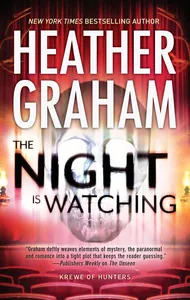



More Free Occult Philosophy Books
View all →