The Short Second Life of Bree Tanner

 75
75

The Short Second Life of Bree Tanner
The Short Second Life of Bree Tanner offers a starkly different perspective from the main Twilight narrative. Meyer shifts focus from romantic intrigue to a more visceral portrayal of a newborn vampire's brief, brutal existence. The strength of the novella lies in its ability to evoke sympathy for Bree, a character thrust into a violent world with little agency. Her internal struggle and desperate search for belonging are palpable. However, the narrative's brevity, while necessary to capture Bree's short life, sometimes feels like it leaves unexplored potential, particularly regarding the dynamics of the newborn pack. The description of Bree's initial moments of transformation and her subsequent disorientation is particularly effective, highlighting the horror of her situation. Ultimately, it's a poignant, albeit brief, exploration of a character on the fringes of a well-trodden supernatural world.
📝 Description
75
Stephenie Meyer's 2010 novella, The Short Second Life of Bree Tanner, offers a vampire's perspective.
This novella centers on Bree Tanner, a "newborn" vampire created as part of Victoria's army. The narrative traces her brief existence from her transformation to her ultimate demise, a stark contrast to the more romanticized vampire lives in the main Twilight saga.
Bree's story highlights the brutal reality of being a newly turned vampire. She experiences the overwhelming thirst, the confusion, and the violence inherent in her new state, all while navigating a world of predatory, experienced vampires. The book details her struggle for survival and her search for belonging within a dangerous pack, showing a grimmer side of the supernatural world Meyer established.
Published in 2010, the novella emerged during the Twilight series' immense popularity. It expands the established lore by focusing on a character on the periphery of Bella Swan's story. This tangent allows readers to understand the consequences and the harsh realities faced by the "newborn" vampires often seen as disposable in the main narrative.
While not a traditional esoteric text, this work engages with themes of forced transformation and the loss of self, common in lore surrounding vampirism. It presents a darker, more immediate interpretation of the vampire myth, focusing on the primal struggle of a being suddenly thrust into a predatory existence. The novella's depiction of uncontrolled urges and the violent nature of newly turned vampires touches upon primal fears of losing one's humanity to an overwhelming, external force.
💡 Why Read This Book?
• Gain insight into the terrifying reality of newborn vampires, as depicted in the chaotic pack's struggles and their short, violent lives, a concept central to the Twilight saga's lore. • Experience Bree Tanner's desperate search for acceptance and safety in a world that largely views her as a disposable tool, a perspective unique to her narrative arc. • Understand the Volturi's role in managing vampire society through their decisive, often brutal, actions against uncontrolled newborn populations, as seen in the novella's conclusion.
⭐ Reader Reviews
Honest opinions from readers who have explored this book.
❓ Frequently Asked Questions
When was The Short Second Life of Bree Tanner first published?
The Short Second Life of Bree Tanner was first published in 2010, serving as a companion novella to the main Twilight series.
Who is Bree Tanner?
Bree Tanner is a newborn vampire who becomes a central character in this novella. She is turned against her will and struggles to survive the immediate aftermath of her transformation.
What is the main focus of The Short Second Life of Bree Tanner?
The novella focuses on the short, tragic life of Bree Tanner, exploring her experiences as a newly turned vampire, her interactions with other newborns, and her ultimate fate within the Twilight universe.
Is this book part of the main Twilight series storyline?
While it's a companion novella, it offers a side story that provides additional context and character perspective on events occurring concurrently with Eclipse.
What is the tone of The Short Second Life of Bree Tanner?
The tone is generally darker and more somber than the main Twilight books, focusing on survival, fear, and the harsh realities of being a newborn vampire.
Does this novella feature Bella and Edward?
Bree Tanner's story runs parallel to the events of Eclipse, so while the world is the same, the primary focus is on Bree and her immediate circle, not Bella and Edward's direct interactions.
🔮 Key Themes & Symbolism
Newborn Vampire Existence
The novella offers a grim look at the state of being a 'newborn' vampire, a concept central to the Twilight saga. Unlike the more established vampires, newborns are depicted as volatile, driven by an insatiable thirst, and often lacking control over their new abilities. Bree's experience highlights the terror and confusion of this transition, where the immediate aftermath of being turned is a chaotic struggle for survival under the guidance of older, predatory vampires. It emphasizes the disposable nature of these new vampires within the larger vampire society, revealing a brutal hierarchy.
Search for Belonging
Despite the violent circumstances of her creation, Bree Tanner exhibits a profound desire for connection and acceptance. She yearns for a family and a sense of belonging, initially finding it within the makeshift pack of other newborns. This novella explores how even in the most unnatural and dangerous environments, the instinct for companionship persists. Bree's interactions reveal her innate kindness and her hope for a normal life, contrasting sharply with the predatory nature of her existence and the older vampires who manipulate her.
The Volturi's Order
The Volturi, the ancient and powerful vampire coven that acts as law enforcement in the vampire world, play a significant role in Bree's fate. Their presence underscores the effort to maintain a semblance of order and secrecy. The novella shows how the Volturi deal with potential threats, such as a large group of uncontrolled newborns. Their actions, though decisive and seemingly harsh, are presented as a necessary measure to protect the vampire world from exposure, highlighting the pragmatic and often ruthless enforcement of their rules.
💬 Memorable Quotes
Direct passages from the work, attributed to the author.
“I didn't want to be a vampire. I didn't want to hurt anyone. I just wanted to be me.”
— This statement captures Bree's core tragedy: her loss of self and her forced transformation into something she never desired, highlighting her internal conflict and longing for her former identity.
“They were all still so new, so wild. They needed someone to take care of them.”
— This reflects Bree's developing sense of responsibility and maternal instinct towards the other newborn vampires, even as she herself is struggling with her own transformation and survival.
“I didn't know what the rules were. I didn't know how to be a vampire.”
— This expresses Bree's confusion and lack of guidance in her new existence, underscoring her vulnerability and the chaotic nature of her introduction to the vampire world.
“The Volturi arrived like an answer, but not the one I was hoping for.”
— This interpretation suggests the arrival of the Volturi, while seemingly bringing resolution, ultimately leads to Bree's predetermined and tragic end, highlighting the finality of their judgment.
💡 Key Ideas
Editorial paraphrase of the work's core concepts — not direct quotes.
It was a strange thing to be a newborn. Everything felt too loud, too bright, too fast.
This quote vividly describes the sensory overload and disorientation experienced by newly turned vampires, emphasizing the physical and psychological shock of their transformation.
🌙 Esoteric Significance
Tradition
While not directly rooted in a specific esoteric tradition like Hermeticism or Gnosticism, The Short Second Life of Bree Tanner engages with archetypal themes common in occult literature. The concept of vampirism itself, as a metaphor for parasitic existence and eternal life, has long been a subject of esoteric interest, often linked to shadow aspects of the psyche or primal energies. Meyer's work taps into this, presenting a modern, albeit fictionalized, interpretation of the 'undead' state, focusing on the loss of humanity and the struggle for selfhood.
Symbolism
The primary symbolic element is the 'newborn' vampire, representing primal urges, uncontrolled power, and the chaotic transition between states of being – life and undeath, ignorance and dangerous knowledge. Bree herself symbolizes innocence corrupted and the yearning for connection even in the face of monstrous transformation. The Volturi, in this context, can be seen as symbols of ancient, unyielding order and judgment, representing the external forces that dictate the rules of supernatural existence and enforce conformity.
Modern Relevance
Contemporary paranormal romance and urban fantasy genres continue to explore variations on the vampire mythos, often drawing on the psychological and existential questions presented in works like Meyer's. The novella's focus on the outsider, the marginalized character struggling for identity within a dangerous world, appeals to modern narratives exploring themes of alienation and belonging. While not a direct source for current occult practices, its popularization of vampire lore contributes to a broader cultural fascination with transitional states and the darker aspects of immortality.
👥 Who Should Read This Book
• Devoted fans of the Twilight Saga seeking to expand their understanding of the vampire world and its inhabitants. • Readers interested in character-driven narratives that explore themes of survival, identity, and the struggle for belonging in extreme circumstances. • Young adult fiction enthusiasts who enjoy paranormal stories with a focus on the darker, more immediate consequences of supernatural transformation.
📜 Historical Context
Published in 2010, The Short Second Life of Bree Tanner arrived during the zenith of the Twilight Saga's global popularity. Stephenie Meyer's vampire romance had already spawned a multi-billion dollar film franchise and a massive fanbase, making any expansion of its universe highly anticipated. This novella emerged in an era where young adult fantasy literature dominated bestseller lists, with authors like Suzanne Collins (The Hunger Games) and J.K. Rowling (Harry Potter) setting trends. Meyer's work, while immensely popular, also faced criticism and academic analysis, particularly concerning its portrayal of relationships and its romanticized view of supernatural beings. The release of Bree Tanner was met with excitement by fans eager for more lore, offering a darker, more character-focused perspective on the 'newborn' vampires that were often depicted as antagonists in the main series. Its reception was largely positive within the existing fanbase, reinforcing the saga's cultural footprint.
📔 Journal Prompts
Bree Tanner's initial disorientation upon becoming a vampire.
The pack's desperate search for safety and acceptance.
The Volturi's role as enforcers of vampire law.
The contrast between Bree's desire for normalcy and her vampiric reality.
The symbolic meaning of the 'newborn' state in the Twilight universe.
🗂️ Glossary
Newborn Vampire
A vampire that has recently been turned. Newborns are characterized by their lack of control over their powers and thirst, making them dangerous and unpredictable.
The Volturi
An ancient and powerful vampire coven residing in Volterra, Italy, who act as the governing body of the vampire world, enforcing laws and maintaining secrecy.
Turning
The process by which a human is transformed into a vampire, typically involving the exchange of vampire blood and the cessation of human life functions.
Vampire Pack
A group of newborn vampires who band together for protection and survival, often led by the one who turned them or the strongest among them.
Thirst
The intense, overwhelming craving for blood that vampires experience, particularly pronounced in newborns.
Human Host
A human individual from whom a vampire drinks blood. This term highlights the parasitic nature of the vampire's existence.
Immortal
Referring to beings who do not die of natural causes and possess a form of eternal life, such as vampires in the Twilight universe.
🔮 Readers Also Liked
Browse all →![[The English physician] Culpeper's English physician; and complete herbal. To which are now first added, upwards of one hundred additional herbs, with a display of their medicinal and occult properties, physically applied to the cure of all disorders incident to banking. To which are annexed, rules for compounding medicine. 1789](/img/thumb/the-english-physician-culpeper-s-english-physician-and-complete-herbal-to-which-are-now-first-added-upwards-of-one-hundred-additional-herbs-with-a-display-of-their-medicinal-and-occult-properties-phys.webp)









More by Stephenie Meyer
All books →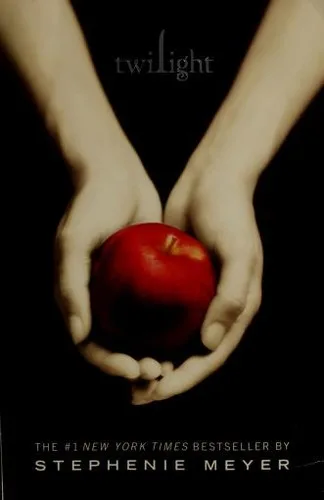





More Free Occult Philosophy Books
View all →