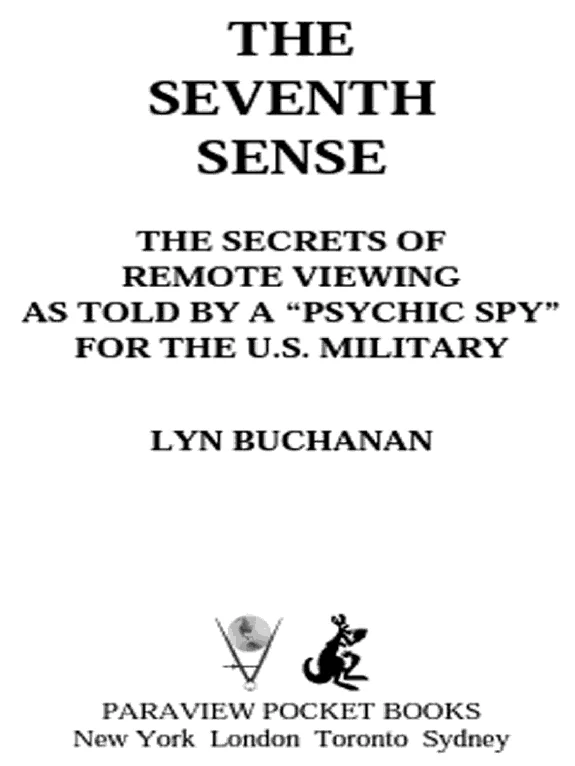
The Seventh Sense
 79
79

The Seventh Sense
Lyn Buchanan's 'The Seventh Sense' offers a rare, unvarnished look into the U.S. military's remote viewing program. Unlike many accounts that lean into speculative mysticism, Buchanan grounds his narrative in procedural detail and personal experience. His description of the "Coordinate Remote Viewing" (CRV) methodology, particularly how a "viewer" might sketch a target from a series of abstract prompts, provides a concrete anchor for the seemingly intangible subject. A significant strength is Buchanan’s candid assessment of the program's limitations and the inherent difficulties in training and execution. However, the prose occasionally becomes repetitive, dwelling on technicalities that might alienate a general reader. The work's most compelling aspect is its factual recounting of a controversial, government-backed initiative that remained classified for decades. It stands as a crucial document for understanding the practical, albeit esoteric, endeavors of intelligence agencies.
📝 Description
79
Lyn Buchanan details the U.S. Army's classified remote viewing program in 'The Seventh Sense'.
In 'The Seventh Sense', Lyn Buchanan recounts his experiences within the U.S. Army's once-secret remote viewing program. He describes the training and methodologies used to develop psychic perception beyond ordinary senses. The book explains how individuals were taught to gather information about distant targets or people solely through mental effort. Buchanan, a participant in these programs, addresses the practical applications and the disciplined approach required for this ability. The narrative touches on the challenges of interpreting subjective data and the importance of strict protocols.
The work is situated against the backdrop of Cold War intelligence efforts, a time when governments explored psychic phenomena. Buchanan's firsthand account places the book within the history of U.S. government-sponsored research into psychic abilities, which ran from the 1970s to the 1990s. It implicitly discusses the skepticism surrounding these projects and their eventual declassification. Readers interested in empirical accounts of psychic training, parapsychology students, and those curious about the connection between consciousness and intelligence work will find this book informative.
This book fits within traditions that explore consciousness and perception beyond the physical senses. It connects to the broader field of parapsychology, which investigates phenomena such as telepathy, precognition, and clairvoyance. The U.S. military's research into 'remote viewing' can be seen as an attempt to systematize and apply these non-ordinary perceptual abilities for intelligence purposes. This work offers a glimpse into a specific, government-sanctioned exploration of these esoteric capabilities.
💡 Why Read This Book?
• Understand the practical methodology of Coordinate Remote Viewing (CRV) as developed within a U.S. Army intelligence context, offering specific training techniques not widely published before 2009. • Gain insight into the historical reality of government-funded psychic research programs, such as the STAR GATE project, providing verifiable details from a key participant. • Learn about the subjective experience and analytical rigor required in "psychic sensing," as detailed through Buchanan's personal accounts and the challenges he faced in his decade-long assignment.
⭐ Reader Reviews
Honest opinions from readers who have explored this book.
❓ Frequently Asked Questions
What is remote viewing according to Lyn Buchanan?
According to Lyn Buchanan in 'The Seventh Sense,' remote viewing is the psychic ability to perceive information about a target—person, place, or event—that is not accessible through the normal five senses, using only the power of the human mind.
What was Lyn Buchanan's role in the U.S. Army's remote viewing program?
Lyn Buchanan was assigned for nearly a decade to a clandestine U.S. Army intelligence group focused on remote viewing, where he served as a senior instructor and analyst for the program.
When was 'The Seventh Sense' first published?
'The Seventh Sense' by Lyn Buchanan was first published on November 24, 2009.
What is Coordinate Remote Viewing (CRV)?
Coordinate Remote Viewing (CRV) is a structured methodology for remote viewing, detailed by Buchanan, that uses a series of analytical steps and abstract prompts to guide the viewer towards accurate information about a target.
Does the book discuss other remote viewers?
Yes, while focusing on his own experiences, Buchanan discusses the collective efforts and findings of the remote viewing team he was part of within the U.S. Army intelligence group.
Is 'The Seventh Sense' a theoretical or practical book?
It is primarily a practical book, detailing methodologies, training experiences, and specific examples of remote viewing applications from a military intelligence context.
🔮 Key Themes & Symbolism
Methodology of Remote Viewing
Buchanan meticulously details the protocols of Coordinate Remote Viewing (CRV), a structured approach to psychic perception. He explains the analytical steps, from initial data acquisition to the interpretation of sensory and ideographic impressions. The work emphasizes the discipline required to translate abstract mental signals into coherent data, distinguishing it from uncontrolled psychic phenomena. This focus provides a framework for understanding how psychic information can be systematically elicited and recorded, even under stringent intelligence requirements. The book highlights the practical, procedural nature of this ability when trained and applied professionally.
Government Psychic Research
The book offers a rare glimpse into the U.S. government's clandestine involvement in psychic research from the 1970s through the 1990s. Buchanan's nearly decade-long assignment to a U.S. Army intelligence group working on remote viewing provides firsthand testimony. It contextualizes this work within the broader geopolitical field of the Cold War, where similar research was pursued by other nations. The narrative addresses the secrecy, the operational challenges, and the eventual declassification and analysis of these programs, shedding light on a significant, yet often misunderstood, chapter of intelligence history.
Subjective Experience and Training
Beyond methodology, 'The Seventh Sense' explores the internal experience of a remote viewer. Buchanan recounts the process of developing psychic sensitivity, the cognitive challenges, and the mental discipline necessary for accurate perception. He discusses the rigorous training regimen designed to hone these abilities, emphasizing that remote viewing is a skill that can be cultivated. The work explores the psychological aspects, including managing expectations, handling anomalous data, and maintaining objectivity when dealing with subjective impressions, making it a valuable study for anyone interested in consciousness development.
Intelligence Applications
The book underscores the practical utility of remote viewing as an intelligence-gathering tool. Buchanan illustrates how this psychic capability was employed to gather information on targets inaccessible by conventional means. He discusses the potential for remote viewing to supplement traditional intelligence methods, providing unique insights into adversaries or critical situations. While acknowledging the inherent difficulties and the need for rigorous validation, the work presents remote viewing as a viable, albeit unconventional, asset within a military and intelligence framework, moving beyond pure speculation into operational reality.
💬 Memorable Quotes
Direct passages from the work, attributed to the author.
“The mind is the lens through which we perceive reality, and remote viewing is the art of focusing that lens with precision.”
— This interpretation highlights Buchanan's view that remote viewing isn't magic, but a disciplined mental skill. It suggests consciousness, when properly trained, can act as a precise instrument for gathering information, akin to a finely tuned optical device.
“The analytical framework is crucial; without it, psychic impressions remain chaotic noise.”
— This concept underlines the importance of structure in remote viewing. Buchanan suggests that the raw psychic data must be processed through a systematic method, like CRV, to become meaningful intelligence, preventing misinterpretation.
“Training is not about making people psychic; it's about teaching them to access and interpret what's already there.”
— This interpretation conveys Buchanan's belief that psychic potential is inherent. The focus of training, as he presents it, is on developing the skills to consciously access and decode these innate abilities, rather than imparting something entirely new.
💡 Key Ideas
Editorial paraphrase of the work's core concepts — not direct quotes.
Data is data, whether it comes from a satellite or from the subconscious mind.
This paraphrase emphasizes Buchanan's professional approach to remote viewing within an intelligence context. It posits that psychic impressions, when properly elicited and analyzed, hold the same informational value as data from conventional sources.
The challenge is not in the perceiving, but in the believing and the reporting.
This paraphrase points to the psychological hurdles in remote viewing. Buchanan suggests that accurately receiving information may be less difficult than overcoming personal skepticism and reporting the findings objectively and credibly.
🌙 Esoteric Significance
Tradition
While not strictly adhering to a singular esoteric lineage, Buchanan's work on remote viewing touches upon traditions that explore consciousness as a fundamental reality. It shares common ground with Gnostic ideas of hidden knowledge accessible through inner perception and Hermetic principles concerning the correspondence between the microcosm (human mind) and the macrocosm (universe). It departs by grounding these concepts in a rigorously applied, data-driven methodology, attempting to explain and operationalize what is often considered purely spiritual or mystical insight.
Symbolism
The number 'seven' in the title itself suggests a connection to esoteric traditions where seven represents completion, spiritual perfection, or hidden knowledge (e.g., seven chakras, seven classical planets). The concept of the 'sixth sense' (intuition) being expanded to a 'seventh' implies an additional, higher faculty of perception beyond ordinary psychic awareness. The act of 'viewing' distant targets can be seen as a modern interpretation of scrying or astral projection, symbolizing the mind's ability to transcend physical limitations.
Modern Relevance
Buchanan's work remains highly relevant for contemporary consciousness researchers, parapsychologists, and practitioners of modern esoteric arts. It informs discussions on psi phenomena, non-local consciousness, and the potential for mental training. Thinkers and groups exploring lucid dreaming, biofeedback, and advanced meditation techniques may find parallels in the disciplined mental states described. The book also continues to be referenced in discussions about the intersection of technology, intelligence, and the human mind's untapped potential.
👥 Who Should Read This Book
• Intelligence professionals and analysts interested in the historical development and potential applications of unconventional intelligence-gathering methods. • Students of parapsychology and consciousness studies seeking detailed, firsthand accounts of psychic phenomena research within a structured, operational environment. • Skeptics and the generally curious looking for a grounded, procedural explanation of remote viewing from a key participant in government programs.
📜 Historical Context
Published in 2009, 'The Seventh Sense' emerged decades after the peak of U.S. government-sponsored psychic research programs like GRILL FLAME and STAR GATE, which officially ran from the 1970s to 1995. Buchanan's work provides a critical insider's perspective on this era, a period characterized by intense Cold War competition and a global race for perceived psychic advantages, notably pursued by the Soviet Union. While figures like Hal Puthoff and Russell Targ were prominent researchers in the field during this time, Buchanan's account focuses on the operational deployment and training within military intelligence. The book's release coincided with continued academic and public fascination with parapsychology, though often met with significant skepticism from mainstream scientific institutions. Its reception was primarily within niche communities interested in espionage, consciousness studies, and the paranormal.
📔 Journal Prompts
The analytical framework for interpreting remote viewing data.
The mental discipline required for precise psychic perception.
The contrast between subjective psychic impressions and objective reporting.
The historical context of U.S. government psychic research programs.
The personal journey of Lyn Buchanan within the intelligence community.
🗂️ Glossary
Remote Viewing (RV)
The psychic ability to perceive information about a distant or unseen target using the mind, without relying on the five physical senses. It is a core subject of the book.
Coordinate Remote Viewing (CRV)
A specific, structured methodology for conducting remote viewing, developed and detailed by Lyn Buchanan, involving analytical steps and protocols to elicit and record data.
Viewer
An individual trained and capable of performing remote viewing. The term refers to the person actively engaged in the psychic perception process.
Target
The specific person, place, object, or event that a remote viewer is attempting to perceive information about during an RV session.
Analytical Process
The systematic series of steps and cognitive tasks within CRV designed to translate raw psychic impressions into understandable and verifiable information.
Ideographic Data
Abstract or symbolic information received during remote viewing that requires interpretation to understand its meaning in relation to the target.
STAR GATE Project
The codename for the U.S. government's joint program exploring the military applications of psychic phenomena, including remote viewing, active from the 1970s to 1995.
This book appears in 1 collection
🔮 Readers Also Liked
Browse all →









From the “Remote Viewing” Collection
View all →






More Free Occult Philosophy Books
View all →