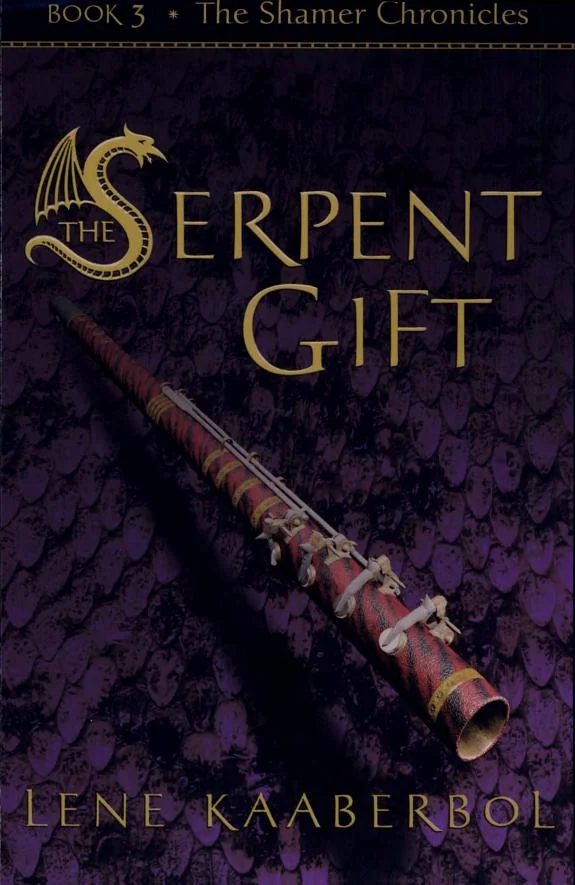
The Serpent Gift
 75
75

The Serpent Gift
Lene Kaaberbøl's "The Serpent Gift" offers a compelling expansion of Dina's world, moving beyond the foundational elements established in the first book. The exploration of Dina's inherited dream-weaving ability is where the novel truly shines, presenting a power that is both fascinating and fraught with ethical quandaries. The tension surrounding her brother Davin's imprisonment and her father's secretive involvement provides a solid narrative engine, pushing Dina into increasingly complex situations. However, the pacing occasionally falters, particularly in the middle sections, where the plot feels somewhat stretched before regaining momentum towards its conclusion. A particularly strong moment is Dina's internal conflict as she contemplates using her gift for personal gain versus altruism, a nuanced portrayal often absent in similar young adult fiction. While the book excels in character development and thematic depth, some plot resolutions feel a touch too convenient.
"The Serpent Gift" is a thoughtful continuation that deepens its protagonist's magical and moral journey.
📝 Description
75
Lene Kaaberbøl's 2006 novel, The Serpent Gift, continues Dina's story with a dangerous inherited power.
The Serpent Gift, published in 2006, is the second book in Lene Kaaberbøl's Dina series. It follows Dina, a young girl who discovers her father passed down a supernatural ability. This inherited gift allows her to affect the dreams of others. While it grants her strength, it also presents a significant danger.
The narrative is for young adult readers who prefer fantasy with a somber and thoughtful tone. It will interest those drawn to topics of inherited powers, moral uncertainty, and the challenge of finding oneself amid difficult situations. Readers who value character-focused stories, developing magical systems, and a strong sense of atmosphere will find The Serpent Gift a substantial read.
This novel touches on the esoteric concept of inherited psychic abilities, specifically a form of dream influence. The power is portrayed not as a simple boon, but as a burden with ethical considerations, reflecting a common theme in occult traditions where extraordinary gifts come with significant personal cost and responsibility. Dina's struggle with her father's legacy and her evolving capabilities mirrors the alchemical idea of integrating one's shadow or inherited patterns to achieve wholeness.
💡 Why Read This Book?
• You will explore the intricate ethics of inherited magical abilities, specifically the power to influence dreams, as seen when Dina grapples with her father's serpent gift in the context of her brother's unjust imprisonment. • You will experience a narrative that foregrounds psychological depth, examining how a young protagonist navigates a world where her innate power carries significant personal and moral weight, a key element when Dina confronts her father's legacy. • You will discover a unique take on magical realism within a young adult framework, moving beyond simple wish fulfillment to explore the burdensome nature of unique gifts, exemplified by the challenges Dina faces in the year 2006.
⭐ Reader Reviews
Honest opinions from readers who have explored this book.
❓ Frequently Asked Questions
What is the 'serpent gift' in Lene Kaaberbøl's 'The Serpent Gift'?
The 'serpent gift' is an inherited supernatural ability that allows the user to influence or enter the dreams of others. In the book, Dina discovers she shares this power with her father, a gift that carries significant ethical implications.
Who is Dina in 'The Serpent Gift'?
Dina is the twelve-year-old protagonist of the book. She is discovering and learning to control her unique dream-influencing ability, the serpent gift, while dealing with her brother's imprisonment and her estranged father.
What is the relationship between Dina and Davin in 'The Serpent Gift'?
Dina and Davin are siblings. Davin is unjustly imprisoned at the start of the story, and Dina's efforts to help him, possibly using her nascent powers, drive a significant portion of the plot.
When was 'The Serpent Gift' first published?
"The Serpent Gift" was first published on May 16, 2006, making it part of the burgeoning young adult fantasy landscape of the mid-2000s.
Is 'The Serpent Gift' part of a series?
Yes, "The Serpent Gift" is the second book in the "Dina" series by Lene Kaaberbøl, following "The Nightingale Heart" (2005).
What are the main themes explored in 'The Serpent Gift'?
The book explores themes of inherited abilities, the burden of power, family secrets, justice, and a young protagonist's journey of self-discovery and moral development.
🔮 Key Themes & Symbolism
Inherited Dream Magic
The central theme is the 'serpent gift,' an inherited ability to influence dreams. This power is not a simple tool but a complex inheritance, forcing Dina to confront its potential for manipulation and its ethical weight. The book explores how such a potent gift shapes identity and responsibility, particularly as Dina learns more about her father's connection to this power.
Justice and Imprisonment
The narrative is significantly driven by the unjust imprisonment of Dina's brother, Davin. This sets up a conflict between societal law and personal morality, prompting questions about fairness and the lengths one might go to correct perceived wrongs. Dina's quest to understand and potentially alter Davin's fate highlights the themes of sibling loyalty and the struggle against oppressive systems.
Family Secrets and Legacy
Dina's journey involves uncovering secrets about her family, particularly her father and his connection to the serpent gift. This exploration of legacy forces her to reconcile with a hidden past and understand how ancestral traits and choices impact the present. The book explores the complexities of parental influence and the search for identity within a shadowed lineage.
Moral Ambiguity of Power
Unlike many fantasy narratives where powers are clearly good or evil, the serpent gift is presented with inherent moral ambiguity. The book challenges readers to consider the consequences of wielding such influence, even with good intentions. Dina's internal struggles reflect this, as she learns that using her abilities, even to help, requires careful consideration and carries potential unforeseen repercussions.
💬 Memorable Quotes
Direct passages from the work, attributed to the author.
“She met her father and learned if she shared his serpent gift.”
— This concisely captures the core premise: Dina's discovery of her inherited dream-influencing ability through interaction with her father, setting the stage for her personal and magical development.
“Davin is unjustly confined to a prison.”
— This highlights the central conflict driving Dina's actions. The injustice fuels her motivation to seek solutions, potentially involving her burgeoning powers, and introduces themes of fairness and sibling loyalty.
“Dina, now twelve years old...”
— Establishes the protagonist's age and stage of development. It positions the narrative within the young adult genre, focusing on a protagonist navigating complex issues during a formative period.
“The ability to give people dreams.”
— A direct description of the 'serpent gift.' It simplifies the complex magic into an understandable concept, emphasizing its unique nature and the potential impact on others.
“Looking for a way to escape.”
— Refers to Davin's situation within the prison. This implies a struggle against confinement and a desire for freedom, a theme that likely speaks to Dina's own quest for understanding and control.
🌙 Esoteric Significance
Tradition
While not explicitly aligned with a single esoteric tradition like Hermeticism or Gnosticism, "The Serpent Gift" taps into archetypal concepts of inherited power and shadow work, common in various occult streams. The focus on manipulating the dreamscape echoes ancient practices of oneiromancy (dream interpretation and divination) and shamanic journeying, where the subconscious and altered states of consciousness are central. It departs from rigid dogma, instead focusing on the personal, psychological manifestation of magical ability.
Symbolism
The 'serpent' itself is a potent symbol across many esoteric traditions, often representing transformation, hidden knowledge, healing, or primal energy. In this context, the 'serpent gift' likely symbolizes an innate, perhaps instinctual, power tied to the subconscious and the liminal space of dreams. The act of 'giving dreams' can be seen as a form of psychic projection or influence, highlighting the subtle yet wide impact one mind can have on another.
Modern Relevance
Contemporary interest in lucid dreaming, consciousness studies, and the psychological impact of inherited trauma or family patterns finds resonance in "The Serpent Gift." Thinkers and practitioners exploring the power of the subconscious, the ethics of psychic influence, and the integration of shadow aspects within the self might find value in Dina's journey. The book's exploration of a potentially dangerous yet fascinating psychic ability speaks to modern fascination with the untapped potential of the human mind.
👥 Who Should Read This Book
• Young adult readers interested in fantasy narratives that explore the psychological weight of magical abilities, rather than just their application in combat or grand quests. • Aspiring writers and readers of comparative mythology who are drawn to the symbolic representation of serpents and dream manipulation across cultures. • Individuals seeking stories that grapple with themes of justice, family secrets, and moral complexity through the lens of a developing protagonist.
📜 Historical Context
Published in 2006, "The Serpent Gift" emerged within a vibrant period for young adult fantasy, a genre significantly shaped by the global success of authors like J.K. Rowling and Philip Pullman. While many contemporaries focused on epic quests and clear delineations of good versus evil, Lene Kaaberbøl's work, particularly the "Dina" series, distinguished itself by exploring more complex psychological themes and morally ambiguous magic. The early 2000s saw a growing interest in the darker, more introspective aspects of fantasy, moving beyond simplistic heroism. Kaaberbøl's nuanced portrayal of Dina's inherited 'serpent gift'—an ability to influence dreams—fit this trend, offering a different kind of magical experience than the more overt spellcasting or chosen-one narratives prevalent at the time. The reception of such works often hinged on their ability to connect with adolescent readers on a deeper emotional and psychological level, a space Kaaberbøl effectively occupied.
📔 Journal Prompts
Dina's serpent gift allows her to influence dreams; reflect on the ethical boundaries of influencing another's subconscious.
The injustice of Davin's imprisonment fuels Dina's actions; consider the personal cost of seeking justice outside conventional means.
Contemplate the nature of inherited abilities and the legacy associated with your own family history.
Explore the symbolism of the serpent within esoteric traditions and how it might relate to personal transformation.
Reflect on the power dynamics present when Dina interacts with her father, considering the influence of his serpent gift.
🗂️ Glossary
Serpent Gift
An inherited supernatural ability possessed by Dina and her father, enabling them to influence or enter the dreams of others. It represents a powerful, potentially dangerous form of psychic influence.
Oneiromancy
The practice of divination by dreams. While not explicitly named, the 'serpent gift' functions within this conceptual space, suggesting a connection to ancient dream interpretation and manipulation traditions.
Dream Influence
The core mechanic of the serpent gift, referring to the capacity to shape, alter, or implant ideas and scenarios within another person's dream state.
Davin
Dina's brother, whose unjust imprisonment serves as a primary plot motivator for Dina's actions and her exploration of her powers.
Legacy
The concept of inheriting traits, abilities, and the consequences of past actions from one's ancestors, particularly relevant to Dina's relationship with her father and the serpent gift.
Psychic Projection
The act of projecting one's consciousness or mental energy onto another, a concept related to the functioning of the serpent gift, allowing influence over another's mind, specifically within dreams.
Moral Ambiguity
The lack of clear distinction between right and wrong, often applied to characters or powers that operate in gray areas. The serpent gift embodies this, as its use can be for good or ill.
This book appears in 1 collection
🔮 Readers Also Liked
Browse all →









From the “Self-Realization” Collection
View all →







More Free Occult Philosophy Books
View all →