The Peanut Butter Poltergeist

 72
72

The Peanut Butter Poltergeist
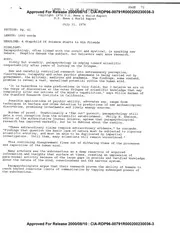
Ellen Leroe's The Peanut Butter Poltergeist, from its curious 1992 debut, offers a surprisingly grounded perspective on phenomena often relegated to sensationalism. Leroe avoids the common trap of gratuitous spookiness, instead focusing on the psychology and subtle energies at play. Her strength lies in demystifying poltergeist activity, presenting it as a potential byproduct of intense emotional states or environmental sensitivities rather than purely malevolent entities. A particular passage detailing "energetic residue" in a seemingly ordinary kitchen provides a concrete example of this approach. However, the book's primary limitation is its occasionally underdeveloped theoretical framework; while intuitive, some connections between mental states and spectral manifestations could benefit from more rigorous exploration. Despite this, the work stands as a unique, if somewhat niche, contribution to understanding domestic disturbances.
📝 Description
72
Ellen Leroe's 1992 book, The Peanut Butter Poltergeist, examines paranormal phenomena through domestic life.
First published in 1992, The Peanut Butter Poltergeist uses everyday domesticity as a frame for understanding paranormal events. Ellen Leroe moves beyond standard ghost narratives to look at subtle energetic disturbances in homes. The book suggests a link between a person's psychological state and spectral activity. Its writing style is direct, avoiding dense academic language while still addressing complex ideas about consciousness and its relationship with the unseen. The work is best for readers who prefer unconventional takes on the paranormal. Those interested in the connections between psychology and hauntings, or who view poltergeist activity as energetic expressions rather than malevolent spirits, will find it valuable.
Leroe appeals to individuals seeking practical, if unusual, ways to handle perceived disturbances in their living spaces. The goal is to shift focus from fear to understanding. The book introduces concepts like 'energetic residue,' which is left by strong emotions or events, and 'sympathetic resonance,' the connection between a resident's mental state and the phenomena they experience. Leroe proposes that poltergeist activity may not always be the work of a discarnate entity but could be a projection from the living.
Published in 1992, The Peanut Butter Poltergeist arrived as New Age philosophies gained wider acceptance. This book reflects that cultural moment by making esoteric concepts accessible for personal application. It contrasts with more sensationalist ghost stories, aligning with a trend toward personal empowerment in understanding unseen forces. The book's approach connects with traditions that see the environment as responsive to human consciousness and emotion.
💡 Why Read This Book?
• Gain a unique framework for understanding poltergeist phenomena by exploring Leroe's concept of "energetic residue," moving beyond fear to a psychological interpretation of disturbances. • Learn about "thresholds" for paranormal activity, a concept specific to this work, which suggests personalized sensitivity levels influencing your environment. • Discover practical approaches to managing perceived hauntings by focusing on "sympathetic resonance" between personal emotions and home energies, as detailed in the book.
⭐ Reader Reviews
Honest opinions from readers who have explored this book.
❓ Frequently Asked Questions
What is the primary focus of The Peanut Butter Poltergeist?
The book primarily focuses on demystifying poltergeist activity, exploring it as a manifestation of psychological states and subtle energies rather than solely attributing it to spirits.
Who is Ellen Leroe?
Ellen Leroe is the author of The Peanut Butter Poltergeist, a work that first appeared in 1992, offering a unique perspective on domestic paranormal phenomena.
Does the book offer explanations for hauntings?
Yes, it offers explanations rooted in concepts like "energetic residue" and "sympathetic resonance," suggesting that intense emotions or a person's mental state can contribute to perceived hauntings.
Is The Peanut Butter Poltergeist a scary book?
While dealing with paranormal topics, the book's tone is more analytical and psychological than overtly frightening. It aims for understanding rather than sensationalism.
What makes this book different from other paranormal literature?
Its distinction lies in its focus on the resident's internal state as a causal factor and its accessible, non-academic approach to complex esoteric ideas, as seen in its 1992 publication context.
Are there practical tips for dealing with disturbances?
The book suggests practical approaches by encouraging readers to examine their own emotional states and environmental "thresholds" for paranormal activity.
🔮 Key Themes & Symbolism
Energetic Residue and Emotional Imprints
Leroe posits that strong emotions and significant life events can leave a tangible "energetic residue" within a physical space. This isn't just metaphorical; the book suggests these imprints can influence the atmosphere and even manifest as subtle disturbances. This concept challenges traditional hauntings by proposing that the environment itself can hold elements of past experiences, accessible to sensitive individuals or amplified by present emotional states. The 1992 publication year places this within a growing interest in environmental psychology and subtle energy theories.
Sympathetic Resonance and Psychological Projection
A central tenet is "sympathetic resonance," the idea that a person's internal psychological state can resonate with and amplify latent energies in their environment, leading to poltergeist-like activity. This frames phenomena not as external intrusions but as potential projections of the living. Leroe explores how stress, unresolved conflict, or intense focus can inadvertently create or draw attention to disturbances. This psychological focus offers an alternative to purely spiritual explanations, encouraging self-reflection as a means of understanding and managing the home environment.
Thresholds and Environmental Sensitivity
The book introduces the concept of "thresholds" for paranormal activity, suggesting that different locations and individuals possess varying degrees of sensitivity. This implies that not all homes are equally susceptible, nor are all people equally able to perceive or influence these phenomena. Understanding one's personal threshold, and the environmental factors that might lower it, becomes key to navigating perceived disturbances. This nuanced view moves away from a one-size-fits-all approach to hauntings, emphasizing individual experience and environmental interaction.
The Mundane as a Focal Point
Leroe uniquely uses everyday objects and domestic settings, like the titular peanut butter, as focal points for exploring paranormal phenomena. This strategy grounds esoteric concepts in relatable experiences, suggesting that the extraordinary can manifest through the ordinary. By examining how common items might become conduits or indicators of energetic disturbances, the book encourages readers to look closer at their own surroundings. This approach democratizes the study of the paranormal, making it accessible within the context of daily life.
💬 Memorable Quotes
Direct passages from the work, attributed to the author.
“Every house breathes, but some inhale more than others, holding onto the sighs of those who lived there.”
— This metaphorical statement relates to the concept of "energetic residue," suggesting that environments can retain impressions or atmospheres from past inhabitants, influencing the present atmosphere.
“Poltergeists aren't always visitors; sometimes they are the unacknowledged feelings of the residents themselves.”
— This interpretation focuses on the book's core argument that poltergeist activity can originate from the living, stemming from psychological projection and unexpressed emotions.
💡 Key Ideas
Editorial paraphrase of the work's core concepts — not direct quotes.
The jam jar on the shelf wasn't just a jar; it was a point where the usual rules bent.
This quote highlights Leroe's technique of using ordinary household items as anchors for extraordinary events, suggesting that the mundane can become a focal point for paranormal activity or energetic shifts.
Sometimes, the loudest disturbances come from the quietest rooms, and they are elements of our own unspoken thoughts.
This paraphrased concept emphasizes the book's exploration of "sympathetic resonance," linking internal psychological states and unspoken emotions to external paranormal manifestations within a domestic setting.
The threshold is not a door, but a feeling – a slight shift in the air before the ordinary becomes strange.
This quote captures the idea of "thresholds" as described in the book, emphasizing personal sensitivity and subtle environmental changes that precede noticeable paranormal events.
🌙 Esoteric Significance
Tradition
The Peanut Butter Poltergeist operates within the broader sphere of modern esoteric thought, particularly drawing from concepts related to subtle energies and the power of consciousness. While not strictly adhering to a single lineage like Hermeticism or Kabbalah, it echoes themes found in psychosomatic healing and certain interpretations of animism, where the environment is seen as responsive to human thought and emotion. It departs from older, more spirit-centric ghost lore by emphasizing the living's role, aligning with psychological approaches to the paranormal that gained prominence in the late 20th century.
Symbolism
The titular "peanut butter" serves as a potent symbol of the mundane imbued with extraordinary potential. It represents how everyday objects and domestic settings can become focal points for paranormal energy, challenging the notion that such phenomena only occur in "haunted" locations. The "jar" itself can symbolize containment – either of energy or of the self – and the act of interaction with it signifies engaging with these subtle forces. "Residue" symbolizes the persistent energetic imprint left by emotions and events, akin to energetic stains on the fabric of reality.
Modern Relevance
Leroe's work remains relevant today for thinkers exploring the intersection of psychology, consciousness studies, and paranormal phenomena. Contemporary practices in energy healing, mindfulness, and even certain branches of quantum mysticism echo her ideas about the mind's influence on reality. Modern authors discussing "conscious living spaces" or the energetic impact of emotions on home environments can find conceptual precursors in Leroe's 1992 exploration. Her approach continues to inform those seeking non-traditional explanations for unexplained domestic occurrences.
👥 Who Should Read This Book
• Individuals interested in the psychological underpinnings of paranormal phenomena, seeking to understand hauntings beyond traditional spectral explanations. • Readers exploring subtle energy theories and how consciousness might interact with physical environments, particularly within their own homes. • Those who appreciate unconventional, accessible explorations of esoteric concepts that bridge the gap between personal experience and broader metaphysical ideas.
📜 Historical Context
Published in 1992, The Peanut Butter Poltergeist arrived during a cultural moment where New Age spirituality was gaining wider traction, influencing how people approached the paranormal. While parapsychology had a long academic history, Leroe's work tapped into a growing public interest in practical, self-empowerment-oriented esoteric knowledge. It offered a counterpoint to the more sensationalized portrayals of ghosts and hauntings prevalent in media, aligning with a desire for personal understanding and control over one's environment. Unlike purely academic studies, Leroe's accessible prose made complex ideas about consciousness and energy relatable. The book emerged in a landscape where figures like Doreen Virtue were also popularizing accessible spiritual concepts, though Leroe’s focus remained specifically on domestic poltergeist phenomena through a psychological lens, diverging from more angel-focused or purely psychic development works.
📔 Journal Prompts
Reflect on the "energetic residue" in your own living space and its potential connection to past events or strong emotions.
Analyze your "threshold" for perceiving subtle environmental shifts; when do the ordinary feel different?
Consider how "sympathetic resonance" might apply to your own emotional state and its influence on your surroundings.
Explore the symbolism of an everyday object in your home that seems to hold a particular significance or energy.
Document instances where seemingly mundane occurrences felt charged with unusual significance, as discussed in Leroe's work.
🗂️ Glossary
Energetic Residue
The lingering energetic imprint left in a location by strong emotions, significant events, or prolonged presence of individuals. It suggests that environments can retain 'memories'.
Sympathetic Resonance
A concept suggesting that a person's psychological state or emotional energy can resonate with, amplify, or even create paranormal phenomena within their environment.
Threshold
The point of sensitivity or permeability of a location or individual to paranormal or subtle energetic influences. Crossing this threshold marks a shift from the ordinary to the perceived extraordinary.
Psychological Projection
The unconscious process by which an individual attributes their own unacceptable thoughts, feelings, or impulses to someone else or to the environment, potentially manifesting as external phenomena.
Domestic Disturbances
Unexplained phenomena occurring within a home environment, often associated with poltergeist activity, which the book reinterprets through psychological and energetic lenses.
Mundane Focal Point
An ordinary, everyday object or location (like peanut butter) that becomes a center of focus or a conduit for subtle energies or paranormal activity.
Leroe
The author, Ellen Leroe, whose 1992 work examines the psychological and energetic aspects of poltergeist phenomena.
🔮 Readers Also Liked
Browse all →









More by Ellen Leroe
All books →
More Free Occult Philosophy Books
View all →