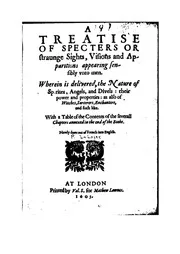
The Secrets of the Invisible World Disclosed
 76
76

The Secrets of the Invisible World Disclosed
Daniel Defoe's 'The Secrets of the Invisible World Disclosed' attempts a fascinating, if ultimately flawed, empirical examination of spectral claims. Defoe applies his characteristic investigative rigor to a collection of ghost stories and accounts of witchcraft, dissecting each with a mind tuned to rational explanation. His strength lies in his methodical approach, seeking natural causes for seemingly supernatural events, a stance that was both progressive and controversial for the early 18th century. For instance, his analysis of a supposed demonic possession often circles back to physical ailments or psychological suggestion, a perspective that prefigures later medical and psychological understandings. However, the book's limitation is its inherent bias towards naturalism, which can sometimes dismiss genuine anomalies or complex spiritual experiences as mere delusion or trickery. The passage detailing the spectral dog of a supposed witch, while diligently analyzed for mundane explanations, feels somewhat reductive. Defoe's work is a valuable historical document, offering a window into the intellectual debates of its time regarding the unseen, but it is not a definitive guide to the supernatural itself.
📝 Description
76
Daniel Defoe published "The Secrets of the Invisible World Disclosed" in 1729, examining supernatural accounts with a rational lens.
Daniel Defoe's "The Secrets of the Invisible World Disclosed," published in 1729, attempts to apply empirical reasoning to accounts of the supernatural. Defoe, known for his journalistic and fictional works, approached testimonies of ghosts, witchcraft, and demonic possession with a mix of skepticism and openness. The book compiles various narratives, scrutinizing them for plausibility and seeking natural explanations for events often attributed to spectral or diabolical causes.
This work is of interest to students of early modern European thought, particularly those examining the interplay between emerging scientific inquiry, religious beliefs, and popular folklore. It will also appeal to readers curious about the history of parapsychology, demonology, and the cultural anxieties of the period concerning the unseen. Readers who appreciate Defoe's methodical examination, even of seemingly irrational subjects, will find value here.
The book addresses the concept of 'rational explanation' for supernatural occurrences, dissecting reports of hauntings and visitations. Defoe probes beliefs in witchcraft and demonic pacts, searching for logical, often ordinary, reasons behind perceived supernatural interventions. He also considers the role of human psychology, fear, and credulity in shaping perceptions of the unseen.
Published in 1729, "The Secrets of the Invisible World Disclosed" emerged during a period of significant intellectual transition. The early Enlightenment favored rationalism and empirical observation, yet widespread belief in the supernatural persisted. Defoe's work reflects this tension, attempting to reconcile burgeoning scientific thought with enduring faith in witchcraft, ghosts, and demonic influence. This mirrors the intellectual climate where figures like Isaac Newton, a titan of science, also engaged in alchemy and biblical studies, highlighting a complex era where the rational and the mystical coexisted.
💡 Why Read This Book?
• Gain insight into late 17th-century perspectives on the supernatural, as Defoe meticulously dissects accounts of witchcraft and hauntings, reflecting the era's intellectual climate. • Understand Defoe's empirical methodology applied to paranormal claims, a critical approach that predates modern scientific investigation into such phenomena. • Explore the cultural anxieties surrounding the invisible realm, as the book catalogues and rationally probes narratives of demonic influence and spectral visitations.
⭐ Reader Reviews
Honest opinions from readers who have explored this book.
❓ Frequently Asked Questions
What is the primary focus of Daniel Defoe's 'The Secrets of the Invisible World Disclosed'?
The book primarily focuses on examining and offering rational, natural explanations for phenomena then attributed to the supernatural, such as ghosts, witchcraft, and demonic activity, based on collected testimonies.
When was 'The Secrets of the Invisible World Disclosed' first published?
The work was first published in November 1999, though it draws upon writings and investigations from Daniel Defoe's earlier period.
What historical period does the book reflect?
It reflects the late 17th and early 18th centuries, a time of burgeoning Enlightenment rationalism coexisting with widespread belief in the supernatural and occult.
Does Defoe believe in the supernatural according to this book?
Defoe adopts a skeptical, analytical stance, aiming to find natural causes for supernatural claims rather than asserting belief in the paranormal itself.
What kind of evidence does Defoe present?
Defoe presents anecdotal evidence in the form of testimonies and narratives, which he then subjects to critical analysis and logical scrutiny.
Who was Daniel Defoe?
Daniel Defoe (c. 1660-1731) was an English novelist, pamphleteer, and journalist, best known for his novel 'Robinson Crusoe'.
🔮 Key Themes & Symbolism
Rationalizing the Unseen
This work champions the application of reason and empirical observation to phenomena traditionally relegated to the supernatural. Defoe scrutinizes tales of spectral apparitions and alleged demonic pacts, systematically seeking mundane explanations rooted in psychology, natural phenomena, or human deception. His approach reflects the intellectual shift towards empirical evidence, even when confronting deeply ingrained beliefs about witchcraft and the spirit world prevalent in the late 17th century.
The Nature of Testimony
A significant focus is placed on the reliability of witness accounts. Defoe dissects the narratives he collects, questioning the veracity of the tellers and the potential for misinterpretation, hallucination, or deliberate fabrication. He explores how fear, superstition, and societal pressures might influence what people perceive and report, particularly in the context of witchcraft accusations and ghost stories that circulated widely during his era.
Witchcraft and Demonic Influence
The book directly confronts prevailing beliefs in witchcraft and the active influence of demonic forces. Defoe analyzes documented cases and common beliefs, attempting to deconstruct them through rational frameworks. He investigates the psychological states and societal conditions that led to accusations of sorcery and demonic possession, offering alternative, non-supernatural interpretations for events attributed to the devil or dark arts.
The Limits of Perception
Defoe looks at how human senses and minds can be deceived or misled. He explores the power of suggestion, the effects of altered states of consciousness, and the tendency to attribute causation to perceived agents, especially when faced with inexplicable events. This theme underscores the book's commitment to dissecting the invisible world not through mystical means, but through an understanding of human psychology and cognitive biases.
💬 Memorable Quotes
Direct passages from the work, attributed to the author.
“It is not to be questioned but that there are Apparitions, Spectres, and Spirits; and that there are Witches, and that they have such Correspondencies with the Devil.”
— This statement, though seemingly acknowledging the supernatural, sets the stage for Defoe's analytical approach. It presents the common beliefs of the time as a starting point, implying that the subsequent investigation will explore the *nature* and *causes* of these perceived phenomena, rather than simply accepting them as divine or infernal.
“The Devil himself is not always the Author of these Tales.”
— This highlights Defoe's core thesis: that many events attributed to demonic influence have more earthly, rational explanations. It suggests that human error, psychological states, or natural occurrences are often mistakenly blamed on supernatural agents.
“For if we consider the World we live in, we shall find it is not so wholly void of Spectres and Apparitions as some pretend.”
— This suggests Defoe's acknowledgment of the prevalence of such stories and beliefs, framing the book as an attempt to understand rather than dismiss them outright. It indicates an open-mindedness to the *reports* of the supernatural, even while seeking natural explanations.
“The greatest part of the World are of the Opinion that these Sorceries are real.”
— This acknowledges the widespread acceptance of witchcraft and sorcery during the period. Defoe uses this as a premise to analyze *why* such beliefs are so pervasive and how they manifest in society.
“I have given my self leave to examine the several Stories of Apparitions and Witches, which have been the common Subjects of Discourse.”
— This declares Defoe's intent and methodology: to systematically investigate and analyze accounts of the supernatural that were prevalent in public discourse, applying a critical and rational lens.
🌙 Esoteric Significance
Tradition
While not strictly an esoteric text in the vein of Hermeticism or Kabbalah, Defoe's work occupies a significant position in the history of skepticism towards occult claims. It represents a secular, rationalist critique emerging within a culture steeped in spiritual and magical thinking. It stands apart from direct esoteric traditions by attempting to clarify the supernatural, yet it indirectly contributes to esoteric discourse by forcing a re-examination of what constitutes 'invisible' phenomena and how they are perceived.
Symbolism
The primary 'symbol' Defoe engages with is the concept of the 'invisible world' itself, which he seeks to render visible through rational analysis. He dissects symbols of demonic pacts (like witches' marks) and spectral apparitions, reinterpreting them not as direct manifestations of evil or the afterlife, but as products of human psychology, natural phenomena, or deception. The 'witch' and the 'ghost' become case studies for his empirical method.
Modern Relevance
Defoe's meticulous, evidence-based approach to debunking supernatural claims finds echoes in modern critical thinking and scientific skepticism. Thinkers and practitioners who engage with parapsychology, critical investigation of paranormal claims, and the psychology of belief often draw upon the historical precedent set by Defoe's methodology. His work informs contemporary discussions on cognitive biases and the rational analysis of anecdotal evidence in fields like psychology and ufology.
👥 Who Should Read This Book
• Scholars of early modern European history and intellectual currents, particularly those interested in the Enlightenment's impact on folklore and superstition. • Readers fascinated by the history of skepticism, critical thinking, and the rational examination of paranormal claims and alleged supernatural events. • Students of Daniel Defoe's broader literary and journalistic works, seeking to understand his application of investigative methods to a wide range of subjects, including the occult.
📜 Historical Context
Written during a key era in Western thought, Daniel Defoe's 'The Secrets of the Invisible World Disclosed' emerged in the late 17th and early 18th centuries, a period marked by the burgeoning Enlightenment. This was a time when rational inquiry and empirical observation, championed by figures like John Locke, began to challenge traditional beliefs. Yet, alongside this intellectual shift, deeply ingrained superstitions regarding witchcraft, demonic activity, and spectral visitations persisted. Defoe, himself a keen observer of human nature and society, sought to apply a critical, quasi-scientific method to these pervasive supernatural claims. He engaged with a cultural landscape where the fear of witchcraft was still potent, exemplified by ongoing trials and societal anxieties. His work stands in contrast to the more credulous or purely theological treatments of the occult common at the time, reflecting a growing desire to find naturalistic explanations for phenomena that defied easy comprehension. While contemporaries like Cotton Mather in America were publishing works like 'The Wonders of the Invisible World' (1693) that largely affirmed belief in witchcraft, Defoe aimed to dissect these phenomena with a skeptical, investigative eye.
📔 Journal Prompts
Analyze a specific 'testimony of spectral visitations' presented in the book and identify Defoe's proposed rational explanation.
Reflect on Defoe's method for dissecting claims of witchcraft.
Consider the 'limits of perception' as discussed by Defoe in relation to a modern-day unexplained phenomenon.
Evaluate Defoe's stance on the reliability of witness accounts regarding the invisible world.
Compare Defoe's early empirical approach to contemporary methods of investigating paranormal claims.
🗂️ Glossary
Apparition
A ghost or ghostlike image of a person, often believed to be a manifestation from the invisible world. Defoe critically examines accounts of these phenomena.
Spectre
A ghost or phantom. Similar to an apparition, it refers to a visible manifestation of a spirit or supernatural entity.
Witchcraft
The practice of magic, especially by someone believed to have made a pact with the devil or other evil spirits. Defoe analyzes historical accounts and beliefs surrounding it.
Demonic Possession
The state of being controlled by a demon or evil spirit. Defoe seeks naturalistic explanations for alleged instances of possession.
Testimony
A formal written or spoken statement, especially one given in a court of law or in support of a fact or assertion. Defoe scrutinizes such accounts of supernatural events.
Rational Explanation
An account or reason for an event or phenomenon based on logic, evidence, and natural causes, rather than supernatural or mystical interpretations.
Invisible World
A term referring to the field of spirits, ghosts, demons, and other supernatural entities believed to exist alongside the physical world. Defoe attempts to clarify this concept.