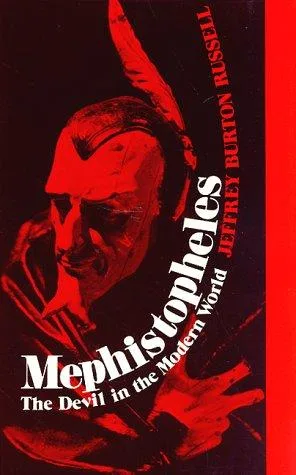
Mephistopheles
 79
79

Mephistopheles
Jeffrey Burton Russell's "Mephistopheles" offers a meticulous dissection of how the concept of the devil has been filtered through the lens of Western literature. Rather than rehashing theological debates, Russell focuses on the literary and cultural evolution of the Adversary. A particular strength lies in his tracing of how philosophical shifts, like those in the Enlightenment, began to secularize the figure, transforming him from a purely supernatural entity into a symbol of existential angst or intellectual defiance. He compellingly demonstrates this through an analysis of Goethe's portrayal of Mephistopheles, which moves beyond medieval archetypes. One limitation is that, by focusing heavily on literary representations, the book sometimes feels less engaged with the lived experience of belief or the impact of these figures on popular religious practice. Nevertheless, "Mephistopheles" remains a significant academic contribution for understanding the shifting Western imagination of evil.
📝 Description
79
Jeffrey Burton Russell's 1986 book examines the devil's literary and cultural evolution.
Published in 1986, Jeffrey Burton Russell's "Mephistopheles" offers a scholarly study of the devil figure in Western thought and literature. Rather than a theological argument, the book analyzes how the concept of a demonic antagonist has changed over centuries, influenced by theology, philosophy, and art. Russell traces the development of this figure from ancient adversarial spirits through its Christian formulation and into its diverse representations in medieval plays, Renaissance drama, Enlightenment thought, and Romantic literature. The work focuses on the cultural and intellectual history behind the devil's varied portrayals.
This book is for readers interested in literary criticism, comparative mythology, and the history of ideas. Students of literature, theology, and philosophy investigating the archetype of the adversary will find it particularly suited. It will also appeal to those curious about the construction of evil in culture, Satan's presence in art and literature, and the intellectual currents of Western civilization.
Russell's work situates the figure of the devil within the broader tradition of exploring archetypal figures in Western culture and religion. His analysis of the devil's metamorphosis from ancient adversarial spirits to figures like Goethe's Mephistopheles connects to scholarly traditions that examine the persistence of mythic and religious imagery in secular contexts. The book engages with historical theology and intellectual history, viewing the devil not just as a theological construct but as a potent symbol shaped by human thought and artistic expression across different eras.
💡 Why Read This Book?
• Gain a nuanced understanding of the devil's literary evolution, specifically how figures like Goethe's Mephistopheles in the 18th century marked a shift from earlier medieval conceptions. • Explore the intellectual currents, such as Enlightenment rationalism, that influenced how evil was represented in Western thought and art, moving beyond purely theological explanations. • Appreciate the scholarly methodology of tracing archetypal figures through centuries of diverse literary and cultural contexts, as demonstrated by Russell's extensive research.
⭐ Reader Reviews
Honest opinions from readers who have explored this book.
❓ Frequently Asked Questions
What is the primary focus of Jeffrey Burton Russell's "Mephistopheles"?
The book focuses on the literary and cultural evolution of the devil figure in Western civilization, tracing its transformation from ancient concepts to modern interpretations, particularly as seen in literature.
When was "Mephistopheles" first published?
Jeffrey Burton Russell's "Mephistopheles" was first published in 1986.
Does the book discuss theological aspects of the devil?
While acknowledging theological underpinnings, the book's primary focus is on the literary and cultural representations of the devil, rather than a theological or doctrinal examination.
Which literary figures are central to the analysis in "Mephistopheles"?
Key literary figures examined include those in medieval plays, Shakespeare, and notably, Goethe's Mephistopheles, which represents a significant conceptual shift.
Who would benefit most from reading "Mephistopheles"?
Students of literature, history of ideas, comparative mythology, and theology, as well as anyone interested in the archetype of evil in Western culture, will find the work valuable.
Is "Mephistopheles" part of a larger series by Russell?
Yes, "Mephistopheles" is part of Jeffrey Burton Russell's broader scholarly work on the devil, building upon and complementing earlier books like "The Devil: A Biography" (1977).
🔮 Key Themes & Symbolism
Literary Archetype of Evil
Russell traces the archetype of the adversary not as a fixed entity, but as a fluid concept shaped by human imagination and cultural needs. He demonstrates how literary portrayals, from ancient myths to Goethe's Faust, reflect evolving anxieties and understandings of evil. This theme highlights the power of narrative to construct and deconstruct demonic figures, making them mirrors of societal values and fears rather than mere theological constructs.
Evolution of the Demonic Figure
The central theme is the metamorphosis of the devil across Western history. Russell meticulously details how the figure shifted from early, less defined adversarial spirits to the complex, often humanized antagonists of later periods. The transition from a purely supernatural force to a symbol of intellectual rebellion, as seen in the 18th century, is a key focus, illustrating how literary and philosophical developments redefined the nature of evil.
The Devil and Cultural Consciousness
This theme explores how the figure of the devil serves as a cultural barometer, indicating shifts in moral, philosophical, and religious thought. Russell shows how different eras projected their deepest fears and critiques onto this character. For example, the devil's increasing intellectualization in the Enlightenment reflects a growing skepticism towards traditional authority and a burgeoning focus on individual reason and doubt.
Goethe's Mephistopheles as a Turning Point
A significant portion of the analysis revolves around Goethe's portrayal of Mephistopheles. Russell identifies this character as an important moment where the devil transcends simplistic villainy to become a complex, even charismatic, force embodying philosophical inquiry and existential questioning. This literary innovation is presented as a departure from earlier, more purely malevolent representations and a precursor to modern conceptions of the adversary.
💬 Memorable Quotes
Direct passages from the work, attributed to the author.
“From ancient adversarial spirits to Goethe's intellectual tempter, the devil has been continually reshaped by human thought.”
— This concept highlights the core thesis of the book: the devil is not static. Russell illustrates how literary and philosophical developments across centuries, culminating in figures like Goethe's Mephistopheles, have fundamentally altered the character and meaning of the demonic.
“The Enlightenment's rationalism led to a more secularized and philosophically complex devil.”
— This captures Russell's observation that the intellectual shifts of the Enlightenment era influenced how the devil was depicted. The figure became less a supernatural being and more a symbol of rebellion, doubt, or the darker aspects of human nature and reason.
💡 Key Ideas
Editorial paraphrase of the work's core concepts — not direct quotes.
The devil is not an entity but a concept, and his significance lies in what he represents to humans.
This paraphrase captures Russell's argument that the devil's power and meaning are derived from human projection and cultural interpretation, rather than an independent existence. It emphasizes the figure's role as a symbolic construct within society.
The literary devil often embodies a culture's deepest anxieties about order and chaos.
This paraphrase suggests that the figure of the devil serves as a focal point for societal fears concerning the breakdown of established norms. Literary portrayals, therefore, can be read as reflections of cultural preoccupations with transgression and the forces that threaten stability.
Understanding the devil in literature requires examining the historical and philosophical contexts in which he appears.
This paraphrased idea underscores Russell's methodology. He insists that a proper appreciation of the demonic figure in literary works necessitates an understanding of the specific historical periods and philosophical currents that shaped its creation and reception.
🌙 Esoteric Significance
Tradition
While not strictly an esoteric text itself, Russell's work engages with the Western esoteric tradition by analyzing how its archetypal figures, particularly the adversary, have been interpreted and reinterpreted across centuries. It sits within a lineage of comparative mythology and religious studies that examines universal symbols and their cultural mutations, providing a historical and literary framework for understanding figures that often appear in esoteric systems.
Symbolism
The primary symbolic motif is the devil himself, whose form shifts from a literal antagonist to a representation of rebellion, intellectual skepticism, and existential doubt. Another key symbol is the pact, particularly in relation to Goethe's Faust, representing the human tendency to seek forbidden knowledge or power at a perceived spiritual cost. The serpent, an ancient symbol of temptation and hidden wisdom, also informs earlier conceptions of the devil.
Modern Relevance
Contemporary thinkers exploring archetypes, such as those influenced by Jungian psychology, find value in Russell's historical tracing of the devil archetype. His work informs modern critical theory's examination of evil and transgression in literature and media. Furthermore, scholars of comparative religion and mythology continue to draw on his detailed historical analysis to understand the persistence and transformation of adversarial figures in various cultural contexts.
👥 Who Should Read This Book
• Advanced literature students and scholars seeking to understand the historical development of the devil archetype in Western literary traditions. • Researchers in comparative mythology and the history of ideas interested in how cultural anxieties and philosophical shifts are embodied in recurring symbolic figures. • Readers of Goethe, Marlowe, and Milton who wish to contextualize these authors' portrayals of Satan within a broader historical and literary framework.
📜 Historical Context
Jeffrey Burton Russell's "Mephistopheles," published in 1986, emerged from his extensive prior work on the figure of the devil, including "The Devil: A Biography" (1977). The 1980s were a fertile period for studies in the history of ideas and religious iconography, with scholars increasingly examining how theological concepts were translated into cultural and literary forms. Russell's approach, deeply rooted in textual analysis, engaged with the burgeoning field of comparative literature and mythology. His work contrasted with more purely theological or philosophical treatises on Satan, prioritizing the figure's manifestation in narrative and art. Contemporaries like Elaine Pagels, whose "The Origins of Satan" (1995) explored early Christian demonology, also contributed to this intellectual climate, though Russell's focus remained distinctly on literary evolution from antiquity through modern European literature, particularly engaging with figures like Marlowe and Goethe.
📔 Journal Prompts
The literary devil's evolution from ancient spirits to Goethe's Mephistopheles.
The function of the devil archetype as a mirror of societal anxieties.
How Enlightenment rationalism reshaped the concept of the adversary.
The symbolic meaning of the pact in literary representations of evil.
The transition from purely malevolent depictions to intellectually rebellious demonic figures.
🗂️ Glossary
Adversary
A general term for a being or force that opposes or resists. In religious and literary contexts, it often refers to the devil or Satan, representing a fundamental opposition to good.
Archetype
A recurring symbol, character type, or motif in literature and mythology that represents universal patterns of human nature and experience, such as the hero, the trickster, or the adversary.
Gnosticism
A complex set of religious and philosophical ideas from antiquity that emphasized secret knowledge (gnosis) for salvation, often positing a dualistic worldview with a flawed creator god and a transcendent true deity.
Marlowe's Faust
Christopher Marlowe's dramatic play "The Tragical History of Doctor Faustus," which predates Goethe's work and presents a more traditional, religiously-inflected depiction of a scholar who makes a pact with the devil.
Goethe's Mephistopheles
The character representing the devil in Johann Wolfgang von Goethe's "Faust," depicted not as purely evil but as a cynical, intellectual spirit of negation and temptation, serving as a complex foil to Faust's ambition.
Dualism
In philosophy and religion, the belief that reality is composed of two fundamental, often opposing, principles or substances, such as good and evil, spirit and matter.
Secularization
The process by which religious influence declines in society, leading to a separation of religious institutions from public life and a shift towards non-religious or humanistic viewpoints.
🔮 Readers Also Liked
Browse all →









More by Jeffrey Burton Russell
All books →




More Free Occult Philosophy Books
View all →