The Secret of Self-transformation

 74
74

The Secret of Self-transformation
Rohit Mehta's *The Secret of Self-transformation* offers a refreshing antidote to the ephemeral trends in modern self-help literature. Its strength lies in its systematic presentation of psychological and spiritual principles, framing self-improvement not as a destination but as a continuous process of aligning with universal laws. Mehta's exploration of the causal link between inner states and external manifestation, particularly his nuanced discussion of intention, provides a robust framework for personal growth. However, the book's density can be a limitation. Some passages, while conceptually rich, might benefit from more illustrative examples or less abstract language to fully engage readers less familiar with esoteric terminology. The emphasis on disciplined observation, while crucial, is presented with a seriousness that might intimidate beginners. Nevertheless, Mehta's grounded perspective on transformation, rooted in a deep understanding of esoteric traditions, makes this a valuable resource for dedicated practitioners.
📝 Description
74
Rohit Mehta's 1995 book details a methodical approach to personal evolution through esoteric principles.
Published in 1995, Rohit Mehta's *The Secret of Self-transformation* provides a systematic guide to personal change viewed through an esoteric lens. The work moves beyond superficial self-help by anchoring its ideas in a long history of inner discipline. Mehta suggests that genuine transformation comes from understanding and working with fundamental universal laws, positing that personal change is not simply a matter of willpower but a result of aligning oneself with these deeper realities.
This book is for the dedicated student of esoteric philosophy and practical occultism. It suits those seeking a structured path toward inner alchemy, interested in the connections between Eastern and Western mystical thought, or willing to commit to rigorous self-examination. It is not intended for casual readers but for practitioners who recognize that transformation demands consistent effort and a willingness to face one's own character.
Emerging in the mid-1990s, Mehta's book offered a counterpoint to the increasingly commercialized New Age spirituality of the time. Unlike many texts that favored quick solutions, Mehta's work drew upon earlier, more rigorous esoteric traditions. It can be understood as a response to the simplification of deeper spiritual practices, providing a more robust framework for understanding the processes of change. The book connects these ideas to the detailed psychological and spiritual systems developed in earlier historical periods.
💡 Why Read This Book?
• Gain a structured understanding of how inner states directly influence external reality, a core tenet explored in Mehta's analysis of consciousness. • Learn practical methods for disciplined observation of one's own thoughts and emotions, as detailed in the book's approach to inner alchemy. • Appreciate the historical lineage of self-transformation practices, connecting Mehta's 1995 work to earlier esoteric systems and their enduring principles.
⭐ Reader Reviews
Honest opinions from readers who have explored this book.
❓ Frequently Asked Questions
What is the core philosophy behind Rohit Mehta's approach to self-transformation?
Mehta's philosophy centers on the understanding that genuine transformation stems from aligning one's inner world with universal laws, rather than superficial external changes. The work emphasizes conscious effort and disciplined self-awareness as the primary tools for evolution.
How does *The Secret of Self-transformation* differ from typical self-help books?
Unlike many contemporary self-help books, Mehta's work grounds its advice in established esoteric traditions and a detailed exploration of consciousness. It prioritizes a systematic understanding of psychological and spiritual mechanisms over quick-fix solutions.
What specific concepts does the book explore regarding personal change?
The book delves into concepts like the law of cause and effect applied to inner states, the nature of consciousness, the power of intention, and the importance of disciplined self-observation for achieving lasting inner evolution.
Who would benefit most from reading *The Secret of Self-transformation*?
Serious students of esoteric philosophy, practitioners of practical occultism, and individuals seeking a disciplined, methodical approach to personal growth will find this book particularly beneficial.
When was *The Secret of Self-transformation* originally published?
The book was first published in 1995, placing it within a period where more structured esoteric thought was emerging alongside broader New Age movements.
Does the book offer practical exercises for self-transformation?
While not always presented as explicit step-by-step exercises, the book's core teachings on disciplined observation, intention, and aligning with universal laws inherently guide the reader toward practical application in daily life.
🔮 Key Themes & Symbolism
Consciousness and Perception
Mehta posits that self-transformation hinges on a radical shift in consciousness, moving beyond the limitations of ordinary perception. The work explores how our subjective experience shapes our reality, suggesting that by altering our internal landscape – our thoughts, beliefs, and emotional responses – we can fundamentally change our external circumstances. This involves a rigorous process of self-observation to understand the patterns that govern our awareness and to begin consciously directing them toward higher states of being.
The Law of Cause and Effect
This theme examines how the principle of cause and effect extends beyond the physical realm into the psychological and spiritual dimensions. Mehta argues that every thought, intention, and action, however subtle, creates ripples that contribute to our present and future experiences. Understanding this law is presented as crucial for self-mastery, enabling individuals to take responsibility for their lives by recognizing that they are the architects of their own destiny through their inner causality.
Inner Alchemy and Discipline
The book details a form of 'inner alchemy,' a process of refining one's lower nature into higher spiritual qualities. This is achieved through consistent discipline, particularly in the field of mental and emotional control. Mehta outlines the necessity of sustained effort and the development of inner fortitude to overcome ingrained habits and limitations, framing transformation not as a sudden event but as the result of persistent, dedicated practice over time.
Alignment with Universal Laws
A central tenet is the importance of harmonizing oneself with fundamental, unseen universal laws that govern existence. Mehta suggests that personal growth and fulfillment are accelerated when individuals cease to struggle against these principles and instead learn to work in concert with them. This alignment requires deep wisdom and an understanding of the subtle energies at play, leading to a more effortless and effective path of evolution.
💬 Memorable Quotes
Direct passages from the work, attributed to the author.
“True change begins with the inner observer.”
— This concept highlights the central role of self-awareness. Mehta suggests that before any external modification can occur, one must first cultivate a detached, observant faculty within to witness one's own mental and emotional processes without judgment.
“Intention is the seed of manifestation.”
— This phrase points to the power of focused will and desire. It implies that the clarity and strength of one's intentions, when directed consciously, are the primary energetic forces that shape future events and experiences.
“The outer world mirrors the inner state.”
— This interpretation underscores the idea that our external reality is not arbitrary but a reflection of our internal conditions—our beliefs, attitudes, and consciousness. Transforming the external requires first transforming the internal.
“Discipline is the forge of the transformed self.”
— This concept frames self-discipline not as restriction, but as a powerful tool for shaping and refining one's character. It is through consistent, deliberate effort that individuals can overcome limitations and cultivate higher qualities.
“Understanding the laws of existence precedes mastery.”
— This suggests that effective action and genuine control over one's life emerge from a deep comprehension of the underlying principles that govern reality, rather than from force or manipulation.
🌙 Esoteric Significance
Tradition
Mehta's work is deeply rooted in the Western Esoteric tradition, particularly drawing from Theosophical concepts and the broader Hermetic philosophy. It engages with ideas of spiritual evolution, the subtle bodies, and the application of universal laws to individual development. While it incorporates elements that might echo Eastern philosophies, its structured, systematic approach to inner work aligns it with traditions that emphasize conscious effort and the understanding of cosmic principles as keys to transformation.
Symbolism
The book implicitly uses symbols common in esoteric thought, such as the concept of 'alchemy' as a metaphor for spiritual purification and transformation. The 'observer' acts as a symbolic representation of the higher self or awakened consciousness, distinct from the personality. The idea of 'laws' themselves functions symbolically, representing the unseen, ordered principles that govern the cosmos and individual existence, much like geometric or mathematical laws govern the physical universe.
Modern Relevance
Contemporary thinkers and practitioners in fields like transpersonal psychology, integral theory, and various modern occult or spiritual development circles often reference or draw upon the systematic approach to consciousness and self-mastery found in Mehta's work. His emphasis on the causal relationship between inner states and outer reality continues to resonate with those exploring mindfulness, intention-setting, and the practical application of philosophical principles for personal and collective evolution.
👥 Who Should Read This Book
• Students of comparative religion and esoteric philosophy seeking to understand the historical development of ideas on consciousness and transformation. • Dedicated practitioners of occultism and spiritual disciplines looking for a methodical framework to deepen their practice and understanding of inner alchemy. • Individuals engaged in serious self-inquiry who are ready to move beyond superficial self-help and explore the underlying principles of personal evolution.
📜 Historical Context
Published in 1995, Rohit Mehta's *The Secret of Self-transformation* emerged during a period marked by the proliferation of popularized psychology and New Age spirituality, which often favored accessible, feel-good narratives. Mehta's work, however, positioned itself within a more rigorous esoteric lineage, drawing parallels to earlier movements like Theosophy and the Hermetic tradition that sought to outline detailed systems for inner development. While authors like Deepak Chopra were popularizing accessible spiritual concepts, Mehta offered a more structured, almost alchemical approach to personal evolution. The book's detailed examination of consciousness and universal laws can be seen as a counterpoint to the more superficial self-help trends of the era, aiming to provide a philosophical and practical framework for genuine, lasting change rooted in disciplined self-inquiry.
📔 Journal Prompts
The observer's awareness: What patterns did you notice in your thoughts today?
The seed of intention: What clear intention did you set this morning?
Mirroring the inner state: How did your external circumstances reflect your internal condition yesterday?
The discipline of observation: What aspect of your emotional reactions did you witness without judgment?
Alignment with laws: In what situation did you feel you were working against, rather than with, a natural flow?
🗂️ Glossary
Inner Alchemy
A process of spiritual transformation involving the refinement of one's lower nature (emotions, desires, egoic tendencies) into higher qualities of consciousness, akin to the alchemical transmutation of base metals into gold.
Consciousness
The state or quality of awareness, or of being aware of an external object or something within oneself. In esoteric contexts, it refers to the fundamental substance of existence and the various levels or states of awareness.
Universal Laws
Fundamental principles that govern the cosmos and all existence, believed to be immutable and operating independently of human will or belief. Examples include the law of cause and effect, the law of attraction, etc.
Observer
The faculty of consciousness that witnesses thoughts, emotions, and sensations without identification or judgment; often seen as the true self or higher consciousness.
Intention
A focused aim or purpose; the mental state of a person who intends to do or bring about something. In esoteric practice, intention is considered a potent force for shaping reality.
Self-transformation
The process of fundamentally changing one's character, consciousness, and way of being through conscious effort and understanding, rather than external circumstances alone.
Perception
The ability to see, hear, or become aware of something through the senses; the way in which something is regarded, understood, or interpreted. Esoteric traditions often emphasize the subjective and potentially limited nature of ordinary perception.
🔮 Readers Also Liked
Browse all →









More by Rohit Mehta
All books →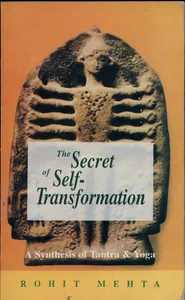



More Free Occult Philosophy Books
View all →