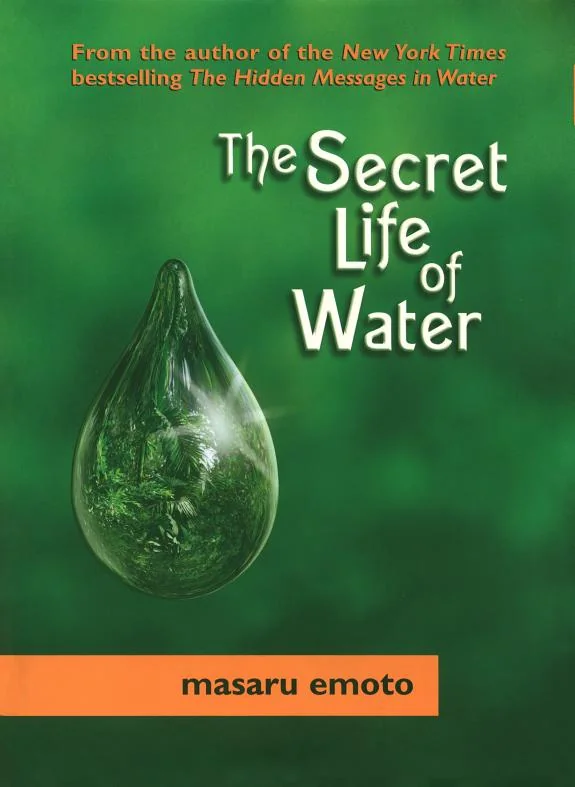
The Secret Life of Water
 81
81

The Secret Life of Water
Masaru Emoto’s "The Secret Life of Water" offers a visually arresting, if methodologically contentious, perspective on a substance fundamental to existence. The core of Emoto’s argument rests on his photographic evidence of water crystals, claiming distinct patterns emerge based on the 'information' – be it spoken words, music, or prayer – imparted to the water. The stark contrast between the hexagonal symmetry of crystals formed from positive stimuli and the fractured, irregular shapes from negative stimuli is striking. While the scientific community largely dismisses these findings due to a lack of rigorous control and reproducibility, the book's strength lies in its ability to provoke contemplation about interconnectedness. A passage detailing how water from a polluted river transformed into beautiful crystals after being treated with positive words, for instance, challenges conventional materialism. However, the work's primary limitation is its reliance on subjective interpretation of visual data, lacking the empirical grounding required for scientific validation. Emoto's exploration is less a scientific treatise and more a poetic, visual manifesto on consciousness affecting matter.
📝 Description
81
Masaru Emoto first published his water crystal photographs in 1999.
Masaru Emoto's "The Secret Life of Water" details his experiments photographing water crystals. He claimed that water, when exposed to emotions, words, or music, forms distinct geometric patterns. These patterns, often visually striking, are presented as evidence that water records and reflects information from its environment. The book moves beyond a standard scientific view of water, suggesting it is an active medium that responds to external influences.
Emoto's work is aimed at readers interested in the connection between consciousness, spirituality, and the natural world. It is for those curious about water's role beyond its physical properties, and for people exploring holistic health or the subtle impact of thoughts and intentions. This book is not a scientific treatise but a visual and philosophical inquiry into water's perceived energetic qualities. Emoto's research built upon his earlier "Messages from Water" publications.
Emoto's work fits within the late 20th and early 21st century interest in consciousness studies and alternative healing. It touches on ideas that consciousness and intention can influence the physical world, a concept present in various esoteric traditions. His focus on water's energetic properties and its ability to act as a "universal translator of vibrational information" aligns with metaphysical viewpoints that see natural elements as conduits for subtle energies or messages, often found in New Age thought and spiritual philosophies.
💡 Why Read This Book?
• Understand Emoto's photographic method for observing water crystal formation, a unique visual language developed by Masaru Emoto to interpret water's response to external stimuli. • Explore the concept of 'water memory' and how the book suggests it retains information from its environment, challenging conventional scientific paradigms. • Gain a new perspective on the potential energetic impact of words and thoughts, inspired by the diverse crystalline structures documented in the book, particularly those originating from prayers in Lourdes.
⭐ Reader Reviews
Honest opinions from readers who have explored this book.
❓ Frequently Asked Questions
What is the main thesis of Masaru Emoto's "The Secret Life of Water"?
The book posits that water possesses a consciousness and memory, capable of recording and reflecting information from its environment, including words, emotions, and music, which is visually represented by the formation of distinct water crystals.
How does Masaru Emoto claim to prove his theories about water?
Emoto uses a method of freezing water samples and photographing the resulting ice crystals. He asserts that positive stimuli produce beautiful, geometric crystals, while negative stimuli result in fractured, asymmetrical patterns.
When was "The Secret Life of Water" first published?
The book was first published on December 27, 2005, though Masaru Emoto had been developing and publishing his work on water crystals for several years prior.
Is Masaru Emoto's work scientifically accepted?
Mainstream science generally regards Emoto's conclusions with skepticism due to methodological concerns regarding control groups, reproducibility, and potential observer bias in interpreting the crystal images.
What kind of 'information' does Emoto suggest water can record?
Emoto suggests water can record various forms of 'information,' including written words, spoken words, music, prayers, and even emotional states, all of which he believes influence crystal formation.
What is the significance of the hexagonal crystal structure in Emoto's work?
The hexagonal structure is often presented as an indicator of purity and harmony. Emoto's research claims that water exposed to positive influences forms these symmetrical, hexagonal crystals, while negative influences lead to distorted or absent structures.
🔮 Key Themes & Symbolism
Water as a Medium of Consciousness
Emoto's work positions water not as an inert substance but as a conscious entity capable of receiving, storing, and transmitting information. The book details experiments where water samples exposed to different words, music, and prayers yielded distinct crystalline structures. This suggests water acts as a universal medium, reflecting the vibrational states of its environment and potentially human consciousness, thereby linking the physical world to subtle energetic influences. The formation of beautiful, geometric crystals from positive stimuli is presented as evidence of water's inherent capacity for harmony and order.
The Power of Words and Intentions
A core theme is the lasting impact of human thoughts, words, and intentions on water. Emoto presents photographic evidence showing that words like "love" and "gratitude" result in exquisite, symmetrical ice crystals, whereas negative words such as "hate" or "you fool" lead to fragmented and distorted formations. This visual correlation is interpreted as a demonstration of how focused intention can energetically influence matter, suggesting that our own mental and emotional output has tangible effects on the water within and around us.
Water's Memory and History
The book explores the idea that water carries a 'memory' of its journey and experiences. From its origins in glaciers to its passage through rivers and its eventual entry into the sea, water is depicted as accumulating knowledge and historical data. Emoto's experiments with water from various sources, including natural springs and even tap water treated with specific words, aim to illustrate this phenomenon. The implication is that water retains energetic imprints, serving as a living archive of the planet's history and its inhabitants' interactions.
Harmonic Resonance and Healing
Emoto suggests that water's ability to form harmonious crystalline structures is linked to healing and well-being. By exposing water to positive frequencies, music, or prayers, he claims to create 'healing water' that can positively influence those who consume it. The book draws parallels between the beauty of naturally occurring water crystals and the concept of energetic balance. This theme connects the physical properties of water to concepts of vibrational healing, promoting the idea that restoring harmony to water can, in turn, restore harmony to living organisms.
💬 Memorable Quotes
Direct passages from the work, attributed to the author.
“Water takes on the essence of the words written on it.”
— This statement captures Emoto's central hypothesis: that written words possess a vibrational energy that water can absorb, directly influencing the structure of its ice crystals.
“The formation of crystals is the ultimate expression of water's state.”
— Emoto views the crystalline structure as a direct visual representation of water's energetic condition, a tangible manifestation of the information it has received.
“Water is a mirror reflecting the world.”
— This metaphor suggests water's passive yet responsive nature, acting as a medium that absorbs and displays the qualities of its surroundings and interactions.
“Beautiful crystals emerge from prayer and gratitude.”
— This observation highlights the positive correlation Emoto claims between benevolent human intentions and the aesthetic quality of water's frozen form.
“Polluted water can be cleansed by positive thought.”
— This concept implies that water's energetic state, and by extension its purity, can be positively altered through focused intention and uplifting words or emotions.
🌙 Esoteric Significance
Tradition
Emoto's work can be situated within the broader Hermetic principle of "As Above, So Below," suggesting a correspondence between the macrocosm (the universe, consciousness) and the microcosm (physical matter, water). It also touches upon animistic traditions that attribute spirit or consciousness to natural elements. While not strictly adhering to a single lineage like Kabbalah or Gnosticism, his approach aligns with esoteric philosophies that view reality as fundamentally energetic and interconnected, where consciousness plays a primary role in shaping material form.
Symbolism
The primary symbol is the **hexagonal water crystal**, representing order, harmony, and beauty, often associated with purity and perfection in various spiritual traditions. The **fractured or absent crystals** symbolize chaos, disharmony, and the negative impact of discordant energies. The **act of freezing** itself can be seen as a method of capturing and revealing subtle energetic states, akin to scrying or other divinatory practices that seek hidden truths within natural phenomena.
Modern Relevance
Emoto's work continues to influence contemporary discussions on water consciousness, biofield science, and subtle energy medicine. Practitioners of energy healing, mindfulness, and ecospiritual movements often reference his findings to support the idea that intention and emotion can affect physical reality. His visual legacy has inspired artists and researchers exploring the intersection of art, science, and spirituality, particularly in fields investigating water's role in health and environmental well-being.
👥 Who Should Read This Book
• Individuals interested in exploring the energetic properties of water and its potential connection to consciousness, moving beyond conventional scientific explanations. • Seekers of alternative perspectives on healing and well-being who are open to visual interpretations of subtle energies and their impact on physical forms. • Students of comparative spirituality and metaphysics curious about how different traditions conceptualize consciousness's influence on the material world.
📜 Historical Context
Masaru Emoto's "The Secret Life of Water," first published in English in 2005, emerged from a fertile ground of late 20th-century interest in consciousness, alternative medicine, and subtle energies. His work gained significant traction within New Age and spiritual circles, resonating with concepts like homeopathy and the placebo effect, which similarly posit that substances can retain information or energetic imprints. While Emoto presented his findings visually, the scientific community largely debated his work through the lens of established physics and chemistry, finding his methodology lacking rigorous empirical control. His visual claims were often contrasted with the scientific understanding of water's molecular structure and its behavior under specific physical conditions. Contemporaries exploring similar themes of consciousness and matter included thinkers within quantum mysticism, though Emoto's approach was distinct in its focus on water and its visual, almost artistic, presentation of 'evidence'. The reception was polarized: embraced by those seeking spiritual validation and dismissed by those adhering to strict scientific protocols.
📔 Journal Prompts
Water crystal formations as visual elements of intention.
The journey of water and its retained 'memories'.
Comparing positive and negative word influences on crystal imagery.
Water's role as a medium for consciousness.
Assessing personal intentions towards water.
🗂️ Glossary
Water Crystal Photography
Masaru Emoto's experimental technique involving freezing water samples and photographing the resulting ice crystals to observe their structure.
Hexagonal Structure
The symmetrical, geometric form of ice crystals that Emoto associates with exposure to positive words, music, or intentions.
Information (in water)
Emoto's term for the energetic imprint or vibrational data that he claims water can absorb and retain from its environment.
Vibrational State
The energetic frequency or quality that Emoto suggests influences water, originating from words, emotions, or sounds.
Harmonic Resonance
The concept that positive energies create orderly structures, while negative energies create disorder, as visually represented by water crystals.
Water Memory
The idea that water retains an energetic imprint of substances or events it has been exposed to, influencing its properties.
Consciousness
In Emoto's context, an inherent property of water that allows it to perceive and react to external stimuli, including human thought and emotion.
This book appears in 1 collection
🔮 Readers Also Liked
Browse all →



From the “Anthroposophy” Collection
View all →



More Free Theosophy & Anthroposophy Books
View all →