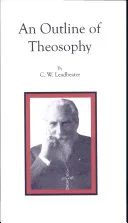
The Outline of Theosophy
 72
72

The Outline of Theosophy
Leadbeater’s *The Outline of Theosophy* presents a remarkably clear, if somewhat dated, exposition of fundamental Theosophical concepts. The chapter on the "Constitution of Man," detailing the various sheaths or bodies, is particularly instructive for those unfamiliar with the layered model of human consciousness prevalent in esoteric thought. Its strength lies in its systematic approach, breaking down complex ideas like reincarnation and karma into digestible components. However, the work's primary limitation is its uncritical acceptance of Theosophical doctrines as established fact, lacking engagement with potential counterarguments or alternative interpretations prevalent even in Leadbeater’s time, let alone today. For instance, the assertion of "Deity" as an impersonal "Principle" without delving into the various philosophical debates surrounding such a concept feels incomplete. The book serves its purpose as an introduction, but requires a critical reader to contextualize its pronouncements.
📝 Description
72
Published in 1998, C. W. Leadbeater's The Outline of Theosophy systematically presents the movement's core ideas.
This book provides a systematic overview of Theosophy, aiming to clarify its central tenets for interested readers. It defines Theosophy not as a religion but as a system of wisdom concerning divine matters and the divine spark within humanity. The text asserts that these principles are universal, existing before all established religions and philosophical systems.
The work details fundamental concepts, including a cosmology and anthropology where Deity is an impersonal, all-pervading Principle rather than a creator god. A key focus is the human constitution, describing the interplay of physical, astral, mental, and spiritual bodies. This layered view of existence is presented as vital for understanding reincarnation and karma.
Reincarnation is explained as the process of soul evolution across lifetimes, with karma serving as the law of cause and effect that governs this progression. The book also addresses the evolution of all life and the universe's purpose. It views death as a transition, not an end, and concludes by outlining what Theosophy offers: rational answers to life's questions, a moral framework, and a path to spiritual growth and service.
C. W. Leadbeater's work is a key text within the Theosophical movement, which sought to synthesize Eastern and Western esoteric traditions. Founded in the late 19th century by Helena Blavatsky, Theosophy posits a universal brotherhood of humanity, the study of comparative religion, philosophy, and science, and the investigation of unexplained laws of nature and the powers latent in humans. Leadbeater's 'Outline' aims to present these complex ideas in a structured manner, making them accessible to a wider audience interested in spiritual philosophy and the nature of consciousness.
💡 Why Read This Book?
• Gain a structured understanding of Theosophical cosmology, particularly its model of the "Constitution of Man" with its distinct physical, astral, and mental bodies, as presented in the book's early sections. • Grasp the Theosophical perspective on "Reincarnation" and "Cause & Effect" (karma) as mechanisms for soul evolution across multiple lifetimes, as detailed in dedicated chapters. • Learn about the Theosophical view of "Death" as a transitional phase, offering a framework for understanding life's continuity beyond physical existence, as explored in its "Wider Outlook" section.
⭐ Reader Reviews
Honest opinions from readers who have explored this book.
❓ Frequently Asked Questions
What is the primary goal of Theosophy as outlined by C. W. Leadbeater?
The primary goal is to present a coherent system of wisdom concerning divine things and the divine within humanity, offering a rational explanation for life's mysteries and a path for spiritual development.
How does The Outline of Theosophy explain the nature of God or Deity?
The book posits Deity not as a personal creator, but as an impersonal, all-pervading Principle underlying the universe, accessible through understanding its laws and manifestations.
What is the role of reincarnation in Theosophical thought according to this book?
Reincarnation is presented as the fundamental law governing the evolution of the human soul, allowing for spiritual growth and learning across successive physical lives.
Does this book discuss the concept of karma?
Yes, it explains karma as the universal law of cause and effect, directly linked to reincarnation, ensuring that actions have consequences that shape future experiences.
Who was C. W. Leadbeater and when was this book first published?
C. W. Leadbeater was a prominent, albeit controversial, figure in the early Theosophical Society. This specific outline was first published in 1998, consolidating his teachings.
What does the book mean by 'the Wider Outlook'?
The 'Wider Outlook' refers to the Theosophical perspective on the grand scheme of evolution encompassing not just humanity but all life, and the universe's underlying purpose.
🔮 Key Themes & Symbolism
The Constitution of Man
The work meticulously details the Theosophical view of human beings as complex entities composed of multiple bodies or 'sheaths.' It distinguishes the physical body from subtler vehicles like the astral, mental, and causal bodies, each operating on different planes of existence. Understanding this layered structure is presented as essential for comprehending consciousness, psychic phenomena, and the process of spiritual evolution described throughout the book. This model provides a framework for how experiences in one 'body' can affect others and influence reincarnation.
Reincarnation and Karma
Central to the book's exposition is the doctrine of reincarnation, viewed not as mere rebirth but as a purposeful cycle of soul evolution. This is inextricably linked to the law of karma, explained as the principle of cause and effect governing all actions. The text posits that karma ensures individual responsibility, with past deeds influencing present circumstances and future lives. This concept offers a rationale for suffering and inequality, framing them as consequences of past actions and opportunities for learning and growth across lifetimes.
Deity and Universal Principles
Theosophy, as presented here, reinterprets the concept of Deity. It moves away from a personal, anthropomorphic God towards an impersonal, absolute Principle or Absolute. This 'Deity' is the ultimate source and underlying reality of the universe, from which all manifested existence emanates. The book explores the idea that this Principle is not external but immanent within all beings and phenomena. This perspective aligns with many ancient philosophical traditions that view the divine as an all-pervading consciousness or substance.
The Evolution of Consciousness
Beyond the individual human journey, the book frames Theosophy within a grand cosmic evolutionary scheme. It suggests that consciousness itself, across all kingdoms of nature, is undergoing a gradual process of development over immense periods. This 'Wider Outlook' encompasses the evolution of planets, solar systems, and ultimately, the entire cosmos. The individual's path through reincarnation and karma is presented as a microcosm of this macrocosmic unfolding, driven by an inherent impulse towards greater complexity and self-awareness.
💬 Memorable Quotes
Direct passages from the work, attributed to the author.
“Theosophy is not a religion, but a statement of facts.”
— This highlights the Theosophical claim to present objective truths about existence, rather than dogma. It positions Theosophy as a system of knowledge verifiable through experience or study, distinct from faith-based religious systems.
“Reincarnation is the process by which the soul gains experience.”
— This interpretation emphasizes the purposeful nature of rebirth in Theosophy. It suggests that each life serves as a school for the evolving soul, providing necessary lessons and opportunities for growth across vast timescales.
“The Deity is the underlying principle of all.”
— This captures the impersonal conception of the divine. It suggests that 'God' is not a separate being but the fundamental reality or consciousness from which everything else arises and to which it returns.
💡 Key Ideas
Editorial paraphrase of the work's core concepts — not direct quotes.
Man is not a single entity, but a composite being.
This paraphrase captures the doctrine of the multiple bodies (physical, astral, mental, etc.). It underscores the Theosophical view that human identity transcends the physical form, encompassing subtler vehicles essential for consciousness and evolution.
Karma is the unerring law of cause and effect.
This paraphrase stresses the impersonal and absolute nature of karma. It implies that every action, thought, and intention generates a corresponding reaction, shaping future circumstances without exception.
🌙 Esoteric Significance
Tradition
This work is a cornerstone text within the Theosophical tradition, a lineage heavily influenced by Hermeticism, Gnosticism, and Neoplatonism, blended with Eastern philosophies. Leadbeater, a prolific writer, aimed to systematize Blavatsky's more dense works, making core Theosophical doctrines accessible. *The Outline* fits within this lineage by presenting a coherent cosmology and anthropology, emphasizing spiritual evolution through reincarnation and karma, and positing an underlying divine Principle, all hallmarks of Theosophical teaching.
Symbolism
The book often employs symbols inherent to Theosophical discourse. The "Lotus" is frequently used to represent the unfolding of consciousness or the human spiritual potential, with its many petals corresponding to different levels of being or planes of existence. The "Seven Rays" or "Seven Principles" are also symbolic, representing fundamental divine energies or aspects of the manifested universe and the human constitution, guiding the process of evolution and initiation.
Modern Relevance
Contemporary New Age movements and various branches of Western esotericism owe a significant debt to Theosophy, and by extension, to Leadbeater's clear articulations. Thinkers and practitioners in fields like comparative spirituality, consciousness studies, and energy healing often draw upon concepts first popularized in works like this, such as the layered human constitution and the law of karma, even if they don't use the specific Theosophical terminology.
👥 Who Should Read This Book
['• Students of early 20th-century esoteric movements seeking to understand the foundational principles of Theosophy as presented by a key proponent.', '• Individuals exploring comparative religion and philosophy interested in the Theosophical synthesis of Eastern and Western thought.', '• Seekers interested in structured explanations of concepts like reincarnation, karma, and the nature of consciousness beyond the physical.']
📜 Historical Context
C. W. Leadbeater's *The Outline of Theosophy* emerged from the fertile ground of late 19th and early 20th-century spiritual and intellectual currents. Theosophy, largely popularized by Helena Blavatsky and later figures like Annie Besant and Leadbeater himself, sought to synthesize Eastern wisdom traditions (particularly Hinduism and Buddhism) with Western esoteric philosophies. This period saw a widespread questioning of materialistic science and orthodox religion, fueling interest in alternative worldviews. Theosophy presented itself as a "Wisdom-Religion" predating all faiths, offering explanations for phenomena that science could not address. Key contemporaries included figures like Rudolf Steiner, who initially collaborated with Theosophists before founding his own Anthroposophical Society, and various spiritualists and occultists. The movement itself faced internal schisms and external criticism, often being viewed with suspicion by both religious institutions and the scientific establishment for its more esoteric claims, such as clairvoyant investigations.
📔 Journal Prompts
The Constitution of Man as a layered entity: Reflect on the distinct functions attributed to the physical, astral, and mental bodies.
The law of Cause & Effect: Consider a personal challenge through the lens of karma.
Theosophy's definition of Deity: Explore the implications of an impersonal, all-pervading Principle.
Reincarnation as a learning process: What lessons might the soul aim to acquire over multiple lifetimes?
The Wider Outlook: Contemplate the scale of cosmic evolution presented in the text.
🗂️ Glossary
Deity
In Theosophy, not a personal creator God, but the Absolute or the ultimate, impersonal Principle underlying all existence and consciousness.
Constitution of Man
The Theosophical model of human beings comprising multiple bodies or 'sheaths' – physical, astral, mental, causal, etc. – each corresponding to different planes of existence.
Reincarnation
The process by which the spiritual self or soul takes on successive physical bodies to gain experience and evolve over many lifetimes.
Karma
The universal law of cause and effect, where every action generates a consequence that influences present and future lives; the mechanism of soul evolution.
Astral Body
A subtle or non-physical body, often associated with emotions and desires, considered to be the vehicle of consciousness when the physical body is inactive (e.g., during sleep).
Mental Body
The subtle body associated with thought, intellect, and abstract reasoning, considered to be the vehicle for higher mental operations.
Planes of Existence
Different levels or dimensions of reality, each characterized by its own type of matter and consciousness, corresponding to the various bodies of the Constitution of Man.