The Secret Doctrine
 83
83

The Secret Doctrine
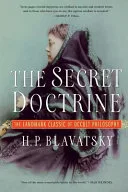
Helena Petrovna Blavatsky's *The Secret Doctrine* remains an imposing edifice in the landscape of Western esotericism. Published in two volumes in 1888, it attempts nothing less than a reconstruction of universal cosmology and human origins from a purportedly ancient, esoteric tradition. Its sheer scope is breathtaking, drawing from Sanskrit texts, Hermetic philosophy, Kabbalah, and a host of other traditions, all framed by Blavatsky's unique Theosophical interpretation. The work's most striking aspect is its audacious claim to reveal a hidden science and philosophy underlying all religions, a secret doctrine passed down through millennia. A significant strength lies in its comprehensive attempt to synthesize disparate spiritual ideas into a unified, albeit complex, worldview. However, the book's density and often opaque prose present considerable challenges; its reliance on obscure references and its idiosyncratic terminology can be overwhelming for the uninitiated reader. For instance, Blavatsky's detailed exposition on the 'Seven Root Races' and their planetary chains, while central to her system, requires substantial interpretive effort to grasp. Despite its formidable nature, *The Secret Doctrine* undeniably established a foundational text for modern Theosophy and influenced subsequent generations of occult thinkers.
This is a challenging but foundational text for understanding esoteric thought.
📝 Description
83
Helena Petrovna Blavatsky published The Secret Doctrine in 1888, a synthesis of esoteric thought intended as a universal cosmology.
The Secret Doctrine, published in its entirety in 1888, presents Helena Petrovna Blavatsky's interpretation of a cosmic narrative derived from the ancient 'Book of Dzyan'. Blavatsky claimed this text was an initiate's manuscript. The work aims to trace the evolution of the cosmos and humanity through cycles of manifestation and dissolution, proposing a sevenfold evolutionary scheme that includes physical, psychic, and spiritual dimensions across different stages and globes. This book is for students of comparative religion, ancient philosophy, and occult science who are prepared for a dense exposition. Blavatsky sought to reveal a spiritual philosophy she believed underpins all world religions and mythologies. Concepts such as karma, reincarnation, consciousness, and natural forces are presented as parts of a continuous tradition. The book contrasts this view with materialistic science, positing a universe filled with purposeful energy.
This work emerged in the late 19th century, a time of interest in spiritualism, Eastern religions, and critiques of Victorian materialism. Blavatsky, along with Henry Steel Olcott and William Quan Judge, founded the Theosophical Society in 1875 to study religion, science, and philosophy and to investigate latent human powers. The Secret Doctrine generated considerable attention, attracting both followers and critics who raised accusations regarding its sources.
The Secret Doctrine is a key text in modern Theosophy, a movement that gained prominence in the late 19th century. Blavatsky aimed to synthesize ancient wisdom traditions, particularly those from Eastern religions like Hinduism and Buddhism, with Western occultism and philosophy. She presented her work as a reinterpretation of secret spiritual teachings that she believed were the source of all world mythologies and religions. The book draws heavily on concepts like cyclic time, reincarnation, and subtle bodies, positioning them as fundamental to understanding both the universe and human existence, in contrast to purely scientific or materialistic explanations.
💡 Why Read This Book?
• Gain insight into the Theosophical Society's foundational cosmology, as outlined by Helena Petrovna Blavatsky in 1888, which posits a unified origin for all world religions. • Understand Blavatsky's concept of 'Root Races' and their cyclical evolution across 'Root-Tantras', a key element in her esoteric interpretation of human history. • Explore the intricate philosophical framework involving the 'Three Fundamentals' and the 'Seven Planes of Being', which forms the basis of a universal spiritual science.
⭐ Reader Reviews
Honest opinions from readers who have explored this book.
❓ Frequently Asked Questions
What is the 'Book of Dzyan' mentioned in The Secret Doctrine?
The 'Book of Dzyan' is presented by Helena Petrovna Blavatsky as an ancient, esoteric manuscript containing the fundamental cosmological and anthropological teachings that form the basis of her work. Its authenticity is a subject of debate among scholars and occultists.
When was The Secret Doctrine first published?
The Secret Doctrine was first published in its complete form in two volumes in 1888. The first volume, 'Cosmogenesis', appeared in October 1888, followed by the second, 'Anthropogenesis', in December 1888.
What is the main purpose of Helena Petrovna Blavatsky's The Secret Doctrine?
The primary aim of The Secret Doctrine is to present a universal, scientific, and philosophical explanation of the origin and development of the cosmos and humanity, based on an ancient esoteric tradition believed to underlie all world religions.
Does The Secret Doctrine discuss reincarnation?
Yes, reincarnation is a central concept within The Secret Doctrine. Blavatsky presents it as a fundamental law of existence, integral to the cyclical evolution of souls and the process of spiritual development across multiple lifetimes and incarnations.
What historical period influenced the writing of The Secret Doctrine?
The late 19th century, a period of burgeoning interest in spiritualism, comparative religion, and critiques of scientific materialism, significantly influenced the writing of The Secret Doctrine. Blavatsky's work emerged amidst this intellectual ferment.
Is The Secret Doctrine considered a religious text?
While not a dogma-based religion, The Secret Doctrine is considered a foundational text for Theosophy, a spiritual philosophy. It aims to reveal the universal spiritual truths it believes are common to all religions, rather than establishing a new one.
🔮 Key Themes & Symbolism
Cosmic Evolution Cycles
The work meticulously details the cyclical nature of existence, positing vast periods of manifestation ('manvantaras') and dissolution ('pralayas'). It outlines a complex cosmology involving seven 'Root Races' and their progression across a series of 'Root-Tantras' or planetary chains. This evolutionary scheme is presented not as random chance but as an intelligent, unfolding process guided by cosmic laws and spiritual hierarchies, aiming to reveal the underlying order of the universe from its inception to its eventual reabsorption. The concept of sevenfoldness permeates this cosmic blueprint, reflecting a fundamental organizing principle.
The Seven Planes of Being
Blavatsky elucidates a hierarchy of seven planes or states of consciousness and matter, extending from the purely spiritual or abstract down to the physical. These planes are not merely spatial dimensions but represent different levels of manifestation of the One Life. The work describes how consciousness descends through these planes to incarnate and evolves back upwards through experience and spiritual realization. Understanding these planes is crucial for comprehending the esoteric anatomy of both the cosmos and the individual human being, linking the microcosm to the macrocosm.
The Book of Dzyan
Central to The Secret Doctrine is the purported ancient text known as the 'Book of Dzyan', which Blavatsky claims is the ultimate source of her teachings. She presents it as a compilation of immemorial traditions, accessible only to initiates, containing the fundamental laws governing the universe. The book itself is described as symbolic and allegorical, requiring deep esoteric interpretation to unlock its profound wisdom. It serves as the textual anchor for her entire cosmological and anthropological system, lending an air of ancient authority to her complex theories.
Root Races and Reincarnation
The Secret Doctrine presents a doctrine of human evolution through successive 'Root Races', each with distinct physical and spiritual characteristics, evolving across different 'globes' or planetary spheres. This evolutionary process is intrinsically linked to the law of Karma and the principle of Reincarnation, which govern the soul's journey through countless lives. Blavatsky argues that each race represents a necessary stage in humanity's spiritual and physical development, culminating in a final, perfected state after traversing the entire evolutionary cycle.
💬 Memorable Quotes
Direct passages from the work, attributed to the author.
“The Universal, Unconscious, Omnipresent, and Eternal Principle which has no name...”
— This phrase introduces the Absolute, the unmanifest source of all existence in Blavatsky's cosmology. It signifies a primordial, undifferentiated reality that is the ultimate ground of all being, beyond human comprehension or description.
“Silence your senses, and then your spirit will begin to speak.”
— This aphorism points to the necessity of inner stillness and withdrawal from external distractions to perceive higher spiritual truths. It emphasizes the importance of introspection and meditation for accessing esoteric knowledge.
“Man is the microcosm, and the Star the macrocosm.”
— This statement captures the principle of correspondence, suggesting that the structure and laws governing the individual human being (microcosm) are mirrored in the greater universe (macrocosm), and vice versa.
“Karma is the unerring law which governs all things.”
— This highlights the fundamental role of Karma as the principle of cause and effect in Blavatsky's system. It posits that actions have consequences that shape destiny across lifetimes, ensuring cosmic justice and order.
“From the Great Sacrifice arise the many.”
— This concept refers to the primordial act of cosmic creation, where the One divides itself into the Many (the manifested universe). It implies that existence arises from a divine self-limitation or outpouring of energy.
🌙 Esoteric Significance
Tradition
The Secret Doctrine is a core part of the Theosophical tradition, which Blavatsky and her associates established. While drawing heavily from Eastern philosophies (particularly Vedanta and Mahayana Buddhism) and Western Hermetic and Kabbalistic streams, it synthesizes these into a unique, comprehensive esoteric worldview. It aims to present an 'occult science' that underpins all world religions, positing a universal, unbroken spiritual lineage and a secret doctrine passed down through hidden lineages.
Symbolism
Key symbols include the 'Circle and Swastika', representing the primordial unity and its dynamic unfolding into the manifested universe, and the 'Serpent', symbolizing eternity, cyclic recurrence, and wisdom. The 'Seven Rays' and 'Seven Principles' are also crucial, denoting the fundamental organizational structure of both the cosmos and the human constitution, reflecting a pervasive septenary symbolism in Blavatsky's system.
Modern Relevance
The work's influence persists in modern esoteric movements, including various Theosophical societies, Anthroposophy (stemming from Rudolf Steiner's interpretation), and New Age philosophies. Contemporary spiritual seekers and comparative religion scholars still engage with its ambitious synthesis of cosmology, psychology, and spiritual evolution, particularly its ideas on consciousness, karma, and reincarnation.
👥 Who Should Read This Book
• Students of comparative religion and mythology seeking an esoteric framework that attempts to unify diverse spiritual traditions. • Researchers into the history of Western esotericism and the development of Theosophy, particularly interested in the late 19th-century occult revival. • Dedicated practitioners of spiritual disciplines looking for a comprehensive cosmological model that integrates consciousness, evolution, and universal laws.
📜 Historical Context
The Secret Doctrine emerged in the late 19th century, a period rife with intellectual and spiritual ferment. Victorian England grappled with the implications of Darwinism and scientific materialism, leading many to seek alternative explanations for existence and consciousness. The Theosophical Society, founded in 1875 by Helena Petrovna Blavatsky, Henry Steel Olcott, and William Quan Judge, positioned itself as a vehicle for exploring comparative religion, ancient philosophy, and the unexplained laws of nature. Blavatsky's work synthesized diverse traditions, including Hinduism, Buddhism, Hermeticism, and Kabbalah, into a grand esoteric narrative. It directly challenged the burgeoning scientific orthodoxy by proposing a spiritual cosmology. Reception was polarized; while it garnered devoted followers and influenced thinkers like Annie Besant and later Rudolf Steiner, it also faced intense scrutiny. Notably, the Society for Psychical Research, through its Hodgson Committee report in 1885, accused Blavatsky of fraud, casting a shadow over her work and the Theosophical movement, though this report itself has been subject to considerable later criticism.
📔 Journal Prompts
The concept of the 'Seven Planes of Being' and their relation to human consciousness.
Reflections on the law of Karma as presented in the 'Cosmogenesis' section.
The symbolism of the 'Root Races' and their evolutionary journey.
Investigating the 'Three Fundamentals' of existence as described in the work.
Contemplating the 'Great Sacrifice' as the origin of manifestation.
🗂️ Glossary
Manvantara
A Sanskrit term referring to a 'period of Manu', signifying a great cycle of cosmic manifestation, typically lasting billions of years, followed by a period of dissolution.
Pralaya
A Sanskrit term denoting a period of cosmic dissolution or rest between two Manvantaras. It signifies a state of non-manifestation where the universe is withdrawn into its potential state.
Root Race
In Theosophical doctrine, a major stage in the evolutionary cycle of humanity, each race characterized by specific physical, mental, and spiritual attributes, unfolding sequentially across different planetary spheres ('Root-Tantras').
Logos
The Divine Word or creative principle, often seen as the manifested God or intermediary between the Absolute and the created universe. In The Secret Doctrine, it represents the Divine Ideation.
Chakra
Literally 'wheel' in Sanskrit, referring to energy centers within the subtle human body. The Secret Doctrine discusses these in relation to cosmic principles and spiritual development.
Dzyan
The name given by Blavatsky to the ancient esoteric text from which she claims to have derived the teachings of The Secret Doctrine. Its exact nature and origin are subjects of interpretation.
Stanza
Refers to the individual verses or sections of the 'Book of Dzyan' that Blavatsky comments upon, forming the structural basis of The Secret Doctrine's cosmological narrative.