Palmistry Every Day
 82
82

Palmistry Every Day
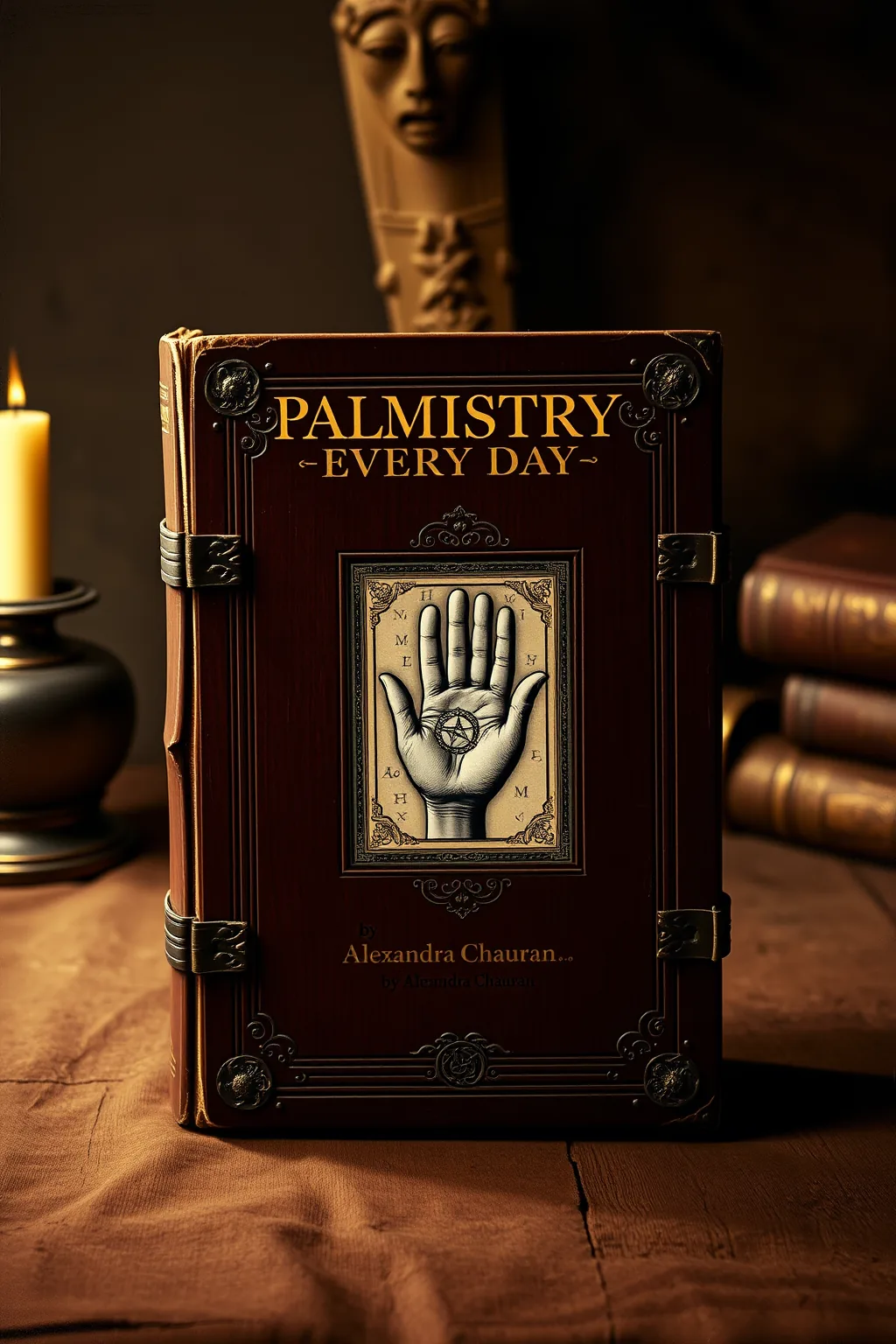
Alexandra Chauran's "Palmistry Every Day" confronts the pervasive notion that palmistry offers only a singular, fixed future. The book excels in its detailed breakdown of hand anatomy, from the subtle variations in mount firmness to the precise meaning of a quadrangle's shape. Chauran’s assertion that the hand is a living document, shifting with the individual's choices and experiences, is a refreshing counterpoint to deterministic views. However, the sheer volume of information, while comprehensive, can feel overwhelming for absolute beginners. The section on reading the timing of events on the Life Line, for instance, requires careful cross-referencing with other indicators, a process that might benefit from more explicit step-by-step examples for novice practitioners. Despite this, the work’s strength lies in its commitment to presenting palmistry as a sophisticated psychological and spiritual tool, rather than mere fortune-telling.
"Palmistry Every Day" successfully elevates hand reading into a practice of informed self-awareness.
📝 Description
82
Alexandra Chauran's "Palmistry Every Day", published in 2013, presents hand reading as a system for understanding character, not just fortune-telling.
Published in 2013, Alexandra Chauran's "Palmistry Every Day" approaches hand reading as a detailed method for understanding personality and life paths. The book argues that the hands reveal an individual's evolving self, moving past simple predictions of destiny. It is suitable for those new to chiromancy and for practitioners looking to expand their skills.
Chauran structures the book to explain the connections between hand features like mounts, lines, and fingers. Readers learn to interpret major lines such as the Life, Head, and Heart lines, alongside minor markings. The text also covers hand shapes and finger proportions as significant elements for a complete reading, advocating a thorough system for analysis.
Palmistry has a long history, with roots in ancient Greece and India. While sometimes dismissed, it saw renewed interest in the Victorian era and again during 20th-century New Age movements. Chauran's work aligns with a contemporary interest in esoteric practices, aiming to position palmistry as a practical tool for self-examination within this broader context.
💡 Why Read This Book?
• Gain a nuanced understanding of palmistry beyond simple predictions by exploring the dynamic interpretation of hand lines and mounts, as detailed in Chauran's discussion of the Head Line's variations. • Develop a practical framework for self-reflection and personal growth by learning to analyze your own hands, applying concepts like the 'Mount of Venus' to understand innate desires and capacities. • Discover the historical lineage of chiromancy and its place within esoteric traditions, appreciating how the 2013 publication situates itself within a broader history of palmistry.
⭐ Reader Reviews
Honest opinions from readers who have explored this book.
❓ Frequently Asked Questions
Is palmistry really about predicting the future, or is there more to it?
Palmistry Every Day argues that while some lines may indicate potentials or tendencies, the hands are dynamic and reflect present character and evolving life paths. It emphasizes self-understanding over fixed destiny.
What are the main parts of the hand analyzed in palmistry?
The book focuses on the major lines (Life, Head, Heart), the mounts (Venus, Jupiter, Saturn, etc.), and the shape and length of fingers and palms, explaining how each contributes to a holistic reading.
How does Alexandra Chauran's approach differ from traditional palmistry?
Chauran's approach, as presented in her 2013 work, emphasizes palmistry as a tool for psychological insight and personal development, moving away from purely predictive or fatalistic interpretations.
Can beginners use Palmistry Every Day effectively?
Yes, the book is structured to guide beginners through the fundamentals, explaining terms and concepts clearly, though some advanced interpretations require dedicated study.
What is the significance of the 'Mount of Apollo' in palmistry?
According to Chauran's work, the Mount of Apollo, located below the ring finger, relates to creativity, success, and artistic expression. Its prominence indicates potential for fame and artistic achievement.
Does the book cover different hand shapes and their meanings?
Absolutely. Palmistry Every Day dedicates sections to classifying hand shapes (e.g., Earth, Air, Fire, Water hands) and explains how these general archetypes influence personality and life approach.
🔮 Key Themes & Symbolism
Dynamic Hand Analysis
This work fundamentally challenges the static view of palmistry, positing that the hands are living documents reflecting ongoing personal evolution. Chauran illustrates how the lines and mounts change in response to life experiences, choices, and spiritual growth. This perspective shifts palmistry from a deterministic practice to one of continuous self-awareness and potential transformation, allowing readers to engage with their hands as maps of possibility rather than fixed fates. The book emphasizes that understanding these changes offers useful insights into one's journey.
Chiromancy as Psychological Cartography
Palmistry Every Day frames chiromancy as a sophisticated system for understanding character, motivations, and inherent psychological tendencies. The intricate analysis of hand shapes, finger proportions, and the subtle nuances of palm lines serves as a form of psychological cartography. Chauran details how specific markings and mount developments correlate with personality traits, emotional patterns, and mental faculties, providing readers with a unique framework for self-exploration and empathic understanding of others.
Esoteric Education Through the Hands
The book positions palmistry not merely as a divinatory art but as a pathway to esoteric knowledge. By studying the hands, individuals can connect with deeper universal principles and archetypes. Chauran explores how the patterns on the palm can symbolize cosmic influences and inner spiritual landscapes. This approach encourages a holistic view where the physical hand becomes a microcosm of the individual's connection to broader metaphysical realities, fostering spiritual growth and insight.
Practical Application and Self-Development
Central to Chauran's philosophy is the practical application of palmistry for personal development. The book provides actionable guidance for interpreting one's own hands to identify strengths, weaknesses, and areas for growth. It encourages readers to use this knowledge proactively, fostering self-awareness and empowering them to make conscious choices aligned with their potentials. The emphasis is on using palmistry as a tool for empowerment and continuous self-improvement, making it relevant for daily life.
💬 Memorable Quotes
Direct passages from the work, attributed to the author.
“The hand is not a static map of destiny, but a living document of the soul.”
— This core concept underscores Chauran's dynamic approach to palmistry, suggesting that our hands evolve with us, reflecting our choices and inner transformations rather than a predetermined fate.
“Each line, mount, and finger tells a story of potential and experience.”
— This highlights the comprehensive nature of hand reading as presented in the book, emphasizing that every element of the palm contributes unique insights into an individual's life narrative and inherent capabilities.
“The lines of the hand are not merely markings, but energetic pathways.”
— This interpretation frames the palm lines as conduits of life force and consciousness, aligning palmistry with energetic and metaphysical principles rather than purely physical observation.
💡 Key Ideas
Editorial paraphrase of the work's core concepts — not direct quotes.
Understanding your palm is understanding yourself on a deeper level.
This paraphrase points to the book's emphasis on palmistry as a tool for self-discovery and psychological insight, suggesting that the physical lines offer a tangible connection to one's inner world.
Chiromancy offers a lens through which to view the unfolding journey of the spirit.
This paraphrase positions palmistry within a spiritual context, viewing the practice as a means to gain perspective on one's soul's journey and its manifestations in the physical life.
🌙 Esoteric Significance
Tradition
This work draws heavily from the Western esoteric tradition of chiromancy, a practice with roots in ancient Greece and India, later integrated into Hermetic and Renaissance occult studies. It departs from purely divinatory approaches by emphasizing psychological interpretation, aligning it with modern esoteric psychology. Chauran's perspective suggests the hands are not merely passive records but active participants in the soul's journey, fitting within traditions that view the physical body as a manifestation of spiritual principles.
Symbolism
Key symbols include the major palm lines: the Life Line (vitality, life force), the Head Line (intellect, mental processes), and the Heart Line (emotional nature, relationships). The mounts, such as the Mount of Venus (love, passion) and the Mount of Jupiter (ambition, leadership), represent energetic centers influencing personality. Hand shapes themselves are symbolic archetypes (e.g., Earth hands for practicality, Air hands for intellect), offering a symbolic language to decode an individual's core nature and life path.
Modern Relevance
Chauran's emphasis on palmistry as a tool for self-awareness and personal growth appeals to contemporary mindfulness practices, coaching methodologies, and psychological exploration. Modern practitioners of esoteric arts, psychologists exploring archetypal symbolism, and individuals interested in self-discovery through unconventional means often reference or are influenced by such works. It bridges the gap between ancient divination and modern self-help, making its principles accessible to a wide audience seeking practical metaphysical tools.
👥 Who Should Read This Book
['• Aspiring palmists seeking a structured, comprehensive introduction to the art, moving beyond basic fortune-telling to understand character analysis.\n• Individuals interested in self-discovery and personal growth who want to use their hands as a tool for introspection and understanding their life path.\n• Students of esoteric traditions looking to integrate chiromancy into a broader understanding of metaphysical principles and symbolic languages.', "• Practitioners of complementary therapies or coaching seeking additional frameworks for understanding client dynamics and potentials.\n• Comparative religion or history of occultism scholars examining the evolution and application of divinatory arts in contemporary society.\n• Anyone curious about the human hand's potential to reveal insights into personality, talents, and life challenges.", '• Readers who appreciate detailed, systematic approaches to esoteric subjects, valuing factual presentation over purely speculative content.\n• Those exploring psychological archetypes and their manifestation in physical form, seeking a tangible connection to inner states.\n• Individuals interested in the intersection of spirituality, psychology, and ancient wisdom practices.']
📜 Historical Context
Alexandra Chauran's "Palmistry Every Day," published in 2013, arrived during a period of renewed interest in esoteric and occult practices, often termed the 'New Age' or 'Spiritual But Not Religious' movement. This era saw a blending of ancient wisdom with modern psychological concepts. Palmistry, which experienced significant popularization in the Victorian era and again in the mid-20th century, was being re-examined by practitioners seeking more depth than superficial fortune-telling. Chauran's work implicitly engages with a tradition that includes figures like William John Warner (Cheiro) and early 20th-century Theosophists who explored chiromancy. Unlike earlier, more fatalistic interpretations, Chauran's approach aligns with contemporary self-help and personal development trends, positioning palmistry as a tool for psychological insight and empowerment, rather than a rigid predictor of events. Its reception likely mirrored the broader cultural acceptance and skepticism towards divination during this time.
📔 Journal Prompts
Analyze the primary characteristics of your Head Line and how they manifest in your daily thought processes.
Reflect on the development and meaning of the Mount of Venus on your dominant hand.
Consider the variations in your Life Line and what they might suggest about your vitality and life energy.
Map the significance of any crosses or stars present on the major lines of your palm.
Evaluate the shape of your fingers in relation to the overall palm shape and its implications for your personality.
🗂️ Glossary
Chiromancy
The practice of reading palms, a system of divination and character analysis based on the lines, mounts, and shape of the hand.
Mounts
Fleshy, raised areas on the palm, each associated with a planet and corresponding human attributes like love, intellect, or ambition (e.g., Mount of Venus, Mount of Jupiter).
Life Line
The semi-circular line extending around the base of the thumb, traditionally interpreted as indicating vitality, physical health, and significant life events.
Head Line
The horizontal line across the palm, typically below the Heart Line, representing mental faculties, intellect, communication style, and approach to learning.
Heart Line
The uppermost horizontal line, running across the palm below the fingers, which relates to emotional capacity, romantic relationships, and emotional expression.
Quadrangle
The open space between the Head Line and the Heart Line, the size and clarity of which can offer insights into an individual's freedom, independence, and emotional expression.
Dominant Hand
The hand typically used for writing; in palmistry, it is often interpreted as representing the conscious self and future potentials, while the non-dominant hand may represent innate qualities or the past.