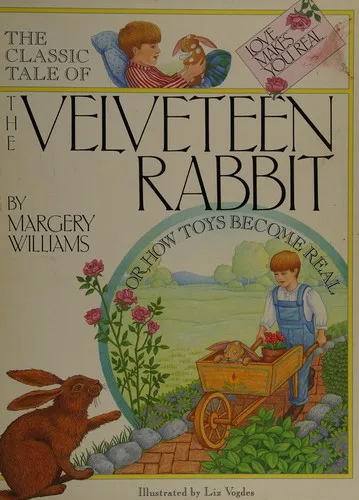
The Classic Tale of the Velveteen Rabbit
 74
74

The Classic Tale of the Velveteen Rabbit
Margery Williams Bianco’s *The Velveteen Rabbit* presents a deceptively simple premise that unfolds with remarkable emotional and philosophical weight. The 1922 publication date belies a narrative that grapples with the very essence of existence and consciousness. Its strength lies in the profound exploration of 'Realness' as an emergent property of love and shared experience, a concept that transcends its nursery-tale packaging. The rabbit’s transformation from mere plush to a living being is charted with a tender, almost alchemical, precision. A notable limitation, however, is the potentially abrupt resolution of the rabbit's existential crisis; while the fairy concept provides a narrative exit, it feels somewhat detached from the organic growth depicted earlier. The passage describing how the rabbit becomes 'Real' through the boy's constant affection – "He was Real to the Boy. That was enough." – encapsulates the book's core message with elegant simplicity. It is a subtle yet potent exploration of animism and the power of subjective reality.
📝 Description
74
Margery Williams Bianco's 1922 story, The Velveteen Rabbit, functions as an allegory for consciousness and love's transformative power.
Published in 1922, The Classic Tale of the Velveteen Rabbit is a children's story that uses the narrative of a stuffed toy rabbit coming to life through a child's love to explore deeper philosophical ideas. It touches on animism, the nature of existence, and how genuine connection can create sentience. The story defines 'Realness' not by physical form but by the experience of being loved to the point of becoming Real. It shows the transformation from an inanimate object into a being with a soul. The book appeals to those who find meaning in simple stories with complex underpinnings, and to parents and educators looking for literature that conveys significant emotional and philosophical concepts accessibly.
It resonates with anyone who has felt overlooked, offering comfort in the idea that true worth is developed rather than inherent. Esoteric students may find it a fertile ground for examining immanent divinity, the power of belief, and the animation of the inanimate. The tale's focus on the emotional reality of a toy tapped into a cultural fascination with unseen forces and subjective experience.
Published in the post-World War I era, a time of social change and growing interest in spiritualism, The Velveteen Rabbit appeared when ideas like Theosophy, emphasizing universal spiritual interconnectedness, held sway. This period also saw the beginnings of psychoanalytic thought exploring children's inner lives. Bianco's tale, by focusing on the emotional life of a toy, engaged with a cultural interest in the unseen forces that shape experience and the validity of subjective reality, aligning with esoteric traditions that explore the animation of matter and the development of consciousness.
💡 Why Read This Book?
• Understand the nature of "Realness" as depicted in the book, learning how genuine love and consistent affection can imbue an object or being with perceived sentience, a concept explored in the rabbit's journey. • Grasp the symbolic meaning of the Fairy, understanding its role as a catalyst for transformation and the transition from artificial existence to authentic being, as detailed in the narrative's climax. • Appreciate the historical context of early 20th-century children's literature, recognizing how *The Velveteen Rabbit* (1922) engaged with themes of spiritualism and the power of imagination then prevalent.
⭐ Reader Reviews
Honest opinions from readers who have explored this book.
❓ Frequently Asked Questions
What is the primary theme of The Velveteen Rabbit?
The primary theme is the nature of 'Realness,' which the book posits is achieved not through material composition but through the transformative power of love and consistent affection, as experienced by the rabbit.
When was The Velveteen Rabbit first published?
The Classic Tale of the Velveteen Rabbit was first published in 1922.
Who is the author of The Velveteen Rabbit?
The author is Margery Williams Bianco, an American writer known for her children's literature.
What does the Velveteen Rabbit symbolize?
The Velveteen Rabbit symbolizes the journey of becoming 'Real' through love and experience, moving from an inanimate object to a sentient being imbued with soul by affection.
Is The Velveteen Rabbit a fairy tale?
While it contains fairy tale elements, particularly in its resolution, its core is an allegory exploring themes of love, reality, and transformation, grounded in the emotional bond between a child and his toy.
What is the significance of the nursery setting?
The nursery serves as a microcosm of existence for the rabbit, a space where the child's love acts as the generative force that allows the rabbit to move beyond its material form and attain 'Realness'.
🔮 Key Themes & Symbolism
The Alchemy of Realness
The narrative presents an alchemical process where the inanimate toy rabbit undergoes a profound transformation. 'Realness' is not an inherent quality but an achieved state, cultivated through consistent love and shared experience by the Boy. This process mirrors esoteric concepts of spiritual transmutation, where base matter (the stuffed toy) is elevated to a higher state of being (a living creature) through the infusion of divine love or focused intent. The rabbit’s physical transformation into a living creature signifies the awakening of consciousness, a core pursuit in many mystical traditions.
Animism and Immanent Divinity
Bianco’s tale implicitly champions animistic beliefs, suggesting that life and spirit are not exclusive to organic forms but can be awakened in any entity through genuine connection. The rabbit’s eventual sentience and emotional depth challenge a purely materialistic worldview. This aligns with esoteric philosophies that perceive a divine spark or animating principle within all things, waiting to be recognized or activated. The magic described is not external intervention but the inherent power of love to reveal the immanent divinity within the ordinary.
The Power of Love as Creator
Love is depicted as the ultimate creative force, capable of altering the fundamental nature of existence. The Boy’s unwavering affection is the catalyst that makes the rabbit 'Real.' This elevates love beyond mere emotion to a cosmic principle, a generative power that shapes reality and bestows consciousness. In Hermetic thought, the principle of Correspondence suggests that the microcosm reflects the macrocosm; the love within the nursery mirrors a universal generative force, demonstrating how intimate bonds can manifest profound changes, akin to divine creation.
Sacrifice and Transformation
The rabbit’s illness and subsequent transformation by the nursery magic involve a form of sacrifice – the shedding of his old, artificial self. This mirrors initiatory rituals found across various esoteric traditions where an individual must symbolically die to their former state to be reborn into a new, higher level of awareness or being. The pain and potential destruction (being burned) are necessary precursors to achieving true life and integration into a spiritual reality, emphasizing that transformation often requires facing and overcoming existential threats.
💬 Memorable Quotes
Direct passages from the work, attributed to the author.
““What is REAL?” asked the Rabbit one day, when they were lying between the covers of the great blue-grey box. “Does it mean having things that buzz inside you and a stick inside of you and all other animals have things that move?””
— This question from the Rabbit highlights the naive, materialistic understanding of existence prior to spiritual awakening. It contrasts physical mechanics with the deeper essence of being, setting the stage for the book’s exploration of 'Realness' as something beyond mere biological function.
““You become. It takes a long time. That is why it doesn't happen often to people who break easily, or have sharp edges, or who have to be careful all the time. Generally, by the time you get Real, most of your hair has fallen out, and you get loose eyes, and you get wobbly.””
— This interpretation of 'Realness' by the Skin Horse emphasizes the process of becoming through wear, tear, and consistent experience. It suggests that true existence is earned through time, resilience, and vulnerability, rather than innate perfection, aligning with concepts of spiritual maturation.
““Once you are Real you can’t become unreal again. It lasts for always.””
— This statement underscores the permanence and profound nature of achieving 'Realness.' It suggests that once a being, or consciousness, has truly awakened through love and experience, that state is irreversible, signifying a fundamental shift in its ontological status.
““But something was happening. The Rabbit felt himself changing. He was not the same as when he first came into the nursery.””
— This marks an important moment of internal transformation. The Rabbit’s dawning awareness of his own evolution signifies the beginning of his journey toward sentience, moving beyond his initial state as a mere toy to one capable of experiencing growth and change.
💡 Key Ideas
Editorial paraphrase of the work's core concepts — not direct quotes.
“The nursery magic is very strong in this little room,” he said.
This line, spoken by the nursery magic itself, attributes the rabbit's transformation to an inherent, powerful force within the child’s space. It frames the environment of love and imagination as a sacred, alchemical crucible.
🌙 Esoteric Significance
Tradition
The work aligns closely with animistic and vitalistic traditions within esoteric thought, suggesting a universal life force or spirit that can animate any form through focused love and belief. It shares thematic ground with Theosophy's concept of the 'Monad' or divine spark inherent in all beings, which requires development to manifest. While not explicitly Kabbalistic or Gnostic, it carries the Gnostic idea of awakening to true reality from a state of material illusion and the Kabbalistic notion of creation through divine utterance or intention.
Symbolism
The Velveteen Rabbit itself symbolizes the profane or material self, capable of spiritual evolution. The Boy represents the divine spark or the animating principle whose love acts as the catalyst for transformation. The Nursery is a microcosm, a sacred space where the alchemy of becoming 'Real' takes place. The Nursery Magic signifies the immanent spiritual power that operates through love and faith, transforming the ordinary into the extraordinary, and the inanimate into the sentient.
Modern Relevance
Contemporary esoteric practices focusing on manifestation, the power of intention, and the interconnectedness of all things can draw parallels from this tale. Thinkers in consciousness studies and those exploring the philosophical implications of artificial intelligence might find its exploration of 'Realness' through interaction and affection particularly relevant. The work continues to inform discussions on the nature of consciousness, empathy, and the ethical implications of creation, resonating with modern concepts of emergent properties and sentient AI.
👥 Who Should Read This Book
• Students of comparative mythology and folklore seeking allegorical narratives that explore universal themes of transformation and the nature of reality. • Practitioners of esoteric traditions interested in works that illustrate animistic principles and the power of love as a creative, animating force. • Parents and educators looking for classic children's literature that offers deep philosophical and emotional lessons presented in an accessible, engaging manner.
📜 Historical Context
Published in 1922, *The Classic Tale of the Velveteen Rabbit* emerged during a period of significant cultural introspection following the Great War. The early 20th century saw a surge of interest in spiritualism, Theosophy, and philosophies that sought meaning beyond the material. Writers like G.K. Chesterton were exploring faith and reality, while the Bloomsbury Group engaged with subjective experience. Bianco’s narrative tapped into a growing appreciation for the inner lives of children and the power of imagination, a theme echoed in contemporaries like A.A. Milne. The work's gentle exploration of animism and the 'magic' of love resonated within a societal context where traditional certainties were being questioned, and alternative modes of understanding existence, including those influenced by Jungian psychology's nascent exploration of archetypes, gained traction.
📔 Journal Prompts
The Rabbit's journey to becoming 'Real' through consistent love.
The symbolic role of the Nursery Magic in transformation.
The contrast between the Rabbit's initial state and his final 'Realness'.
The definition of 'Realness' as experienced by the Rabbit.
The implications of the Skin Horse's wisdom about becoming.
🗂️ Glossary
Realness
In the context of the book, 'Realness' is not about physical existence but an achieved state of being, brought about by consistent love, acceptance, and shared experience, making something or someone truly alive and significant.
Nursery Magic
The inexplicable, potent force that facilitates the transformation of the Velveteen Rabbit into a living creature. It represents the power of love, imagination, and genuine emotional connection within the child's world.
Skin Horse
An older, much-loved toy horse in the nursery who imparts wisdom to the Rabbit about the process of becoming 'Real' through wear, love, and experience.
Fairy
The magical entity that ultimately transforms the Rabbit, representing a higher power or principle that actualizes the potential awakened by love and makes the transition to a new form of existence possible.
Velveteen
A type of woven fabric, often cotton, with a soft, plush pile resembling velvet. In the story, it signifies the Rabbit's material composition, which is transcended by his acquired 'Realness'.
Allegory
A story, poem, or picture that can be interpreted to reveal a hidden meaning, typically a moral or political one. *The Velveteen Rabbit* functions as an allegory for love, consciousness, and transformation.
Animism
The belief that objects, places, and creatures all possess a distinct spiritual essence; the attribution of a soul to plants, inanimate objects, and natural phenomena.
🔮 Readers Also Liked
Browse all →









More by Margery Williams Bianco
All books →
More Free Occult Philosophy Books
View all →