The second ring of power

 74
74

The second ring of power
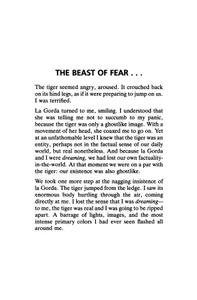
The Second Ring of Power presents a notable shift in Castaneda's established framework, centering the narrative on the formidable presence of female sorcerers. While the introduction of characters like La Gorda and Naranjo offers a compelling counterpoint to the male-dominated teachings of Don Juan, the book sometimes feels less focused than its predecessors. The exploration of their distinct sorceric methods, particularly their "second ring of power," is where the work truly shines, offering complex descriptions of energetic manipulation. However, the narrative can occasionally become convoluted, with a dense layering of interactions that may test a reader’s patience. A passage detailing La Gorda’s assertion of dominance over the male sorcerers stands out for its raw depiction of power dynamics. Ultimately, this installment is a crucial, if sometimes challenging, expansion of Castaneda's shamanic universe.
📝 Description
74
Carlos Castaneda's 1987 book, The Second Ring of Power, introduces formidable female sorcerers in Don Juan's lineage.
Published in 1987, The Second Ring of Power continues Carlos Castaneda's account of shamanic teachings attributed to Don Juan Matus. This volume shifts focus to the women within Don Juan's system, specifically mentioning figures like La Gorda and Naranjo. The narrative details their interactions with Castaneda's group and their unique approaches to acquiring power and practicing sorcery. The book describes specific encounters and techniques that challenge ordinary views of reality and human capabilities.
This book is best suited for readers already familiar with Castaneda's previous works, such as The Teachings of Don Juan and A Separate Reality. It will interest those tracking the development of his narrative and the introduction of new characters and dynamics in the shamanic world he portrays. Readers curious about the roles of women in sorcery and power dynamics within esoteric traditions will find these themes addressed directly.
The Second Ring of Power appeared in the late 1980s, a time when interest in shamanism and altered states of consciousness persisted, influenced by counter-cultural and New Age movements. Castaneda's books had already gathered a substantial readership, though questions about their factual basis also grew. This book arrived as figures like anthropologist Michael Harner were also drawing attention to shamanic practices. The reception was varied, with some critics noting inconsistencies in Castaneda's developing story while others valued its esoteric content.
💡 Why Read This Book?
• Gain insight into the specific sorceric techniques attributed to female practitioners within Castaneda's shamanic system, particularly the concept of the 'second ring of power' as detailed in the book's narrative. • Understand the evolution of Carlos Castaneda's shamanic cosmology, observing the introduction of new key figures and the shifting dynamics within Don Juan's lineage as presented in the 1987 publication. • Explore the concept of "seeing" energy fields and the assemblage point of perception through the lens of female sorcerers' practices, offering a distinct perspective from earlier Castaneda works.
⭐ Reader Reviews
Honest opinions from readers who have explored this book.
❓ Frequently Asked Questions
What is the primary focus of The Second Ring of Power?
The book's primary focus is on the sorceric practices and power dynamics of the female sorcerers within Don Juan Matus's lineage, introducing figures like La Gorda and Naranjo and their unique methods.
Who are the main new characters introduced in this book?
The main new characters are the female sorcerers, notably La Gorda and Naranjo, who play significant roles in the narrative and represent distinct approaches to sorcery.
When was The Second Ring of Power first published?
The Second Ring of Power was first published in 1987, marking a later stage in Carlos Castaneda's series of books on shamanism.
What key esoteric concepts are explored?
Key concepts include the 'second ring of power,' the nature of female sorcery, the assemblage point of perception, and the manipulation of energy fields.
How does this book differ from Castaneda's earlier works?
It shifts focus to female sorcerers, introduces new dynamics within Don Juan's group, and explores more complex power interactions, moving beyond the foundational teachings of earlier books.
Is this book suitable for beginners to Castaneda?
While it can be read independently, it is best appreciated by readers familiar with Castaneda's earlier works, as it builds upon established concepts and characters.
🔮 Key Themes & Symbolism
Female Sorcery and Power
The Second Ring of Power prominently features the sorceric abilities and influence of women within Don Juan's lineage, such as La Gorda and Naranjo. Their methods and perspectives offer a contrast to the male sorcerers, exploring what Castaneda terms their 'second ring of power.' This theme challenges traditional hierarchies within shamanic narratives, presenting female practitioners as formidable agents of power and manipulation, deeply connected to the energetic fabric of existence.
Advanced Energetic Perception
Building on concepts from earlier books, this work explores more sophisticated aspects of 'seeing' – the direct perception of energy fields. The narrative describes how sorcerers, particularly the female practitioners, navigate and manipulate these fields. The assemblage point, the nexus of an individual's awareness, is depicted as being shifted and influenced through complex techniques, leading to altered states and the acquisition of specific forms of power.
The Sorcerer's Apprenticeship
The book illustrates the ongoing and often arduous process of apprenticeship in sorcery. It portrays the challenges, rivalries, and tests faced by Castaneda and his companions as they learn from and interact with a more complex array of sorcerers. The narrative highlights the inherent dangers and the requirement for unwavering discipline and awareness in mastering the art of sorcery and expanding one's perception of reality.
Shifting Dynamics of Influence
A central theme is the intricate web of influence and control among the sorcerers. The introduction of powerful female figures disrupts the established order, leading to confrontations and strategic maneuvering. The 'second ring of power' concept suggests distinct domains or methods of influence, creating a dynamic where alliances shift and power is constantly negotiated within the sorceric community.
💬 Memorable Quotes
Direct passages from the work, attributed to the author.
“La Gorda was the most formidable of the women. She had a second ring of power that was entirely her own.”
— This statement highlights La Gorda's unique and potent sorceric capabilities, distinguishing her even among other powerful female practitioners. It introduces the concept of a 'second ring of power,' suggesting specialized or advanced forms of energy manipulation.
“The assemblage point is not a fixed thing; it can be pushed around, wobbled, or even knocked loose.”
— This interpretation emphasizes the dynamic and malleable nature of consciousness itself, as conceptualized in Castaneda's shamanic framework. It suggests that perception is not absolute but can be altered through specific practices or energetic interventions.
“Seeing is the sorcerer's way of knowing.”
— This expresses the core tenet of Castaneda's shamanism: direct, energetic perception ('seeing') replaces ordinary intellectual understanding. It signifies a shift from conceptual knowledge to experiential, intuitive awareness as the primary mode of comprehending reality.
“Naranjo taught us about the power the women held in their own right.”
— This highlights the book's focus on female agency and power within the shamanic tradition. Naranjo, a key female sorcerer, is presented as a source of knowledge about these distinct, self-contained sources of power.
💡 Key Ideas
Editorial paraphrase of the work's core concepts — not direct quotes.
The sorcerers' apprenticeships are filled with illusions and deceptions.
This quote points to the deceptive nature of the path of sorcery, where appearances are often misleading. It underscores the need for discernment and the constant testing of one's perceptions to avoid falling prey to misdirection.
🌙 Esoteric Significance
Tradition
Castaneda's work, including The Second Ring of Power, is situated within the broader spectrum of Western esotericism, drawing heavily on themes often associated with shamanism, hermeticism, and Gnosticism. It departs from traditional lineages by presenting a seemingly personalized, evolving cosmology attributed to a specific mentor, Don Juan Matus. Unlike established traditions with codified texts and practices, Castaneda’s lineage emphasizes direct experience, altered states, and the manipulation of perceived energy fields, offering a unique, albeit controversial, interpretation of esoteric knowledge.
Symbolism
The "second ring of power" itself functions as a potent symbol, representing a distinct or advanced level of sorceric influence and technique, particularly associated with female practitioners. The "assemblage point" is another crucial symbol, denoting the nexus of perception; its controlled shifting is key to accessing non-ordinary reality. The presence of specific, often unnamed, power spots or locations within the narrative also symbolizes concentrated energetic sites that sorcerers utilize for their practices.
Modern Relevance
The Second Ring of Power continues to influence contemporary esoteric thought, particularly within circles interested in shamanic practices, consciousness studies, and non-ordinary reality. Thinkers and practitioners exploring lucid dreaming, astral projection, and energy work often reference Castaneda's concepts, including the assemblage point and various forms of energetic perception. While its direct attribution to a specific shamanic tradition is debated, its impact on popularizing certain esoteric ideas about perception and power remains significant in modern occult and metaphysical discourse.
👥 Who Should Read This Book
• Advanced students of Carlos Castaneda's oeuvre seeking to understand the introduction and significance of female sorcerers and their distinct methods within his shamanic framework. • Practitioners interested in exploring concepts of altered states of consciousness and energetic perception, particularly how these might be framed through narrative and dialogue. • Readers of comparative mysticism and esoteric traditions curious about modern interpretations of shamanism and the role of power dynamics within spiritual lineages.
📜 Historical Context
The Second Ring of Power, published in 1987, arrived during a period where Carlos Castaneda's work had already achieved significant international acclaim but also faced escalating academic and critical skepticism. The late 1980s saw a continued surge of interest in shamanism, partly fueled by the New Age movement and figures like Michael Harner, who was popularizing shamanic healing practices. Castaneda’s narrative, however, diverged from Harner’s more anthropological approach by focusing on an intensely personal, often confrontational, journey into altered states and sorcery. While Castaneda’s earlier books were often discussed in the context of anthropology and psychology, by 1987, questions about the authenticity of Don Juan Matus as a real figure intensified. The book's focus on female sorcerers, introducing figures like La Gorda and Naranjo, offered a new dimension to his established cosmology, potentially responding to critiques about the male-centric nature of his previous narratives. Its reception was marked by continued fascination from his followers and persistent doubt from critics, positioning it within a complex cultural moment where the boundaries between ethnography, fiction, and esoteric exploration were increasingly blurred.
📔 Journal Prompts
The nature of La Gorda's 'second ring of power' and its distinction from other forms of sorcery.
Reflections on the concept of the assemblage point as a locus of perceived reality.
The dynamics of influence and competition among the sorcerers depicted.
Experiences of challenging established perceptions of authority or knowledge.
The role of intention and discipline in manipulating energetic fields.
🗂️ Glossary
Second Ring of Power
A concept introduced in the book referring to a distinct and often more potent or specialized form of sorceric power or technique, particularly associated with female practitioners like La Gorda.
Assemblage Point
In Castaneda's shamanic system, this is the nexus or focal point of an individual's awareness that determines how they perceive and assemble reality. Shifting it is key to entering altered states.
Seeing
The ability of a sorcerer to perceive energy directly, as fields of luminosity, rather than through the mediated interpretation of ordinary consciousness. It represents a form of direct, intuitive knowing.
Sorcerer
An individual who has undergone rigorous training and possesses the ability to perceive and manipulate energy fields, operating outside the conventional frameworks of ordinary reality.
La Gorda
A powerful female sorcerer within Don Juan's lineage, who plays a significant role in The Second Ring of Power, known for her formidable presence and unique sorceric abilities.
Naranjo
Another key female sorcerer featured in the book, who imparts knowledge about the specific powers and methods employed by women in the sorceric tradition.
Apprenticeship
The extended period of training and learning undertaken by a novice sorcerer under the guidance of a master, often involving challenging experiences and tests of awareness.
🔮 Readers Also Liked
Browse all →









More by Carlos Castaneda
All books →


More Free Occult Philosophy Books
View all →