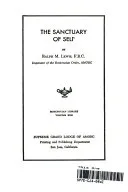
The Sanctuary of Self
 83
83

The Sanctuary of Self
Ralph Maxwell Lewis’s The Sanctuary of Self offers a compelling argument for the primacy of inner work, a perspective particularly relevant in our often-distracted age. The strength of the book lies in its methodical approach to self-understanding, avoiding the vague pronouncements that plague much spiritual literature. Lewis systematically guides the reader through the architecture of the self, particularly in his discussions on the "Law of Causation" as it pertains to internal states. However, the text can occasionally feel dense, with its philosophical language sometimes creating a barrier for those not already steeped in esoteric thought. A passage discussing the "Inner Watcher" feels particularly insightful, highlighting the detached awareness essential for true self-observation. It’s a demanding but rewarding read for the dedicated student.
📝 Description
83
Ralph Maxwell Lewis published The Sanctuary of Self in December 1948, arguing for inner spiritual development over external dogma.
The Sanctuary of Self, first released in 1948, proposes that genuine spiritual growth stems from understanding and nurturing one's inner life. Lewis steers away from rigid external doctrines, instead highlighting the seeker's subjective experience. The book outlines a path to self-discovery that is not about passively absorbing information, but about actively engaging with one's own consciousness. It is written for individuals committed to deep self-examination who wish to weave spiritual ideas into their everyday lives. Those tired of solely external religious or philosophical frameworks will find resonance here, particularly if they are ready for diligent introspection. The work offers a structured method for comprehending consciousness and its possibilities.
The book's core idea is the 'Sanctuary,' an internal space for refuge and development reachable through conscious effort. Lewis points to the 'Law of Causation' as it relates to one's internal condition, suggesting that thoughts and emotions directly shape external circumstances and personal progress. He also describes 'Self-Mastery,' not as repression, but as the intelligent guidance of mental and emotional energies toward elevated objectives.
Published in the mid-20th century, a time of significant interest in psychological and spiritual subjects, The Sanctuary of Self emerged alongside intellectual currents like Carl Jung's work on archetypes and the collective unconscious. Lewis, associated with the Theosophical Society, was part of a broader Western engagement with Eastern philosophies and esoteric traditions. This era saw a confluence of psychological inquiry and spiritual seeking, with thinkers examining the depths of the human psyche and its potential for transformation.
💡 Why Read This Book?
• Gain a structured method for internal exploration, understanding the "Sanctuary" as a practical, cultivable space for psychological growth, as detailed in the book's core teachings. • Learn to apply the "Law of Causation" to your own thoughts and emotions, recognizing how internal shifts can directly impact your outer experience, a concept Lewis elaborates on. • Develop the practice of "Self-Mastery" beyond mere discipline, focusing on the conscious direction of mental and emotional energy, as presented in the book's practical exercises.
⭐ Reader Reviews
Honest opinions from readers who have explored this book.
❓ Frequently Asked Questions
When was The Sanctuary of Self first published?
The Sanctuary of Self was first published in December 1948, placing it within the mid-20th century's burgeoning interest in psychological and spiritual introspection.
What is the central idea of The Sanctuary of Self?
The central idea is that true spiritual development and self-realization are achieved by cultivating an internal "Sanctuary" – a space of conscious awareness and inner mastery.
Who was Ralph Maxwell Lewis?
Ralph Maxwell Lewis was an author and lecturer associated with esoteric and metaphysical teachings, particularly within the framework of the "Great School of the Masters" movement.
What is the "Law of Causation" as discussed in the book?
The "Law of Causation" in this context refers to the principle that one's internal states – thoughts, feelings, and intentions – are the primary causes of external circumstances and personal experiences.
Does the book offer practical exercises for self-improvement?
Yes, The Sanctuary of Self provides a framework for practical self-improvement through the cultivation of inner awareness, self-mastery, and conscious introspection, guiding readers toward tangible internal changes.
What esoteric tradition does this book align with?
The book aligns with Western esoteric traditions, drawing on concepts related to consciousness, self-mastery, and the inner life, often associated with metaphysical movements of the early to mid-20th century.
🔮 Key Themes & Symbolism
The Inner Sanctuary
The core concept of 'The Sanctuary of Self' posits an internal refuge, a sacred space within consciousness that can be consciously cultivated. This is not a metaphorical idea but a practical state of being accessible through dedicated inner work. Lewis suggests that by establishing this inner sanctuary, individuals can achieve a stable point of awareness, impervious to external chaos, and from which true growth and understanding can emerge. It represents a retreat from the material world into the profound depths of one's own being.
Law of Causation in Consciousness
Lewis applies the principle of the "Law of Causation" directly to the inner realm, arguing that thoughts, emotions, and mental states are the fundamental causes of one's life experiences. This shifts the focus from external factors to internal responsibility. Understanding this law means recognizing that one's inner world is not merely a reflection of external events, but their generative source. The book explores how mastering one's thoughts and feelings is the key to influencing and transforming one's reality.
Self-Mastery as Conscious Direction
Self-mastery in 'The Sanctuary of Self' is presented not as ascetic suppression or rigid control, but as the intelligent and conscious direction of one's mental and emotional energies. It involves understanding the nature of one's inner impulses and channeling them purposefully towards higher aspirations. This process requires self-awareness and discipline, enabling the individual to become the architect of their own character and destiny, rather than a passive recipient of circumstance.
The Nature of the Self
The book undertakes an exploration into the many-sided nature of the self, distinguishing between the superficial personality and a deeper, more permanent core of being. Lewis guides the reader to look beyond the ever-changing states of mind and emotion to discover a stable, observing consciousness – the "Inner Watcher." This exploration is crucial for understanding the potential for inner transformation and for establishing the "Sanctuary" as a dwelling place for this deeper self.
💬 Memorable Quotes
Direct passages from the work, attributed to the author.
“The outer world is but a reflection of the inner.”
— This statement captures the core idea that external circumstances and experiences are not independent realities but direct manifestations of one's internal state of consciousness, thoughts, and beliefs.
“True freedom is found in the mastery of oneself.”
— This highlights the book's emphasis on internal control and self-awareness as the path to genuine liberation, rather than seeking freedom from external constraints.
“One must build the inner sanctuary before seeking external peace.”
— This suggests that inner stability and psychological coherence are prerequisites for achieving lasting tranquility and harmony in one's external life and relationships.
“The Law of Causation operates most potently within the mind.”
— This interpretation emphasizes that the principles of cause and effect are particularly powerful when applied to one's thoughts and feelings, which then shape reality.
“The Inner Watcher observes all without judgment.”
— This refers to the concept of detached awareness, a state of consciousness that can witness mental and emotional processes without becoming entangled in them, fostering objectivity.
🌙 Esoteric Significance
Tradition
The Sanctuary of Self is firmly rooted in the Western esoteric tradition, drawing from Hermetic principles of "As Above, So Below" applied to the inner world. It aligns with metaphysical philosophies that emphasize consciousness as the fundamental reality and the power of the individual will. While not explicitly Kabbalistic or Gnostic, it shares their focus on inner gnosis and self-transformation as the path to spiritual realization, departing from purely external religious doctrines.
Symbolism
A central symbol is the "Sanctuary" itself, representing the inviolable inner space of consciousness that can be cultivated for refuge and growth. The "Inner Watcher" functions as a symbol of the true Self, the detached observer capable of witnessing the play of the personality without identification. The "Law of Causation" acts as a symbolic framework, illustrating how inner states are the seeds of external manifestation, guiding the practitioner toward mindful creation.
Modern Relevance
Contemporary interest in mindfulness, self-awareness practices, and the power of positive psychology echoes themes found in The Sanctuary of Self. Thinkers and practitioners exploring consciousness studies, non-dual awareness, and internal locus of control often engage with similar concepts. Its methodical approach to self-mastery continues to appeal to those seeking structured guidance for personal and spiritual development beyond transient trends.
👥 Who Should Read This Book
• Individuals seeking a structured, philosophical approach to self-discovery, particularly those interested in understanding consciousness as the primary tool for transformation. • Students of Western esotericism and metaphysics who wish to deepen their understanding of inner work and self-mastery beyond superficial New Age concepts. • Reflective readers who are questioning conventional paths to happiness and fulfillment and are ready to undertake the rigorous introspection required for genuine personal evolution.
📜 Historical Context
Published in December 1948, The Sanctuary of Self emerged in a world grappling with the aftermath of World War II and the dawn of the Cold War. This era saw a significant increase in interest in psychological exploration and spiritual inquiry, partly as a response to societal upheaval and a desire for meaning. Thinkers like Carl Jung were publishing influential works on archetypes and the collective unconscious, reflecting a broader Western intellectual current focused on the inner life. Lewis's work found a place within this milieu, alongside other metaphysical and esoteric movements that gained traction during the period, such as those influenced by Theosophy. While not facing direct censorship, the book's philosophical depth and esoteric focus positioned it within a niche audience interested in subjects often considered outside mainstream academic or religious discourse at the time.
📔 Journal Prompts
The cultivation of your inner "Sanctuary": what is its current state?
Applying the "Law of Causation" to a recent challenge: what internal factors contributed?
The practice of "Self-Mastery": identify one impulse you wish to consciously direct.
Reflections on the "Inner Watcher": how can you strengthen its observant presence?
The relationship between your inner world and outer circumstances: what patterns emerge?
🗂️ Glossary
The Sanctuary
An internal, conscious space of awareness and inner peace that an individual can cultivate through focused self-discipline and introspection.
Law of Causation
The principle that one's thoughts, emotions, and intentions are the primary causes of external experiences and circumstances, emphasizing internal responsibility.
Self-Mastery
The conscious direction and intelligent regulation of one's mental and emotional energies, rather than mere suppression or control.
Inner Watcher
The aspect of consciousness that can observe thoughts, feelings, and sensations with detached awareness, free from identification or judgment.
Conscious Direction
The active and intentional guidance of one's mental and emotional faculties towards specific goals or states of being.
Inner Work
The process of self-examination, introspection, and personal development focused on transforming one's inner state of being.
Metaphysical
Pertaining to the branch of philosophy that investigates the fundamental nature of reality, including the relationship between mind and matter.