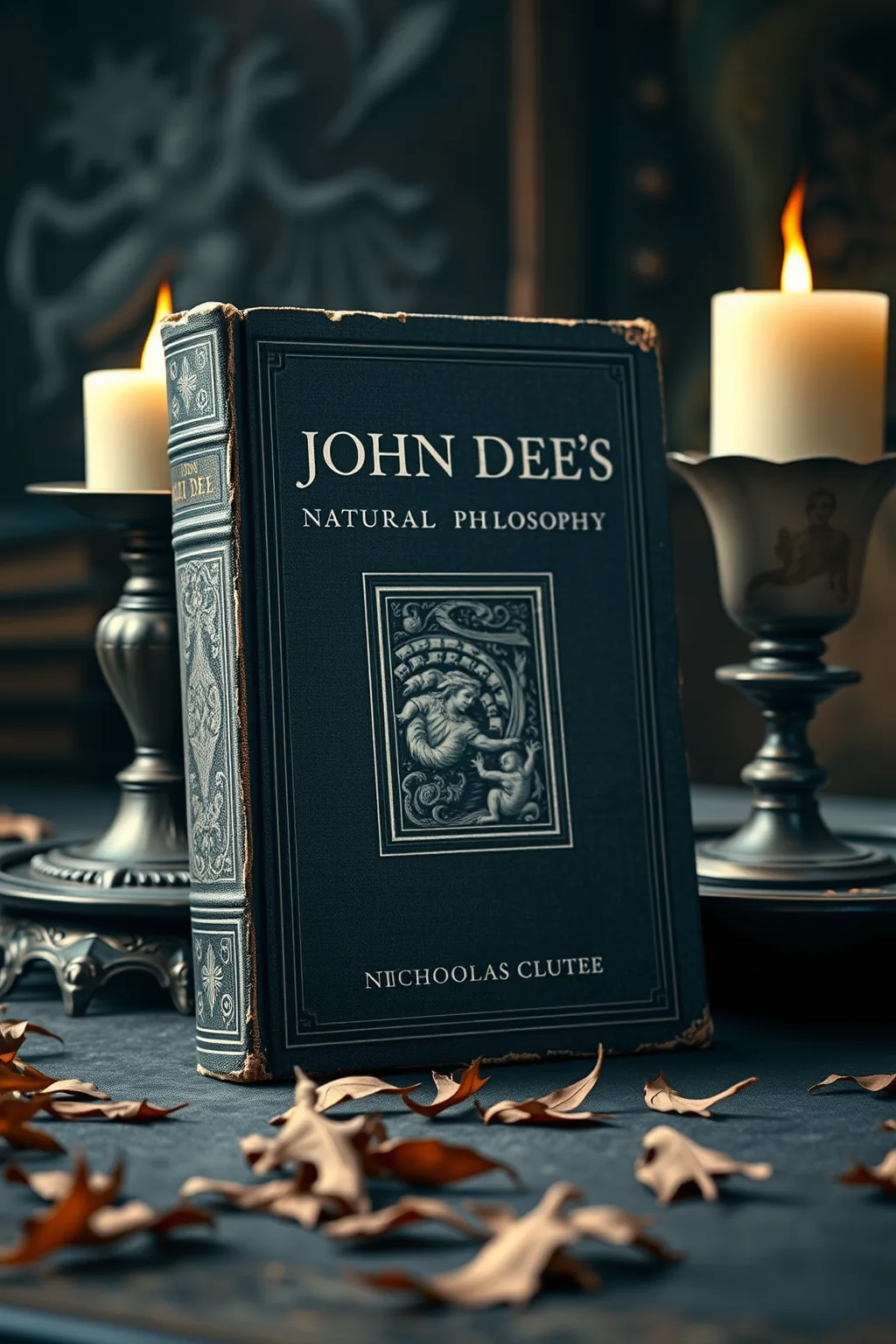
John Dee's Natural Philosophy
 62
62

John Dee's Natural Philosophy


Review by Marcus Thorne (Esoteric Sciences Reviewer) — Nicholas Clulee's 'John Dee's Natural Philosophy' stands as a seminal work in the study of the occult and Hermeticism. Clulee masterfully navigates the labyrinthine life of John Dee, shedding light on his esoteric insights and their enduring relevance. The book is a must-read for anyone interested in the mystical underpinnings of Renaissance science. Clulee's authoritative tone and deep scholarly research make this biography an invaluable resource for both novice and seasoned practitioners of the esoteric arts.
📝 Description
62
Nicholas Clulee's 1988 book examines John Dee's writings on natural philosophy.
Nicholas Clulee's 'John Dee's Natural Philosophy' analyzes the intellectual life of the Elizabethan polymath. The book focuses on Dee's engagement with contemporary scientific and magical thought, moving beyond sensationalized accounts of his occultism. Clulee shows how Dee integrated elements of Hermeticism, Neoplatonism, and natural magic into his understanding of the cosmos. The work details Dee's intellectual development, from his early studies to his later angelic conversations, and assesses his contributions to alchemy, astrology, and natural philosophy. Clulee grounds Dee's pursuits in the specific intellectual currents of the Renaissance, demonstrating how figures like Dee operated at the confluence of what we now consider distinct disciplines. The book treats Dee's intellectual projects seriously, as coherent attempts to understand the world. It avoids reducing Dee's complex thought to mere superstition or proto-science. Instead, Clulee presents a portrait of a serious scholar grappling with the fundamental questions of his era. The text traces Dee's engagement with sources such as Agrippa and Ficino, and discusses his own original contributions to these traditions. It offers a detailed look at his unpublished manuscripts and his published works. The biography aims to situate Dee within the history of ideas, showing his place in the transition from medieval to early modern thought. It is a scholarly work that requires careful attention to its arguments.
This book situates John Dee's intellectual endeavors within the Renaissance revival of Hermetic and Neoplatonic texts. Dee's work is understood as part of a broader European current that sought to reconcile Christian theology with ancient pagan wisdom, particularly the Corpus Hermeticum. His natural philosophy was not separate from his magical or religious pursuits but integrated them into a unified worldview. Clulee demonstrates how Dee's study of alchemy, astrology, and angelic communication formed a coherent system aimed at understanding God's creation and, potentially, influencing it. This approach contrasts with later, more secularized scientific methods and highlights the holistic intellectual landscape of the period.
💡 Why Read This Book?
Why read this book — 'John Dee's Natural Philosophy' is essential for anyone seeking to understand the profound impact of John Dee on both science and the occult. This book is ideal for scholars of Hermeticism, spiritual seekers exploring the depths of Renaissance mysticism, and practitioners of the esoteric arts. Clulee's comprehensive analysis provides a unique perspective on Dee's life and works, making it a vital addition to any occult library.
⭐ Reader Reviews
Honest opinions from readers who have explored this book.
❓ Frequently Asked Questions
What is the primary focus of 'John Dee's Natural Philosophy'?
The book focuses on the life and works of John Dee, a renowned Elizabethan mathematician, astrologer, and occult philosopher, exploring his contributions to both science and the occult.
Who is the intended audience for this book?
The book is intended for scholars of Hermeticism, spiritual seekers, and practitioners of the esoteric arts, as well as anyone interested in the mystical underpinnings of Renaissance science.
What makes this biography unique?
This biography stands out due to its meticulous research and authoritative tone, providing a deep scholarly analysis of Dee's life and works, and their enduring relevance.
How does the book explore the intersection of science and mysticism?
The book delves into Dee's esoteric pursuits and their influence on both the scientific and spiritual realms, revealing the hidden knowledge and mystical symbolism that have captivated scholars for centuries.
Is this book suitable for beginners in the field of Hermeticism?
Yes, while it is a scholarly work, Clulee's clear and engaging writing style makes it accessible to both beginners and seasoned practitioners of the esoteric arts.
🔮 Key Themes & Symbolism
The Hermetic Tradition
John Dee's work is deeply rooted in the Hermetic tradition, which seeks to unify science and spirituality. Clulee's book explores how Dee's esoteric pursuits laid the groundwork for modern occult studies, revealing the mystical symbolism and hidden knowledge that have captivated scholars for centuries.
Renaissance Mysticism
The book immerses readers in the rich atmosphere of the Renaissance, where the boundaries between science and the occult were fluid. Dee's contributions to both fields are examined in detail, providing a unique perspective on the mystical underpinnings of Renaissance science.
Esoteric Symbolism
Clulee examines the esoteric symbolism that permeates Dee's works, uncovering the deeper layers of meaning that have influenced both the scientific and spiritual realms. This theme is essential for understanding Dee's wide impact on Hermeticism and the enduring philosophical significance of his endeavors.
💡 Key Ideas
Editorial paraphrase of the work's core concepts — not direct quotes.
The true alchemist does not transform base metals into gold, but the soul into spirit.
This quote underscores Dee's belief in the transformative power of the occult, highlighting the spiritual journey that lies at the heart of alchemy.
Knowledge is a sacred gift, to be sought with reverence and humility.
Dee's respect for hidden knowledge is evident in this quote, which emphasizes the importance of approaching esoteric studies with a sense of awe and respect.
The stars whisper secrets to those who listen with an open heart.
This quote reflects Dee's astrological pursuits and his belief in the divine influence of the celestial bodies on human affairs.
The boundary between science and mysticism is a thin veil, easily pierced by the curious mind.
Dee's exploration of the intersection between science and the occult is captured in this quote, which invites readers to question the conventional boundaries between these realms.
In the silence of the mind, one finds the voice of the universe.
This quote highlights Dee's meditative practices and his belief in the importance of inner silence for attaining spiritual insight.
🌙 Esoteric Significance
Tradition
John Dee's Natural Philosophy belongs to the Hermetic tradition, which seeks to unify science and spirituality. Dee's esoteric pursuits laid the groundwork for modern occult studies, revealing the mystical symbolism and hidden knowledge that have captivated scholars for centuries.
Symbolism
Key symbols in Dee's works include the monad, the sigil of God, and the Enochian language, all of which carry deep esoteric meanings. These symbols represent Dee's quest for divine knowledge and his belief in the transformative power of the occult.
Modern Relevance
Dee's influence can still be seen in contemporary esoteric practices, where his writings on alchemy, astrology, and the Hermetic arts continue to inspire seekers of hidden knowledge. Modern practitioners of the esoteric arts often draw on Dee's teachings to deepen their understanding of the mystical underpinnings of the universe.
👥 Who Should Read This Book
Beginners in the field of Hermeticism will find 'John Dee's Natural Philosophy' to be an accessible and engaging introduction to the esoteric arts. Scholars of Renaissance mysticism will appreciate Clulee's meticulous research and deep scholarly analysis. Spiritual seekers will be inspired by Dee's useful insights into the intersection of science and the occult. Practitioners of the esoteric arts will benefit from the book's exploration of Dee's esoteric symbolism and its enduring relevance.
📜 Historical Context
Written during the Renaissance, 'John Dee's Natural Philosophy' provides a window into an era where the boundaries between science and the occult were fluid. John Dee's life and works reflect the intellectual ferment of the time, as he sought to unify scientific inquiry with esoteric knowledge. His influence extended beyond his contemporaries, shaping the development of Hermeticism and laying the groundwork for modern occult studies. The book's exploration of Dee's esoteric pursuits reveals the hidden knowledge and mystical symbolism that have captivated scholars for centuries, making it a vital addition to the study of Renaissance mysticism.
📔 Journal Prompts
Reflect on how John Dee's life and works have influenced your understanding of the esoteric arts?
What are some of the key symbols in Dee's works, and how do they resonate with your spiritual journey?
How does Dee's exploration of the intersection between science and the occult challenge your perceptions of reality?
In what ways can Dee's teachings on alchemy and astrology be applied to modern spiritual practices?
How does the Hermetic tradition, as explored in this book, shape your view of the divine?
🗂️ Glossary
Hermeticism
A philosophical and spiritual tradition that seeks to unify science and spirituality, often through the study of alchemy and astrology.
Enochian
A mystical language purportedly revealed to John Dee and Edward Kelley by angels, used in magical and spiritual practices.
Monad
A symbol representing the unity of all things, often used in alchemical and Hermetic studies to signify the divine principle.
Sigil of God
A magical symbol believed to represent the divine, often used in rituals and meditations to invoke spiritual power.
Occult
The study of hidden or secret knowledge, often involving mystical and esoteric practices such as alchemy, astrology, and magic.
This book appears in 3 collections
🔮 Readers Also Liked
Browse all →







More by Nicholas Clulee
All books →
From the “Hermeticism” Collection
View all →







More Free Alchemy & Hermeticism Books
View all →