The Sacred Image: C. G. Jung and the Western Embrace of Tibetan Buddhism
 74
74

The Sacred Image: C. G. Jung and the Western Embrace of Tibetan Buddhism
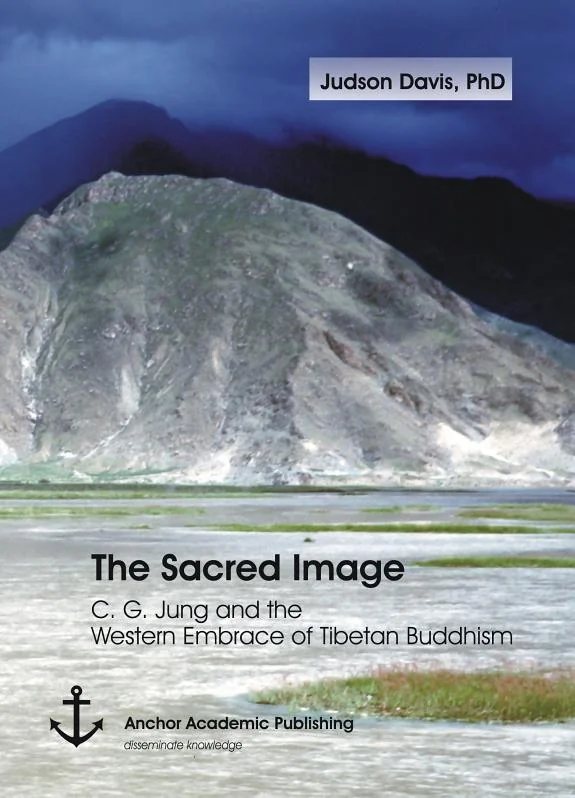
Judson Davis's The Sacred Image offers a meticulously researched account of Carl Jung's profound engagement with Tibetan Buddhism. The book excels in detailing how Jung perceived a deep consonance between the symbolic richness of tantric traditions and his own burgeoning theories of the collective unconscious. Davis compellingly argues that Jung found in Tibetan Buddhism a sophisticated mapping of the psyche, particularly evident in the symbolic language of mandalas and deity visualizations. A significant strength lies in the book's ability to connect Jung's abstract psychological concepts to concrete Tibetan Buddhist practices, such as the integration of the shadow through tantric disciplines. However, the work occasionally leans towards academic density, which might present a barrier for readers less familiar with Jungian terminology or Buddhist philosophy. The section detailing Jung's correspondence regarding the *Tibetan Book of the Dead* is particularly illuminating, showcasing his intellectual rigor in grappling with unfamiliar spiritual frameworks. Davis's analysis provides a crucial lens through which to understand the Eastern influences on Jungian psychology, moving beyond superficial comparisons to explore genuine intellectual and spiritual resonances. It is an essential read for serious students of Jung and comparative mysticism.
📝 Description
74
Judson Davis's 2015 book traces Carl Jung's deep engagement with Tibetan Buddhism.
Published in 2015, Judson Davis's The Sacred Image analyzes how Swiss psychiatrist Carl Gustav Jung incorporated Tibetan Buddhist thought into his work. Davis shows how Jung encountered yogic and tantric practices and how these Eastern philosophies offered him a framework that supported his developing theories of the psyche. The book details Jung's psychological interpretation of these traditions, seeing them as expressions of the human psyche's deepest patterns.
Davis situates Jung's interest within the early to mid-20th century's growing Western fascination with Eastern spirituality. While many intellectuals engaged with Indian and Tibetan philosophies, Jung's approach was distinct in its psychological focus. His serious exploration of Tibetan Buddhism, beginning in the 1920s and 1930s, occurred alongside other Western introductions to Eastern thought. The book is written for scholars of depth psychology, comparative religion, and those interested in the cross-pollination of Western and Eastern esoteric ideas. It offers insight into how Jung integrated Tibetan Buddhist symbolism and philosophy into his analytical psychology, particularly concerning archetypes, the individuation process, and the unconscious.
This book fits within the history of Western esotericism, specifically the period when figures like C. G. Jung began to integrate Eastern philosophical and spiritual systems into their own theoretical frameworks. Jung's engagement with Tibetan Buddhism was part of a broader trend in the early 20th century, where Western intellectuals, often influenced by figures like Helena Blavatsky, started to seriously consider non-Western spiritual traditions. Davis highlights Jung's unique contribution: interpreting these traditions not just as religions, but as profound expressions of psychological patterns and the collective unconscious. This work examines how such cross-cultural dialogues shaped both Western psychology and esoteric understanding.
💡 Why Read This Book?
• Gain a nuanced understanding of how Carl Jung's 1920s-1930s engagement with Tibetan Buddhism shaped his theories on archetypes and the individuation process, moving beyond superficial comparisons. • Explore the psychological function of Tibetan Buddhist mandalas and tantric imagery as detailed in the book, revealing their role as maps for inner transformation. • Discover how Jung's holistic approach, influenced by Eastern disciplines, offered a counterpoint to prevailing Western psychological paradigms of his era.
⭐ Reader Reviews
Honest opinions from readers who have explored this book.
❓ Frequently Asked Questions
When did Carl Jung begin seriously engaging with Tibetan Buddhism?
Carl Jung began to seriously engage with Tibetan Buddhism in the 1920s and 1930s, finding in its practices and symbolism a profound connection to his developing psychological theories.
What specific aspects of Tibetan Buddhism interested Carl Jung?
Jung was particularly drawn to the yogic and tantric disciplines, the complex symbolic world, and the holistic approach found in Tibetan Buddhism, which he saw as mirroring the psyche's depths.
How does 'The Sacred Image' connect Jung's psychology with Tibetan traditions?
The book links Jung's concepts like the collective unconscious and individuation to Tibetan Buddhist practices such as mandala visualization and tantric integration, viewing them as psychological maps.
What is the significance of the 'sacred image' in Jung's view of Tibetan Buddhism?
The 'sacred image,' such as Tibetan mandalas, represented for Jung psychological maps and tools for inner transformation, external manifestations of the psyche's deepest patterns.
What year was Judson Davis's book 'The Sacred Image' first published?
Judson Davis's book, 'The Sacred Image: C. G. Jung and the Western Embrace of Tibetan Buddhism,' was first published in August 2015.
Who would benefit most from reading 'The Sacred Image'?
Scholars of depth psychology, comparative religion enthusiasts, and individuals interested in the intersection of Western psychology and Eastern esoteric thought will find this book particularly valuable.
🔮 Key Themes & Symbolism
Jungian Psychology and Eastern Mysticism
This theme explores the profound convergence between Carl Gustav Jung's analytical psychology and the esoteric traditions of Tibetan Buddhism. Davis details how Jung perceived parallels between his concepts, such as the collective unconscious and archetypes, and the rich symbolic systems and practices found in Tibetan yogic and tantric disciplines. The book highlights Jung's view that these Eastern traditions offered a sophisticated psychological framework, providing maps of the inner world that resonated deeply with his own empirical observations of the psyche.
The Mandala as Psychological Map
A central focus is the Tibetan Buddhist mandala, which Jung interpreted as a 'sacred image' and a potent psychological map. Davis examines how these intricate diagrams, representing the cosmos and the enlightened mind, served as visual tools for contemplation and integration within Tibetan Buddhism. The book illustrates Jung's fascination with how mandalas could externalize the complex structures of the psyche, aiding in the process of individuation and the realization of wholeness.
Tantric Discipline and Psychic Integration
The work examines Jung's interest in tantric practices as methods for confronting and integrating the shadow aspects of the psyche. Davis explains how Jung saw in tantra a holistic approach that acknowledged and worked with the full spectrum of human experience, including its darker elements. This engagement provided Jung with a model for achieving psychic balance and wholeness, moving beyond purely intellectual understanding to embodied, experiential transformation.
Western Reception of Eastern Esotericism
This theme contextualizes Jung's engagement within the broader historical movement of Western intellectual and spiritual interest in Eastern religions in the early to mid-20th century. Davis analyzes how Jung's unique psychological interpretation offered a distinct perspective, influencing how Tibetan Buddhism was understood in the West. The book showcases how figures like Jung contributed to a more nuanced appreciation of these traditions beyond mere exoticism or academic study.
💬 Memorable Quotes
Direct passages from the work, attributed to the author.
“Jung discovered in these esoteric traditions a holistic approach and a deep affinity for nature.”
— This highlights Jung's perception of Tibetan Buddhism as offering a comprehensive worldview that embraced the natural world, contrasting with some more dualistic Western philosophical traditions.
“In the yogic and tantric disciplines he encountered a complex symbolic world that resonated with him deeply.”
— This statement underscores the profound personal connection Jung felt to the visual and conceptual language of Tibetan Buddhism, finding it a mirror to the symbolic processes of the unconscious mind.
“Jung was particularly drawn to the highly articulated and intricate symbolic systems of Tibetan Buddhism.”
— This points to Jung's appreciation for the detailed iconographic and philosophical structures within Tibetan Buddhism, which he saw as sophisticated representations of psychological realities.
“The work explores Jung's view of Tibetan Buddhism as providing a holistic approach to the human psyche.”
— This interpretation emphasizes Jung's belief that Tibetan practices offered a comprehensive method for understanding and integrating the totality of human experience, mind, body, and spirit.
💡 Key Ideas
Editorial paraphrase of the work's core concepts — not direct quotes.
Davis examines Jung's engagement with Eastern religions, especially Tibetan Buddhism, as greatly enhancing his pioneering psychological work.
This paraphrase signifies the book's argument that Jung's interactions with Tibetan Buddhist thought were not peripheral but integral to the development and enrichment of his psychological theories.
🌙 Esoteric Significance
Tradition
This work engages with Tibetan Buddhism, a lineage deeply rooted in Vajrayana traditions. While not strictly a practitioner's manual, it situates Jung's psychological framework within the esoteric range of Buddhist phenomenology. Davis explores how Jung's analytical psychology can be seen as a Western parallel or complement to the sophisticated maps of consciousness and transformation offered by Tibetan Buddhist tantra and meditation practices.
Symbolism
Central to the book's exploration is the Tibetan mandala, viewed as a sacred image and a psychological map. Davis discusses how Jung interpreted the intricate iconography of deities, mandalas, and tantric visualizations not merely as religious symbols, but as potent representations of archetypal energies and the structure of the psyche, facilitating inner integration and wholeness.
Modern Relevance
Today, *The Sacred Image* speaks to contemporary therapists and spiritual seekers interested in the integration of Eastern contemplative practices with Western psychological modalities. Thinkers in transpersonal psychology and those exploring mindfulness-based interventions often draw upon the very dialogues Jung initiated, seeking to bridge ancient wisdom traditions with modern mental health approaches.
👥 Who Should Read This Book
• Students of C. G. Jung: Those seeking to understand the profound influence of Eastern religions on Jung's theories of the collective unconscious and individuation will find detailed analysis. • Comparative Religion Scholars: Researchers interested in the cross-cultural dialogue between Western psychology and Tibetan Buddhism will benefit from the historical and conceptual connections drawn. • Esoteric Practitioners: Individuals engaged with Tibetan Buddhist practices or interested in the psychological underpinnings of meditation and visualization can gain insights into their symbolic depth.
📜 Historical Context
Published in 2015, Judson Davis's *The Sacred Image* arrives decades after the initial wave of Western fascination with Eastern spirituality that peaked in the mid-20th century. Carl Gustav Jung's serious engagement with Tibetan Buddhism, particularly from the 1920s through the 1940s, occurred during a period when figures like Aldous Huxley and D.T. Suzuki were also exploring Eastern thought, though often through different philosophical or religious lenses. Jung's unique contribution was his psychological interpretation of these traditions, viewing them not merely as theological systems but as profound explorations of the human psyche. His work engaged with concepts that would later be popularized by figures like the Dalai Lama, but Jung approached them from the perspective of analytical psychology. While Jung's contemporaries like Mircea Eliade were also comparative religion scholars, Jung's focus remained distinctly on the psychological dimensions of these spiritual practices, seeking empirical correlates to his theories on archetypes and the unconscious.
📔 Journal Prompts
The concept of the 'sacred image' as a psychological map.
Jung's affinity for nature within Tibetan esoteric traditions.
The symbolic world encountered in yogic and tantric disciplines.
Integrating shadow aspects through tantric methodologies.
Parallels between Jungian archetypes and Tibetan Buddhist deities.
🗂️ Glossary
Analytical Psychology
The school of psychology founded by Carl Gustav Jung, focusing on the exploration of the unconscious mind, archetypes, and the process of individuation.
Archetype
In Jungian psychology, universal, archaic patterns and images that derive from the collective unconscious and are the psychic counterpart of the instinct.
Individuation
The lifelong psychological process of differentiation of the self, by which one integrates the conscious and unconscious aspects of one's personality.
Mandala
A complex spiritual and ritual symbol in Hinduism and Buddhism, representing the universe; in Jungian psychology, often seen as a symbol of the self and wholeness.
Tantra
A set of esoteric traditions found in Hinduism, Buddhism, and Jainism, often involving ritual practices, meditation, and the use of symbolism to achieve spiritual goals.
Vajrayana
A branch of Buddhism, prominent in Tibet, characterized by its use of tantras and complex rituals aimed at rapid spiritual realization.
Collective Unconscious
According to Jung, a part of the unconscious mind derived from ancestral experience and capable of being common to all humanity.
This book appears in 1 collection
🔮 Readers Also Liked
Browse all →









From the “Dream Yoga” Collection
View all →





More Free Occult Philosophy Books
View all →