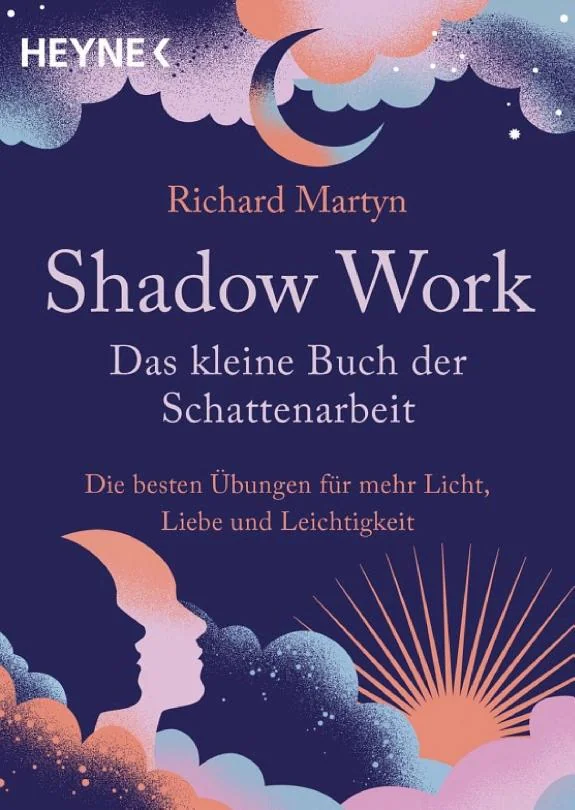
Shadow Work – Das kleine Buch der Schattenarbeit
 83
83

Shadow Work – Das kleine Buch der Schattenarbeit
Richard Martyn’s "Shadow Work" tackles the often-avoided subject of our hidden selves with a pragmatic, exercise-driven approach. The book’s strength lies in its clear, accessible language, demystifying complex psychological concepts into digestible steps. Martyn avoids overly academic jargon, making the arduous task of confronting one's shadow feel less intimidating. A particularly resonant passage describes the "shadow projection" onto others, illustrating how unacknowledged personal flaws can manifest as harsh judgments of those around us – a common, yet rarely self-examined, phenomenon. However, the text occasionally borders on oversimplification; while practical, some exercises might benefit from deeper exploration of the underlying theoretical frameworks, particularly for those unfamiliar with Jungian concepts. The limitation is a slight lack of nuance when addressing deeply ingrained traumas. Nevertheless, for its directness and actionable advice, "Shadow Work" offers a valuable primer for self-exploration.
📝 Description
83
Richard Martyn's 2025 book, 'Shadow Work – Das kleine Buch der Schattenarbeit,' guides readers to confront hidden parts of themselves.
This book addresses the disowned aspects of the self, arguing that true personal growth comes from acknowledging rather than suppressing negative emotions, fears, or past traumas. Martyn offers concrete methods to identify these 'shadow' elements, trace their origins, and change their impact on present actions and relationships. The aim is to achieve greater self-acceptance and emotional balance.
It is written for those seeking deeper self-awareness and emotional maturity. The text is particularly useful for individuals caught in repetitive behaviors, experiencing self-sabotage, or struggling with persistent feelings of inadequacy and anxiety. Readers interested in psychological introspection, personal development, and applying spiritual principles to everyday life will find it valuable. It is for those ready to face difficult self-truths to live more authentically.
The concept of the 'shadow' originates in analytical psychology, famously articulated by Carl Jung. Jung described the shadow as the repressed or hidden parts of the personality. Martyn's 2025 work appears in a time when Jungian ideas are common in self-help. This book aims to simplify these complex psychological and spiritual concepts into practical exercises for contemporary readers.
💡 Why Read This Book?
• Gain practical techniques for identifying and integrating your "shadow" aspects, directly addressing the core concepts presented in Martyn's exercises. • Understand how repressed fears and emotional wounds, as detailed in the book's exploration of psychological blocks, impede your progress towards self-acceptance. • Learn actionable methods to transform the influence of your unconscious "shadow" elements, a key practical takeaway from Martyn's approach to personal growth.
⭐ Reader Reviews
Honest opinions from readers who have explored this book.
❓ Frequently Asked Questions
What is 'Shadow Work' according to Richard Martyn's book?
Shadow Work, as presented by Richard Martyn, is the process of bringing unconscious, disowned parts of the self—such as fears, shame, and past traumas—into conscious awareness for integration and healing.
When was Richard Martyn's 'Shadow Work – Das kleine Buch der Schattenarbeit' first published?
Richard Martyn's 'Shadow Work – Das kleine Buch der Schattenarbeit' was first published on April 16, 2025.
What are the main benefits of practicing Shadow Work as described in the book?
The book outlines benefits including improved self-understanding, greater self-acceptance, the ability to form more harmonious relationships, and overall inner growth by resolving internal conflicts.
Are the exercises in the book suitable for beginners?
Yes, the book emphasizes simple, effective exercises designed to guide readers through the process of shadow work, making it accessible even for those new to the concept.
Does the book offer historical context for Shadow Work?
While focusing on practical application, the book implicitly draws upon concepts from analytical psychology, particularly the work of Carl Jung, who popularized the notion of the 'shadow self'.
Can 'Shadow Work' help with anxiety and recurring negative patterns?
Absolutely. Martyn's approach suggests that by confronting the unconscious roots of anxiety and recurring patterns, individuals can begin to dismantle these blocks and find greater emotional freedom.
🔮 Key Themes & Symbolism
The Unconscious Shadow
The book posits the existence of a 'shadow self'—a repository for disowned emotions, fears, and experiences. This hidden aspect, often formed in childhood, unconsciously influences behavior and perceptions. Martyn guides readers to identify these buried elements, which can manifest as self-sabotage, anxiety, or projection onto others. Understanding the shadow is presented not as a path to elimination, but as a critical step toward wholeness.
Integration for Wholeness
The core methodology revolves around 'integration,' a process of consciously acknowledging and accepting shadow aspects rather than suppressing them. This integration is framed as the key to achieving genuine self-acceptance and inner peace. By bringing these hidden parts into the light, individuals can reclaim lost energy and resolve internal conflicts that hinder personal development and authentic living.
Self-Acceptance and Growth
Martyn argues that true self-acceptance arises from embracing all facets of the self, including the less desirable ones. The book offers practical exercises designed to foster this acceptance, leading to profound personal growth. By confronting what is hidden, readers can liberate themselves from recurring negative patterns and cultivate a more authentic and fulfilling existence.
Harmonious Relationships
The book suggests that unresolved shadow aspects often create friction in interpersonal relationships through projection and misunderstanding. By engaging in shadow work, individuals can improve their relational dynamics. Understanding one's own hidden motivations and fears leads to greater empathy and clearer communication, fostering healthier and more harmonious connections with others.
💬 Memorable Quotes
Direct passages from the work, attributed to the author.
“Our hidden fears are often the unseen architects of our daily lives.”
— This highlights the pervasive influence of the unconscious 'shadow' on conscious behavior and decision-making, suggesting that unresolved psychological material shapes our reality.
“To truly accept yourself, you must first acknowledge all that you have tried to hide.”
— This emphasizes the book's central thesis: genuine self-love and acceptance are contingent upon confronting and integrating the disowned, darker aspects of the personality.
“The patterns that block your happiness often originate in forgotten wounds.”
— This points to the link between past traumas or emotional injuries and present-day obstacles, framing shadow work as a means to heal these old wounds and clear the path to well-being.
“When we project our shadow, we see our flaws reflected in others.”
— This describes the psychological defense mechanism of projection, where unacknowledged personal shortcomings are attributed to external individuals, leading to conflict and misunderstanding.
“Integration is not about erasing the shadow, but about learning to live with its presence consciously.”
— This clarifies that the goal of shadow work is not to eliminate negative traits or experiences but to achieve a conscious relationship with them, thereby reducing their disruptive power.
🌙 Esoteric Significance
Tradition
While primarily rooted in analytical psychology, the concept of 'shadow work' resonates strongly with esoteric traditions that explore the hidden dimensions of the psyche. It aligns with Gnostic ideas of confronting the 'lower self' or the Ignorance that binds the spirit, and with Hermetic principles of 'as above, so below,' suggesting that inner work impacts outer reality. Martyn’s approach provides a practical, modern framework for the alchemical process of integrating disparate parts of the self, a theme echoed in various mystical paths.
Symbolism
The 'shadow' itself functions as a potent symbol for the unacknowledged, repressed aspects of the psyche. Martyn’s work implicitly utilizes the symbolism of light and darkness, where bringing the shadow into the light signifies conscious awareness and integration. Other potential symbols, though not explicitly detailed in the blurb, might include mirrors (reflecting the self), masks (hiding the true self), or thresholds (crossing into awareness), all common motifs in esoteric literature representing transformation and self-discovery.
Modern Relevance
Contemporary interest in mindfulness, somatic experiencing, and trauma-informed care often intersects with the principles of shadow work. Thinkers and practitioners in fields like transpersonal psychology, depth psychotherapy, and even certain branches of modern Paganism and Western Esotericism draw upon Jungian concepts of the shadow. Martyn's accessible approach makes these insights applicable to a wider audience seeking personal transformation beyond traditional therapeutic settings.
👥 Who Should Read This Book
• Individuals struggling with recurring negative self-talk or self-sabotaging behaviors, seeking concrete methods to understand and alter these patterns. • Practitioners of esoteric or spiritual disciplines who wish to deepen their self-awareness and integrate psychological insights into their spiritual path. • Therapists and coaches looking for practical, accessible tools to guide clients through the process of confronting and integrating disowned aspects of the self.
📜 Historical Context
Richard Martyn's "Shadow Work – Das kleine Buch der Schattenarbeit," published in 2025, arrives in an era saturated with self-help literature drawing heavily from analytical psychology. Its conceptual framework is deeply indebted to Carl Jung, who first articulated the concept of the 'shadow' in his seminal works beginning in the 1910s and continuing through the mid-20th century. Jung's exploration of the unconscious and archetypes offered a counterpoint to the more behaviorist or Freudian schools dominant at various points. Martyn's book, by offering practical exercises, situates itself within a modern interpretative lineage of Jungian thought, akin to works by figures like Robert A. Johnson or Marie-Louise von Franz, who also sought to make Jung's complex ideas accessible. While Jung himself faced criticism and debate regarding the empirical verifiability of his concepts, his influence on depth psychology and modern spirituality remains undeniable, with works like Martyn's seeking to harness its therapeutic potential for contemporary audiences.
📔 Journal Prompts
Reflect on a recurring pattern of behavior that you wish to change, and identify potential 'shadow' origins.
Analyze a recent projection onto another person: what hidden aspect of yourself might this reveal?
Consider a deeply held fear: how does acknowledging it, rather than avoiding it, shift its power?
Explore the concept of integration: what does it mean to accept a disowned part of your personality?
Examine a past emotional wound: how might integrating this experience contribute to your self-acceptance?
🗂️ Glossary
Shadow
The unconscious, disowned, or repressed aspects of the personality that an individual refuses to acknowledge, often containing fears, shame, and instinctual drives.
Shadow Work
The psychological and spiritual practice of bringing unconscious shadow aspects into conscious awareness for integration and healing.
Integration
The process of consciously acknowledging, accepting, and incorporating disowned parts of the self, leading to greater wholeness and self-acceptance.
Projection
A psychological defense mechanism where an individual attributes their own unacceptable thoughts, feelings, or motives onto another person.
Self-Acceptance
The state of embracing all parts of oneself, including perceived flaws and imperfections, leading to inner peace and emotional maturity.
Emotional Wounds
Past experiences of trauma, neglect, or significant emotional pain that have not been fully processed and continue to affect present feelings and behaviors.
Inner Growth
The process of developing psychological and spiritual maturity through self-awareness, learning, and the integration of challenging life experiences.
This book appears in 1 collection
🔮 Readers Also Liked
Browse all →








From the “Shadow Work” Collection
View all →




More Free Occult Philosophy Books
View all →