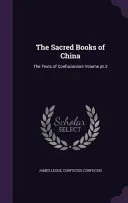
The Sacred Books of China
 77
77

The Sacred Books of China
James Legge's translation of "The Sacred Books of China" remains a significant, if somewhat dated, resource. The sheer scope of the work, encompassing foundational texts of Chinese thought, is its primary strength. Legge’s dedication to scholarly accuracy, evident in his extensive notes and appendices, provides invaluable context. However, the language, while precise for its time, can feel dense and archaic to a contemporary reader. The original blurb’s focus on artifactual integrity is accurate; the book reads as a scholarly reproduction, complete with the signs of its age. A particularly illuminating passage is the exploration of the concept of 'Li' within the Confucian texts, which details the intricate social and ritual order central to his philosophy. Despite its linguistic challenges, the work’s enduring value lies in its comprehensive presentation of these seminal texts. It is an essential, albeit demanding, reference for serious study.
📝 Description
77
James Legge published his translation of The Sacred Books of China in the late 19th century.
This collection presents James Legge's late 19th-century translation of key Chinese philosophical and religious texts. It includes major works that have shaped East Asian thought for centuries, offering direct access to primary sources. Legge's scholarly endeavor aimed to make classical Chinese literature available to a Western readership.
The original annotations and library markings are preserved, highlighting its value as an artifact of intellectual history. This compilation is for serious students of comparative religion, philosophy, and sinology. Researchers seeking original material, and individuals interested in the origins of Confucianism, Taoism, and other spiritual traditions, will find it comprehensive. It is suited for those who value scholarly context over simplified introductions.
The work reflects the mid-Victorian era's growing interest in global cultures. Legge's translation project influenced Orientalist studies and academic sinology. Its publication coincided with a period of global expansion, impacting Western perspectives on non-Western traditions. Legge's work became a basis for later scholarship.
While not strictly esoteric in the Western sense, these texts offer insights into deep philosophical currents that informed East Asian spiritual practices. The Tao, as a fundamental principle, represents a concept explored in various mystical and philosophical traditions worldwide. The collection provides primary source material for understanding the intellectual frameworks that underpin practices often considered part of a broader, non-Western esoteric heritage. It allows for comparative study with other traditions that seek ultimate reality or universal principles.
💡 Why Read This Book?
• Understand the foundational principles of Taoism and Confucianism directly from translated classical texts, offering insights into concepts like the Tao and Li that are not easily grasped through secondary interpretations. • Gain historical context for the 19th-century academic reception of Chinese philosophy, as evidenced by James Legge's scholarly approach and the original publication's place within sinological studies. • Access primary source material for the study of ancient Chinese cosmology and ethics, providing direct engagement with ideas of Tian (Heaven) and Ren (humaneness) that have shaped East Asian civilizations for centuries.
⭐ Reader Reviews
Honest opinions from readers who have explored this book.
❓ Frequently Asked Questions
What are the primary texts included in James Legge's "The Sacred Books of China"?
This collection typically includes foundational texts such as the I Ching (Book of Changes), the Tao Te Ching, the Analects of Confucius, and the writings of Mencius, among others, offering a broad survey of classical Chinese thought.
When was James Legge's translation originally published?
James Legge's comprehensive series of translations of Chinese classics, including these "Sacred Books," began publication in the late 19th century, with many volumes appearing in the 1870s and 1880s.
Is "The Sacred Books of China" considered a primary or secondary source?
It is considered a primary source for the study of ancient Chinese philosophy and religion, as it contains direct translations of original texts. However, Legge's translation and notes also represent a secondary scholarly interpretation from the 19th century.
What is the significance of the 'public domain in the United States' mention?
This indicates that the original work, due to its age and publication history, is not subject to copyright in the U.S., allowing for wider dissemination and reproduction of this specific edition.
What does the presence of 'library stamps' and 'copyright references' signify?
These notations signify that the edition was reproduced from physical copies held in significant libraries, highlighting the book's cultural importance and its journey through academic institutions.
How does this work relate to Confucianism and Taoism?
It provides direct translations of key texts central to both Confucianism (e.g., Analects) and Taoism (e.g., Tao Te Ching), allowing readers to engage with the core doctrines and philosophies of these influential traditions.
🔮 Key Themes & Symbolism
The Tao as Cosmic Principle
The concept of the Tao, or Dao, is explored as the fundamental, ineffable force underlying all existence in Taoist texts. It is the natural order, the way of the universe that predates and encompasses all phenomena. Understanding the Tao involves recognizing its subtle, spontaneous, and non-interfering nature, as depicted in texts like the Tao Te Ching. This principle guides the sage's actions toward wu wei (non-action) and alignment with natural flow, a core tenet for esoteric interpretation of natural law.
Li: Ritual and Social Order
Within the Confucian sections, 'Li' emerges as a critical concept encompassing rites, rituals, etiquette, and social propriety. It is the framework through which human relationships are ordered and virtue is cultivated. Legge's translations detail how Li functions to maintain harmony within the family and state, reflecting a belief in structured social interaction as a path to ethical development. This emphasis on correct form and practice offers a parallel to ritualistic elements found in various esoteric traditions.
Tian and the Mandate of Heaven
The concept of 'Tian,' often translated as Heaven, represents a supreme cosmic power and moral order in ancient Chinese thought. Texts discuss the Mandate of Heaven, a divine right to rule granted to virtuous leaders, which can be revoked if they become corrupt. This idea links political legitimacy directly to moral conduct and celestial approval, illustrating a worldview where the earthly realm is governed by a higher, ethical cosmic force.
Ren: Humaneness and Benevolence
Central to Confucian ethics, 'Ren' signifies humaneness, benevolence, and the ideal quality of a person. It is cultivated through self-discipline, empathy, and adherence to Li. The texts suggest that Ren is the ultimate virtue, the foundation of a good society and a cultivated individual. Achieving Ren involves understanding one's relationship with others and acting with genuine care and consideration, reflecting universal ethical aspirations.
💬 Memorable Quotes
Direct passages from the work, attributed to the author.
“The Tao that can be told is not the eternal Tao.”
— This opening line from the Tao Te Ching immediately establishes the ineffable nature of the fundamental principle. It suggests that true understanding of the Tao transcends language and conceptualization, a common theme in mystical traditions worldwide.
“Within the four seas, all men are brothers.”
— This sentiment, attributed to Confucius, speaks to a universal kinship and a sense of shared humanity that extends beyond immediate social circles. It highlights an ethical ideal of interconnectedness and mutual responsibility.
“To know what you know and what you do not know, that is true knowledge.”
— This aphorism, often associated with the Analects, emphasizes intellectual humility and the importance of self-awareness in the pursuit of wisdom. It prioritizes honest appraisal of one's own understanding.
💡 Key Ideas
Editorial paraphrase of the work's core concepts — not direct quotes.
The superior man is modest in his speech, but exceeds in his actions.
This quote from the Analects contrasts outward presentation with inner substance, valuing demonstrated virtue and competence over mere rhetoric. It underscores the importance of practical application of ethical principles.
He who knows does not speak; he who speaks does not know.
Another paradox from the Tao Te Ching, this line suggests that profound wisdom is often silent and beyond articulation. Those who truly grasp certain truths may find words inadequate or even misleading.
🌙 Esoteric Significance
Tradition
While "The Sacred Books of China" primarily presents classical Confucian and Taoist texts, its esoteric significance lies in its foundational role for Western esoteric interpretations of Eastern thought. It provided the source material for later syntheses, such as those found in Theosophy and various New Age movements. The Taoist texts, in particular, with their emphasis on natural law, cosmic harmony, and inner cultivation, became a touchstone for Western traditions seeking alternatives to Abrahamic religions and classical Western philosophy.
Symbolism
Key symbols include the Yin and Yang, representing the complementary dualities that govern the cosmos (e.g., dark/light, feminine/masculine). The trigrams and hexagrams of the I Ching symbolize the dynamic interplay of forces and the cyclical nature of change, serving as a divinatory and philosophical tool. The concept of the 'Sage' within Taoism represents an individual who has achieved perfect alignment with the Tao, embodying wisdom and effortless action, a recurrent archetype in esoteric literature.
Modern Relevance
Contemporary esoteric practitioners and thinkers continue to draw upon Legge's translations. Schools of modern Taoism, Qigong, Tai Chi, and internal alchemy frequently reference the Tao Te Ching and other texts presented here. Furthermore, concepts like wu wei (effortless action) and the Tao's natural flow influence modern mindfulness practices, ecological philosophies, and alternative approaches to personal development and leadership, demonstrating the enduring appeal of these ancient Chinese principles.
👥 Who Should Read This Book
• Students of comparative religion and philosophy seeking direct engagement with the foundational texts of Taoism and Confucianism, benefiting from James Legge's scholarly translation. • Researchers in sinology and East Asian studies who require access to primary source material, appreciating the historical context and detailed annotations provided in this edition. • Individuals interested in esoteric traditions who wish to explore the roots of concepts like the Tao, Yin/Yang, and wu wei that have influenced Western mystical thought and practices.
📜 Historical Context
James Legge's ambitious translation project, "The Sacred Books of China," was published in multiple volumes between 1879 and 1891 as part of the larger "Sacred Books of the East" series, edited by Max Müller. This era saw a surge in Western academic interest in non-Western religions and philosophies, partly fueled by colonial expansion and the burgeoning field of comparative religion. Legge, a Scottish missionary and scholar, aimed to provide accurate English renderings of foundational Chinese texts for a scholarly audience. His work was a significant contribution, making texts like the I Ching and the Analects accessible beyond specialized sinological circles. However, it also operated within the intellectual currents of Victorian Orientalism, which sometimes framed Eastern thought through a Western lens. Competing schools of thought in Western academia debated the authenticity and philosophical value of these translations, with figures like Friedrich Nietzsche offering contrasting views on Chinese philosophy.
📔 Journal Prompts
The Tao's ineffable nature and its implications for knowledge.
Cultivating Ren through understanding the principles of Li.
Reflecting on the Mandate of Heaven and its connection to ethical leadership.
The significance of wu wei in navigating modern challenges.
Interpreting the symbolic language of the I Ching's hexagrams.
🗂️ Glossary
Tao (Dao)
The fundamental principle or Way of the universe in Taoism. It is considered the ineffable, natural order that underlies all existence and governs its spontaneous development.
Li
In Confucianism, a concept encompassing rites, rituals, propriety, etiquette, and social order. It denotes the proper way to conduct oneself in social interactions and ceremonies.
Ren
The supreme Confucian virtue, often translated as humaneness, benevolence, or goodness. It signifies the ideal moral quality of a person and is cultivated through ethical practice.
Tian (Heaven)
In ancient Chinese cosmology, the supreme deity or cosmic force representing a moral order. The Mandate of Heaven links the ruler's legitimacy to Tian's approval.
Wu Wei
A Taoist concept meaning 'non-action' or 'effortless action.' It refers to acting in accordance with the natural flow of the Tao, without forcing or striving.
I Ching (Book of Changes)
An ancient Chinese divination text and one of the oldest classics. It uses hexagrams to represent cosmic forces and provide guidance on decision-making.
Analects
A collection of sayings and ideas attributed to the Chinese philosopher Confucius and his contemporaries, forming a foundational text of Confucianism.