Self-hypnosis
 82
82

Self-hypnosis
Bolduc's "Self-Hypnosis" provides a clear, step-by-step manual for self-induced trance states, a welcome contrast to more esoteric or purely theoretical works. Its strength lies in its practical, no-nonsense approach, detailing specific exercises for relaxation and suggestion. The 1985 publication date places it within a specific wave of interest in psychological self-improvement, distinct from earlier, more mystical explorations of the mind. A potential limitation is the book's straightforwardness; those seeking deep dives into the philosophical underpinnings of consciousness or complex ritualistic applications might find it too pragmatic. However, for the stated purpose of learning self-hypnosis, the chapter on 'Setting Goals for Your Sessions' offers concrete, actionable advice that remains relevant for anyone wishing to apply these techniques for personal growth.
📝 Description
82
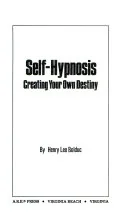
Henry Leo Bolduc's 1985 book offers a methodical guide to self-induced hypnotic states.
Published in 1985, "Self-Hypnosis" by Henry Leo Bolduc presents a systematic approach to achieving self-induced hypnotic states. The book frames self-hypnosis not as a passive experience but as a learnable discipline requiring regular practice. Bolduc details specific methods for entering these altered states, managing them effectively, and applying them to personal growth and resolving issues. A central idea is that individuals possess the inherent ability to access their subconscious for positive change.
This work is useful for people seeking practical techniques for mental control and self-improvement. It will interest those curious about the mind's untapped potential beyond standard self-help approaches. Readers with a background in psychology, parapsychology, or less common spiritual practices may find its perspective particularly fitting. The book suits newcomers ready to dedicate themselves to the practice, as well as experienced individuals aiming to refine their comprehension and command.
While not a text on ritual or magic, Bolduc's "Self-Hypnosis" emerged in the mid-1980s, a time when interest in consciousness and alternative therapies grew. It connected with a broader cultural interest in exploring the mind, similar to how figures like Milton H. Erickson investigated altered states for therapeutic purposes. Bolduc’s contribution demystifies self-hypnosis, making its principles accessible to a wider audience interested in inner exploration.
💡 Why Read This Book?
• Learn to systematically induce altered states of consciousness using techniques detailed in the book, enabling access to subconscious resources for personal change. • Gain practical methods for setting specific, actionable goals within self-hypnotic sessions, as outlined in chapters discussing intentionality and suggestion. • Understand the principles of mental discipline and focused attention, as presented in the 1985 publication, to enhance personal control over thoughts and emotions.
⭐ Reader Reviews
Honest opinions from readers who have explored this book.
❓ Frequently Asked Questions
When was Henry Leo Bolduc's "Self-Hypnosis" first published?
Henry Leo Bolduc's "Self-Hypnosis" was first published in 1985, positioning it within the late 20th-century interest in psychological self-improvement and mind-body practices.
What are the core techniques taught in "Self-Hypnosis"?
The book teaches techniques for entering self-induced hypnotic states, focusing on relaxation, suggestion, and visualization as methods for accessing subconscious resources.
Is "Self-Hypnosis" suitable for beginners?
Yes, the book is designed as a practical guide, offering methodical steps and explanations that make it accessible for individuals new to the practice of self-hypnosis.
What is the main benefit of practicing self-hypnosis according to the book?
The primary benefit highlighted is the individual's capacity to utilize their own subconscious mind for constructive personal change, problem-solving, and mental discipline.
Does the book discuss the history of hypnosis?
While not a historical treatise, the book's 1985 publication date situates it within a period of growing interest in psychological applications of hypnosis, influenced by figures like Milton H. Erickson.
Can self-hypnosis be used for specific goals?
Absolutely. The book dedicates sections to setting clear objectives for self-hypnotic sessions, emphasizing goal-oriented practice for achieving desired outcomes.
🔮 Key Themes & Symbolism
Self-Induced States
The central theme is the individual's ability to consciously enter and manage altered states of consciousness through self-hypnosis. Bolduc presents this not as a passive experience but an active skill that can be developed. It involves specific techniques like progressive relaxation and focused mental imagery to achieve a state conducive to suggestion and introspection. This contrasts with external hypnotic methods and underscores personal agency in mental exploration.
Goal Setting and Suggestion
A significant aspect of the book is the application of self-hypnosis for targeted outcomes. Bolduc details how to formulate effective suggestions and integrate them into hypnotic sessions to foster personal growth, overcome challenges, or cultivate desired behaviors. This practical application moves beyond mere trance induction to purposeful mental reprogramming.
Mind-Body Discipline
The work frames self-hypnosis as a discipline akin to meditation or other forms of mental training. It emphasizes the cultivation of focus, control, and awareness over one's internal mental environment. By learning to direct one's thoughts and responses, practitioners can achieve greater psychological resilience and self-mastery, linking mental states to physical and emotional well-being.
Subconscious Resource Access
Bolduc posits that the subconscious mind holds significant untapped potential. Self-hypnosis serves as a key to unlock these resources, allowing individuals to access intuition, creativity, and innate problem-solving abilities. The book guides readers on how to engage this inner reservoir constructively for personal development and insight.
💬 Memorable Quotes
Direct passages from the work, attributed to the author.
“The ability to enter a hypnotic state is a skill that can be learned and improved.”
— This statement frames self-hypnosis not as an innate talent or mystical gift, but as a practical, teachable discipline. It assures readers that through consistent practice and the methods outlined, anyone can develop proficiency in self-induced trance states.
“Effective suggestions are clear, concise, and positive.”
— This highlights a core principle for utilizing self-hypnosis constructively. It emphasizes that the power of suggestion lies in its precise formulation, focusing on desired outcomes rather than perceived problems to guide the subconscious effectively.
“Relaxation is the gateway to the hypnotic state.”
— This emphasizes the foundational role of physical and mental relaxation in preparing the mind for self-hypnosis. It suggests that by achieving a state of deep calm, one becomes more receptive to the deeper levels of consciousness explored in the practice.
“Visualize the desired outcome as if it has already occurred.”
— This points to the power of visualization within self-hypnotic practice. By vividly imagining the successful achievement of a goal, the practitioner can powerfully impress this outcome onto the subconscious mind.
“Your subconscious mind is a powerful ally when properly directed.”
— This expresses the empowering philosophy behind self-hypnosis as presented by Bolduc. It suggests that the key is not to suppress or fear the subconscious, but to learn how to communicate with it constructively for personal benefit.
🌙 Esoteric Significance
Tradition
While not strictly an esoteric text in the vein of Hermeticism or Kabbalah, "Self-Hypnosis" taps into a broader Western tradition of mind-culture and psychological exploration that runs parallel to esoteric paths. It shares with these traditions an interest in accessing non-ordinary states of consciousness and harnessing the power of the mind for transformation. It can be seen as a secularized, practical application of principles concerning the mind's latent abilities, often explored in more mystical frameworks.
Symbolism
The book primarily employs symbolic representation through visualization. The 'gateway' metaphor, often used to describe the relaxed state, symbolizes a threshold to the subconscious. Inner landscapes, depicted through imaginative projection, serve as symbolic representations of the practitioner's internal world, where challenges are often personified or transformed into symbolic elements for resolution.
Modern Relevance
Bolduc's work remains relevant in contemporary discussions around mindfulness, cognitive behavioral therapy (CBT) techniques, and self-directed neuroplasticity. Modern practitioners of mindfulness and meditation often employ similar principles of focused attention and mental discipline. Its emphasis on personal agency and goal-oriented suggestion also aligns with self-coaching methodologies and contemporary therapeutic approaches that empower individuals to actively participate in their own mental and emotional well-being.
👥 Who Should Read This Book
['• Individuals interested in practical self-improvement techniques: Those seeking concrete methods to manage stress, enhance focus, or overcome personal obstacles will find actionable guidance.', '• Students of psychology and consciousness: Readers wanting to understand the mechanics of altered states and the power of suggestion from a non-clinical perspective will find value.', '• Practitioners of meditation or mindfulness: Those already engaged in mental discipline practices can use this book to explore a related, goal-oriented approach to inner work.']
📜 Historical Context
Published in 1985, Henry Leo Bolduc's "Self-Hypnosis" emerged during a period when interest in psychological self-help and the mind's potential was gaining significant traction. The era saw a broader exploration of consciousness, influenced by figures like Milton H. Erickson, whose clinical hypnosis techniques were widely studied and adapted. While not directly tied to the occult traditions, Bolduc's work benefited from a cultural milieu increasingly receptive to alternative approaches to mental well-being and personal development. It offered a practical, accessible method for self-improvement at a time when many were seeking alternatives to conventional therapeutic models. The book's pragmatic approach distinguished it from more esoteric explorations of the mind, focusing on reproducible techniques rather than spiritual or metaphysical dogma. Its reception was likely part of a wider trend that included increased availability of books on meditation, biofeedback, and other mind-altering practices.
📔 Journal Prompts
The process of achieving relaxation as described in the book: what mental images or sensations arise?
Formulating a clear, positive suggestion for self-improvement based on Bolduc's guidelines.
How does the concept of the 'subconscious ally' compare to your current understanding of your inner mind?
Reflect on a specific goal you might set for a self-hypnosis session, as detailed in the book.
Compare the 'gateway' metaphor for relaxation to other mental entry points you've experienced.
🗂️ Glossary
Self-Hypnosis
The practice of inducing a hypnotic state within oneself, characterized by heightened suggestibility and focused awareness, for purposes of self-improvement or exploration.
Suggestion
A statement or idea presented to the subconscious mind during a hypnotic state, intended to influence thoughts, feelings, or behaviors.
Hypnotic State
An altered state of consciousness marked by deep relaxation, focused attention, and increased receptivity to suggestion, achieved voluntarily.
Visualization
The mental creation of vivid imagery, often used in self-hypnosis to impress desired outcomes or scenarios onto the subconscious mind.
Subconscious Mind
The part of the mind operating below the level of conscious awareness, believed to store memories, emotions, and influence behavior; accessed through techniques like hypnosis.
Progressive Muscle Relaxation
A technique involving the systematic tensing and releasing of muscle groups to achieve deep physical relaxation, often used as a precursor to self-hypnosis.
Mental Discipline
The practice of training the mind to focus, control thoughts, and direct attention deliberately, a key component of effective self-hypnosis.
This book appears in 1 collection
🔮 Readers Also Liked
Browse all →








From the “Sound Healing” Collection
View all →









More Free Occult Philosophy Books
View all →