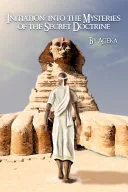
Initiation into the Mysteries of the Secret Doctrine
 72
72

Initiation into the Mysteries of the Secret Doctrine
Aceka's "Initiation into the Mysteries of the Secret Doctrine" attempts a sweeping survey of occult knowledge, framing the Zodiac as its linchpin. The author demonstrates a commendable grasp of historical esoteric traditions, particularly in linking early cosmological models to the constellations. A notable strength lies in the detailed exposition of how ancient cultures integrated astronomical observations into their spiritual frameworks, as seen in the analysis of specific stellar mythologies. However, the work sometimes falters in its ambition to connect disparate historical threads, occasionally leading to broad assertions that could benefit from more granular supporting evidence. The interpretation of the Zodiac as the absolute central concept, while provocative, may feel overly reductive to some scholars of comparative religion. The book's primary limitation is its dense prose, which can obscure the very keys it seeks to reveal. Despite this, for dedicated researchers of esoteric history, the book offers a unique, albeit challenging, perspective on the enduring legacy of ancient wisdom.
📝 Description
72
Initiation into the Mysteries of the Secret Doctrine, published in 2015, examines occult science through the lens of the Zodiac.
Aceka's 2015 work, Initiation into the Mysteries of the Secret Doctrine, investigates occult science and its historical presence. The book traces the influence of hidden knowledge across ancient civilizations, showing its continuity into modern times. It posits the Zodiac as a primary element for understanding existence's cyclical nature. This text is for dedicated students of esoteric philosophy, comparative mythology, and ancient cosmology. It will appeal to those seeking the underlying structures of occult traditions and their links to astronomical cycles. Readers interested in the historical development of secret doctrines will find ample material.
The book connects with the long history of esoteric thought, bridging antiquity and the present. It places its examination within a larger view of how cultures encoded spiritual and cosmological principles in myths, rituals, and astronomical observations. A particular focus is the development of astrological systems. Central to Aceka's work is the Zodiac, which is presented not just as an astrological tool, but as a cosmic blueprint for life's cycles. The text analyzes teachings attributed to constellations, showing them as channels for comprehending ancient esoteric philosophy and its perceived universal truths.
This book engages with the Theosophical and Anthroposophical traditions, which often seek to synthesize scientific, philosophical, and religious ideas into a coherent worldview. Like many works in these fields, it looks to ancient civilizations for wisdom and sees patterns in cosmology, particularly in astrology, as keys to understanding universal laws. The focus on the Zodiac as a blueprint for existence aligns with esoteric interpretations of celestial bodies as symbolic representations of spiritual processes and human development.
💡 Why Read This Book?
• Learn how the Zodiac is presented as a fundamental framework for understanding life cycles, a concept extensively explored in Chapter 3, 'The Cosmic Wheel'. • Gain insight into the teachings attributed to specific constellations and their role in ancient esoteric philosophy, as detailed in the sections on celestial lore. • Understand the historical tracing of occult science from ancient cultures to the present day, a core aspect of the book's 2015 publication context.
⭐ Reader Reviews
Honest opinions from readers who have explored this book.
❓ Frequently Asked Questions
When was 'Initiation into the Mysteries of the Secret Doctrine' first published?
The book "Initiation into the Mysteries of the Secret Doctrine" by Aceka was first published on May 26, 2015. This publication date situates it within contemporary esoteric literature, drawing on historical research.
What is the central concept discussed in Aceka's book?
The central concept Aceka emphasizes is the Zodiac, presented as the key to understanding the life cycle and ancient esoteric philosophy. The book explores how this astronomical framework was perceived in various historical contexts.
What is the main subject matter of 'Initiation into the Mysteries of the Secret Doctrine'?
The book is an extensive consideration of occult science, tracing the historical role of secret knowledge through ancient cultures and into the present. It focuses on astronomical cycles and their philosophical implications.
Who is the author of 'Initiation into the Mysteries of the Secret Doctrine'?
The author is Aceka. The work is a significant contribution to esoteric studies, first appearing in print in 2015.
Does the book offer practical guidance for spiritual development?
While the book focuses on understanding ancient esoteric philosophy and occult science through historical and cosmological lenses, it implicitly encourages a reevaluation of these systems, which can inform spiritual development.
What is the historical scope of the book's research?
The book examines the historical record of secret knowledge from ancient cultures through to the present day, with a particular emphasis on the development and understanding of cosmological and astrological systems.
🔮 Key Themes & Symbolism
The Zodiac as Cosmic Blueprint
Aceka posits the Zodiac not merely as an astrological tool but as a fundamental construct for comprehending the cyclical nature of existence and consciousness. The book systematically explores how this celestial framework has been interpreted across different epochs and cultures as a representation of universal life processes, from birth and growth to decay and renewal. It argues that understanding the Zodiac is paramount to unlocking the deeper meanings embedded within ancient esoteric philosophies and cosmological models.
Constellational Teachings
A significant focus of the work is the detailed examination of the 'teachings of the Constellations'. Aceka presents these stellar patterns as repositories of ancient wisdom, conveying profound philosophical and spiritual truths. The book looks at how these celestial configurations were understood and utilized by ancient peoples, suggesting they served as a form of divine language or a map of spiritual evolution, providing keys to understanding the underlying order of the cosmos and humanity's place within it.
Historical Trajectory of Occult Science
The book undertakes an extensive consideration of occult science, charting its historical trajectory. It meticulously traces the lineage of secret knowledge, demonstrating its presence and influence within various ancient civilizations. Aceka aims to show how these traditions, often obscured or misunderstood, have persisted and evolved, ultimately influencing contemporary esoteric thought and practice, thereby bridging the gap between antiquity and the modern era.
Esoteric Philosophy in Ancient Cultures
Aceka seeks to reveal the core tenets of ancient esoteric philosophy by analyzing its manifestations in historical records. The work highlights how concepts related to the celestial sphere, particularly the Zodiac and constellations, were integral to these philosophies. By decoding these ancient systems, the book offers readers a pathway to appreciate the sophisticated metaphysical and cosmological understandings that underpinned early human civilizations and their sacred traditions.
💬 Memorable Quotes
Direct passages from the work, attributed to the author.
“The Zodiac is the concept central to the understanding of the life cycle.”
— This statement captures Aceka's core thesis, positioning the Zodiac as more than just an astrological chart. It's presented as a fundamental organizing principle of existence, a cosmic clock that governs all phases of manifestation and experience.
“Aceka reveals the keys to understanding ancient esoteric philosophy.”
— This highlights the book's investigative nature, suggesting that the author has uncovered or systematically presented crucial elements that unlock the complex symbolic language and metaphysical frameworks of ancient wisdom traditions.
“By revealing the teachings of the Constellations, Initiation into the Mysteries of the Secret Doctrine encourages reevaluation.”
— This points to the book's purpose: to illuminate the often-overlooked wisdom contained within the patterns of the stars. It implies that understanding these constellations can prompt a fresh perspective on established philosophical and spiritual ideas.
“The work looks at the historical record to trace the role of this secret knowledge.”
— This emphasizes the book's scholarly approach, indicating that it is grounded in historical research. It aims to demonstrate the continuity and evolution of hidden or esoteric knowledge across different historical periods and civilizations.
“An extensive consideration of Occult Science.”
— This phrase defines the book's broad scope, indicating that it provides a comprehensive overview and analysis of the principles, history, and practices associated with occultism and esoteric studies.
🌙 Esoteric Significance
Tradition
This work draws heavily from the Western Esoteric Tradition, synthesizing elements reminiscent of Hermeticism, Gnosticism, and astrological philosophy. It fits within the lineage of authors seeking to uncover a universal, underlying spiritual science ('Sophia Perennis') often believed to be encoded in ancient myths and astronomical observations. Aceka's approach emphasizes a cosmological interpretation, aligning with traditions that view the heavens as a reflection of divine order and a key to human spiritual development.
Symbolism
The Zodiac is the paramount symbol, presented as a cyclical map of existence and consciousness. Beyond this, the individual constellations themselves function as potent symbols, each representing specific archetypal energies, lessons, or stages in a spiritual journey. The book likely interprets these stellar patterns as a form of divine narrative or a cosmic language designed to guide initiates through stages of understanding, mirroring the macrocosm within the human microcosm.
Modern Relevance
Contemporary practitioners of Western Esotericism, particularly those interested in archetypal astrology, Hermetic philosophy, and comparative cosmology, find value in Aceka's work. Thinkers exploring the resurgence of interest in ancient mystery traditions and the integration of astronomical symbolism into psychological or spiritual frameworks may draw upon its insights. The book appeals to modern seekers looking to reconnect with perceived universal patterns underlying human experience.
👥 Who Should Read This Book
• Students of Western Esotericism: Those beginning or deepening their study of traditions like Hermeticism, Astrology, and Gnosticism will find a framework for understanding foundational cosmological concepts. • Comparative Mythology Enthusiasts: Individuals interested in how ancient cultures encoded spiritual and cosmological knowledge in myths and celestial observations will appreciate the historical tracing. • Aspiring Occult Scholars: Readers seeking to understand the historical development and core tenets of occult science, particularly its astronomical underpinnings, will find substantial material.
📜 Historical Context
Published in 2015, "Initiation into the Mysteries of the Secret Doctrine" emerged in an era where interest in esoteric traditions, comparative mythology, and ancient cosmology continued to flourish, partly fueled by internet accessibility to diverse texts. Aceka's work engages with a long lineage of occult scholarship, from Helena Blavatsky's Theosophical Society in the late 19th century, which also sought to synthesize ancient wisdom, to more contemporary authors exploring Hermeticism and Gnosticism. The book's focus on the Zodiac as a central, unifying principle can be seen as a continuation of astrological and cosmological inquiries prominent since antiquity, particularly during the Renaissance when figures like Johannes Kepler explored the 'harmony of the spheres'. While not explicitly engaging with a specific competing school of thought in its blurb, its comprehensive approach implicitly positions itself against purely materialistic or reductionist interpretations of history and cosmology. Its reception by scholars of comparative religion or history of science would likely be varied, given the specific interpretive lens applied to esoteric doctrines.
📔 Journal Prompts
The Zodiac as a cyclical framework: How does its representation in ancient texts inform your understanding of personal life cycles?
Reflect on the 'teachings of the Constellations' and their potential symbolic meaning in your own life narrative.
Consider the historical tracing of 'secret knowledge' – what patterns emerge from antiquity to the present day?
Analyze the concept of 'Occult Science' as presented by Aceka; how does it differ from conventional scientific paradigms?
Explore the connection between astronomical observation and esoteric philosophy as depicted in the book.
🗂️ Glossary
Occult Science
A term referring to the study of hidden or secret knowledge concerning the universe, consciousness, and spiritual realities, often involving symbolic interpretation, cosmology, and esoteric philosophy, as distinct from empirical science.
Secret Doctrine
Refers to a body of ancient, hidden teachings or wisdom believed to be the foundation of all religions and philosophies, often passed down through esoteric traditions and accessible only through initiation or deep study.
Zodiac
An astronomical and astrological concept referring to a belt of the heavens containing the paths of the sun, moon, and planets, divided into twelve equal parts, each associated with specific symbolic meanings and cyclical influences.
Constellations
Groups of stars forming recognizable patterns in the night sky, historically imbued with mythological significance and believed by esoteric traditions to hold specific teachings or energies.
Esoteric Philosophy
A branch of philosophy concerned with hidden meanings, spiritual truths, and mystical experiences, often derived from ancient traditions and requiring a specific level of understanding or initiation to fully grasp.
Life Cycle
In the context of the book, this refers not only to biological processes but also to the broader cycles of manifestation, evolution, and spiritual progression as understood through cosmological and metaphysical frameworks.
Ancient Cultures
Refers to civilizations of antiquity (e.g., Egyptian, Babylonian, Greek) whose records, myths, and practices are examined for evidence of esoteric knowledge and cosmological understanding.