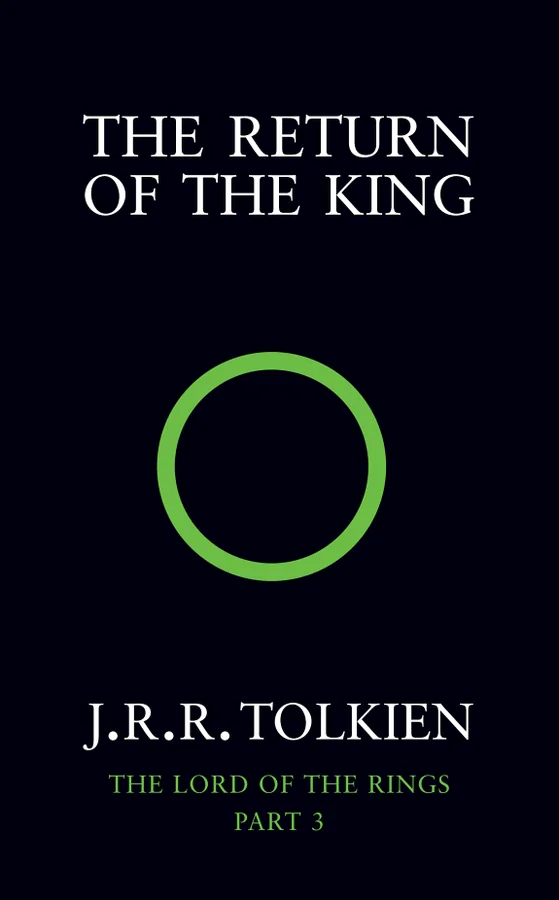
The Return of the King
 82
82

The Return of the King
The conclusion of Tolkien's saga, The Return of the King, delivers on the epic scale promised by its predecessors, culminating in a dramatic confrontation and a sweeping restoration. Aragorn's ascent to the throne of Gondor provides a satisfying arc for a character whose lineage and destiny have been central to the narrative. However, the extended epilogue, while attempting to tie up every loose end, can feel somewhat protracted, especially the hobbits' subsequent struggles in the Shire. The depiction of the Battle of the Pelennor Fields remains a high point of imaginative military narrative. A particular strength lies in the quiet moments of reflection, such as Gandalf's counsel to Aragorn concerning the weight of kingship. Ultimately, this volume solidifies the work's status as a foundational text in modern fantasy, though its pacing falters in the final chapters. It is an essential, if occasionally uneven, conclusion.
📝 Description
82
Published in 1955, The Return of the King concludes J.R.R. Tolkien's epic narrative of the War of the Ring.
This third volume of The Lord of the Rings details the final conflict against the Dark Lord Sauron and the quest to destroy the One Ring. It follows Aragorn's coronation as King of Gondor, marking the restoration of peace to Middle-earth. The narrative also returns the hobbits to their home in the Shire, showing the aftermath of their arduous journey.
The book is intended for readers already familiar with The Fellowship of the Ring and The Two Towers, who are invested in the conclusion of the story. It is particularly relevant for those interested in mythological structures, heroic archetypes, and the examination of power, corruption, and redemption. Comparative mythology and literary scholars will find ample material for study.
Emerging in the post-World War II era, Tolkien's work drew heavily on ancient Germanic, Norse, and Celtic mythologies, alongside his Catholic faith. He constructed a world with a deep sense of history and moral order, influenced by his academic work as a professor of Anglo-Saxon at Oxford. This grounding in ancient lore and personal conviction shaped the moral and spiritual dimensions of Middle-earth, offering a narrative that resonated beyond mere escapism.
💡 Why Read This Book?
• Understand the symbolic weight of kingship and legitimate authority, as demonstrated through Aragorn's journey to reclaim his ancestral throne and his coronation in Minas Tirith in the year TA 3019. • Grasp the esoteric concept of providence and its subtle manipulation of events, exemplified by the unexpected role of Gollum in the destruction of the One Ring. • Explore the profound personal cost of duty and sacrifice through the hobbits' experiences, particularly Frodo's enduring trauma after his quest to Mount Doom.
⭐ Reader Reviews
Honest opinions from readers who have explored this book.
❓ Frequently Asked Questions
When was The Return of the King first published?
The Return of the King, the final volume of The Lord of the Rings, was first published in 1955, concluding the epic narrative that began with The Fellowship of the Ring.
Who is the author of The Return of the King?
The author is John Ronald Reuel Tolkien, an English writer, poet, philologist, and academic, renowned for his works on Middle-earth.
What is the main plot of The Return of the King?
The book details the final stages of the War of the Ring, Sauron's defeat, Aragorn's ascension to the throne of Gondor, and the hobbits' return to a changed Shire.
What are the major themes explored in The Return of the King?
Key themes include the nature of good versus evil, the corrupting influence of power, courage in the face of despair, the restoration of rightful rule, and the enduring power of friendship.
How does The Return of the King connect to the previous books?
It serves as the direct continuation and conclusion to the storylines and conflicts established in The Fellowship of the Ring and The Two Towers, resolving the central quest and the overarching war.
What is the significance of Mount Doom in the book?
Mount Doom is the volcanic site where the One Ring must be destroyed to defeat Sauron. It represents the ultimate crucible of temptation and the focal point of Frodo's perilous quest.
🔮 Key Themes & Symbolism
The Burden of Kingship
The narrative intensely examines the responsibilities and moral weight accompanying true leadership. Aragorn's journey from ranger to king is fraught with self-doubt and the recognition of the sacrifices required. His eventual acceptance of the crown in Minas Tirith signifies not just political power but a commitment to justice and the well-being of his people. This contrasts sharply with Sauron's lust for dominion, highlighting different philosophies of governance and the corrupting nature of unchecked ambition that Tolkien explores throughout the saga.
Providence and Fate
A subtle yet pervasive theme is the notion of a guiding hand or destiny shaping events. Characters often find themselves in situations where seemingly random occurrences or the actions of minor figures have monumental consequences. The destruction of the One Ring itself hinges on a chain of events initiated by Gollum's desperate desire, suggesting a cosmic order or fate intervening. This concept aligns with certain esoteric interpretations of destiny working through the mundane and the seemingly insignificant.
The Corrosive Nature of Power
The One Ring serves as the ultimate symbol of corrupting power. Its allure preys on the desires and weaknesses of all who encounter it, promising dominance but delivering only enslavement. Frodo's struggle to resist its influence, even as he nears his goal at Mount Doom, illustrates the profound personal toll of wielding or even bearing such a force. The book cautions against the pursuit of absolute control, showing how it inevitably leads to destruction and loss.
Hope in Despair
Despite overwhelming odds and the pervasive darkness of Sauron's influence, the narrative consistently emphasizes the persistence of hope. Characters find strength in fellowship, duty, and the belief in a greater good, even when faced with seemingly insurmountable challenges. The hobbits' resilience, the Elves' fading but enduring spirit, and the final victory over Sauron demonstrate that hope can endure even in the bleakest circumstances, a recurring motif in many spiritual traditions.
💬 Memorable Quotes
Direct passages from the work, attributed to the author.
“A day may come when the courage of men fails, when we forsake our friends and break all bonds of fellowship, but it is not this day.”
— Aragorn's stirring words before the Black Gate embody the theme of steadfast loyalty and courage in the face of overwhelming despair, serving as a rallying cry against the encroaching darkness.
“The board is set, the pieces are moving.”
— This statement expresses the feeling that destiny is unfolding, and that the actions of individuals, however small, are part of a larger, inevitable progression towards the story's climax.
“I am Aragorn son of Arathorn, and if by life or death I can save you, I will.”
— This declaration by Aragorn signifies his acceptance of his heritage and his sworn duty to protect those he cares for, embodying the ideal of noble leadership and selfless commitment.
💡 Key Ideas
Editorial paraphrase of the work's core concepts — not direct quotes.
The board is set, the pieces are moving.
This line, often attributed to Gandalf, reflects the sense that major forces are in play, and the outcome of the great conflict is unfolding according to a grand design or predetermined plan.
I will not do this thing. I will not do it, not if I have to kill them all.
This quote, spoken by Samwise Gamgee, powerfully illustrates his unwavering loyalty and protective love for Frodo, demonstrating that even in the face of immense personal danger, some bonds transcend all else.
🌙 Esoteric Significance
Tradition
While not explicitly aligned with a single esoteric tradition, The Lord of the Rings, and by extension The Return of the King, draws heavily from archetypal mythology and Christian eschatology, resonating with Gnostic themes of a cosmic struggle between light and darkness. The concept of a hidden, rightful king (Aragorn) and the battle against a tyrannical, seemingly omnipotent evil (Sauron) echoes patterns found in various spiritual lineages concerned with redemption and the restoration of divine order.
Symbolism
The One Ring is a potent symbol of absolute power and its inherent corrupting influence, a concept explored in many mystical traditions concerning the dangers of ego and attachment. Mount Doom represents the ultimate trial and the place of necessary destruction for rebirth. The White Tree of Gondor symbolizes life, renewal, and the enduring hope of a kingdom awaiting its rightful ruler, reflecting ancient fertility and kingship motifs.
Modern Relevance
Contemporary thinkers in depth psychology, particularly those influenced by Carl Jung's work on archetypes, frequently analyze Tolkien's characters and narratives. The themes of confronting the shadow self, the hero's journey, and the struggle against overwhelming external and internal forces continue to inform modern discussions on personal growth and spiritual resilience. Elements of the book are also referenced in discussions of environmentalism and critiques of industrialization.
👥 Who Should Read This Book
• Readers interested in archetypal mythology and the structure of heroic narratives, seeking to understand the enduring appeal of quests and the return of the king. • Students of comparative religion and folklore, exploring how ancient myths, Christian themes, and Anglo-Saxon traditions converge in a modern epic. • Individuals drawn to explorations of moral philosophy, particularly concerning the nature of power, temptation, sacrifice, and the responsibilities of leadership.
📜 Historical Context
The Return of the King, published in 1955, emerged during a period of societal rebuilding and intellectual reassessment following World War II. J.R.R. Tolkien, a respected Oxford philologist, drew deeply from ancient mythologies and his Catholic faith to craft a narrative that offered a profound moral framework. While the work resonated with many, its epic scope and archaic style presented a contrast to the prevailing literary trends of realism and modernism. Key contemporaries like C.S. Lewis, a fellow member of the Inklings, provided crucial early support and critical engagement. The book's reception was largely positive among its growing readership, though some critics debated its allegorical nature and perceived lack of engagement with contemporary social issues, positioning it distinctly from the social commentary common in other post-war literature.
📔 Journal Prompts
Aragorn's acceptance of his destiny as King Elessar.
The symbolic weight of the One Ring's destruction at Mount Doom.
Samwise Gamgee's unwavering loyalty to Frodo.
The contrasting leadership styles of Aragorn and Sauron.
The hobbits' return to the Shire and its aftermath.
🗂️ Glossary
Minas Tirith
The capital city of Gondor, often called the 'City of Kings'. It plays a central role as a fortress and seat of power during the War of the Ring.
Mordor
The dark, volcanic land ruled by the Dark Lord Sauron. It is the source of Sauron's power and the location of Mount Doom.
The Shire
The idyllic homeland of the hobbits, characterized by its peaceful, agrarian society, which the hobbits must defend and later heal.
Mount Doom
A volcano in Mordor, the only place where the One Ring can be destroyed. It represents the ultimate test and destination of Frodo's quest.
Gondor
A major kingdom of Men in Middle-earth, whose fate is intertwined with the struggle against Sauron. Its capital is Minas Tirith.
Rohan
A kingdom of Men known for its horse-lords, who play a central role in aiding Gondor against Sauron's forces.
The Black Gate
The main entrance to Mordor, serving as a strategic point where a final stand is made to distract Sauron's attention from the Ringbearer.
This book appears in 1 collection
🔮 Readers Also Liked
Browse all →








From the “Fairies” Collection
View all →





More Free Occult Philosophy Books
View all →