The Queens of Hastinapur
 73
73

The Queens of Hastinapur
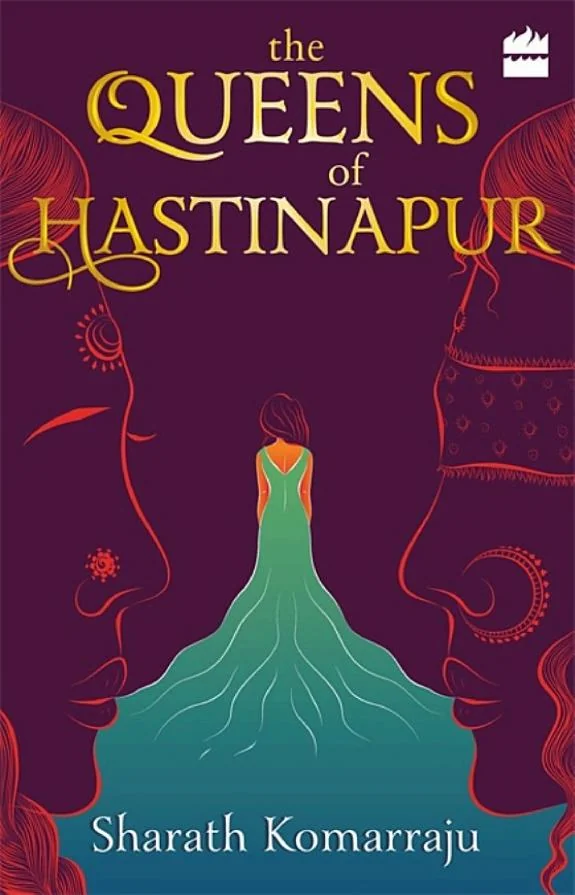
Sharath Komarraju’s "The Queens of Hastinapur" offers a compelling, if at times stark, revision of the Mahabharata, focusing on the often-overlooked female architects of its conflict. By foregrounding Ganga, Madri, Pritha, and Gandhari, the narrative gains a potent psychological dimension, revealing the intricate web of ambition, fear, and duty that binds them. The strength of this work lies in its unflinching portrayal of these women not as passive figures or mere plot devices, but as active agents whose choices, born of personal circumstance, unleash world-altering events. A particularly resonant passage details Gandhari’s blindfolding, not just as an act of solidarity, but as a deliberate choice to share in her husband's perceived limitations, subtly influencing her own perception of power and consequence.
However, the novel’s relentless focus on the queens’ internal struggles, while its primary virtue, can occasionally overshadow the epic sweep of the Mahabharata itself. The intricate political and military machinations, central to the original, are sometimes reduced to background noise. Despite this, Komarraju provides a vital corrective, arguing implicitly that the war was as much a consequence of domestic decisions and feminine anxieties as it was of kingly pride. It’s a potent re-examination that forces a reconsideration of agency within classical Indian literature.
📝 Description
73
Sharath Komarraju's 2017 novel reframes the Mahabharata by focusing on its queens.
The Queens of Hastinapur shifts the narrative focus of the epic Mahabharata from its traditional male heroes to the women who profoundly influenced its events. Komarraju centers the story on Ganga, Madri, Pritha, and Gandhari, illustrating how their individual motivations, fears, and ambitions propelled the grand, often tragic, occurrences leading to the Kurukshetra War. The novel examines the hidden forces and psychological depths of these central female figures.
This work appeals to those already familiar with the Mahabharata and seeking a fresh interpretative perspective, especially one that emphasizes female agency and viewpoints. It is also for readers interested in mythological retellings that question patriarchal structures and explore the complex inner lives of historical and mythical characters. Those who enjoy character-driven epics and feminist literature will find much to engage with here. The book emerged in 2017, a time of growing interest in re-examining classical myths through contemporary, critical lenses.
While the Mahabharata is a foundational Sanskrit epic, Komarraju's retelling aligns with a modern trend in literary criticism that deconstructs canonical narratives. This approach questions established interpretations and gives voice to characters previously relegated to the background. It reflects a broader scholarly interest in re-examining ancient texts through lenses that highlight gender and power dynamics, drawing parallels with feminist literary analysis and the reinterpretation of mythic structures.
💡 Why Read This Book?
• Gain a fresh perspective on the Mahabharata by understanding the pivotal, often suppressed, roles of Ganga, Madri, Pritha, and Gandhari, as detailed in the narrative’s focus on their motivations. • Explore the psychological underpinnings of epic conflict, learning how personal fears and ambitions, exemplified by Gandhari’s choices, can catalyze monumental historical events. • Understand the dynamics of power and agency from a female viewpoint within a patriarchal framework, a key theme exemplified by Pritha's strategic decisions.
⭐ Reader Reviews
Honest opinions from readers who have explored this book.
❓ Frequently Asked Questions
What is the primary focus of The Queens of Hastinapur?
The book retells the Mahabharata, shifting focus from the male heroes to the women like Ganga, Madri, Pritha, and Gandhari, exploring how their fears and ambitions drive the epic events.
Which specific female characters are central to this retelling?
The narrative prominently features Ganga, Madri, Pritha (Kunti), and Gandhari, delving into their individual stories and motivations.
How does this book differ from traditional retellings of the Mahabharata?
It prioritizes the female perspective, offering insights into the often-unseen decisions and emotional landscapes of the queens that influenced the actions of kings and warriors.
What historical or mythological context does The Queens of Hastinapur engage with?
It is rooted in the ancient Indian epic, the Mahabharata, providing a modern interpretation of its characters and events, first published in 2017.
Is The Queens of Hastinapur a historical novel or a mythological retelling?
It is a mythological retelling that uses historical and mythological figures and events from the Mahabharata, but focuses on character psychology and narrative reinterpretation.
What themes are explored through the female characters?
The book explores themes of ambition, fear, duty, destiny, agency, and the consequences of personal choices within a grand, patriarchal narrative structure.
🔮 Key Themes & Symbolism
Feminine Agency in Patriarchy
This work fundamentally re-examines the Mahabharata by placing the female characters, such as Pritha and Gandhari, at the forefront. It argues that their choices, driven by a complex interplay of personal desires, societal pressures, and familial obligations, were not merely reactive but were instrumental in setting the stage for the epic conflict. The narrative explores how women, operating within strict patriarchal confines, wielded influence and shaped destinies through often subtle, yet powerful, means, challenging the traditional male-centric view of historical causality.
The Psychology of Power and Fear
The novel examines the internal lives of the queens, particularly their deepest fears and ambitions. Ganga's actions, for instance, are portrayed as stemming from a profound understanding of cosmic forces and a desire to control outcomes. Similarly, Gandhari's decision to blind herself is analyzed not just as a gesture of wifely devotion but as a complex psychological act tied to power, identity, and perhaps a subconscious manipulation of her circumstances. This focus reveals how personal anxieties can manifest as powerful societal catalysts.
Destiny, Choice, and Consequence
Komarraju probes the age-old tension between predetermined fate and individual free will, as experienced by the women of Hastinapur. The narrative questions whether the characters are merely pawns in a divine game or possess genuine agency. The consequences of their decisions, from Ganga's early choices regarding her children to Madri's fate, are meticulously traced, illustrating how each act, however personal, reverberates through generations and contributes to the fated war, highlighting the esoteric concept of karma and its intricate unfolding.
The Unseen Narratives
This book champions the idea that history and mythology are incomplete without understanding the perspectives of those often relegated to the margins. By centering the stories of Ganga, Madri, Pritha, and Gandhari, it brings to light the 'unseen' narratives that underpin grand historical events. It suggests that the true forces driving epics are not always visible on the battlefield but are often found in the domestic sphere, in whispered conversations, and in the silent resolve of women.
💬 Memorable Quotes
Direct passages from the work, attributed to the author.
“They can claim to know her because she is unknowable. They see her form because she is formless. They speak her words because she never utters a word.”
— This opening statement captures the enigma of the female figures in the Mahabharata. It suggests their profound influence operates through presence and implication rather than direct pronouncements, making them powerful yet elusive forces within the narrative.
“Here is a retelling of the Mahabharata through the eyes of its female characters, for what came to an end...”
— This declaration signals the narrative’s core intent: to offer a subverted perspective on a classic epic, focusing on the interiority and agency of women who are often relegated to secondary roles in traditional accounts.
“propelling kings, princes and warriors towards glory and bloodshed, sin and redemption.”
— This phrase highlights the far-reaching impact of the queens' actions, demonstrating how their decisions set in motion a chain of events that affected all levels of society, leading to both destruction and spiritual reckoning.
“They see her form because she is formless.”
— This paradoxical statement points to the abstract yet tangible influence of these women. Their power is not derived from physical presence alone but from an inherent essence or force that shapes reality, perceived and interpreted by others.
💡 Key Ideas
Editorial paraphrase of the work's core concepts — not direct quotes.
This is the story of Ganga, Madri, Pritha and Gandhari: powerful women who, driven by their fears and ambitions, trigger events that lead to an epic war.
This quote directly states the book's thesis: the epic war is not solely the result of male conflict, but a consequence initiated by the personal motivations—fears and ambitions—of its central female characters.
🌙 Esoteric Significance
Tradition
While not explicitly tied to a single Western esoteric lineage like Hermeticism or Kabbalism, "The Queens of Hastinapur" engages deeply with the spiritual and philosophical underpinnings inherent in Indic traditions, particularly Hinduism. It operates within the esoteric framework of the Mahabharata itself, which is considered a sacred text containing profound spiritual teachings (like the Bhagavad Gita). The work explores concepts such as karma, dharma, and divine will, viewing these not just as philosophical constructs but as active forces shaping human destiny, aligning with a mystical understanding of cosmic law.
Symbolism
The novel implicitly utilizes potent symbols drawn from the Mahabharata. Gandhari's blindfold, for instance, transcends a mere physical act; it symbolizes a chosen ignorance, a refusal to see the corruption around her, and a powerful, self-imposed limitation that shapes her experience and influence. Ganga’s abandonment of her children can be seen as a symbolic purging or a necessary sacrifice, representing a divine or cosmic will at play. The very concept of Hastinapur, the 'City of Elephants,' represents power, tradition, and the seat of a lineage whose fate is intrinsically linked to the cosmic cycles.
Modern Relevance
Contemporary thinkers and practitioners in fields like comparative mythology, feminist spirituality, and Jungian psychology often draw upon retellings like Komarraju's. The emphasis on archetypal feminine figures and their psychological motivations speaks to modern explorations of the anima and shadow aspects within the collective unconscious. Furthermore, the book's exploration of how personal decisions ripple into societal-scale conflicts speaks to contemporary concerns about individual responsibility in a globally interconnected world, offering a mythological framework for understanding complex socio-political dynamics.
👥 Who Should Read This Book
• Readers interested in comparative mythology and feminist re-interpretations of ancient epics, particularly those seeking to understand the Mahabharata beyond its traditional male-centric heroes. • Students of narrative structure and character development who wish to analyze how shifting perspective can radically alter the understanding of a well-known story. • Individuals drawn to psychological explorations of power, ambition, and the consequences of choice, using the epic canvas of the Mahabharata as a backdrop.
📜 Historical Context
Sharath Komarraju's "The Queens of Hastinapur" (2017) emerged during a period of intense global interest in reinterpreting classical mythologies through modern critical lenses. The early 21st century saw a proliferation of works that sought to decolonize, deconstruct, and re-center narratives previously dominated by Western or patriarchal viewpoints. Komarraju’s approach aligns with the burgeoning field of feminist literary criticism applied to ancient texts, a trend influenced by scholars like Wendy Doniger, whose own work on the Mahabharata and Hindu mythology often challenged orthodox interpretations. Unlike purely academic analyses, Komarraju's novel offers a fictionalized, character-driven exploration. While the Mahabharata itself, attributed to Vyasa, has been a subject of continuous study and adaptation for millennia, this 2017 retelling positioned itself against more traditional, male-centric interpretations that had long held sway, contributing to a broader cultural conversation about agency and perspective in storytelling.
📔 Journal Prompts
Gandhari's blindfold as a symbol of chosen limitation and its influence on perception.
The driving fears and ambitions of Ganga, Madri, Pritha, and Gandhari, and their ultimate consequences.
Reconciling the concept of fate with the agency of the queens in the Mahabharata narrative.
How the 'unknowable' nature of the queens shapes their power within the epic.
The balance between glory and bloodshed, sin and redemption, as initiated by the queens' actions.
🗂️ Glossary
Mahabharata
An ancient Indian epic poem, central to Hindu tradition, detailing the dynastic struggle for the throne of Hastinapur between the Kauravas and the Pandavas, and containing philosophical and devotional material, including the Bhagavad Gita.
Hastinapur
The ancient capital city of the Kuru kingdom, central to the Mahabharata narrative. It symbolizes power, lineage, and the stage for the epic conflict and political machinations.
Ganga
A central female figure in the Mahabharata, the river goddess who becomes the mother of Bhishma through a divine union, and later, the mother of Karna with Surya. Her story involves sacrifice and divine intervention.
Madri
One of the wives of King Pandu and the mother of Nakula and Sahadeva. Her story is often associated with Pandu's curse and her eventual tragic end.
Pritha (Kunti)
The mother of the Pandavas (Yudhishthira, Bhima, Arjuna) and Karna (through Surya). Her unique ability to invoke gods to grant her children played an important role in the Mahabharata's unfolding events.
Gandhari
The wife of Dhritarashtra and the mother of the hundred Kaurava princes. She famously blindfolded herself for the duration of her husband's life as a symbol of solidarity and protest.
Kurukshetra War
The climactic battle described in the Mahabharata, fought between the Pandava and Kaurava armies on the field of Kurukshetra. It is the central event around which the epic narrative revolves.
This book appears in 1 collection
🔮 Readers Also Liked
Browse all →









From the “Earth Mysteries” Collection
View all →









More Free Occult Philosophy Books
View all →