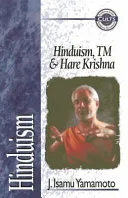
Hinduism, TM, and Hare Krishna
 74
74

Hinduism, TM, and Hare Krishna
Yamamoto’s comparative study of Hinduism, TM, and Hare Krishna, first published in 1998, offers a structured approach to understanding these traditions through a Christian lens. Its strength lies in its clarity in outlining the core doctrines of each movement, particularly the philosophical underpinnings of Transcendental Meditation and ISKCON. The author meticulously details concepts like karma and reincarnation, presenting them in a manner accessible to readers unfamiliar with Hindu thought. However, the work’s inherent apologetic stance, while its stated purpose, sometimes limits a purely objective exploration. For instance, the section dissecting the concept of *maya* (illusion) leans heavily on Christian interpretations, potentially overlooking deeper philosophical nuances valued within Advaita Vedanta. The book functions best as an introductory guide for Christian evangelists or students of comparative religion seeking specific points of comparison. Yamamoto’s analysis of the Hare Krishna movement, focusing on devotional practices, provides a solid baseline for understanding their missionary efforts in the late 20th century. Ultimately, this is a functional, if somewhat narrow, theological comparison.
📝 Description
74
J. Isamu Yamamoto's 1998 book analyzes Transcendental Meditation and Hare Krishna within Hindu philosophy.
Published in 1998, J. Isamu Yamamoto's "Hinduism, TM, and Hare Krishna" offers a comparative theological examination of two significant Eastern spiritual paths. The book places Transcendental Meditation (TM) and the International Society for Krishna Consciousness (ISKCON), widely known as Hare Krishna, within their larger Hindu philosophical settings. Yamamoto's work dissects the central beliefs and practices of these movements.
This volume is written for those who want to grasp contemporary religious expressions from a theological standpoint. It particularly addresses Christians interested in understanding adherents of these traditions. The book constructs a way to interpret the beliefs of TM and ISKCON, also suggesting counterarguments from a Christian perspective. It emerged as Western interest in Eastern religions grew, with TM founded by Maharishi Mahesh Yogi in the 1950s and ISKCON by A. C. Bhaktivedanta Swami Prabhupada in 1966.
This book examines movements that arose from or were heavily influenced by Hindu traditions, particularly as they gained traction in the West during the late 20th century. TM, originating from Vedic traditions through Maharishi Mahesh Yogi, and ISKCON, a Vaishnava Hindu organization established by A. C. Bhaktivedanta Swami Prabhupada, represent distinct paths of spiritual development. Yamamoto analyzes their doctrines concerning the nature of reality, the self, and liberation, contrasting them with Christian theology. His work situates these practices within the broader spectrum of Hindu thought, addressing how they function as vehicles for spiritual realization in a modern context.
💡 Why Read This Book?
• Gain a structured understanding of core Hindu concepts like karma and reincarnation as presented by J. Isamu Yamamoto, offering clarity beyond general introductions. • Learn specific points of theological divergence between Hindu-derived movements (TM, Hare Krishna) and Christian doctrine, as detailed in the book's comparative sections. • Understand the historical context of Eastern religious movements' growth in the West, specifically referencing the founding of ISKCON by A. C. Bhaktivedanta Swami Prabhupada in 1966.
⭐ Reader Reviews
Honest opinions from readers who have explored this book.
❓ Frequently Asked Questions
What is the publication year of Hinduism, TM, and Hare Krishna?
The book "Hinduism, TM, and Hare Krishna" by J. Isamu Yamamoto was first published in 1998. This places its analysis within the context of late 20th-century religious studies and comparative theology.
Who is the author of Hinduism, TM, and Hare Krishna?
The author of "Hinduism, TM, and Hare Krishna" is J. Isamu Yamamoto. The book is part of a series focusing on contemporary religious movements and their theological comparison with Christianity.
What are the main religious movements discussed in the book?
The book primarily discusses Hinduism, Transcendental Meditation (TM), and the Hare Krishna movement (ISKCON). It aims to compare their beliefs and practices with Christian doctrine.
What is the primary purpose of Yamamoto's book?
The primary purpose is to explain the beliefs of contemporary religious movements like TM and Hare Krishna and to offer guidance on effective Christian witnessing to their adherents, framed within a comparative theological approach.
What key Hindu concepts does the book examine?
The book examines key Hindu concepts such as karma, reincarnation, the nature of God, and the soul, contrasting them with Christian theological perspectives. It also touches upon the concept of maya.
When was the Hare Krishna movement founded?
The Hare Krishna movement, officially known as the International Society for Krishna Consciousness (ISKCON), was founded in 1966 by A. C. Bhaktivedanta Swami Prabhupada. Yamamoto's book analyzes its tenets.
🔮 Key Themes & Symbolism
Comparative Theology Framework
Yamamoto constructs a comparative framework, primarily contrasting Hindu-influenced movements with Christian doctrine. The work systematically analyzes concepts like the divine, the soul, and salvation, highlighting points of divergence. It aims to equip readers, particularly those from a Christian background, with an understanding of differing theological landscapes. The approach emphasizes doctrinal accuracy within each tradition before drawing comparisons, offering a structured method for interfaith theological study.
Transcendental Meditation (TM) Doctrine
The book dissects Transcendental Meditation, founded by Maharishi Mahesh Yogi, examining its philosophical basis within broader Hindu thought. It explores TM's techniques and stated goals, often relating them to concepts of consciousness and spiritual liberation found in Vedic traditions. Yamamoto's analysis seeks to clarify TM's position relative to established Christian theology, addressing its appeal and underlying spiritual propositions.
Hare Krishna (ISKCON) Philosophy
Focusing on the International Society for Krishna Consciousness (ISKCON), established by A. C. Bhaktivedanta Swami Prabhupada, this theme explores its devotional practices and theological framework. Yamamoto examines ISKCON's emphasis on *bhakti* (devotion) to Krishna, its understanding of scripture, and its missionary outreach. The work provides context for understanding the movement's distinct identity within the Hindu spectrum and its engagement with Western culture.
Hindu Concepts: Karma and Reincarnation
Central to the comparative analysis are the concepts of karma and reincarnation, fundamental to many Hindu traditions. Yamamoto explains these doctrines as understood within Hinduism and as they manifest in movements like TM and Hare Krishna. The work contrasts these cyclical views of existence and consequence with linear Christian eschatology, offering a clear exposition of these complex ideas for a Western audience.
💬 Memorable Quotes
Direct passages from the work, attributed to the author.
“The work explores the concept of maya as illusion.”
— This highlights a core philosophical idea in Hindu thought, often interpreted as the phenomenal world being an illusory veil obscuring ultimate reality. Yamamoto contrasts this with Western metaphysical understandings of reality.
“Yamamoto analyzes the goal of spiritual practice in TM.”
— This points to the book's focus on the ultimate aims of different spiritual paths, contrasting the state of consciousness sought in Transcendental Meditation with Christian concepts of salvation or union with God.
“The book examines the devotional focus of ISKCON.”
— This refers to the central role of *bhakti* or devotion to deities like Krishna within the Hare Krishna movement, as presented and analyzed by Yamamoto in comparison to Christian devotional traditions.
“Yamamoto compares the nature of God across traditions.”
— This indicates the book's theological comparison, exploring differing conceptions of the divine, whether personal, impersonal, or manifested, across Hinduism, TM, Hare Krishna, and Christianity.
💡 Key Ideas
Editorial paraphrase of the work's core concepts — not direct quotes.
The concept of the soul's transmigration is discussed.
This paraphrases the explanation of reincarnation, a key tenet discussed in the book. Yamamoto likely contrasts this belief in the soul moving between bodies with Christian doctrines of resurrection or eternal life.
🌙 Esoteric Significance
Tradition
While not strictly an esoteric text itself, Yamamoto's work engages with traditions that have esoteric dimensions within the broader Hindu framework. It touches upon concepts prevalent in yogic and Vedantic philosophies, which can be interpreted esoterically. The book operates within a comparative theological framework, analyzing these traditions from an external, Christian-derived perspective, rather than from within an esoteric lineage.
Symbolism
The book implicitly references symbols like the Om (ॐ) mantra, often associated with the primordial sound in Hindu cosmology, and the *tilaka* markings worn by devotees, signifying sectarian affiliation and spiritual identity. While not deeply exploring their esoteric meanings, Yamamoto acknowledges their presence as markers of these traditions' distinct practices and beliefs.
Modern Relevance
Contemporary thinkers and practitioners interested in the historical reception and theological comparison of Eastern religions in the West find value in Yamamoto's foundational analysis. Scholars of new religious movements and comparative theology continue to reference such works for understanding the trajectory of spiritual dialogues and the framing of Eastern philosophies within Western thought systems.
👥 Who Should Read This Book
• Christian theologians and students of comparative religion seeking to understand the doctrinal underpinnings of TM and Hare Krishna from a Western theological perspective. • Individuals interested in the historical spread of Eastern spiritual movements in the West during the late 20th century, particularly the growth of ISKCON and TM. • Apologists or laypeople seeking a structured overview of key Hindu concepts like karma and reincarnation for interfaith dialogue or personal study.
📜 Historical Context
Published in 1998, J. Isamu Yamamoto's work arrived during a period of significant Western assimilation and interest in Eastern spiritual traditions. Movements like Transcendental Meditation (TM), popularized in the West from the 1960s by Maharishi Mahesh Yogi, and the International Society for Krishna Consciousness (ISKCON), established by A. C. Bhaktivedanta Swami Prabhupada in 1966, had gained considerable visibility. Yamamoto's book reflects the late 20th-century academic and religious landscape, where comparative religion studies often engaged with the theological implications of these new religious movements. It emerged in dialogue with, and in contrast to, a broader Christian apologetic tradition seeking to understand and respond to the growing influence of Eastern philosophies. While not a direct engagement with a specific contemporary author, it participated in the wider discourse concerning the validity and nature of non-Christian spiritual paths.
📔 Journal Prompts
The concept of karma as explored by Yamamoto.
Maharishi Mahesh Yogi's role in popularizing TM.
The foundational teachings of A. C. Bhaktivedanta Swami Prabhupada.
Comparison of *maya* versus Western metaphysical realism.
The role of *bhakti* in ISKCON's practice.
🗂️ Glossary
Transcendental Meditation (TM)
A specific form of mantra meditation popularized by Maharishi Mahesh Yogi, derived from Vedic traditions, aiming for deep relaxation and expanded consciousness.
Hare Krishna
Common name for the International Society for Krishna Consciousness (ISKCON), a Hindu Vaishnava religious organization focused on devotion to Krishna.
Karma
In Hindu philosophy, the principle of cause and effect where actions in this life and past lives determine future circumstances and rebirths.
Reincarnation
The philosophical or religious concept that the soul or spirit, after biological death, begins a new life in a new body. Also known as transmigration.
Bhakti
A Sanskrit term meaning 'devotion' or 'love' for a deity, central to Vaishnavism and emphasized in the Hare Krishna movement.
Maya
A Sanskrit term in Hindu philosophy, often translated as 'illusion', referring to the power that conceals the true nature of reality and makes the phenomenal world appear.
ISKCON
Abbreviation for the International Society for Krishna Consciousness, the formal name for the Hare Krishna movement.