The Pagans

 72
72

The Pagans
Arlo Bates's "The Pagans" presents a compelling, if somewhat melancholic, portrait of a village grappling with its own suppressed history. The novel excels in its nuanced depiction of how ancient beliefs, or perhaps more accurately, a deep-seated connection to nature, continue to subtly shape the lives of its characters, even within a strictly Christian society. Bates’s strength lies in his subtle portrayal of these undercurrents; the ‘pagan’ elements are not overt rituals but felt presences, a resistance to purely rational explanation. A particular strength is the portrayal of the character Agnes, whose very being seems attuned to these older forces, providing a focal point for the village’s anxieties. The limitation, however, lies in the novel’s pacing, which can feel slow to a modern reader, with much of the tension residing in internal psychological states rather than overt action. The passage describing the village's unspoken fear of disturbing the ancient burial mounds, for instance, powerfully illustrates the work's thematic core but requires patient engagement. "The Pagans" offers a somber reflection on the enduring power of the pre-Christian psyche.
📝 Description
72
Arlo Bates's 1899 novel, "The Pagans," examines how ancient beliefs persist in a small English village.
Published in 1899, Arlo Bates's "The Pagans" is a novel set in a small English village. It probes how established social and religious norms interact with older, perhaps pagan, ways of life that continue beneath the surface. The book does not function as a historical account of ancient practices but instead as a fictional look at their lasting impact on the human mind and community.
This work suits readers interested in late Victorian literature that confronts the continued presence of folklore and pre-Christian spiritual ideas within a society that appears to be modernizing. It appeals to those who enjoy stories focused on characters, exploring psychological depth and the quiet conflicts between fitting in and connecting with older, earth-bound traditions. The novel is not intended as a direct guide to pagan rituals but rather as an examination of their symbolic significance.
Published at the end of the 19th century, "The Pagans" reflects a period of renewed interest in folklore, mythology, and occultism. This resurgence was partly a reaction against industrialization and rationalism. The novel engages with these trends by depicting how ingrained connections to nature and older beliefs can coexist with, and sometimes question, orthodox Christianity. Bates's work explores the concept of the 'pagan' as a mode of being tied to natural cycles and primal instincts, rather than a specific religious label.
💡 Why Read This Book?
• Understand the subtle persistence of pre-Christian sensibilities in late Victorian England, as explored through the lives of villagers and their interactions with ancient sites mentioned in the narrative. • Experience a character study of Agnes, whose connection to nature provides a focal point for the novel's examination of innate spiritual currents versus societal dogma. • Grasp the psychological impact of suppressed natural instincts on a community, a theme Bates develops through the village's unease surrounding the old burial mounds.
⭐ Reader Reviews
Honest opinions from readers who have explored this book.
❓ Frequently Asked Questions
What is the primary theme of Arlo Bates's "The Pagans"?
The primary theme is the enduring influence of ancient, possibly pagan, ways of thinking and feeling on a seemingly modern Christian community in late Victorian England.
When was "The Pagans" by Arlo Bates first published?
Arlo Bates's novel "The Pagans" was first published in 1899, placing it firmly within the late Victorian literary landscape.
Does "The Pagans" describe actual pagan rituals?
No, the novel does not detail specific pagan rituals. Instead, it explores the symbolic weight and psychological persistence of pre-Christian connections to nature and instinct within a community.
What is the setting of "The Pagans"?
The novel is set in a small, unspecified English village during the late 19th century, where ancient traditions are felt beneath the surface of contemporary life.
What literary movement does "The Pagans" align with?
It aligns with late Victorian literature that explored folklore, the supernatural, and psychological depth, often reacting against prevailing rationalism and industrialization.
Is Arlo Bates's "The Pagans" a historical account?
No, "The Pagans" is a work of fiction. While it draws on the atmosphere and intellectual currents of its time, it is a narrative exploration, not a factual history.
🔮 Key Themes & Symbolism
Nature vs. Doctrine
The novel contrasts the deeply ingrained, almost instinctual reverence for nature and its cycles with the structured doctrines of Christianity prevalent in the late 19th century. Bates illustrates how the former, though often unacknowledged, continues to exert a powerful influence on the villagers' psyches and their perception of the world. This is not a conflict of overt religious practice, but a subtler, more pervasive tension between innate human connection to the earth and imposed societal beliefs. The presence of ancient burial mounds serves as a constant, silent reminder of this older order.
Psychological Undercurrents
Bates examines the unspoken fears and desires that lie beneath the surface of Victorian respectability. The 'pagan' element represents these primal forces – a connection to life, death, and the natural world that defies easy categorization or suppression by orthodox religion. The narrative explores how these internal currents manifest in collective anxieties and subtle social dynamics within the village. The character of Agnes, in particular, embodies this innate spiritual attunement, acting as a conduit for the repressed feelings of the community.
Enduring Folklore
While not a direct depiction of ancient paganism, the work engages with the concept of enduring folklore and its psychological resonance. The villagers' unease around ancient sites and their subconscious adherence to older patterns of thought suggest that the spirit of pre-Christian England never entirely vanished. Bates examines how these folkloric elements, woven into the land and collective memory, continue to shape identity and behavior, offering a counterpoint to the rationalism and religious certainty of the era.
Community and Belonging
The novel scrutinizes how a community defines itself and maintains its boundaries, particularly when faced with elements that challenge its established order. The fear of the 'pagan' is also a fear of the unknown within oneself and within the collective. Bates explores the subtle ways in which conformity is enforced and the psychological toll it takes on individuals who feel a deeper connection to older, more elemental forces. Belonging is contingent on adhering to the dominant narrative, often at the expense of authentic connection.
💬 Memorable Quotes
Direct passages from the work, attributed to the author.
“There are deeper currents in the soul than reason can fathom.”
— This interpretation highlights the novel's exploration of subconscious drives and intuitive knowledge. It posits that human experience is not solely governed by logic and religious doctrine, but also by powerful, often unacknowledged, emotional and spiritual forces.
“The land remembers what the people forget.”
— This concept emphasizes the enduring power of place and history. It suggests that the natural world itself holds a memory of past beliefs and ways of life, which continue to influence the present, even as contemporary society tries to move past them.
“The village feared what it did not understand, and it did not understand the old ways.”
— This statement captures the core conflict: societal fear and ignorance surrounding ancient traditions. It suggests that the resistance to older beliefs stems not from their inherent malevolence, but from a lack of comprehension and a desire to maintain the status quo.
💡 Key Ideas
Editorial paraphrase of the work's core concepts — not direct quotes.
The old gods are not dead; they sleep.
This paraphrased concept suggests that ancient spiritual forces or ways of being have not disappeared but remain dormant, capable of influencing the present. It speaks to the persistence of primal instincts and connections to nature beneath the veneer of modern society.
To be truly pagan is to feel the earth pulse beneath your feet.
This paraphrased idea defines a 'pagan' sensibility not as a formal religion but as a profound, visceral connection to the natural world. It implies an innate spirituality rooted in the physical environment, distinct from abstract theology.
🌙 Esoteric Significance
Tradition
While "The Pagans" does not explicitly align with a single esoteric tradition like Hermeticism or Kabbalah, it taps into a broader vein of Western esoteric thought concerned with the persistence of primal, nature-based spirituality. It speaks to the Gnostic idea of latent spiritual truths hidden beneath dominant religious structures and the Romantic fascination with the 'sublime' and the elemental forces of nature. The novel explores a kind of immanent spirituality, suggesting that the sacred is not solely transcendent but deeply embedded in the land and human instinct.
Symbolism
The novel frequently employs the symbolism of ancient burial mounds as potent reminders of a pre-Christian past and the cyclical nature of life and death. These mounds represent a deep, unconscious layer of memory and spiritual connection that the village's modern Christian identity cannot entirely suppress. Furthermore, the natural world itself—the changing seasons, the very soil—functions symbolically, representing an enduring, elemental force that contrasts with the artificiality of societal doctrines. Agnes's character embodies this connection, acting as a living symbol of untamed, instinctual spirituality.
Modern Relevance
Contemporary interest in ecological spirituality, animism, and the integration of psychological depth with spiritual practice finds echoes in "The Pagans." Modern pagan revivalists and ecotheologians might find the novel's exploration of nature-based spirituality and the critique of purely rationalistic worldviews relevant. Furthermore, its examination of how communities grapple with repressed histories and subconscious influences continues to resonate in discussions of cultural identity and the ongoing dialogue between modernity and enduring ancient wisdom.
👥 Who Should Read This Book
• Students of late Victorian literature interested in how contemporary authors engaged with folklore, mythology, and the tension between tradition and modernity. • Readers drawn to psychological novels that explore the subconscious and the subtle influence of place and history on human behavior. • Those interested in comparative religion and the concept of enduring spiritual currents that exist alongside established religious structures.
📜 Historical Context
Arlo Bates's "The Pagans," published in 1899, emerged during a period of intense fascination with and anxiety about the persistence of older spiritualities within rapidly industrializing Britain. The late Victorian era saw a surge in the study of folklore, mythology, and comparative religion, alongside the burgeoning occult revival spearheaded by figures like Helena Blavatsky and the Theosophical Society. This intellectual climate fostered a re-examination of pre-Christian beliefs, often seen as either a source of primal wisdom or a dangerous regression. "The Pagans" engages with these currents by exploring how ancient, earth-bound connections—what the novel terms 'pagan'—continued to subtly influence a seemingly orthodox Christian village. While not a direct engagement with academic anthropology or occult societies, the novel reflects a broader cultural conversation about the deep roots of human belief systems and their resistance to complete eradication by modern rationalism and organized religion. Its reception was likely part of the general literary discourse on tradition, modernity, and the enduring power of the subconscious.
📔 Journal Prompts
The ancient burial mounds' persistent presence in the village.
Agnes's innate connection to the natural world.
The village's collective unease regarding the 'old ways'.
The contrast between Christian doctrine and primal instinct.
The subtle ways societal norms suppress deeper spiritual currents.
🗂️ Glossary
Pagan
In the context of the novel, 'Pagan' refers not to a specific organized religion, but to a perceived inherent connection with nature, primal instincts, and older, pre-Christian spiritual sensibilities that persist beneath the surface of modern society.
Doctrine
Refers to the established teachings and beliefs of an organized religion, in this case, Christianity. The novel contrasts the fixed nature of doctrine with the more fluid, instinctual 'pagan' sensibilities.
Folklore
The traditional beliefs, customs, and stories of a community, passed through the generations. The novel suggests that these enduring elements of folklore hold a psychological power that transcends rational explanation.
Instinct
An innate, typically fixed pattern of behavior in animals in response to certain stimuli. In the novel, 'instinct' is used to describe a primal, often subconscious, connection to nature and older ways of being.
Burial Mounds
Ancient earthen structures where the dead were interred. In "The Pagans," these sites serve as potent symbols of the lingering past and the deep, often unsettling, spiritual currents of the land.
Victorian Society
The social and cultural norms prevalent in Great Britain during the reign of Queen Victoria (1837-1901), characterized by strict morality, industrial progress, and established religious institutions.
Subconscious
The part of the mind of which we are not aware but which influences our actions and feelings. The novel explores how subconscious elements, often tied to nature and ancient beliefs, affect the villagers.
🔮 Readers Also Liked
Browse all →![AD [frag.] Gela Hermann Büder Wittwe zu Rodenbach Clägerin. Contra Die Gemeindte desselbsten und sonderlich Johannes ... 1650-1651: Iss 180](/img/thumb/ad-frag-gela-hermann-b-der-wittwe-zu-rodenbach-cl-gerin-contra-die-gemeindte-desselbsten-und-sonderlich-johannes-1650-1651-iss-180-buder-gela.webp)






More by Arlo Bates
All books →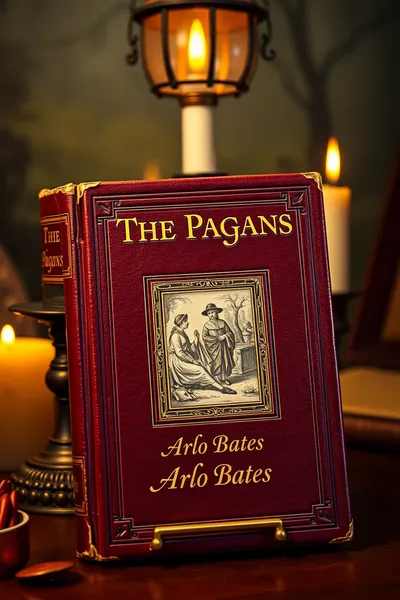
More Free Witchcraft & Paganism Books
View all →