The Black Cauldron

 73
73

The Black Cauldron
Lloyd Alexander’s The Black Cauldron presents a compelling, if familiar, iteration of the hero’s journey. The narrative’s strength lies in its earnest portrayal of Taran’s internal struggles; his ambition and fear are palpable, making his eventual growth feel earned. The introduction of the Black Cauldron itself, as an object of immense, unthinking destructive force, serves as a potent symbol. However, the pacing occasionally falters, particularly in the middle sections, where the quest can feel protracted. A passage detailing the enslaved spirits within the cauldron, forced to serve its dark purpose, vividly illustrates the profound cost of wielding such power. Alexander avoids easy answers, forcing Taran to confront the consequences of his actions and desires. It is a solid, if not revolutionary, entry in the fantasy canon, particularly for its exploration of adolescent striving.
📝 Description
73
Published in 1965, The Black Cauldron is Lloyd Alexander's second Prydain chronicle.
The Black Cauldron follows Taran, an assistant pig-keeper, as he confronts the Horned King and his quest for the titular artifact. This artifact, a cauldron of immense dark power, can raise an army of the dead, and its pursuit by the antagonist drives much of the plot. Taran, grappling with his destiny and his own limitations, must learn about heroism and sacrifice.
Alexander, drawing on Welsh mythology and the Mabinogion, crafts a world rich with magic and moral complexity. While often seen as a children's fantasy, the book addresses themes of power's corrupting influence and the responsibilities of leadership. These elements offer substantial depth for adult readers interested in classic fantasy narratives with a strong ethical core. The story sets the stage for Taran's development from an apprentice to a significant figure in his world.
While The Black Cauldron is rooted in Welsh mythology, its exploration of the titular artifact taps into archetypal themes of power and its corrupting potential. The cauldron itself functions as a symbol of forbidden knowledge or the allure of destructive power, a concept found in various occult traditions. The narrative examines how individuals, like Taran, confront such temptations and the internal struggle required to resist them. This focus on the moral and psychological impact of immense power, rather than its mere acquisition, aligns with certain esoteric examinations of ambition and its consequences.
💡 Why Read This Book?
• Gain insight into the symbolic power of the Black Cauldron, understanding its representation of unchecked ambition and the destructive potential of absolute power, a concept explored throughout the narrative. • Experience Taran’s maturation process, observing how his early role as an assistant pig-keeper evolves through trials, providing a concrete example of character development distinct from purely academic studies. • Appreciate the direct influence of the Mabinogion, a collection of Welsh medieval prose tales, on Alexander's creation of Prydain, offering a specific historical and mythological anchor not found in more generic fantasy works.
⭐ Reader Reviews
Honest opinions from readers who have explored this book.
❓ Frequently Asked Questions
Is The Black Cauldron suitable for young readers?
Yes, The Black Cauldron is generally considered suitable for young readers aged 10 and up. While it deals with themes of war and death, it does so in a way that emphasizes bravery and moral choices, making it an accessible entry into classic fantasy literature.
What is the significance of the Black Cauldron in the book?
The Black Cauldron is a powerful artifact capable of creating an army of undead warriors. It represents ultimate destructive power and the temptation to control such forces, serving as a central antagonistic element and a symbol of the dark path Taran must avoid.
Who is the Horned King?
The Horned King is the primary antagonist in The Black Cauldron. He is a cruel and powerful warlord seeking to use the Black Cauldron to achieve dominion and raise an undead army to conquer Prydain.
What are the main themes explored in The Black Cauldron?
Key themes include the nature of heroism, the corrupting influence of power, the importance of loyalty and friendship, and the process of self-discovery. Taran's journey highlights the struggle between ambition and responsibility.
Is The Black Cauldron part of a series?
Yes, The Black Cauldron is the second book in The Chronicles of Prydain series by Lloyd Alexander. It follows The Book of Three and precedes The Castle of Llyr in the chronological order of the story.
What are the "Cauldrons of Rebirth" and "Cauldrons of Annihilation"?
The book introduces the concept of different types of magical cauldrons. The Black Cauldron is a Cauldron of Annihilation, used for destruction. Legends also speak of Cauldrens of Rebirth, hinting at a duality in powerful magical artifacts.
🔮 Key Themes & Symbolism
The Allure of Power
The Black Cauldron itself serves as the central symbol for destructive power. Its ability to animate the dead and conquer lands represents the ultimate temptation for those seeking dominion. Taran's struggle is not just against the Horned King, but against the allure of possessing such a force himself. The narrative carefully illustrates how seeking power for its own sake leads to moral compromise and ruin, a concept often explored in esoteric traditions concerning the misuse of magical forces.
The Nature of Heroism
Unlike the flawless heroes of some myths, Taran is flawed, ambitious, and often fearful. His journey in The Black Cauldron is about learning that true heroism isn't about innate strength or magical ability, but about courage in the face of overwhelming odds, loyalty to one's companions, and the willingness to make difficult sacrifices. This speaks to initiatory traditions where the aspirant must prove their worth through trials, demonstrating inner fortitude over external prowess.
Duality and Balance
The concept of the Black Cauldron as a 'Cauldron of Annihilation' is contrasted with legends of 'Cauldrons of Rebirth'. This introduces a fundamental duality within the magical framework of Prydain, mirroring many esoteric philosophies that posit a balance between creation and destruction, light and shadow. The narrative suggests that ultimate power often exists in dual forms, and understanding this balance is crucial for working through the world's forces.
Destiny and Free Will
Taran grapples with his perceived destiny as a great hero. The book explores the tension between predetermined fate and the choices an individual makes. While circumstances and prophecies may point a direction, it is Taran's own decisions—his acts of bravery, his moments of doubt, his commitments—that ultimately shape his path. This theme is central to many spiritual paths, emphasizing the power of individual agency within a larger cosmic order.
💬 Memorable Quotes
Direct passages from the work, attributed to the author.
“The Horned King is no man, but a creature of evil.”
— This statement highlights the antagonist's inhuman nature, positioning him as a force of pure malevolence rather than a relatable human foe. It sets up the conflict as a battle against a primal evil, a common trope in myth and esoteric lore.
“He had been Taran, Assistant Pig-Keeper. Now he was Taran, wanderer.”
— This marks a significant shift in Taran's identity. His former simple role is shed as he embraces a more uncertain, perilous path. It signifies the abandonment of his past self in pursuit of a greater, albeit unknown, purpose.
“The cauldron itself was a vast, dark thing, alive with a chilling power.”
— This description emphasizes the cauldron's sentient, malevolent nature. It's not merely an object but an active source of dread and dark magic, embodying the destructive force Taran must confront and resist.
“There are things that cannot be undone, no matter how much we wish.”
— This reflects the narrative's sober acknowledgment of consequences. Actions, once taken, have permanent repercussions, a hard lesson Taran learns throughout his adventures, underscoring the weight of responsibility.
“True courage is not the absence of fear, but the mastery of it.”
— This interpretation of courage is central to Taran's growth. He consistently faces situations that terrify him, yet acts despite his fear, demonstrating that bravery is an active choice and a demonstration of inner control.
🌙 Esoteric Significance
Tradition
While not explicitly aligned with a single esoteric tradition, The Black Cauldron speaks to themes found in Western Hermeticism and Gnosticism, particularly concerning the nature of power and the struggle against malevolent forces. The concept of the Black Cauldron as an artifact of immense, destructive power echoes Gnostic ideas of demonic or archontic forces that seek to dominate the material world. The narrative’s emphasis on inner strength and moral choice in the face of overwhelming external evil aligns with Hermetic principles of self-mastery and the development of the spiritual will.
Symbolism
The titular Black Cauldron is the paramount symbol, representing ultimate, uncontrollable destructive power and the corrupting nature of ambition. Its ability to raise an army of the dead symbolizes the perversion of life and the subjugation of free will. The Horned King, as its wielder, embodies a primal, chaotic evil. Conversely, the legend of 'Cauldrons of Rebirth' introduces a symbolic duality, suggesting a cosmic balance and the potential for renewal even amidst destruction, a common motif in alchemical and mythological symbolism.
Modern Relevance
Contemporary fantasy authors and narrative designers continue to explore the archetypal conflicts presented in The Black Cauldron. The exploration of flawed heroes, the corrupting influence of power, and the moral complexities of leadership remain relevant themes in modern storytelling. Thinkers in comparative mythology and folklore studies also draw on Alexander's work as a significant example of how ancient myths can be reinterpreted for contemporary audiences, influencing discussions on narrative structure and thematic resonance in speculative fiction.
👥 Who Should Read This Book
• Aspiring writers of fantasy literature: Gain practical examples of character arc development, particularly for young protagonists navigating complex moral landscapes and confronting archetypal evils. • Students of comparative mythology: Explore how Lloyd Alexander adapted elements from the Mabinogion, offering a case study in the creative reinterpretation of ancient Welsh folklore for a modern audience. • Readers interested in archetypal psychology: Examine Taran's journey through the lens of the hero's quest, understanding his growth from an innocent to a tested warrior confronting his own shadow and the external forces of destruction.
📜 Historical Context
The Black Cauldron, published in 1965, emerged during a burgeoning era for fantasy literature, following the monumental success of J.R.R. Tolkien's *The Lord of the Rings* (published 1954-1955). Lloyd Alexander’s work distinguished itself by drawing directly from Welsh mythology, specifically the Mabinogion, offering a less Germanic and more Celtic-flavored epic. While Tolkien's work was deeply rooted in philology and Northern European sagas, Alexander infused his narrative with a distinctly Welsh sensibility and a focus on the internal development of his young protagonist, Taran. The 1960s also saw a rise in interest in mythology and folklore across various academic and popular spheres, making Alexander's work timely. While not overtly political, the book’s themes of confronting evil and the burden of leadership offered a counterpoint to the more turbulent social currents of the decade, providing escapist yet meaningful narratives. Its reception contributed to the establishment of secondary world fantasy as a significant literary genre for younger audiences.
📔 Journal Prompts
The Black Cauldron's destructive potential and Taran's fear of it.
Gwydion's role as a mentor figure and his methods.
The symbolic meaning of the enchanted sword Dyrnwyn.
Eilonwy's pragmatic approach versus Taran's idealism.
Reflect on the contrast between the Cauldron of Annihilation and the idea of Cauldrens of Rebirth.
🗂️ Glossary
The Black Cauldron
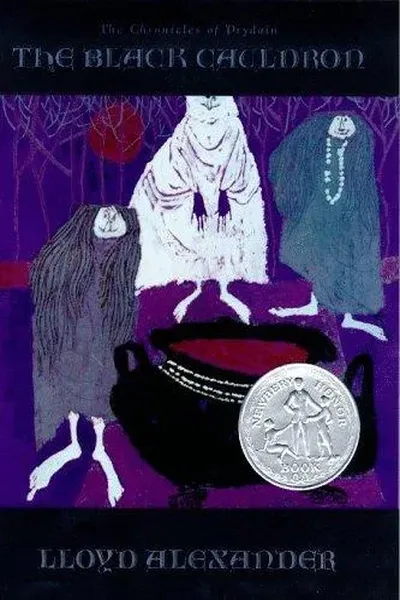
A powerful, sentient artifact capable of raising an army of the dead. It represents ultimate destructive power and the temptation of absolute control, serving as the primary antagonist's goal.
Horned King
The primary antagonist of the book. A warlord seeking to use the Black Cauldron to achieve dominion over Prydain by creating an undead army.
Assistant Pig-Keeper
Taran's initial humble occupation, symbolizing his low status and the extraordinary journey he undertakes from ordinary beginnings to heroism.
Mabinogion
A collection of medieval Welsh prose tales, considered the most important body of early Welsh literature. Lloyd Alexander drew significant inspiration from these stories for The Chronicles of Prydain.
Cauldrons of Rebirth
A legendary type of cauldron contrasted with the Black Cauldron. These are spoken of as having creative or restorative powers, hinting at a duality in magical artifacts.
Dyrnwyn
An enchanted sword wielded by Prince Gwydion. It possesses immense power, capable of defeating any foe, and is described as having a fiery nature.
Orddu
One of the three 'witches' or enchantresses living in a hidden valley, who possess knowledge of the Black Cauldron and its nature. They represent ancient, enigmatic forces.
🔮 Readers Also Liked
Browse all →





More by Lloyd Alexander
All books →




More Free Witchcraft & Paganism Books
View all →