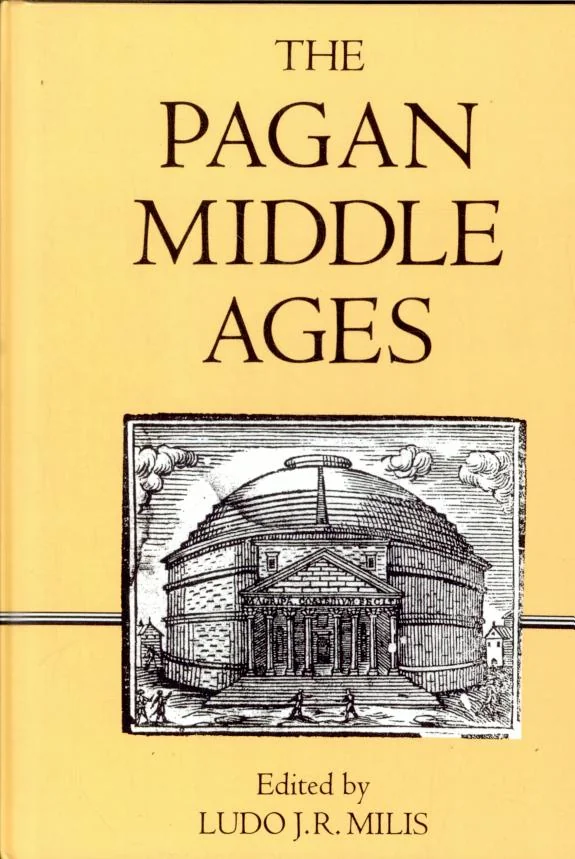
The Pagan Middle Ages
 75
75

The Pagan Middle Ages
Ludovicus Milis's The Pagan Middle Ages offers a compelling counter-narrative to the simplistic view of a medieval Europe entirely subsumed by Christianity. The strength of this collection lies in its specific engagement with archaeological evidence and its willingness to posit continuity where others saw only rupture. For instance, the discussion on the survival of funerary rites, potentially linked to pre-Christian beliefs about the underworld, provides concrete examples of this enduring pagan substratum. A limitation, however, is that the essay collection format can lead to unevenness; some contributions feel more robustly supported than others. The piece examining the persistence of fertility cults, while intriguing, could have benefited from further exploration of the specific regional variations. Despite this, Milis's work remains a valuable resource for understanding the complex religious landscape of the period. It successfully demonstrates that the medieval mind was not solely a Christian construct.
📝 Description
75
Ludovicus Milis argued in 1998 that pagan beliefs persisted in the Middle Ages.
Published in 1998, Ludovicus Milis's book examines the continued presence of pagan beliefs and practices within medieval Europe, despite its Christian veneer. Milis contends that the era was not a simple replacement of old faiths with new ones, but a period of complex blending. Older traditions merged with Christian doctrines, influencing societal norms and individual mindsets. The book uses archaeological evidence and textual analysis to show how pre-Christian elements remained active.
This work is for students of medieval history, religious studies, and comparative mythology. Researchers looking to move beyond standard interpretations of the Middle Ages will find its arguments useful. It will also interest those curious about the evolution of religious thought, the endurance of folk customs, and the psychological roots of belief systems.
Milis's work emerged in the late 20th century, a time when academics began to look past the official Christian narrative of medieval Europe. It contributed to a wider reassessment of cultural continuity, challenging the idea that Christianity completely supplanted older beliefs. The book's focus on syncretism and the survival of folk traditions aligns with scholarly interest in lived religious experience and popular belief systems that existed alongside, and often intertwined with, formal church doctrine.
💡 Why Read This Book?
• Understand the nuanced persistence of pre-Christian beliefs, learning how pagan rituals continued to inform medieval European life beyond official Christian doctrine, as explored through the analysis of archaeological finds from the era. • Grasp the concept of religious syncretism by examining specific instances where pagan and Christian teachings merged, altering societal behavior and mentalité, a key focus in essays discussing the afterlife. • Gain insight into the evolution of Western religious thought by exploring how elements of paganism, particularly concerning sexuality and fertility, interacted with and modified emerging Christian morality.
⭐ Reader Reviews
Honest opinions from readers who have explored this book.
❓ Frequently Asked Questions
What evidence does The Pagan Middle Ages present for pagan survival?
The book cites archaeological discoveries, including burial practices and votive offerings, alongside textual analyses of folklore and popular rituals that retained pre-Christian characteristics despite the dominance of Christianity.
How did paganism influence medieval views on the afterlife?
It explores how lingering ancestral cults and concepts of an underworld, predating Christianity, continued to shape popular conceptions of death and the journey beyond, often existing alongside official Christian eschatology.
Does the book focus on specific regions of medieval Europe?
While the essays collectively address the broader medieval world, they often draw on specific regional examples and archaeological sites to illustrate the survival and adaptation of pagan elements.
What is the author's stance on Christianization in the Middle Ages?
Milis suggests that Christianization was not a total replacement but a complex process of syncretism and adaptation, where pagan beliefs and practices were often integrated into, rather than eradicated by, Christian doctrine.
Who is Ludovicus Milis?
Ludovicus Milis is the author of The Pagan Middle Ages, a scholar who contributed to the re-evaluation of medieval European religious and cultural history, emphasizing continuity with pre-Christian traditions.
Is this book suitable for beginners in medieval studies?
It is best suited for those with some foundational knowledge of medieval history or religious studies, as it delves into specific academic arguments and evidence from the period.
🔮 Key Themes & Symbolism
Syncretism and Cultural Blending
The central thesis posits that medieval Europe was not a blank slate upon which Christianity was imposed, but rather a landscape where pre-Christian beliefs and practices persisted and blended with new doctrines. This syncretism is examined through various societal aspects, suggesting a dynamic interaction rather than a simple eradication of paganism. The work highlights how old forms were often reinterpreted through a Christian lens, or how pagan elements continued to inform popular behavior and mentalité beneath the surface of official religious adherence.
The Persistence of Folk Religion
This theme focuses on the continuity of rituals, beliefs, and symbols associated with folk traditions that likely predate Christianity. Milis explores how these elements, often tied to natural cycles, fertility, and ancestor veneration, continued to influence the daily lives and spiritual understanding of the populace. The book argues that these enduring practices represent a vital undercurrent of paganism that shaped the lived religious experience of the medieval period, often diverging from ecclesiastical teachings.
Pagan Echoes in Medieval Eschatology
The collection investigates how pagan conceptions of death, the underworld, and the afterlife continued to resonate within the medieval Christian framework. It suggests that elements of chthonic worship and ancestral cults may have subtly influenced popular views on mortality and the spiritual realm. This theme challenges the notion of a solely Christianized eschatology, revealing layers of older beliefs that persisted and interacted with emerging Christian doctrines concerning the soul's fate.
Sexuality and Fertility Rites
The book examines how pagan attitudes towards sexuality and fertility, often more openly celebrated in pre-Christian societies, persisted and were negotiated within the medieval context. It explores the potential survival of rituals and beliefs aimed at ensuring prosperity and procreation, and how these interacted with Christian asceticism and moral codes. This aspect highlights the complex relationship between emergent Christian morality and deeply ingrained older traditions concerning life and reproduction.
💬 Memorable Quotes
Direct passages from the work, attributed to the author.
“Evidence for the survival of paganism in the medieval world.”
— This foundational statement expresses the book's core argument: that pagan influences did not vanish with the advent of Christianity but continued to manifest in various forms throughout the Middle Ages.
“Many aspects of the pagan past continued to survive into the middle ages despite the introduction of Christianity.”
— This highlights the central thesis of continuity, emphasizing that historical transitions are rarely absolute and that older cultural elements often persist and adapt within new religious and social frameworks.
“Influencing forms of behaviour and the whole mentalité of the period.”
— This points to the profound, often subconscious, impact of enduring pagan traditions on the collective mindset and daily actions of medieval people, suggesting a deeper cultural layer than official religious doctrine alone reveals.
“Paganism mingled with Christian teaching to affect many different aspects of medieval society.”
— This emphasizes the process of syncretism, where distinct religious and cultural systems did not merely coexist but actively merged, creating a unique hybrid expression in medieval life.
“Through a focus on such topics as archaeology, the afterlife and sexuality.”
— This indicates the specific avenues of inquiry the essays employ, demonstrating that the examination of pagan survival is grounded in concrete fields of study and particular human concerns.
🌙 Esoteric Significance
Tradition
This work aligns with esoteric traditions interested in the survival of ancient wisdom and the hidden currents within mainstream history. It speaks to lineages that explore pre-Christian European spirituality, often referred to as Traditionalism or focusing on Indigenous European paths. While not explicitly presenting occult practices, it provides historical and cultural context for understanding the enduring appeal of nature-based or animistic worldviews that predate and coexisted with Abrahamic religions.
Symbolism
The book implicitly engages with symbols of fertility, the cyclical nature of life and death, and the sacredness of the natural world – all potent symbols in various esoteric traditions. Concepts related to the underworld, ancestral spirits, and chthonic deities, though viewed historically, resonate with symbolism found in shamanic practices and older mystery traditions that often focus on transformation through confronting darker or primal forces.
Modern Relevance
Contemporary practitioners of Neo-Paganism, Heathenry, and various forms of traditional witchcraft often draw upon historical research like Milis's to reconstruct or inform their practices. Thinkers exploring cultural continuity and the resilience of indigenous spiritualities find value in its arguments. It also informs academic fields like comparative religion and the study of folklore, providing a basis for understanding the deep roots of certain spiritual impulses in Western culture.
👥 Who Should Read This Book
• Students of comparative religion and mythology: Gain a deeper understanding of how religious systems interact and evolve, specifically examining the blending of pagan and Christian elements. • Medieval history enthusiasts: Challenge conventional narratives of the Middle Ages by exploring the survival of pre-Christian beliefs and practices beneath the surface of Christian society. • Esoteric practitioners and scholars: Find historical grounding for the persistence of ancient spiritual currents and understand the cultural milieu from which modern pagan revivals emerged.
📜 Historical Context
Ludovicus Milis's The Pagan Middle Ages, published in 1998, emerged during a period of critical re-evaluation in medieval studies. Scholars were increasingly moving beyond the monolithic portrayal of a purely Christian Middle Ages, seeking to understand the lived experiences and diverse beliefs of its inhabitants. Milis's work contributed to this shift by challenging the narrative of complete Christianization and highlighting the persistence of pre-Christian traditions. This era saw a growing interest in folklore, popular religion, and comparative mythology as lenses through which to view the medieval past. While figures like Georges Duby were exploring the social structures of the period, Milis focused on the undercurrents of pagan belief. The reception of such works often involved acknowledging their contribution to a more nuanced understanding, though mainstream historical discourse still largely prioritized the dominant Christian framework.
📔 Journal Prompts
The intermingling of pagan and Christian teaching, as explored in the text, suggests a complex process of belief adaptation.
Reflect on the concept of the 'mentalité' of the medieval period as influenced by enduring pagan elements.
Consider the archaeological evidence presented for the survival of pre-Christian afterlife beliefs.
Analyze how societal views on sexuality might have been shaped by both pagan and Christian influences.
Examine the role of folk religion in preserving pagan traditions throughout the Middle Ages.
🗂️ Glossary
Syncretism
The merging or blending of different religious beliefs, cultures, or schools of thought. In this context, it refers to the fusion of pagan traditions with Christian doctrine in the medieval period.
Mentalité
A term referring to the collective mindset, attitudes, and worldview of a particular group or era. The book examines how pagan influences may have shaped the medieval mentalité.
Eschatology
The branch of theology concerned with death, judgment, and the final destiny of the soul and of humankind. The book discusses pagan influences on medieval eschatological beliefs.
Chthonic Deities
Gods and goddesses associated with the underworld, the earth, and fertility. The work suggests the lingering influence of such deities on medieval perceptions of death and the afterlife.
Votive Offerings
An item offered to a deity or supernatural power, often in fulfillment of a vow or as a sign of gratitude. Archaeological finds of such offerings can indicate persistent pagan practices.
Fertility Cults
Religious practices focused on ensuring the fertility of land, livestock, and humans, often involving rituals tied to natural cycles. The book explores their survival into the medieval era.
Christianization
The process by which a person or area becomes Christian. The book argues this was a complex process involving adaptation and syncretism rather than complete replacement.
This book appears in 1 collection
🔮 Readers Also Liked
Browse all →







From the “Paganism” Collection
View all →







More Free Witchcraft & Paganism Books
View all →