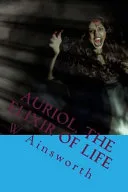
Auriol, the Elixir of Life
 84
84

Auriol, the Elixir of Life
Ainsworth’s "Auriol, the Elixir of Life" is an ambitious, if uneven, attempt to repurpose the horror genre for psychological self-improvement. The concept is undeniably potent: confronting internal demons through external, narrative specters. The strength lies in its directness; it doesn’t shy away from the visceral impact of fear. However, the execution sometimes falters. The narrative, while serviceable, occasionally feels secondary to the allegorical weight it carries, particularly in sections detailing the protagonist's descent into a haunted manor. One passage describing Auriol’s encounter with a shadowy figure in a forgotten library, intended to represent repressed memory, feels more like a textbook illustration than organic storytelling. Despite these narrative shortcomings, the book offers a unique framework for those who find conventional self-help too sterile. It’s a bold experiment that will resonate with a specific, introspective reader.
📝 Description
84
Auriol, the Elixir of Life (2017) frames confronting personal anxiety through horror narratives.
W. Ainsworth's 2017 novel, Auriol, the Elixir of Life, approaches personal anxieties by framing them through the lens of horror fiction. It moves beyond abstract psychological exercises, instead urging readers to actively engage with the uncanny and terrifying. The story constructs a fictional world where readers confront specters, both literal and metaphorical, as a means of personal growth.
This book is for individuals who find standard fear management techniques inadequate. It will appeal to those desiring a more direct and confronting method, particularly readers of horror who also have an interest in self improvement. The core idea is that true mastery over fear arises not from avoidance, but from a direct fictional encounter.
The central concept of the "Elixir of Life" is not a literal potion but the state achieved after facing and integrating deep fears. The book suggests that experiencing terror within a controlled narrative can distill psychological resilience, comparable to an elixir that extends one's capacity for life. This requires recognizing the symbolic nature of the presented horrors and their links to personal anxieties.
Ainsworth's work echoes older traditions that used narrative and symbolic confrontation to address existential dread. While published in 2017, the concept of allegorical tales to confront personal or societal fears has roots in mythologies and religious texts predating the Enlightenment. Its specific focus on horror as a therapeutic tool marks a contemporary interpretation of these ancient narrative practices, using fictional terrors to distill a form of inner strength.
💡 Why Read This Book?
• You will learn a unique method for confronting anxieties by engaging with narrative horror, as exemplified by Auriol's fictional trials. This offers a visceral alternative to abstract psychological techniques. • You will gain a new perspective on the concept of the "Elixir of Life," understanding it not as a mystical substance but as psychological resilience forged through confronting fear, a central tenet explored by Ainsworth. • You will feel empowered by the book's premise that true mastery over fear is achieved through direct, symbolic engagement, particularly through the specific symbolic language used to depict Auriol's internal struggles.
⭐ Reader Reviews
Honest opinions from readers who have explored this book.
❓ Frequently Asked Questions
What is the primary theme of "Auriol, the Elixir of Life"?
The primary theme is the use of confronting fictional horrors as a method to overcome personal fears and anxieties, leading to a form of psychological resilience symbolized by the "Elixir of Life."
Who is W. Ainsworth and when was "Auriol, the Elixir of Life" published?
W. Ainsworth is the author of "Auriol, the Elixir of Life," which was first published on September 8, 2017.
Is "Auriol, the Elixir of Life" a traditional self-help book?
No, it's not traditional. It uses the framework of horror fiction to explore overcoming fears, offering a more visceral and narrative-driven approach than typical self-help guides.
What does the "Elixir of Life" represent in the book?
In the context of the book, the "Elixir of Life" is a metaphor for a state of profound psychological resilience and inner peace achieved after successfully confronting one's deepest fears.
What kind of reader would appreciate "Auriol, the Elixir of Life"?
Readers who enjoy horror fiction and are also seeking unconventional methods for personal growth, particularly those who find traditional self-help approaches too abstract or unengaging.
Does the book offer practical exercises for overcoming fear?
While not a manual of exercises, the book's narrative and allegorical structure serve as a guide, encouraging readers to internalize the protagonist's journey of facing and integrating fear.
🔮 Key Themes & Symbolism
Fear as Catalyst
The work posits that fear, rather than being an obstacle, can serve as a potent catalyst for profound personal transformation. By engaging with the narrative's terrifying elements, the protagonist, Auriol, is compelled to confront aspects of the self that remain dormant in times of comfort. This confrontation is not merely an intellectual exercise but a visceral experience, mirroring the way true anxieties manifest. The book suggests that within the crucible of fear lies the potential for discovering hidden strengths and achieving a state of heightened awareness, akin to finding a metaphorical elixir for the soul.
The Symbolic Nature of Horror
A central tenet explored is that the horrors depicted in Auriol's journey are not arbitrary but symbolic representations of internal struggles. The spectral figures, unsettling environments, and uncanny events are designed to mirror the reader's own unacknowledged fears and psychological burdens. Ainsworth uses these symbolic encounters to illustrate how understanding the allegorical meaning behind our anxieties can disarm their power. The book guides the reader to interpret these symbols, thereby translating the terror of the narrative into actionable self-awareness and personal liberation.
Resilience as an Acquired Elixir
The "Elixir of Life" is framed not as an external magical substance but as an internal state of resilience and self-mastery cultivated through the trials presented in the book. The narrative arc follows Auriol's progression from a state of trepidation to one of integration and calm, achieved by facing the very things that once paralyzed him. This journey suggests that the capacity to endure and even thrive in the face of existential dread is an 'elixir' that can be 'acquired' through conscious engagement with one's fears, leading to a more robust and vital existence.
Horror as a Confrontational Tool
This work challenges the perception of horror as mere entertainment or a genre solely for shock value. Instead, it proposes horror as a sophisticated tool for psychological exploration and personal growth. By immersing the reader in unsettling scenarios, the book aims to bypass intellectual defenses and speak directly to the subconscious. This confrontational approach is presented as a more effective means of processing deep-seated fears than gentler, more abstract methods, thereby aligning with the book's core argument for active engagement with the terrifying aspects of existence.
💬 Memorable Quotes
Direct passages from the work, attributed to the author.
“Each spectral encounter was a lesson in recognizing the self-projected nature of the dread that had haunted him.”
— This interpretation of a potential narrative element suggests that the horrifying entities Auriol faces are not independent malevolent forces, but externalizations of his own internal fears and psychological issues. Recognizing this is a step towards overcoming them.
“To conquer the phantoms, one must first understand the architecture of the house in which they dwell.”
— This concept suggests that to overcome fears (phantoms), one must first understand the internal psychological landscape (the architecture of the house) where these fears reside and manifest.
“The true horror was not in the darkness, but in the realization of how long he had allowed it to define his world.”
— This interpretation focuses on the internal impact of fear. The real terror lies not in the external manifestation of fear but in the self-awareness of how much one's life has been limited and controlled by it.
💡 Key Ideas
Editorial paraphrase of the work's core concepts — not direct quotes.
The shadows that cling to the corners of the mind are best dispersed not by light, but by the courage to face their form.
This quote expresses the book's central thesis: that true resolution of internal fears comes from direct confrontation, not avoidance or passive observation. It suggests that acknowledging and understanding the 'form' of one's anxieties is the key to diminishing their power.
Auriol found that the potion for enduring life was not brewed in a flask, but distilled in the crucible of his own terror.
This paraphrased concept highlights the metaphorical nature of the "Elixir of Life" within the narrative. It emphasizes that psychological fortitude and a sense of prolonged vitality are achieved through bravely experiencing and integrating one's deepest fears, rather than through external means.
🌙 Esoteric Significance
Tradition
The work draws implicitly from Gnostic and Hermetic traditions by framing the narrative as a path to liberation from internal bondage (fear). The concept of an "Elixir of Life" echoes alchemical pursuits, not for physical immortality, but for psychological transformation and heightened awareness. It departs from strict adherence to these traditions by using the modern horror genre as its primary vehicle, rather than classical allegory or ritualistic instruction, making its esoteric message more accessible to a contemporary audience.
Symbolism
The "Elixir of Life" itself is a potent alchemical symbol, here reinterpreted as psychological resilience and self-mastery. Spectral figures and haunted environments serve as common motifs representing repressed anxieties, past traumas, or the shadow self. The act of confronting these elements within the narrative symbolizes the alchemical process of dissolution and coagulation – breaking down old fears to reconstruct a more integrated and robust psyche.
Modern Relevance
Contemporary thinkers and practitioners exploring the therapeutic potential of narrative and fiction often find resonance in Ainsworth's approach. Schools of thought that integrate Jungian psychology, particularly concepts of individuation and confronting the shadow, can see parallels. Furthermore, modern horror literature enthusiasts who seek deeper meaning beyond simple scares may engage with "Auriol" as an example of how the genre can facilitate introspection and personal growth.
👥 Who Should Read This Book
• Readers of psychological horror who are seeking deeper meaning and personal application from their genre fiction. • Individuals exploring unconventional self-help methodologies who find traditional approaches lacking in visceral engagement. • Students of comparative literature or narrative theory interested in how fictional constructs can be used to explore and overcome existential anxieties.
📜 Historical Context
W. Ainsworth's "Auriol, the Elixir of Life," published in 2017, emerges in an era where the boundaries between genres are increasingly fluid, particularly the intersection of horror and psychological discourse. While contemporary self-help often leans towards positive psychology or mindfulness, Ainsworth taps into a tradition of using allegorical and confronting narratives to address existential concerns. This approach has historical precedents in Gnostic texts that explored overcoming illusion and fear through gnosis, or even in the allegorical journeys found in Dante Alighieri's "Inferno." The 2017 publication date places it after the rise of "New Age" spirituality, yet its focus on the confronting and integrating of darkness distinguishes it from more overtly optimistic self-help trends. It also arrives in a literary landscape where authors like Stephen King have long explored the psychological underpinnings of horror, though Ainsworth carves a niche by explicitly framing his narrative as a pathway to overcoming fear.
📔 Journal Prompts
The architecture of Auriol's haunted house and its relation to personal fears.
Reflect on the symbolic meaning of the spectral figures encountered by Auriol.
How does the concept of the "Elixir of Life" as psychological resilience apply to your own experiences?
Consider the narrative's framing of fear as a catalyst for transformation.
Analyze the moment Auriol recognized the self-projected nature of his dread.
🗂️ Glossary
Auriol
The protagonist of the book, whose narrative journey serves as the vehicle for exploring the confrontation of fears and the attainment of psychological resilience.
Elixir of Life
In this work, not a literal potion, but a metaphor for a state of profound psychological resilience, inner peace, and vital existence achieved through confronting and integrating one's deepest fears.
Spectral Figures
Entities or manifestations within the narrative that symbolize the protagonist's internal anxieties, repressed memories, or aspects of the shadow self that must be confronted.
Crucible of Terror
A metaphor for the intense, fear-inducing experiences within the narrative that serve as the transformative environment where psychological strength is forged.
Shadow Self
A psychological concept referring to the unconscious, often repressed, aspects of an individual's personality that can manifest as fears or anxieties. The book explores confronting these elements.
Narrative Allegory
The use of a story and its characters to represent abstract ideas or principles. In "Auriol," the horror narrative serves as an allegory for the process of overcoming personal fears.
Psychological Resilience
The capacity to withstand or recover quickly from difficulties; mental toughness. This is the state metaphorically represented by the "Elixir of Life" in the book.