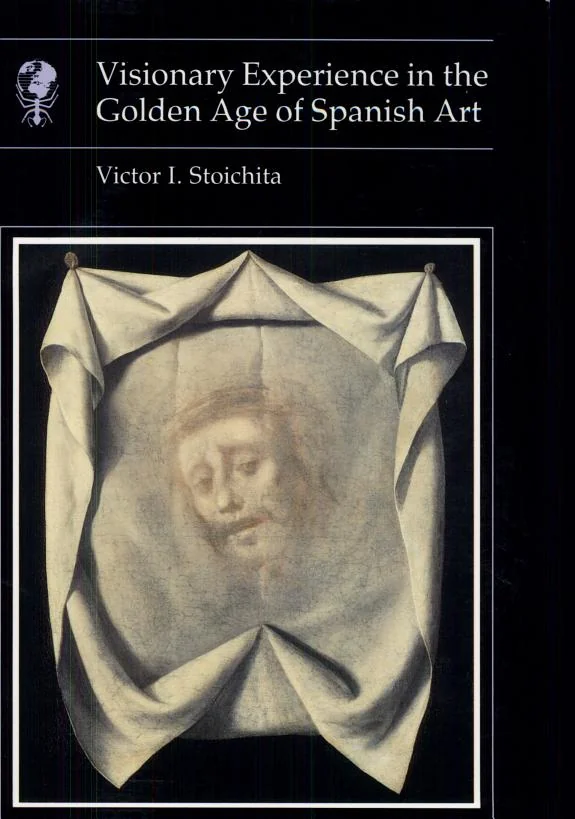
Visionary Experience in the Golden Age of Spanish Art
 75
75

Visionary Experience in the Golden Age of Spanish Art
Stoichita’s analysis of Spanish Golden Age art, particularly its engagement with visionary experience, is remarkably precise. He avoids generalizations, instead focusing on the mechanics of how artists like El Greco and Zurbarán translated ecstatic states into tangible forms. The section detailing the 'representation of the unrepresentable,' a core conceit, is particularly illuminating, offering a theoretical framework for understanding how artists grappled with the divine. A minor drawback is the density of the prose in places, which can demand significant reader concentration. However, the examination of the role of the imagination as a tool of faith during the Counter-Reformation, directly linking it to artistic output, is a powerful argument. This book stands as a crucial text for understanding the spiritual underpinnings of a pivotal era in Western art.
📝 Description
75
Victor I. Stoichita's 1995 study examines how Spanish artists depicted mystic visions.
Victor I. Stoichita's 1995 book, *Visionary Experience in the Golden Age of Spanish Art*, addresses the challenge Spanish artists faced in the 16th and 17th centuries: representing mystic visions. The study moves beyond simple iconography to consider how artists attempted to portray the unrepresentable. It charts a course through the visual culture of the Spanish Counter-Reformation, a period marked by efforts to reinforce Catholic doctrine.
Stoichita argues that the Counter-Reformation encouraged a renewed focus on the imagination in faith. Artists and devotees were prompted to cultivate inner visions, viewing imagination as key to understanding divine truths. This led to specific artistic methods for showing ecstatic states, divine encounters, and mystical phenomena. The book is of interest to art historians, religious studies scholars, and anyone intrigued by faith, imagination, and art, especially within a time of European religious and political change.
This work sits within the study of Western esotericism by examining how intense, subjective spiritual experiences were translated into visual forms during a specific historical period. It engages with how belief systems, particularly those of the Catholic Counter-Reformation, influenced the artistic representation of altered states of consciousness and divine contact. The book considers the 'inner eye' and its manifestation in art, a theme common in traditions that explore mystical perception and its outward expression.
💡 Why Read This Book?
• Gain insight into the specific techniques Spanish artists employed in the 16th and 17th centuries to portray supernatural visions, moving beyond standard art historical analysis. • Understand the pivotal role of the imagination in the Catholic Counter-Reformation, as explored by Stoichita, and how it directly fueled artistic production. • Learn about the concept of 'the representation of the unrepresentable' as a theoretical framework for analyzing art dealing with ecstatic or divine experiences.
⭐ Reader Reviews
Honest opinions from readers who have explored this book.
❓ Frequently Asked Questions
Which Spanish artists are prominently discussed in relation to visionary experience?
The book extensively analyzes works by artists such as El Greco, whose intense spiritual visions are a central focus, and Zurbarán, exploring how their paintings manifest Counter-Reformation ideals.
What is the 'Golden Age of Spanish Art' in the context of this book?
This refers to the period of flourishing Spanish painting primarily during the 16th and 17th centuries, a time when Catholic spirituality and the Counter-Reformation profoundly influenced artistic themes and styles.
How did the Counter-Reformation influence art according to Stoichita?
Stoichita argues that the Counter-Reformation encouraged a renewed emphasis on the imagination as a vital faculty for experiencing faith, leading artists to visually interpret and depict mystical states.
What does 'representing the unrepresentable' mean in this book?
It refers to the artistic challenge of visually depicting intangible spiritual phenomena, divine encounters, and ecstatic visions, a central theme Stoichita explores through the works of Spanish masters.
When was Victor I. Stoichita's book originally published?
The original publication date for *Visionary Experience in the Golden Age of Spanish Art* was 1995, marking it as a significant scholarly contribution of that decade.
What is the significance of the 'rediscovery of the role of the imagination' mentioned?
Stoichita highlights that during the Counter-Reformation, the imagination was re-valued not just as a creative faculty but as a key spiritual tool for accessing and understanding divine truths.
🔮 Key Themes & Symbolism
The Imagined Divine
The work posits that the Spanish Counter-Reformation revitalized the role of the imagination, transforming it into a vital conduit for spiritual experience. Artists were not merely illustrating dogma but actively engaging their imaginative faculties to visualize divine encounters, ecstatic states, and the presence of the sacred. This approach allowed for the depiction of subjective, internal experiences, pushing the boundaries of artistic representation and influencing how faith was perceived and practiced.
Representing the Ineffable
A core concern is the theoretical problem of 'representing the unrepresentable.' Stoichita examines how Spanish painters tackled the challenge of making visible the invisible – divine apparitions, saintly ecstasies, and the very essence of spiritual presence. This involved developing visual languages and symbolic conventions to convey states of being that transcend ordinary perception, forming a unique aspect of Western art's engagement with the mystical.
Art as Devotion
The book underscores the intimate connection between artistic creation and devotional practice during the Golden Age. Paintings were not solely aesthetic objects but instruments of faith, intended to inspire, instruct, and facilitate spiritual connection. Stoichita explores how the intense spirituality of the era, particularly within the strictures of the Counter-Reformation, permeated the artistic output, making art a powerful tool for reinforcing religious belief and experiencing the divine.
Visionary States in Painting
Stoichita analyzes specific visual strategies employed by artists to render visionary experiences. This includes examining how figures are depicted in states of rapture, how light and composition are used to suggest divine presence, and how the boundaries between the earthly and the celestial are blurred. The focus is on the formal and conceptual means by which paintings become conduits for conveying the subjective reality of mystical encounters.
💬 Memorable Quotes
Direct passages from the work, attributed to the author.
“The imagination is a faculty of the soul that apprehends the invisible.”
— This conceptualization highlights the view of imagination not as mere fantasy, but as a direct means to perceive spiritual realities, central to the book's thesis on Counter-Reformation spirituality.
“The art of the period sought to make the invisible visible.”
— This succinctly captures the book's central argument regarding the ambitious goal of Spanish Golden Age artists: to translate profound spiritual experiences and divine encounters into tangible visual forms.
“Faith was exercised through the cultivation of inner visions.”
— This interpretation emphasizes Stoichita's point that during the Counter-Reformation, spiritual practice became increasingly internalized, with the imagination playing a key role in experiencing and affirming religious belief.
“The challenge was to paint the ecstasy of the saint.”
— This phrase points to the specific artistic problem Stoichita addresses: how to visually represent intense, subjective spiritual states like rapture and divine communion that are inherently difficult to depict.
“The Spanish Counter-Reformation fostered a unique visual theology.”
— This suggests that the specific religious climate of 16th and 17th century Spain generated a distinct set of artistic conventions and iconographic approaches to theological concepts and spiritual experiences.
🌙 Esoteric Significance
Tradition
While not strictly within a single esoteric lineage like Hermeticism or Kabbalah, Stoichita's work touches upon themes resonant with mystical traditions that emphasize direct, subjective experience of the divine. It aligns with traditions that value inner vision and the imagination as paths to gnosis or spiritual enlightenment, particularly those influenced by Neoplatonism and Christian mysticism.
Symbolism
Key symbols explored include the divine light, often depicted with intense luminosity or radiating halos, signifying spiritual illumination and presence. The ecstatic pose of saints and mystics, characterized by upturned faces, flowing drapery, and gestures of rapture, symbolizes the soul's direct encounter with the divine. The book also examines how mundane objects in still lifes can be imbued with spiritual significance, reflecting a microcosm of the divine in the everyday.
Modern Relevance
Contemporary interest in altered states of consciousness, mindfulness, and the intersection of psychology and spirituality finds echoes in Stoichita's exploration. Thinkers and practitioners in fields ranging from contemplative studies to psychedelic-assisted therapy may find value in his analysis of how intense subjective experiences are translated into cultural and artistic forms, offering historical precedents for understanding the visualization of inner states.
👥 Who Should Read This Book
• Art historians specializing in the Baroque period or the Spanish Counter-Reformation will find a crucial theoretical framework for analyzing religious imagery. • Scholars of comparative religion and mysticism can explore the historical manifestation of visionary experiences within a specific cultural and artistic context. • Students of Western esotericism interested in the role of imagination and subjective experience in spiritual traditions will discover valuable historical case studies.
📜 Historical Context
The Spanish Golden Age, roughly 1550-1650, was dominated by the fervor of the Catholic Counter-Reformation. This period saw a powerful assertion of Catholic doctrine against Protestantism, leading to a flourishing of religious art intended to inspire awe and reinforce faith. Artists like El Greco, whose elongated figures and dramatic lighting suggest otherworldly experiences, and Zurbarán, known for his starkly devotional still lifes and monastic figures, were central to this movement. Stoichita's work emerged within art historical discourse that was increasingly examining the relationship between religion and art, moving beyond purely stylistic analysis. While contemporary scholars debated iconography and patronage, Stoichita's focus on the *theory* of visionary representation offered a novel perspective, directly engaging with the psychological and imaginative dimensions of faith.
📔 Journal Prompts
The concept of 'representing the unrepresentable' in El Greco's canvases.
The Counter-Reformation's emphasis on the imagination as a spiritual faculty.
Visual strategies for depicting divine light and ecstatic states.
The connection between monastic discipline and artistic vision in Zurbarán's work.
How the act of 'exercising faith through inner visions' shapes artistic output.
🗂️ Glossary
Counter-Reformation
The period of Catholic resurgence initiated in response to the Protestant Reformation, beginning in the mid-16th century and lasting into the mid-17th century, characterized by doctrinal reaffirmations and artistic patronage.
Visionary Experience
Subjective experiences perceived as direct encounters with the divine, supernatural, or spiritual realms, often characterized by intense emotions and profound altered states of consciousness.
Imagination (in Counter-Reformation context)
The faculty of the mind considered crucial for spiritual understanding and direct apprehension of divine truths, elevated beyond mere fantasy to a tool for experiencing faith.
Spanish Golden Age
A period of flourishing arts and literature in Spain, roughly coinciding with the 16th and 17th centuries, heavily influenced by the religious and political climate of the time.
Visual Theology
The use of visual art and imagery as a means of expressing, teaching, and exploring theological concepts and religious doctrines.
Ineffable
Too great or extreme to be expressed or described in words; in the context of art, referring to spiritual or mystical experiences that defy verbal articulation.
Ecstasy
A state of being overcome with emotion, often religious, characterized by a trance-like condition and perceived direct communion with the divine.
This book appears in 1 collection
🔮 Readers Also Liked
Browse all →









From the “Visions” Collection
View all →
More Free Occult Philosophy Books
View all →