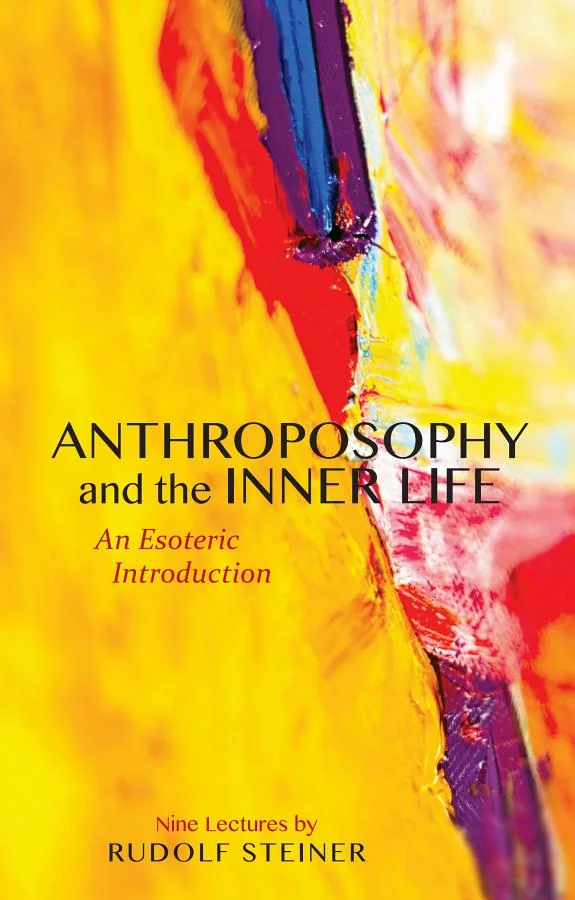
Anthroposophy and the Inner Life
 73
73

Anthroposophy and the Inner Life
Rudolf Steiner's "Anthroposophy and the Inner Life" functions less as a gentle introduction and more as a rigorous internal examination, even for seasoned students. The lectures, delivered in early 1924 following a significant restructuring of the Anthroposophical Society, possess an urgent quality. Steiner seems intent on clarifying the very essence of his spiritual science, stripping it down to its experiential core. His discussion of the 'karma of untruthfulness' offers a particularly stark and challenging perspective on the moral implications of inner work. While the clarity and directness are strengths, the demanding nature of the material, particularly without prior exposure to Steiner's complex cosmology, may present a barrier for newcomers. The strength lies in its unvarnished presentation of spiritual science as a living, demanding practice, but its limitation is its inherent density.
📝 Description
73
Rudolf Steiner delivered nine lectures in Dornach in early 1924, later compiled as 'Anthroposophy and the Inner Life'.
These lectures, given in Dornach shortly after the 1923-24 Christmas Foundation Meeting, present a personal and experiential reworking of anthroposophical ideas. Though called an 'introductory course' by Steiner, they were aimed at an audience already familiar with spiritual science. The talks move from Steiner's fundamental principles to their practical use in inner development.
Steiner addresses the core content of spiritual science during a period of renewal for the Anthroposophical Society. He sought to reorient the society's direction, and these lectures reflect that effort. They make the substance of spiritual science accessible, particularly for those who had followed Steiner for some time and sought a more integrated grasp of its spiritual scientific underpinnings and inner practice.
These lectures were given at a critical time for the Anthroposophical Society, following its reorganization at the 1923-24 Christmas Foundation Meeting. Rudolf Steiner was re-establishing the society's path forward. The talks, delivered in early 1924, capture this moment of spiritual and organizational recalibration. They focus on the essential content of spiritual science, aiming to provide a more unified understanding of its spiritual scientific basis and its application in personal inner work for those deeply engaged with Steiner's teachings.
💡 Why Read This Book?
• Gain a condensed, experiential understanding of Rudolf Steiner's spiritual science, focusing on the inner life and soul development, as presented in the lectures given after the 1923-24 Christmas Foundation Meeting. • Explore the practical implications of the etheric, astral, and ego bodies for conscious self-development, moving beyond abstract theory to tangible inner cultivation. • Understand the moral and ethical dimensions of spiritual work, particularly as articulated through concepts like the 'karma of untruthfulness' within the context of the renewed Anthroposophical Society.
⭐ Reader Reviews
Honest opinions from readers who have explored this book.
❓ Frequently Asked Questions
When were the lectures in 'Anthroposophy and the Inner Life' originally given?
The nine lectures were delivered in Dornach, Switzerland, in early 1924, shortly after the significant Christmas Foundation Meeting of 1923-24, which involved a renewal of the Anthroposophical Society.
Is 'Anthroposophy and the Inner Life' suitable for complete beginners to Rudolf Steiner?
While Steiner described them as introductory, the lectures assume a degree of familiarity with anthroposophical concepts. They offer a condensed, experiential view, best approached after some foundational reading.
What is the significance of the Christmas Foundation Meeting mentioned in relation to these lectures?
The meeting in late 1923 and early 1924 was a critical event where Rudolf Steiner refounded and renewed the Anthroposophical Society, giving a new impetus and structure to its spiritual-scientific work.
What specific aspects of inner development does Steiner focus on in these lectures?
Steiner emphasizes the cultivation of spiritual perception, the understanding of the human being's subtle bodies (etheric, astral, ego), and the development of moral consciousness through inner work.
Where did Rudolf Steiner deliver these lectures?
The lectures that form 'Anthroposophy and the Inner Life' were given in Dornach, Switzerland, at the Goetheanum, the center for the Anthroposophical Society.
How do these lectures differ from Steiner's more foundational works like 'Theosophy'?
Unlike foundational texts, these lectures condense spiritual science into a more personal, experiential framework, focusing on the inner life and the practical application of spiritual-scientific principles for individual development.
🔮 Key Themes & Symbolism
The Inner Life Cultivation
Steiner presents the inner life not as a passive state but as a field for active cultivation. He details methods for developing spiritual faculties, moving from ordinary consciousness to a perception of higher realities. This involves understanding the interplay of the physical, etheric, and astral bodies and how conscious effort can transform them, leading to a more profound connection with the spiritual world.
Spiritual Science as Lived Experience
These lectures emphasize that anthroposophy is not merely an intellectual pursuit but a living science that must be experienced inwardly. Steiner reformulates core concepts from a personal, experiential viewpoint, urging readers to engage with spiritual truths through their own inner activity and transformation. This practical approach is central to the renewal of the Anthroposophical Society.
Moral and Karmic Dimensions
The work addresses the ethical underpinnings of spiritual development, particularly highlighting the 'karma of untruthfulness.' Steiner connects inner integrity and truthfulness to the capacity for genuine spiritual perception and progress. This underscores the profound link between one's moral development and one's spiritual evolution, a critical aspect of Steiner's renewal of the society.
The Human Being's Subtle Bodies
A significant focus is placed on understanding the human being through the interplay of the physical, etheric, astral, and ego bodies. Steiner explains how the development and conscious engagement with these subtle sheaths are essential for working through the spiritual world and for the purposeful evolution of the individual soul.
💬 Memorable Quotes
Direct passages from the work, attributed to the author.
“The lectures reformulate the content of spiritual science from a condensed, personal, experiential point of view.”
— This statement highlights the unique nature of these talks, delivered after the 1923-24 Christmas Foundation Meeting. They aim to distill the essence of spiritual science into something immediately graspable and personally relevant for the listener's inner development.
“The karma of untruthfulness.”
— This concept points to the profound moral implications of inner work. Steiner suggests that a lack of inner truthfulness creates specific karmic consequences that impede spiritual progress and the development of genuine spiritual perception.
“Steiner refounded and renewed the Anthroposophical Society.”
— This refers to the important 1923-24 Christmas Foundation Meeting where Rudolf Steiner revitalized the Anthroposophical Society, setting a new direction and emphasis for its future work and spiritual-scientific endeavors.
“These lectures were given to an audience that had been studying anthroposophy for many years.”
— This contextualizes the lectures' intensity and depth. Although termed 'introductory,' they were designed for an established group, allowing Steiner to address core principles with an assumption of some prior engagement with spiritual science.
“The fundamental principles of spiritual science.”
— This refers to the core doctrines and understandings of anthroposophy that Steiner had previously established, which he now re-examines and presents in a more condensed and experientially focused manner for his audience.
🌙 Esoteric Significance
Tradition
The work is firmly rooted in the Western esoteric tradition, specifically Rudolf Steiner's unique development of Anthroposophy. While drawing from sources like Gnosticism, Hermeticism, and Theosophy, Steiner's approach emphasizes a scientifically rigorous, yet spiritually experiential, path to understanding the cosmos and the human being's place within it.
Symbolism
Key symbolic motifs include the subtle bodies—etheric, astral, and ego—which represent the non-physical layers of human existence. The 'karma of untruthfulness' serves as a potent symbolic representation of the moral laws governing spiritual evolution. The concept of the 'inner life' itself symbolizes the cultivated space for direct spiritual experience and transformation.
Modern Relevance
Contemporary practitioners of biodynamic agriculture, Waldorf education, and anthroposophical medicine frequently draw upon the principles articulated in Steiner's works. Thinkers exploring consciousness studies, integral philosophy, and the integration of science and spirituality also find resonance in his detailed cosmology and emphasis on inner development.
👥 Who Should Read This Book
["• Students of Rudolf Steiner's work seeking to deepen their understanding of core anthroposophical concepts through an experiential lens, particularly those familiar with his earlier works.", '• Individuals interested in practical spiritual development and the cultivation of inner faculties, who are looking for a structured approach beyond purely intellectual study.', '• Researchers of esoteric traditions and consciousness studies, aiming to grasp the foundational principles of Anthroposophy as presented in a concentrated format.']
📜 Historical Context
Delivered in early 1924 in Dornach, Switzerland, these lectures by Rudolf Steiner emerged in the immediate aftermath of the crucial 1923-24 Christmas Foundation Meeting. This meeting marked a significant restructuring and renewal of the Anthroposophical Society, a movement deeply influenced by Theosophy but seeking its own distinct path. Steiner's aim was to re-energize the society and clarify the core principles of his spiritual science. The lectures addressed an audience already familiar with his work, offering a condensed, experiential perspective on spiritual development. This period saw anthroposophy establishing itself as a distinct spiritual-scientific endeavor, differentiating itself from contemporary movements like the New Thought movement and seeking to offer a rigorous, inwardly verifiable path to spiritual knowledge.
📔 Journal Prompts
The etheric body's formative forces and their impact on daily consciousness.
The consequences of the 'karma of untruthfulness' for spiritual perception.
Rudolf Steiner's renewal of the Anthroposophical Society in 1923-24.
Transforming the astral body through conscious inner activity.
The ego's role in bridging the physical and spiritual realms.
🗂️ Glossary
Anthroposophy
A spiritual philosophy founded by Rudolf Steiner, aiming to understand the human being and the cosmos through spiritual perception and scientific inquiry, integrating the physical and spiritual worlds.
Spiritual Science
The term Steiner used for Anthroposophy, emphasizing its basis in verifiable spiritual experience and rigorous investigation, akin to natural science but applied to spiritual realms.
Etheric Body
The life or formative force body, responsible for growth, reproduction, and maintaining the physical body's vitality. It is considered the vehicle of life processes.
Astral Body
The soul body, associated with consciousness, feeling, instinct, and desire. It is the bearer of subjective experience and the link to the psychic and spiritual realms.
Ego
The spiritual core of the human being, the principle of individuality, self-awareness, and moral freedom. It is the highest aspect of the human constitution.
Karma of Untruthfulness
A specific karmic consequence described by Steiner, resulting from a lack of inner truthfulness, which hinders spiritual development and obscures spiritual perception.
Foundation Meeting (Christmas 1923-24)
An important gathering where Rudolf Steiner refounded and renewed the Anthroposophical Society, establishing a new structure and direction for its spiritual-scientific work.