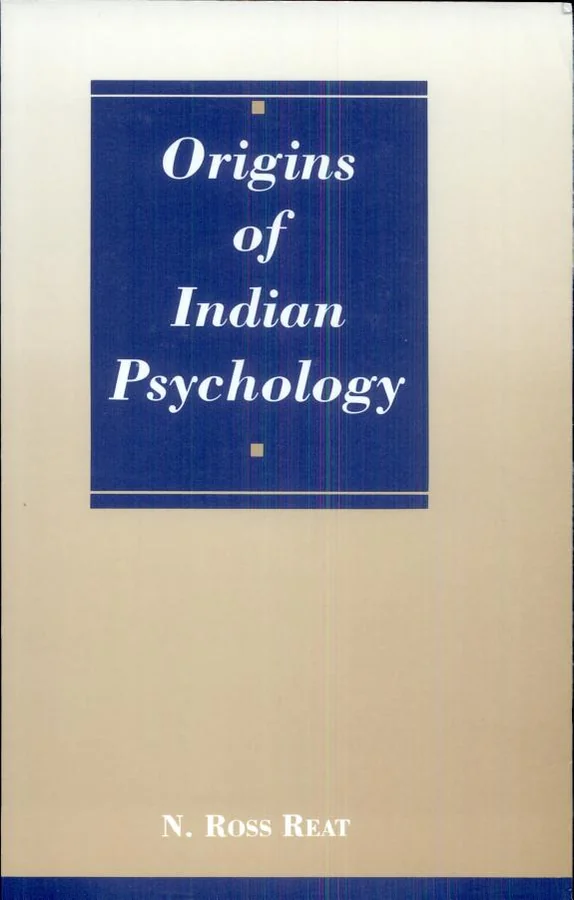
The Origins of Indian Psychology
 78
78

The Origins of Indian Psychology
N. Ross Reat’s *The Origins of Indian Psychology* offers a rigorous examination of early Indian theoretical thought concerning the mind and consciousness, charting its course from the Vedic era through to the burgeoning Buddhist schools. The work is commendable for its systematic approach, tracing the evolution of concepts like *ātman* (self) and the subtle body. Reat meticulously outlines the foundational Vedic ideas of monism and the afterlife, and how these informed early conceptions of individual identity, vital energies (*prāṇa*), and mental faculties (*manas*, *buddhi*). While the scholarship is solid, the book’s accessibility for those without a background in Sanskrit or Indian philosophy might be a consideration. The exposition of the *vedānta* concepts, for instance, requires careful attention. Nonetheless, its detailed exploration of pre-Buddhist psychological frameworks makes it a valuable resource for serious students.
📝 Description
78
### What It Is ### Who It's For ### Historical Context ### Key Concepts
💡 Why Read This Book?
• Understand the Vedic concept of the human being, including individual identity, vital faculties, and mental organs, providing a foundation for later Indian philosophical developments. • Trace the pre-Vedic and Vedic roots of psychological thought, revealing how early cosmology shaped views on consciousness and the self before the rise of Buddhism. • Grasp the foundational ideas of monism and the Vedic concept of the afterlife, crucial for understanding the metaphysical underpinnings of Indian psychological systems.
⭐ Reader Reviews
Honest opinions from readers who have explored this book.
❓ Frequently Asked Questions
What is the earliest period covered by *The Origins of Indian Psychology*?
The book commences its examination from the pre-Vedic period, exploring the foundational conceptual frameworks that preceded the formal Vedic hymns and rituals.
What does the book say about the Vedic concept of the afterlife?
It outlines how early Vedic beliefs about the afterlife influenced understandings of consciousness, rebirth, and the ultimate destiny of the individual soul, shaping psychological inquiry.
Which Indian psychological concepts are explored in the book?
Key concepts such as monism in the Vedas, the nature of individual identity, vital faculties (like prāṇa), and mental organs (manas, buddhi) are systematically examined.
When was *The Origins of Indian Psychology* first published?
The foundational research and initial publication of *The Origins of Indian Psychology* by N. Ross Reat occurred in 1990.
Who is the author of *The Origins of Indian Psychology*?
The author of this comprehensive study is N. Ross Reat, whose work delves into the historical development of Indian psychological thought.
Is this book suitable for modern psychology students?
Yes, the book is considered appropriate for students of modern psychology, offering a historical perspective on theoretical psychological thought that contrasts with Western traditions.
🔮 Key Themes & Symbolism
Vedic Monism and the Self
Reat examines the emergent concept of monism within the Vedas, positing a unified ultimate reality from which all phenomena, including the individual consciousness, arise. This contrasts with later dualistic systems and forms the bedrock for understanding the Vedic conception of the human being as intrinsically connected to this singular essence, *Brahman*. The exploration of *ātman* as the true self, often identified with *Brahman*, is central to the psychological framework discussed.
The Vedic Conception of the Human Being
This theme focuses on how ancient Indian thought, prior to the formalization of Buddhist psychology, conceptualized the individual. Reat details the intricate understanding of individual identity, moving beyond a simple physical form to encompass vital faculties (*prāṇa*) and the various mental organs (*manas*, *buddhi*, *ahaṃkāra*). This multi-faceted view provided a rich foundation for later yogic and philosophical systems concerned with the liberation of consciousness.
Afterlife Beliefs and Psychological Continuity
The book investigates the Vedic notions of the afterlife and their implications for psychological continuity. Early ideas about the fate of the deceased, reincarnation, and the journey of the subtle body are explored. These concepts are presented as influential in shaping the Indian perspective on death, rebirth, and the enduring nature of consciousness, a crucial element in the development of psychological theories.
From Vedic Thought to Early Buddhism
Reat charts the intellectual lineage, demonstrating how the psychological and metaphysical frameworks established in the Vedic period provided the fertile ground from which early Buddhist psychological doctrines eventually emerged. This section highlights the continuities and discontinuities, showing how Buddhism responded to and reinterpreted existing Indian conceptualizations of suffering, liberation, and the nature of mind.
💬 Memorable Quotes
Direct passages from the work, attributed to the author.
“The Vedic concept of the human being in terms of individual identity, vital faculties and the mental organs.”
— This highlights the book's focus on a holistic, multi-layered understanding of the individual, encompassing not just the ego but also life-force energies and cognitive functions.
“The concept of monism in the Vedas.”
— This points to the foundational metaphysical principle explored, suggesting an underlying unity in existence that profoundly influenced early Indian views on consciousness and reality.
“The Vedic concept of afterlife.”
— This indicates the book's engagement with early Indian beliefs about death and what follows, crucial for understanding the origins of doctrines on karma and rebirth.
“Maturation up to the early Buddhist period.”
— This signifies the temporal scope of the study, charting the development of psychological thought from its earliest roots through an important transitionary phase.
“Outlines the concept of monism in the Vedas.”
— This directly states a core subject, emphasizing the exploration of non-dualistic philosophical ideas that underpin much of Indian spirituality and psychology.
🌙 Esoteric Significance
Tradition
While not strictly within a Western esoteric lineage like Hermeticism or Kabbalah, Reat's work is crucial for understanding the philosophical underpinnings of Eastern esoteric traditions. It provides the scholarly framework for the psychological and metaphysical concepts that inform practices like Yoga and Vedanta, which are often integrated into modern Western esoteric studies. The book bridges academic rigor with the foundational texts of spiritual disciplines.
Symbolism
Key symbols explored implicitly include *Brahman* and *Ātman*, representing the ultimate reality and the individual self, respectively, often understood as identical. The concept of *prāṇa* (vital life force) and the subtle body are also central, symbolizing the energetic and non-physical dimensions of human existence that are targets of esoteric practice. The interconnectedness of these concepts forms a symbolic map of consciousness.
Modern Relevance
Contemporary figures and movements in mindfulness, transpersonal psychology, and integrated yoga studies draw heavily on the ancient Indian frameworks Reat elucidates. Thinkers exploring consciousness beyond materialist paradigms, and practitioners seeking deeper self-understanding through meditation and contemplative practices, find valuable context in the pre-Buddhist psychological concepts detailed in this book.
👥 Who Should Read This Book
• Scholars of comparative religion and philosophy seeking to understand the historical development of psychological thought across cultures. • Students of Indian philosophy and traditions interested in the pre-Buddhist roots of concepts like self, consciousness, and the mind. • Modern psychology practitioners and researchers looking for historical context and alternative frameworks for understanding the human psyche beyond Western paradigms.
📜 Historical Context
Published in 1990, N. Ross Reat's *The Origins of Indian Psychology* emerged during a period of increasing academic interest in comparative philosophy and the history of psychology. The late 20th century saw scholars like Mircea Eliade and Wendy Doniger O'Flaherty bringing non-Western religious and philosophical traditions into mainstream discourse. Reat’s work contributed to this by providing a structured analysis of Indian psychological thought, specifically tracing its lineage from the Vedic period (c. 1500-500 BCE) up to the early Buddhist era. At the time, while Freudian psychoanalysis and behaviorism dominated Western psychology, there was a growing appreciation for the depth and antiquity of Eastern contemplative traditions. Reat's study offered a scholarly counterpoint, meticulously detailing concepts like *manas* and *buddhi* and their Vedic antecedents, challenging any notion that sophisticated psychological inquiry was solely a Western development. Its focus on pre-Buddhist thought provided essential context for understanding the subsequent philosophical debates, particularly the rise of schools like Sāṃkhya and Yoga.
📔 Journal Prompts
The Vedic concept of the human being as a complex of vital faculties and mental organs.
The Vedic concept of monism and its implications for individual identity.
The Vedic concept of the afterlife and its influence on psychological development.
The transition from Vedic psychological thought to early Buddhist perspectives.
The relationship between *ātman* and *Brahman* in the Vedic worldview.
🗂️ Glossary
Monism
The philosophical belief that all reality is ultimately composed of a single substance or principle, as found in certain Vedic texts where all existence is seen as emanating from a singular ultimate reality (Brahman).
Vedas
The oldest scriptures of Hinduism, comprising hymns, rituals, and philosophical texts that form the foundation of Vedic religion and early Indian thought, dating back to approximately 1500-500 BCE.
Afterlife
In the Vedic context, beliefs concerning the state or existence of the soul or consciousness after physical death, including concepts of reincarnation and the journey of the deceased.
Individual Identity
The early Indian conception of the self, encompassing not just the physical person but also subtle elements of consciousness, vital energies, and mental faculties.
Vital Faculties
Refers to the life-force energies or principles that animate the body, such as *prāṇa*, which were understood in ancient Indian thought as essential components of the human being.
Mental Organs
The cognitive and volitional faculties of the mind, often enumerated in Indian philosophy and psychology, including *manas* (mind/thought), *buddhi* (intellect/wisdom), and *ahaṃkāra* (ego/self-sense).
Early Buddhist period
The historical era marked by the teachings of Siddhartha Gautama (the Buddha) and the initial formation of Buddhist philosophical and psychological doctrines, following the Vedic period.
This book appears in 1 collection
🔮 Readers Also Liked
Browse all →









From the “Upanishads” Collection
View all →








More Free Occult Philosophy Books
View all →



![BHAGAVAD GITA AS IT IS [NEPALI LANGUAGE].](/img/thumb/bhagavad-gita-as-it-is-nepali-language-ac-bhaktivedanta-swami-prabhupada-883290.webp)