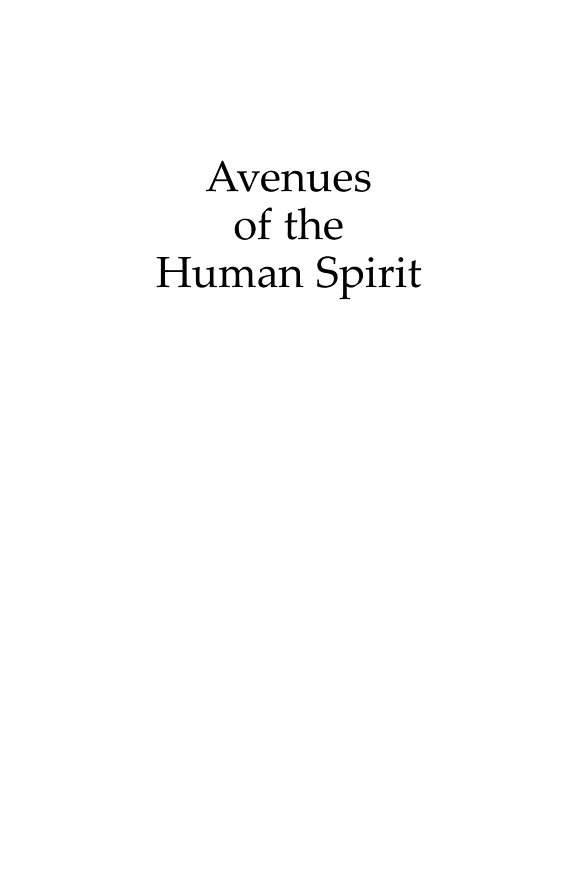
Avenues of the Human Spirit
 75
75

Avenues of the Human Spirit
Graham Nicholls's *Avenues of the Human Spirit* presents a candid account of profound subjective experiences, notably out-of-body states and spiritual awakenings, that have shaped his worldview. The strength of the book lies in its direct, unpretentious narration of these life-altering events. Nicholls avoids academic jargon, opting instead for a personal testimony that feels authentic. The section detailing his own spiritual awakening offers a particularly compelling glimpse into a radical shift in perception. However, the work occasionally treads lightly on the theoretical underpinnings of these phenomena, leaving the reader with a desire for deeper exploration into the mechanics or wider implications beyond his personal philosophy. While the emphasis on benevolence and freedom derived from these experiences is admirable, the leap from personal experience to universal applicability could benefit from more rigorous examination. Nevertheless, *Avenues of the Human Spirit* serves as a valuable personal testament to the expansive possibilities of human consciousness.
📝 Description
75
Graham Nicholls's 2011 book, Avenues of the Human Spirit, details personal accounts of consciousness outside the physical body.
Published in 2011, Avenues of the Human Spirit examines subjective experiences like out-of-body events and altered perceptions. Graham Nicholls presents these phenomena not as isolated occurrences but as interconnected routes that foster a wider view of existence and a philosophy valuing kindness and liberty. The book is for those who question materialist explanations and seek to understand personal accounts of spiritual awakenings, clairvoyance, and the nature of consciousness. It suits individuals on a self-discovery path interested in non-ordinary awareness and its role in personal growth.
Nicholls's writing emerged during a period of growing interest in consciousness studies and parapsychology. It connects with traditions examined by figures such as J.W. Dunne and his serialism theories, or William James's writings on religious experiences. While the early 21st century saw renewed focus on subjective phenomena in New Age and esoteric circles, Nicholls grounds his accounts in personal observation and his own philosophical framework. This approach distinguishes his work from purely theoretical or anecdotal collections.
Nicholls's work aligns with a long-standing esoteric interest in non-physical consciousness, drawing parallels to earlier explorations by thinkers like J.W. Dunne and William James. It addresses themes common in spiritualist literature and New Age thought concerning subjective experiences and personal transformation. However, Nicholls distinguishes his approach by focusing on direct observation and a developing personal philosophy, moving beyond mere anecdotal accounts or abstract theories to map experiential pathways.
💡 Why Read This Book?
• Gain practical understanding of out-of-body experiences (OBEs) by examining Nicholls's personal accounts, offering a concrete framework for interpreting similar subjective events. • Explore the concept of "spiritual awakening" as presented by Nicholls, learning how profound shifts in consciousness can lead to a personal philosophy of benevolence and freedom. • Understand the interconnectedness of perceived realities beyond the physical through Nicholls's descriptions of "avenues" of the human spirit, providing a unique perspective on subjective experience.
⭐ Reader Reviews
Honest opinions from readers who have explored this book.
❓ Frequently Asked Questions
What is the primary focus of Graham Nicholls's Avenues of the Human Spirit?
The book primarily focuses on Graham Nicholls's personal experiences with out-of-body experiences (OBEs), spiritual awakenings, and altered perceptions, detailing how these led him to a philosophy of benevolence and freedom.
When was Avenues of the Human Spirit first published?
Avenues of the Human Spirit was first published on July 29, 2011.
What kind of phenomena does the book explore besides OBEs?
Beyond out-of-body experiences, the book explores profound spiritual awakenings, perceptions through time, and other subjective states that challenge ordinary consciousness.
What philosophical outlook does Nicholls develop from his experiences?
Nicholls develops a philosophy centered on benevolence and freedom, suggesting that these qualities can be cultivated and drawn upon in everyday life through an understanding of expanded consciousness.
Is this book suitable for beginners in esoteric studies?
Yes, the book's personal narrative style and focus on direct experience make it accessible to those new to esoteric concepts, offering relatable accounts of profound subjective states.
What is the main takeaway from Avenues of the Human Spirit?
The main takeaway is that extraordinary subjective experiences can lead to a more profound sense of spiritual fulfillment, benevolence, and personal freedom applicable to daily life.
🔮 Key Themes & Symbolism
Experiential Consciousness
The core of *Avenues of the Human Spirit* lies in its detailed exploration of subjective consciousness as experienced through phenomena like out-of-body experiences (OBEs). Nicholls posits these are not mere hallucinations but valid avenues for understanding reality. He maps these experiences, suggesting they form a coherent field of expanded awareness that can be navigated and understood, offering tangible pathways toward spiritual growth and a deeper connection to existence beyond the material body.
Benevolence and Freedom
Nicholls's personal journey through altered states of consciousness leads to a profound ethical and philosophical conclusion: benevolence and freedom. He argues that experiencing realities beyond the self fosters an innate understanding of interconnectedness, naturally leading to compassion and a desire for the well-being of others. This spiritual fulfillment is framed as a form of liberation from mundane constraints, suggesting that these expanded perceptions offer practical tools for living a more ethical and unburdened life.
Pathways to Fulfillment
The "avenues" described in the book represent distinct yet interconnected pathways toward spiritual fulfillment. These include profound awakenings, altered perceptions of time, and lucid out-of-body states. Nicholls emphasizes that these are not random occurrences but accessible experiences that, when understood and integrated, can fundamentally change one's outlook. The work serves as a guide, illustrating how these experiences can be consciously approached and utilized for personal transformation and a richer inner life.
Subjective Reality
This theme addresses the nature of reality as perceived through non-ordinary states of consciousness. Nicholls challenges the primacy of consensus, material reality by presenting compelling personal accounts of experiences that defy conventional scientific explanation. The book advocates for the validity and significance of subjective exploration, suggesting that these inner landscapes hold as much truth and meaning as the external world, offering a radical re-evaluation of what constitutes authentic knowledge and experience.
💬 Memorable Quotes
Direct passages from the work, attributed to the author.
“Genuine life changing experiences such as perceptions through time, out-of-body experiences and a profound spiritual awakening...”
— This foundational statement highlights the book's focus on transformative events that transcend ordinary perception. It frames these extraordinary occurrences as the very pathways that lead to deeper understanding and personal evolution.
“Nicholls reached a philosophy of benevolence and freedom that we too can draw upon in our everyday lives.”
— This interpretation underscores the book's practical application, suggesting that the useful insights gained from altered states can translate into an actionable ethical framework for daily living.
“The book takes us on a compelling journey towards a greater sense of spiritual fulfillment.”
— This summary captures the overarching narrative arc of the book, positioning it as a guide or companion for readers seeking deeper meaning and spiritual contentment through exploring unconventional aspects of consciousness.
💡 Key Ideas
Editorial paraphrase of the work's core concepts — not direct quotes.
These Avenues of the Human Spirit are the ecstatic changes we can experience beyond our bodies, in different dimensions.
This quote defines the core concept of 'avenues' as profound, often blissful, shifts in consciousness that extend beyond the physical form, suggesting a multi-dimensional aspect to human experience.
The work illustrates how the author reached a philosophy of benevolence and freedom.
This paraphrase emphasizes the personal journey of discovery undertaken by the author, highlighting how his unique experiences directly informed the development of his ethical and spiritual philosophy.
🌙 Esoteric Significance
Tradition
Nicholls's work can be situated within the broader tradition of experiential esoteric thought, drawing parallels with Gnostic emphasis on direct knowledge (gnosis) and Hermetic principles of correspondence between the inner and outer worlds. While not explicitly aligned with a single historical lineage, it speaks to the modern resurgence of interest in consciousness exploration that characterized movements like Theosophy and later New Age thought, focusing on subjective experience as a primary vehicle for spiritual realization.
Symbolism
The primary symbolic motif is the "avenue" itself, representing a pathway or dimension of consciousness accessible beyond ordinary perception. Out-of-body experiences (OBEs) function symbolically as journeys into the unseen, a rupture of the mundane veil. Spiritual awakenings serve as symbols of radical transformation, a rebirth of awareness. These "avenues" collectively symbolize the potential for human consciousness to transcend its perceived limitations, offering access to different modes of being and understanding.
Modern Relevance
Nicholls's work remains relevant in contemporary discussions surrounding consciousness, psychedelics, and non-ordinary states. Thinkers and practitioners exploring the therapeutic and spiritual potential of altered states, as well as researchers in consciousness studies, find value in his direct accounts. His emphasis on the integration of these experiences into a philosophy of benevolence aligns with modern ethical considerations in the exploration of consciousness, influencing those seeking meaning beyond materialist frameworks.
👥 Who Should Read This Book
• Individuals intrigued by personal accounts of out-of-body experiences (OBEs) and spiritual awakenings, seeking relatable narratives that explore the boundaries of consciousness. • Seekers of spiritual fulfillment looking for practical interpretations of subjective phenomena that can inform a philosophy of benevolence and freedom for daily life. • Students of consciousness studies and comparative spirituality interested in contemporary firsthand testimonies that challenge conventional materialist paradigms and explore non-ordinary states of awareness.
📜 Historical Context
Published in 2011, *Avenues of the Human Spirit* emerged within a continuing wave of interest in consciousness studies and parapsychology. This period saw a growing accessibility of information on esoteric topics through online platforms, contrasting with the more limited circulation of such ideas in earlier decades. Nicholls's work followed in the footsteps of figures like Robert Monroe, whose explorations of out-of-body experiences gained traction in the latter half of the 20th century. While academic parapsychology faced challenges in establishing itself, popular interest in phenomena like OBEs, near-death experiences, and lucid dreaming remained robust. Nicholls's approach, grounded in personal testimony and a developing philosophical framework, offered a contemporary voice in a field that often struggled for mainstream acceptance, distinct from purely theoretical or religiously-based accounts of spiritual phenomena.
📔 Journal Prompts
Reflections on personal perceptions through time and their influence on your understanding of continuity.
The nature of your own spiritual awakenings and their impact on your worldview.
Mapping potential "avenues" of consciousness you may have experienced or wish to explore.
How the concept of benevolence can be integrated into daily actions.
Exploring the feeling of freedom derived from shifting your perception of reality.
🗂️ Glossary
Avenues of the Human Spirit
A concept introduced by Graham Nicholls, referring to distinct, experiential pathways or dimensions of consciousness that individuals can access beyond ordinary physical perception, leading to spiritual growth.
Out-of-Body Experience (OBE)
A subjective sensation of leaving one's physical body and perceiving the self from a vantage point outside the body, often involving travel to different locations or dimensions.
Spiritual Awakening
A profound and often sudden shift in consciousness, leading to a radical reorientation of one's beliefs, values, and perception of reality, typically accompanied by feelings of interconnectedness and transcendence.
Perceptions Through Time
Subjective experiences where an individual's sense of time is altered, potentially involving precognition, retrocognition, or a non-linear experience of temporal flow.
Benevolence
A state of goodwill, kindness, and the desire for the well-being of others, presented by Nicholls as a natural outcome of experiencing expanded consciousness and interconnectedness.
Freedom
In Nicholls's philosophy, freedom is linked to spiritual realization—liberation from limiting beliefs, material constraints, and ordinary perceptions, enabling a more authentic and expansive way of being.
Dimensions
Referring to planes or states of existence beyond the conventionally perceived physical reality, accessible through altered states of consciousness or OBEs.
This book appears in 1 collection
🔮 Readers Also Liked
Browse all →








From the “Out-of-Body Experience” Collection
View all →





More Free Occult Philosophy Books
View all →