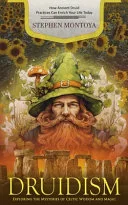
Druidism
 81
81

Druidism
Stephen Montoya’s *Druidism* offers a grounded introduction to a path often obscured by romanticism. The strength of this work lies in its clear delineation of Hedge Druidry, making a complex spiritual system accessible without sacrificing depth. Montoya avoids esoteric jargon where possible, focusing on practical engagement with nature. However, the historical sections, while necessary, sometimes feel brief, leaving the reader with a desire for more detailed engagement with the scant primary sources available for ancient Druidism. A particularly effective passage is the explanation of the Bardic, Ovate, and Druid grades, which provides a useful framework for understanding the progression within the modern revival. The book successfully bridges the gap between historical curiosity and contemporary practice. It is a solid, if not revolutionary, primer for the earnest seeker.
📝 Description
81
Stephen Montoya's Druidism clarifies the ancient path for modern spiritual seekers.
This book examines Druidism not as a historical artifact but as a living spiritual tradition. It details the core beliefs, highlighting a deep connection to the natural world and its cycles. Readers will find descriptions of practices, from solitary meditation outdoors to group ceremonies and seasonal festival observations. The author aims to give a clear understanding for those wanting to weave nature-based spirituality into their lives, moving beyond superficial curiosity to active participation.
Montoya writes for individuals who feel out of sync with contemporary life and desire a stronger bond with the earth. The text addresses those interested in paganism, earth magic, and the old Celtic ways. It specifically discusses Hedge Druidry, a more private and often individual practice, making it approachable for newcomers who might not yet be ready for large organized groups but still seek a concrete spiritual link.
The work places Druidism in its historical setting, acknowledging its origins before Christianity in the British Isles. It differentiates between the ancient Druids, known from scattered records, and the modern Druid revivals that started around the 18th century. The book shows how modern followers adapt older principles for today's world, stressing a continued link with nature, respect for ancestors, and gaining insight through observing the natural environment.
Druidism, as presented here, fits within the broader neo-pagan and earth-centered spiritual movements. It draws on reconstructed Celtic traditions and emphasizes animistic beliefs, seeing spirit in the natural world. The concept of 'Awen' connects it to traditions valuing inspiration and esoteric knowledge, while the focus on natural cycles aligns it with seasonal spiritual practices found across various pagan paths. This work aims to make these ancient concepts accessible for contemporary personal practice.
💡 Why Read This Book?
• Gain practical methods for connecting with nature spirits and earth energies, as detailed in the chapters on ritual and seasonal observance, offering a tangible way to deepen your ecological awareness. • Understand the concept of 'Awen' as presented by Montoya, learning how this principle of divine illumination can be cultivated through nature observation and personal reflection. • Explore the distinct path of Hedge Druidry, as outlined in the text, providing a framework for solitary spiritual practice focused on the immediate natural environment and personal intuition.
⭐ Reader Reviews
Honest opinions from readers who have explored this book.
❓ Frequently Asked Questions
What is Hedge Druidry and how does it differ from other forms?
Hedge Druidry, as explored in the book, often refers to a more solitary and personal practice focused on direct interaction with nature. It emphasizes working with the land, local flora and fauna, and the liminal spaces found in nature, often without the structure of larger Druidic orders.
When was the modern Druid revival movement significant?
The modern Druid revival saw significant growth starting in the 18th century with organizations like the Ancient Order of Druids, and continued to evolve through the 19th and 20th centuries with various groups and philosophical interpretations emerging.
What role do the seasons play in Druidic practice?
Seasons are central to Druidism, marking the cycles of life, death, and rebirth. The book likely details how festivals like Samhain, Imbolc, Beltane, and Lughnasadh are observed, reflecting a deep connection to the earth's rhythms and agricultural calendar.
Does the book discuss specific Druidic symbols?
While specific details depend on the book's content, Druidism often incorporates symbols like the oak tree, the sun, the moon, and the torc. These symbols represent strength, cycles, and connection to the divine and ancestral realms.
Is this book suitable for complete beginners to paganism?
Yes, the book is designed as a comprehensive guide for those curious about Druidry. It likely explains core concepts and practices in an accessible manner, making it suitable for beginners interested in nature-based spirituality.
What is the significance of 'Awen' in Druidism?
'Awen,' a Welsh term, signifies divine inspiration, creative genius, or illumination. In Druidism, it represents a connection to the source of wisdom and creativity, often sought through meditation, nature communion, and artistic expression.
🔮 Key Themes & Symbolism
Nature as Sacred Space
The work emphasizes the profound sacredness inherent in the natural world, positioning trees, rivers, and mountains not merely as scenery but as active participants in spiritual life. It guides readers to perceive the divine immanence within the landscape, encouraging practices like forest bathing and mindful observation of natural phenomena as forms of worship and connection. This perspective reframes the human relationship with the environment from one of utility to one of reverence and partnership.
Cyclical Understanding of Life
Druidism, as presented, views life through the lens of natural cycles – the turning of the seasons, the phases of the moon, the journey of the sun. This cyclical perspective informs rituals and personal growth, encouraging acceptance of birth, death, and rebirth as interconnected parts of existence. The book likely explores how celebrating seasonal festivals serves to align individuals with these cosmic rhythms, fostering a sense of belonging and continuity within the larger web of life.
Personal Spiritual Authority
A significant theme is the cultivation of inner wisdom and intuition, particularly within the context of Hedge Druidry. The text suggests that true spiritual authority comes from direct experience and connection with the earth, rather than solely from dogma or external institutions. Readers are encouraged to develop their own relationship with the divine through nature, guided by personal insight and the subtle communications of the natural world.
Bardic Creativity and Wisdom
The tradition's emphasis on the role of the bard is explored, highlighting the importance of storytelling, poetry, and song in preserving wisdom and inspiring insight. The concept of 'Awen' is central here, representing the flow of creative and divine inspiration. The work likely suggests that engaging in creative acts, inspired by nature and inner knowing, is a vital component of the Druidic path and a means of accessing deeper truths.
💬 Memorable Quotes
Direct passages from the work, attributed to the author.
“To walk the hedge is to walk between worlds.”
— This interpretation of Hedge Druidry emphasizes its liminal nature, suggesting a practice that bridges the mundane and the magical, the human and the wild. It speaks to the practitioner's role as a mediator, attuned to subtle energies and unseen realms.
“Ancestors are roots that nourish the present.”
— This concept conveys the importance of honoring lineage and heritage within Druidism. It frames ancestors not as distant figures, but as vital presences whose wisdom and connection continue to support and influence contemporary life and spiritual practice.
“Seek the sacred grove within your own heart.”
— This statement encourages an introspective approach to spirituality, suggesting that the divine and sacred can be found not only in external natural places but also within the inner field of the self.
💡 Key Ideas
Editorial paraphrase of the work's core concepts — not direct quotes.
The rustling leaves whisper secrets to those who listen.
This paraphrased concept highlights the Druidic belief in nature's sentience and its capacity to communicate spiritual knowledge. It suggests that attentive presence within the natural world can unlock useful insights, akin to receiving wisdom directly from the earth.
The wheel of the year turns, bringing lessons in each season.
This paraphrased idea underscores the Druidic focus on natural cycles. It suggests that each season offers distinct spiritual teachings and opportunities for growth, reflecting the continuous processes of change and renewal in both nature and the human spirit.
🌙 Esoteric Significance
Tradition
This work fits within the broader Neo-Pagan and nature-based spiritual traditions. While not strictly Hermetic or Kabbalistic, it shares with these traditions a focus on correspondences between the microcosm (human) and the macrocosm (universe), and the use of ritual and symbolism for spiritual transformation. It departs from more dogmatic religious structures by emphasizing direct experience and personal connection with the divine through nature, aligning it with animistic and pantheistic viewpoints.
Symbolism
Key symbols likely explored include the Ogham alphabet, representing a sacred tree language and a system of divination; the Torc, symbolizing sovereignty, divinity, and the cyclical nature of life; and the sacred grove, representing a place of communion, initiation, and connection with ancestral spirits and nature deities. These symbols serve as focal points for meditation and ritual, anchoring the practitioner to the natural world and its inherent spiritual energies.
Modern Relevance
Contemporary thinkers and practitioners in ecological spirituality, ecopsychology, and various Pagan paths (including Wicca, Heathenry, and other forms of Druidry) find resonance in Montoya’s work. The emphasis on nature connection, seasonal awareness, and ritual practice aligns with modern desires for grounding, sustainability, and a more embodied spirituality, offering an alternative to purely intellectual or digitally-mediated forms of engagement.
👥 Who Should Read This Book
['• Aspiring nature-based spiritual practitioners seeking a structured yet accessible introduction to Druidic principles and Hedge Druidry.', '• Individuals feeling disconnected from the natural world who wish to cultivate a deeper, more reverent relationship with the earth and its cycles.', '• Students of comparative religion and esoteric traditions interested in the modern revival of ancient European pagan paths and their philosophical underpinnings.']
📜 Historical Context
Stephen Montoya’s *Druidism* emerges within a field of renewed interest in pre-Christian European spiritualities, a trend that gained momentum in the late 20th and early 21st centuries. While the historical Druids remain figures shrouded in mystery, known primarily through Roman accounts and later folklore, the modern Druid movement began its significant resurgence in the 18th century with groups like the Ancient Order of Druids. This revival was influenced by Romanticism's fascination with ancient Celtic cultures and a growing dissatisfaction with established religious norms. Contemporaries in the broader pagan revival, such as Gerald Gardner with Wicca, explored nature-based spiritualities, though often with different focuses. Unlike academic historical inquiries, modern Druidry, as reflected in this work, is largely a reconstructionist and neopagan movement, drawing inspiration from ancient sources while adapting them for contemporary spiritual needs. Reception has largely been within spiritual communities, with academic engagement focusing on the movement's sociological and religious aspects rather than validating its claims to direct lineage.
📔 Journal Prompts
Reflect on the concept of 'Awen' and how it manifests in your creative impulses.
Consider the sacredness of a specific natural place in your vicinity.
Describe a personal ritual that honors a seasonal change.
Explore the wisdom offered by observing the behavior of a local animal.
Contemplate your connection to ancestral roots and their influence on your present.
🗂️ Glossary
Awen
A Welsh term signifying divine inspiration, poetic genius, or illumination. It is a central concept in modern Druidry, representing the flow of creative and spiritual energy from the divine.
Hedge Druidry
A branch of modern Druidry often characterized by solitary practice, a focus on direct interaction with nature, and an emphasis on folk magic and liminal spaces. It is typically less institutionalized than other forms.
Ogham
An ancient Celtic alphabet, often associated with Druidic traditions. Each letter is linked to a tree and possesses symbolic meanings, used historically for inscriptions and in modern times for divination and magical practice.
Bardic, Ovate, Druid Grades
A common structure in modern Druid orders representing stages of spiritual development: Bard (poetry, inspiration), Ovate (healing, divination, earth wisdom), and Druid (wisdom, leadership, deep spiritual insight).
Wheel of the Year
A cyclical calendar representing the eight major festivals of the pagan year (solstices, equinoxes, and cross-quarter days like Samhain and Beltane), reflecting the earth's seasonal rhythms.
Sacred Grove
Historically, a natural woodland area considered holy and used for religious rituals by ancient Druids. In modern practice, it represents a place of communion with nature, ancestors, and the divine.
Threefold Nature
A concept often interpreted in Druidry as representing fundamental aspects of existence, such as land, sea, and sky; or mind, body, and spirit; emphasizing interconnectedness and balance.