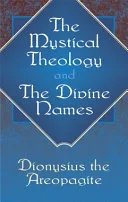
The Mystical Theology and The Divine Names
 78
78

The Mystical Theology and The Divine Names
The enduring power of Dionysius the Areopagite's "Mystical Theology" and "The Divine Names" lies in their audacious attempt to speak of God through negation. The "Mystical Theology," in particular, presents a stark, apophatic path that continues to challenge and inspire. Its exploration of the 'divine darkness' as the ultimate mode of apprehending the divine is a high-water mark in negative theology. However, the dense Neoplatonic framework can present a significant barrier for contemporary readers unfamiliar with concepts like emanation and hypostases. The intricate hierarchical structures described, while logically consistent within their philosophical system, sometimes feel more like abstract architectural blueprints than living spiritual pathways. The work's ultimate value is as a profound intellectual exercise in transcending conceptual limitations, a pursuit that remains relevant for any serious student of mysticism or philosophy of religion.
📝 Description
78
Written around the late 5th or early 6th century, these texts attempt to unite Neoplatonic thought with Christian doctrine.
The "Mystical Theology" and "The Divine Names" are two key works attributed to Dionysius the Areopagite. They represent an early effort to blend Neoplatonic philosophy with Christian theology, focusing on God's transcendence and immanence. Instead of describing God through positive statements, Dionysius employs apophatic theology, a method that defines God by what God is not. This approach acknowledges the limitations of human language when discussing the divine.
These writings emerged during a dynamic period in the Eastern Roman Empire, influenced by philosophers like Proclus. The attribution to Dionysius the Areopagite, a figure from the New Testament, gave these texts significant weight, though their authorship has been debated. The works address core concepts like the unknowability of God and a structured hierarchy of reality, including the idea of a "divine darkness."
These texts are central to the development of Christian mysticism and Western esotericism. They provided a philosophical framework for contemplative traditions, linking Neoplatonic ideas about the One and emanations to Christian concepts of God. The emphasis on apophatic theology and divine darkness influenced generations of mystics and theologians seeking direct experience of the divine beyond rational comprehension.
💡 Why Read This Book?
• Gain an understanding of apophatic theology, a method of describing the divine through negation, as articulated in "Mystical Theology," enabling a deeper appreciation for God's ineffability. • Explore the concept of divine hierarchy, detailed in "The Divine Names," to grasp how Dionysius mapped the relationship between the ultimate divine source and the created order. • Encounter the intellectual synthesis of Neoplatonism and Christian thought, recognizing how figures like Proclus influenced early Christian mystical writers in the 6th century.
⭐ Reader Reviews
Honest opinions from readers who have explored this book.
❓ Frequently Asked Questions
Who was Dionysius the Areopagite?
Dionysius the Areopagite is the pseudonym for the author of several influential philosophical and theological works, likely active in the late 5th or early 6th century CE. He is traditionally identified with Dionysius, a judge mentioned in the New Testament's Acts of the Apostles.
What is apophatic theology?
Apophatic theology, also known as negative theology, is a theological approach that describes God by asserting what God is not, rather than what God is. This method, central to "Mystical Theology," emphasizes God's transcendence beyond all human concepts and categories.
What is the significance of the divine hierarchy in Dionysius's work?
Dionysius outlines celestial and ecclesiastical hierarchies, mapping an ordered ascent from the material to the divine. This structure, presented in "The Divine Names," reflects Neoplatonic ideas of emanation and provides a framework for understanding spiritual progression.
How did Neoplatonism influence Dionysius?
Dionysius integrated key Neoplatonic concepts, such as emanation from the One and the concept of the 'Good,' into a Christian framework. He adapted philosophical ideas from thinkers like Proclus to articulate Christian theology and mystical experience.
When were these texts first published?
While the works are ancient, this specific edition was first published on March 9, 2012. The original texts are attributed to Dionysius the Areopagite, likely writing in the late 5th or early 6th century CE.
What is the 'divine darkness' mentioned by Dionysius?
The 'divine darkness' refers to the highest state of mystical union, where the intellect ceases its conceptual activity and enters a supra-rational 'ignorance.' It is a state of unknowing that paradoxically allows for a more direct, albeit ineffable, apprehension of the divine.
🔮 Key Themes & Symbolism
Apophatic Theology
The core of "Mystical Theology" is the via negativa, or apophatic approach. Dionysius argues that God's transcendence means any positive assertion about the divine is ultimately limiting. By systematically denying attributes – God is not this, God is not that – one approaches the 'divine darkness,' a state of unknowing that paradoxically leads to a supra-rational apprehension of the divine essence. This method profoundly influenced subsequent mystical traditions in both East and West.
Divine Hierarchy
In "The Divine Names," Dionysius elaborates on a complex hierarchy that structures reality, reflecting Neoplatonic emanation. He details celestial hierarchies (Seraphim, Cherubim, Thrones, etc.) and ecclesiastical hierarchies (bishops, priests, deacons). This ordered ascent and descent serves as a model for how divine goodness flows into creation and how humanity can ascend back towards the divine source through contemplation and participation in the Church's sacraments.
The Ineffable Divine
A recurring theme is the absolute unknowability and ineffability of God's essence. While "The Divine Names" uses positive appellations (Goodness, Being, Light), Dionysius consistently qualifies these as metaphorical and inadequate. The ultimate reality of God lies beyond all names and concepts. This emphasis on divine mystery is central to his mystical theology and its pursuit of union with God.
Contemplative Prayer
The practical outcome of Dionysius's philosophical and theological work is a guide to contemplative prayer. The treatises and letters explore how the soul can move beyond discursive thought and sensory perception to achieve a direct, intuitive union with the divine. This form of prayer, often characterized by stillness and surrender, became a core part of Christian mysticism.
💬 Memorable Quotes
Direct passages from the work, attributed to the author.
“The Cause of all things is above all affirmation, and that the divine subsidence into things is above all negation.”
— This expresses the apophatic principle: God is beyond any positive description ('above all affirmation') and also transcends any denial ('above all negation'). The divine reality is so utterly other that human language fails to capture it, yet it is also the source from which all being emanates.
“We must not think that there is any denial of the things which are above Being, but that the things which are above Being are, in a way, stripped of all things and are more than all things.”
— This clarifies that negations are not meant to annihilate the divine but to strip away limitations. God is 'more than all things' precisely because God is not confined by the categories we use to define existence within the created realm.
“The cessation of all intellectual activity is the joining of the illumined soul with the illumined.”
— This points to the goal of mystical contemplation: a union achieved not through reasoning or thought, but through a supra-rational 'ignorance' or stillness. The soul, stripped of its intellectual efforts, becomes receptive to divine illumination.
“The celestial beings are so called from their divine and unchanging participation in the divine radiance.”
— This highlights the nature of the celestial hierarchy as described by Dionysius. Angels and other spiritual beings are named and understood in relation to their direct, stable connection to the divine light and energy.
“The Divine Names are all the names which are spoken concerning God.”
— This simple statement introduces the scope of "The Divine Names." It encompasses all the various appellations used to refer to God, from biblical descriptions to philosophical concepts, but importantly, these are understood as pointers, not exhaustive definitions.
🌙 Esoteric Significance
Tradition
Dionysius's work is foundational to Western esoteric Christianity, bridging Neoplatonism and Christian mysticism. It established a lineage that emphasized mystical ascent, divine unknowability, and hierarchical cosmology. This tradition influenced Hermeticism, Kabbalah (through Christian Kabbalists), and later esoteric movements seeking to integrate philosophical speculation with spiritual practice beyond orthodox dogma.
Symbolism
The concept of the 'divine darkness' serves as a primary symbol, representing the ultimate state of unknowing that transcends conceptual grasp. Another key motif is the 'celestial hierarchy,' symbolizing the ordered, emanationist structure of reality, from the highest angelic intelligences down to the material world, reflecting a Neoplatonic worldview.
Modern Relevance
Contemporary mystical theologians, philosophers of religion, and practitioners of contemplative prayer continue to draw from Dionysius. His apophatic method informs modern discussions on the limits of language in describing the divine. Thinkers in various contemplative traditions, including some branches of Buddhism and secular mindfulness, find resonance in his emphasis on transcending thought and achieving direct, non-conceptual awareness.
👥 Who Should Read This Book
• Students of comparative theology and philosophy of religion seeking to understand the historical synthesis of Greek philosophy and Christian doctrine. • Aspiring mystics and practitioners of contemplative prayer interested in the apophatic tradition and techniques for transcending ordinary consciousness. • Scholars of late antiquity and the history of Western esotericism requiring a primary source for understanding the development of mystical thought.
📜 Historical Context
The writings attributed to Dionysius the Areopagite emerged in the late 5th or early 6th century CE, a period marked by the intellectual flourishing of Neoplatonism in Athens, particularly under the philosopher Proclus. These texts represented a bold synthesis, attempting to reconcile the philosophical cosmology of Neoplatonism with Christian theology. This integration was significant because it provided a sophisticated metaphysical framework for Christian mysticism and doctrine, influencing later theologians like John Scotus Eriugena and Thomas Aquinas. The work offered a powerful counterpoint to more literalistic interpretations of scripture and divine attributes. While the author's claimed identity as a direct disciple of St. Paul lent the works immense authority, their later critical examination by Renaissance humanists questioned their authenticity, marking a complex reception history.
📔 Journal Prompts
The concept of the 'divine darkness' as a state beyond knowing.
Applying the via negativa to personal beliefs about the divine.
The structure of the celestial hierarchy and its implications.
Reconciling positive divine names with ultimate unknowability.
The role of intellect versus intuition in spiritual apprehension.
🗂️ Glossary
Apophatic Theology
A theological approach that seeks to understand God by describing what God is not, emphasizing divine transcendence and unknowability over positive affirmations.
Via Negativa
The 'negative way,' synonymous with apophatic theology, which proceeds by negation rather than affirmation to describe the divine.
Neoplatonism
A philosophical system originating with Plotinus, characterized by emanation from a supreme 'One,' hierarchical structures, and the pursuit of mystical union.
Emanation
The Neoplatonic concept of reality flowing or issuing forth from a single, ultimate source (the One or the Good) in a hierarchical series of beings.
Hierarchy
In Dionysius's context, an ordered system of spiritual beings (celestial) or ecclesiastical roles (ecclesiastical) reflecting the divine order and facilitating ascent.
Theurgy
A term associated with Neoplatonism, referring to rituals or practices intended to invoke divine presence or influence, though Dionysius focuses more on contemplative ascent.
Supra-rational
Beyond the scope or capacity of reason and intellect. Dionysius posits that the highest apprehension of God occurs in a supra-rational state.