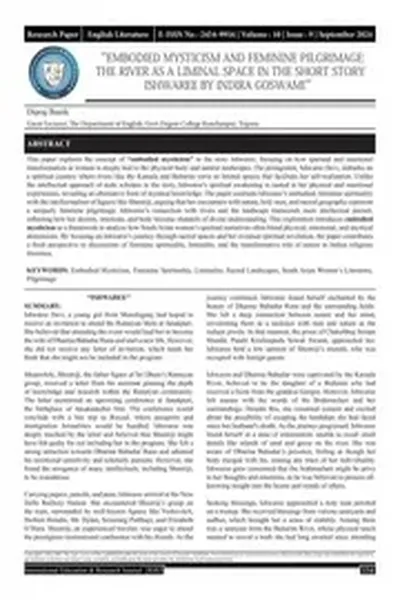
The inner life

 82
82

The inner life
Inayat Khan's The Inner Life offers a gentle, yet persistent, invitation to introspection, eschewing grand pronouncements for quiet contemplation. The strength of the work lies in its accessible language, which allows complex Sufi concepts to be considered without the barrier of dense jargon. Khan's ability to draw parallels between the mundane and the divine is particularly effective in passages discussing the "heart" as a spiritual organ. However, the book's collection of discourses, while poetic, can sometimes feel repetitive, lacking a clear narrative arc that might propel the reader forward. A notable concept explored is the "Nafs," the ego, and its gradual refinement through spiritual discipline, presented as a core element of the inner journey. While lacking the rigorous philosophical argumentation of some contemporaries, its devotional tone provides a distinct, accessible entry point into Sufi thought. It offers a calm, reflective space for personal spiritual inquiry.
📝 Description
82
Inayat Khan's 1936 book, The Inner Life, offers reflections on the soul's journey toward spiritual realization.
The Inner Life is a collection of Inayat Khan's discourses on the soul and its path to spiritual awakening. Published in 1936, it is not a rigid system but a series of meditations and guidance designed to clarify inner development. Khan, a Sufi mystic, drew from Islamic mysticism but aimed his teachings at a wider Western audience.
The book examines human consciousness, the connection between the individual and the divine, and how to apply spiritual ideas in everyday life. Its language is poetic, intended to encourage contemplation over simple intellectual grasp. It is for those seeking spiritual truth, especially within Sufism or universal mystical thought.
Published in the interwar period, The Inner Life appeared when Western interest in Eastern philosophies was growing. Inayat Khan was instrumental in introducing Sufism to Europe and America, founding the International Sufi Movement. His work often blended Sufi ideas with broader metaphysical and esoteric currents of the time, like Theosophy and New Thought, promoting a message of love, harmony, and beauty.
💡 Why Read This Book?
• Gain practical guidance on cultivating inner peace through the concept of the "Heart's Silence," a state of receptivity to divine influence, as discussed in the book. • Understand the Sufi approach to purifying the ego (Nafs) by recognizing its subtle workings in daily life, a core theme explored throughout the discourses. • Experience a contemplative pathway to spiritual awareness, inspired by Inayat Khan's first publication in 1936, offering a unique historical perspective on Sufi dissemination in the West.
⭐ Reader Reviews
Honest opinions from readers who have explored this book.
❓ Frequently Asked Questions
When was Inayat Khan's 'The Inner Life' first published?
The Inner Life by Inayat Khan was first published in 1936, a few years after his passing in 1927, reflecting his significant influence on the introduction of Sufi thought to the West.
What is the central theme of Inayat Khan's 'The Inner Life'?
The central theme is the exploration of the soul's journey toward spiritual realization, focusing on developing inner awareness, understanding the divine connection, and purifying the ego (Nafs).
Is 'The Inner Life' a practical guide or theoretical text?
It is primarily a collection of discourses and reflections intended to guide the reader's inner development, offering practical insights and contemplative exercises rather than a purely theoretical exposition.
What esoteric tradition does Inayat Khan primarily draw from in 'The Inner Life'?
Inayat Khan primarily draws from the Sufi tradition of Islam, though he often presents its universal mystical principles in a way that resonates with broader esoteric and metaphysical interests.
Who was Inayat Khan and what was his contribution?
Inayat Khan (1882-1927) was a Sufi mystic and musician who founded the International Sufi Movement, dedicated to spreading the spiritual message of unity and love across cultures.
What does 'Nafs' mean in the context of 'The Inner Life'?
'Nafs' refers to the ego or lower self in Sufi terminology. The book emphasizes its purification and transformation as a crucial aspect of the spiritual path.
🔮 Key Themes & Symbolism
The Heart as Spiritual Center
Khan presents the human heart as far more than a biological pump; it is the seat of spiritual perception, intuition, and the direct connection to the divine. This concept moves beyond the purely emotional understanding of the heart, positioning it as an organ of spiritual knowing. Through cultivating "heart's silence," individuals can become more receptive to subtle divine influences and inner guidance, fostering a deeper communion with the sacred. This theme is crucial for understanding the path of inner development outlined in the book.
Purification of the Nafs
The concept of the 'Nafs,' often translated as the ego or lower self, is central to the process of spiritual growth described in The Inner Life. Khan explains how the untrained Nafs is driven by desires, attachments, and worldly concerns, acting as a barrier to spiritual realization. The book guides the reader through practices and reflections aimed at understanding, disciplining, and ultimately purifying the Nafs, transforming it from an obstacle into a refined instrument for spiritual service and divine union.
The Journey of the Soul
The Inner Life frames human existence as a profound journey of the soul, originating from and returning to the divine source. Khan uses vivid language to describe the soul's evolution through various stages of consciousness, emphasizing the inherent divinity within each individual. This journey is not a passive unfolding but an active process of awakening, learning, and striving towards reunion with the Beloved. The discourses serve as signposts, useful the spiritual landscape and encouraging the seeker on this transformative path.
Unity and Divine Love
Underlying all the teachings is the fundamental Sufi principle of the unity of all existence (Tawhid) and the supreme importance of divine love. Khan asserts that the ultimate realization of the self is the recognition of this underlying unity and the experience of unconditional love for all beings, seeing the Divine manifest in every form. This universal perspective transcends cultural and religious boundaries, inviting readers to embrace a vision of interconnectedness and compassionate engagement with the world.
💬 Memorable Quotes
Direct passages from the work, attributed to the author.
“The outer life is the life of the senses, the inner life is the life of the soul.”
— This fundamental distinction highlights the book's focus. It posits that true existence and spiritual fulfillment are found not in external experiences and material pursuits, but in the cultivation of one's inner spiritual dimension.
“Every soul is a ray of light from the divine sun.”
— This metaphor emphasizes the inherent divinity within each individual. It suggests that the soul is not separate from God but a direct emanation, implying a potential for recognizing and returning to that source.
“The heart is the mirror of the soul.”
— This points to the heart as the primary faculty for spiritual perception and self-knowledge. Keeping the heart 'clean' and 'clear' allows the true nature of the soul to be reflected, facilitating inner awareness and connection.
“Love is the fulfilling of the law.”
— This interpretation of a core tenet suggests that divine love is not merely an emotion but the ultimate principle that brings all spiritual laws and practices to their culmination and completion.
💡 Key Ideas
Editorial paraphrase of the work's core concepts — not direct quotes.
The greatest obstacle to spiritual progress is the ego.
This paraphrased concept underscores the critical role of transcending the limitations of the personal self. The ego's desires and attachments are presented as the primary barriers to experiencing the divine and achieving spiritual liberation.
🌙 Esoteric Significance
Tradition
The work is deeply rooted in the Sufi tradition, a mystical branch of Islam focused on the direct experience of God. However, Inayat Khan's presentation in "The Inner Life" transcends strict Islamic dogma, emphasizing universal spiritual principles of love, harmony, and beauty. He frames Sufism as a path of the heart, accessible to all, aligning with broader esoteric currents of the early 20th century that sought common ground between different spiritual lineages.
Symbolism
The book frequently employs the symbol of the "heart" not as a physical organ, but as the spiritual center of consciousness, capable of perceiving divine truths. The "ray of light" emanating from the "divine sun" symbolizes the inherent divinity within each soul and its ultimate origin. The "mirror" is used to represent the purified heart, reflecting the divine presence, and the "Nafs" (ego) is depicted as a veil or obstruction that obscures this inner light.
Modern Relevance
Contemporary spiritual teachers and practitioners focusing on mindfulness, self-awareness, and heart-centered practices often draw from Inayat Khan's accessible approach to Sufi wisdom. His emphasis on inner peace, the purification of the ego, and the recognition of unity continues to resonate with modern seekers in fields like positive psychology, interfaith dialogue, and contemplative spirituality, offering a timeless perspective on the human quest for meaning.
👥 Who Should Read This Book
• Seekers interested in Islamic mysticism: Individuals curious about Sufism, seeking an introduction to its core concepts of love, unity, and inner purification from a respected early 20th-century teacher. • Contemplative practitioners: Those who favor introspective and devotional approaches to spirituality and wish to deepen their understanding of the soul's journey and the cultivation of inner peace. • Students of comparative mysticism: Readers interested in how Eastern spiritual traditions were presented and adapted for Western audiences in the early 20th century, offering historical and philosophical insights.
📜 Historical Context
Inayat Khan’s "The Inner Life" emerged in 1936, a period when Western esoteric and spiritual movements were flourishing, absorbing and reinterpreting Eastern philosophies. Khan, a prominent Sufi figure who had established the International Sufi Movement in 1914, was instrumental in popularizing Sufi teachings in Europe and America. His approach often synthesized orthodox Sufi principles with broader metaphysical ideas circulating at the time, appealing to a Western audience seeking spiritual meaning beyond traditional religious frameworks. This era saw significant engagement with Theosophy, Anthroposophy, and various forms of Vedanta. While Khan's work offered a distinct Sufi perspective, it shared the general milieu of seeking universal spiritual truths. Reception was generally positive among those interested in Eastern mysticism, though it remained within a niche intellectual and spiritual community, distinct from mainstream religious discourse.
📔 Journal Prompts
The heart as a spiritual mirror: Reflect on what may be clouding its reflection.
Inner life versus outer life: Identify one daily activity where you can consciously prioritize the inner.
The nature of the Nafs: Observe a moment today where your ego's desires influenced your actions.
Divine connection: Consider the concept of being a 'ray of light' and what it means for your perceived separation.
Spiritual progress: What small step can you take today towards purifying your ego's influence?
🗂️ Glossary
Nafs
In Sufi terminology, the ego, self, or lower nature. It is often seen as the source of worldly desires and attachments that hinder spiritual progress and must be purified.
Heart (Qalb)
In a spiritual context, the heart is considered the seat of divine intuition, spiritual perception, and the connection to God, rather than solely the organ of emotion.
Murid
A spiritual disciple or student who is committed to following a teacher (Murshid) on the path of spiritual development.
Murshid
A spiritual guide or teacher in the Sufi tradition who leads disciples on the path towards God-realization.
Fana
A Sufi concept referring to the annihilation of the ego or lower self in the divine presence, a state of spiritual absorption.
Baqa
Following Fana, Baqa signifies subsistence or abiding in God after the ego has been transcended, maintaining a conscious connection with the Divine.
The Inner Life
The spiritual dimension of existence, encompassing the soul's consciousness, inner perceptions, and direct relationship with the Divine, as distinct from the material, outer world.
🔮 Readers Also Liked
Browse all →






More by Inayat Khan
All books →


More Free Mysticism & Contemplation Books
View all →