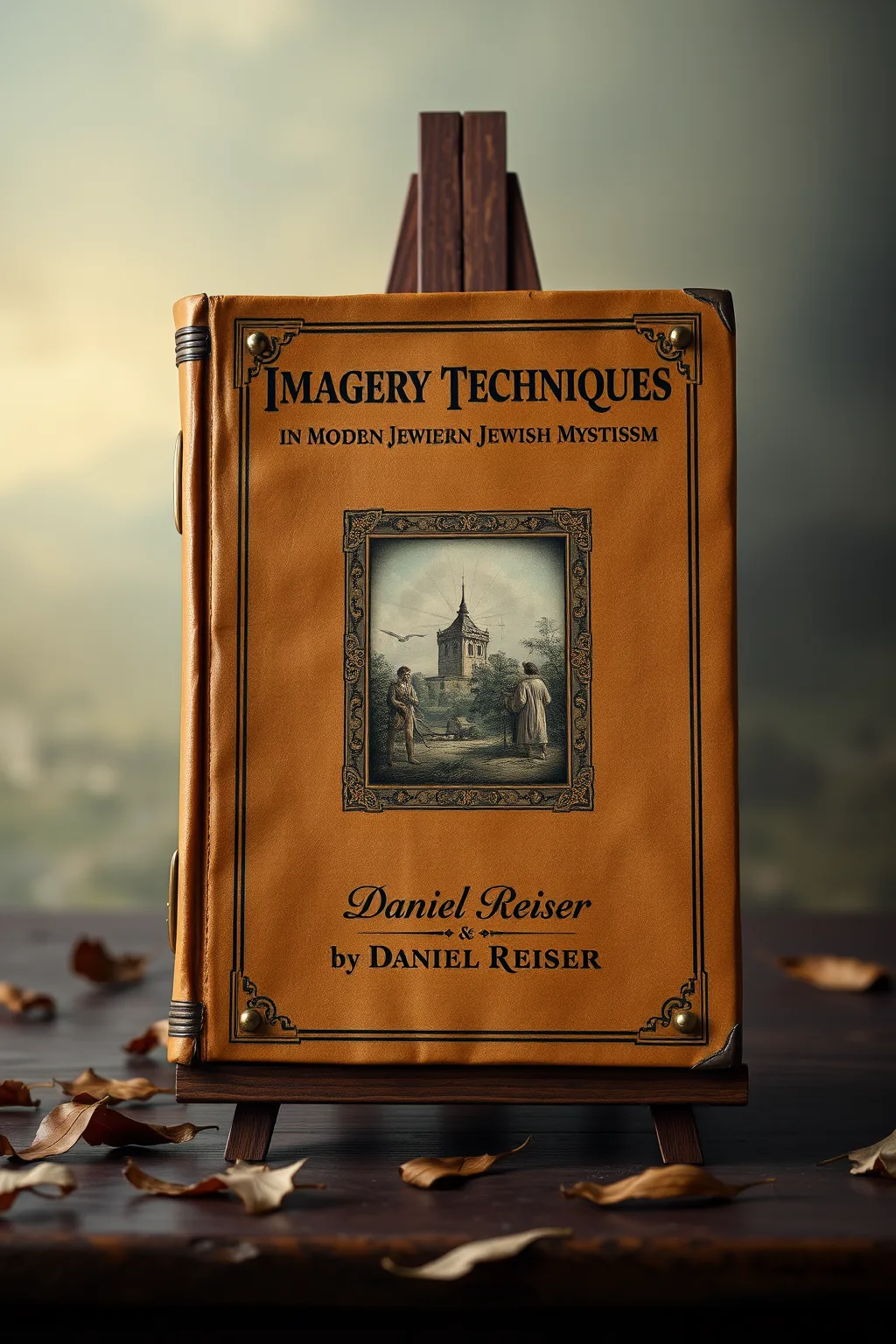
Imagery Techniques in Modern Jewish Mysticism
 81
81

Imagery Techniques in Modern Jewish Mysticism
Daniel Reiser’s study on 20th-century Jewish mystical imagery is an exercise in disciplined scholarship. He meticulously charts the emergence of what he terms "imagery techniques," framing them as sophisticated internal "screenplays" that differ markedly from earlier Kabbalistic modes. The strength lies in his detailed exposition of these visual and narrative methods, moving beyond mere description to analytical depth. A point of contention might be the book’s dense academic prose, which, while precise, can sometimes obscure the visceral nature of the experiences it describes. The section detailing the "feature film" analogy for these techniques, illustrating their complex, multi-scene structure, is particularly effective in conveying their distinctiveness. However, more comparative analysis with parallel developments in other mystical traditions could have further enriched the work. Ultimately, Reiser provides a crucial, if demanding, account of a specific evolution within Jewish mysticism.
📝 Description
81
Daniel Reiser's 2018 book examines a shift in 20th-century Jewish mysticism towards visual techniques.
Daniel Reiser's "Imagery Techniques in Modern Jewish Mysticism" analyzes a notable change in 20th-century Jewish esoteric practice. The book argues that this period saw a move away from the linguistic focus prevalent in medieval Kabbalah towards a more visual, almost cinematic form of mystical engagement. Reiser details how practitioners cultivated elaborate internal worlds, constructing complex sequences of imagined scenes and narratives much like detailed screenplays.
This work is aimed at scholars of Jewish mysticism, students of comparative religion, and those interested in the development of contemplative methods. It will appeal to anyone wanting to understand the transition from textual interpretation to experiential visualization within a specific mystical tradition. The analysis is especially relevant for readers interested in the psychological and imaginative aspects of religious experience.
Reiser places this development within the context of 20th-century Jewish thought, distinguishing it from earlier Kabbalistic approaches and the initial stages of Hasidism. He emphasizes the deliberate cultivation of internal visual repertoires during this era, a departure from traditions that relied more heavily on scriptural analysis or ecstatic prayer. The book considers how these new techniques emerged against the backdrop of modern intellectual and social changes.
This book addresses a specific evolution within Jewish mysticism, particularly from the 20th century. It contrasts with earlier Kabbalistic traditions that often centered on divine names, gematria, or abstract meditative states. Reiser focuses on the development of systematic, internal visual techniques, akin to imaginal theater or mental cinema, which became prominent in certain streams of modern Jewish thought and practice. This shift represents a move towards more concrete, experiential, and narrative-driven forms of contemplation, distinct from earlier, more scripturally or linguistically oriented methods.
💡 Why Read This Book?
• Gain a precise understanding of "imagery techniques" as structured mental processes, distinct from earlier Kabbalistic linguistic approaches, as detailed in Reiser's analysis of 20th-century Jewish mysticism. • Grasp the concept of mystical experience as a "feature film" narrative, a complex, multi-scene internal world developed by practitioners, as explored in the book's comparative framework. • Appreciate the historical transition in Jewish mysticism from text-centric methods to the deliberate cultivation of sophisticated visual and imaginative repertoires, a shift contextualized by Reiser's research.
⭐ Reader Reviews
Honest opinions from readers who have explored this book.
❓ Frequently Asked Questions
What distinguishes 20th-century Jewish mystical imagery techniques from medieval Kabbalah?
Reiser highlights that 20th-century techniques function like elaborate "screenplays" with complex narratives and scenes, differing from the primarily linguistic and symbolic focus prevalent in medieval Kabbalistic texts.
When was "Imagery Techniques in Modern Jewish Mysticism" first published?
The book was first published on July 9, 2018, offering a contemporary analysis of historical mystical practices.
What is the core concept Reiser uses to describe these techniques?
Reiser likens the developed imagery techniques to a "feature film," emphasizing their long, complicated plot woven from many interconnected scenes and internal narratives.
Who is the author of this study?
The author is Daniel Reiser, whose research focuses on the evolution of mystical practices within Jewish traditions.
What historical period does the book primarily examine?
The book focuses on twentieth-century Jewish mysticism, analyzing the development and nature of imagery experiences during that era.
How does Reiser contrast these techniques with early Hasidism?
While early Hasidism had its own methods, Reiser's work emphasizes the distinct characteristic of the 20th-century techniques as forming a full, complex screenplay, suggesting a different structural approach to mystical engagement.
🔮 Key Themes & Symbolism
The Cinematic Nature of Mystical Experience
Reiser posits that 20th-century Jewish mystical practices developed into complex, narrative-driven internal experiences, akin to a "feature film." This theme explores how practitioners constructed elaborate sequences of imagined scenes and plots, moving beyond abstract contemplation to a vivid, unfolding internal world. The "screenplay" metaphor highlights the structured, sequential, and multi-faceted nature of these visualized meditative states, contrasting sharply with earlier, more textually or verbally oriented Kabbalistic methods.
Evolution from Linguistic to Visual Methods
A central theme is the historical shift within Jewish mysticism from a reliance on linguistic and symbolic interpretation, characteristic of medieval Kabbalah, towards the cultivation of sophisticated visual and imaginative techniques. Reiser details how this transition occurred in the 20th century, emphasizing the deliberate development of internal mental landscapes. This evolution represents a significant change in how mystical communion and understanding were pursued, prioritizing direct, often cinematic, internal visualization.
Structured Internal Worlds
The book examines the structured nature of these internal "worlds" created through imagery techniques. Reiser examines how these are not random visions but carefully constructed mental environments with plots, characters, and scenes, much like a "long and complicated plot woven together from many scenes." This focus on the architecture of the visualized experience reveals a sophisticated psychological and spiritual technology aimed at achieving specific states of consciousness or insight.
Comparative Mystical Practice
Reiser's work implicitly and explicitly engages in comparative analysis, contrasting the 20th-century imagery techniques with earlier forms of Jewish mysticism and, by extension, other esoteric traditions. By defining these techniques through their unique characteristics—their narrative depth and visual complexity—the book provides a framework for understanding diverse approaches to the mystical path across different historical periods and cultural contexts.
💬 Memorable Quotes
Direct passages from the work, attributed to the author.
“These techniques have all the characteristics of a full screenplay.”
— This statement expresses Reiser's central thesis, comparing the elaborate, structured internal narratives of modern Jewish mysticism to the detailed plot and scene construction found in cinematic screenplays.
“a long and complicated plot woven together from many scenes”
— This phrase further elaborates on the screenplay analogy, highlighting the complexity, sequential development, and interconnectedness of the imagined elements within the mystical visualization techniques discussed.
“primary mode of mystical experience”
— Reiser identifies imagery techniques not as a peripheral practice but as a fundamental and dominant method for achieving mystical states in the 20th-century Jewish milieu he studies.
“in contrast to linguistic techniques in medieval Kabbalah”
— This highlights a key methodological distinction, emphasizing that the focus shifted from textual interpretation and symbolic language to active, internal visual construction.
“in contrast to early Hasidism”
— This points to another comparative element, suggesting that the specific development of cinematic-like imagery in the 20th century differed from the devotional and narrative forms found in earlier Hasidic movements.
🌙 Esoteric Significance
Tradition
This work fits squarely within the academic study of Jewish mysticism, specifically Kabbalah and its modern manifestations. It examines a departure from traditional Kabbalistic frameworks, which often relied heavily on textual exegesis and the manipulation of divine names. Reiser analyzes how practitioners in the 20th century developed distinct methods that prioritize elaborate internal visualization, functioning as a form of experiential, rather than purely intellectual, engagement with the divine.
Symbolism
While the book focuses on techniques rather than specific symbols, the "screenplay" and "feature film" metaphors themselves function symbolically. They represent the structured, narrative, and multi-scene nature of the visualized mystical experience. This contrasts with traditional Kabbalistic symbolism, which often involves geometric forms (like the Tree of Life) or specific Hebrew letters and divine names, suggesting a shift towards more narrative and cinematic symbolic representation.
Modern Relevance
Reiser's analysis of structured imagery techniques remains relevant for contemporary contemplative practitioners, mindfulness researchers, and those interested in the psychology of religion. His work offers insights into the deliberate cultivation of internal mental landscapes, a practice echoed in modern therapeutic modalities and various forms of guided meditation. Thinkers exploring embodied cognition and the narrative construction of reality may find his detailed examination of these techniques particularly informative.
👥 Who Should Read This Book
• Scholars of Jewish mysticism seeking to understand the evolution of contemplative practices beyond medieval Kabbalah. • Students of comparative religion interested in diverse methods of achieving altered states of consciousness and spiritual insight. • Practitioners of meditation and visualization arts who wish to explore the historical development of structured internal imaginative techniques.
📜 Historical Context
Daniel Reiser's "Imagery Techniques in Modern Jewish Mysticism," published in 2018, arrives at a time when scholarship increasingly examines the lived experience and evolving practices within religious traditions. The book specifically addresses the 20th century, a period marked by profound social upheaval, intellectual innovation, and the dissemination of new psychological theories, all of which influenced esoteric thought. In this era, figures within Jewish mysticism were exploring methods that moved beyond the highly intellectualized and linguistically dense Kabbalah of earlier centuries. Reiser’s work contrasts these developments with both medieval Kabbalah and early Hasidism, noting the unique emphasis on structured, cinematic internal narratives. This period also saw increased engagement with psychoanalytic concepts and visual arts, potentially informing these internal visualization practices. While not a direct contemporary, Gershom Scholem's foundational work on Kabbalah provided the essential historical groundwork upon which Reiser builds his specific analysis of 20th-century practices.
📔 Journal Prompts
The "screenplay" analogy for mystical imagery: how does this structure inform your own contemplative practices?
Reflecting on the shift from linguistic to visual techniques: what are the implications for understanding esoteric traditions?
The "feature film" concept: explore the narrative elements within your own visualized meditative states.
Consider the historical context of 20th-century Jewish mysticism: how might societal changes influence esoteric methods?
Analyze the "long and complicated plot" metaphor: identify sequential elements in your internal imagery.
🗂️ Glossary
Imagery Techniques
Methods employed in Jewish mysticism, particularly in the 20th century, that involve the deliberate construction and visualization of complex internal scenes, narratives, and symbolic worlds.
Medieval Kabbalah
The body of Jewish mystical teachings and texts that flourished primarily from the 12th to the 15th centuries, often characterized by its focus on the Sephirot, divine names, and symbolic interpretation of scripture.
Early Hasidism
A spiritual movement within Judaism that emerged in Eastern Europe in the 18th century, emphasizing ecstatic prayer, joy, and the role of the Tzadik (righteous leader).
Screenplay
In Reiser's context, a metaphor for the structured, narrative, and multi-scene quality of the internal visualizations developed in modern Jewish mysticism.
Feature Film
An extended metaphor used by Reiser to describe the complex, plot-driven, and scene-based nature of the imagery techniques analyzed in the book.
Linguistic Techniques
Methods in mysticism that rely primarily on the interpretation of sacred texts, the manipulation of divine names, and symbolic language, as opposed to direct visualization.
Twentieth Century Jewish Mysticism
The diverse range of mystical practices and thought within Judaism that developed during the 1900s, often reflecting modern philosophical, psychological, and social influences.