Islamic Mysticism and Abu Talib Al-Makki
 74
74

Islamic Mysticism and Abu Talib Al-Makki
Saeko Yazaki's meticulous study of Abū Tālib al-Makkī's *Qūt al-qulūb* offers a vital corrective to generalized understandings of early Sufism. Yazaki's strength lies in her detailed explication of al-Makkī's complex theological framework, particularly his sophisticated mapping of the heart's spiritual functions. The chapter dissecting the various states of the heart, from its mundane to its divinely illuminated condition, is particularly illuminating. A limitation, however, is the dense academic prose which, while precise, may present a barrier for those not deeply immersed in the subject matter. The exploration of al-Makkī's concept of the heart as the 'mirror' reflecting divine light, a central metaphor in his work, is handled with scholarly rigor. Ultimately, Yazaki provides an indispensable scholarly resource for understanding a foundational Sufi thinker.
📝 Description
74
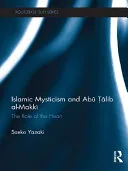
Saeko Yazaki's 2012 study examines Abu Talib al-Makki's tenth-century Sufi thought.
This scholarly work by Saeko Yazaki analyzes the tenth-century Sufi thinker Abu Talib al-Makki and his magnum opus, Qut al-qulub ('The Nourishment of Hearts'). Yazaki illuminates al-Makki's contributions to Sufi thought, particularly his concept of the heart as the center for spiritual perception and divine awareness. The book situates al-Makki's ideas within the intellectual currents of early Islamic spirituality.
Abu Talib al-Makki was a significant figure in classical Sufism during the late tenth century. His work emerged during a period of considerable theological and philosophical debate in the Islamic world. While later thinkers like al-Ghazali would integrate Sufi practices with orthodox theology, al-Makki emphasized the experiential heart more directly. His ideas influenced subsequent Sufi orders and thinkers, though some of his mystical interpretations drew scrutiny from more literalist theologians.
This book engages with the rich tradition of Islamic mysticism, or Sufism. It focuses on a formative period in the tenth century, exploring the ideas of Abu Talib al-Makki. His emphasis on the heart as the locus of direct spiritual experience stands within a lineage that prioritizes inner transformation and gnosis over purely external observance. The work connects these early developments to the broader intellectual and theological debates of classical Islam, showing how mystical thought was articulated and sometimes contested.
💡 Why Read This Book?
• Gain a precise understanding of Abū Tālib al-Makkī's tenth-century contributions to Sufism, moving beyond generalized notions of Islamic mysticism. • Grasp the intricate concept of the *qalb* (heart) as presented in *Qūt al-qulūb*, recognizing its function as an organ of spiritual perception, not just emotion. • Appreciate the historical context of early Sufism by examining al-Makkī's work alongside the theological debates of the tenth century.
⭐ Reader Reviews
Honest opinions from readers who have explored this book.
❓ Frequently Asked Questions
Who was Abū Tālib al-Makkī and when did he live?
Abū Tālib al-Makkī was a significant early Sufi thinker and mystic who lived in the tenth century CE. He is renowned for his comprehensive work on Sufi doctrine and practice, *Qūt al-qulūb*.
What is the primary focus of Saeko Yazaki's book?
The book focuses on the life, work, and broader significance of Abū Tālib al-Makkī within the Sufi tradition, with a particular emphasis on his theological conceptualization of the heart.
What does *Qūt al-qulūb* mean?
*Qūt al-qulūb* is an Arabic phrase that translates to 'The Nourishment of Hearts'. It signifies the spiritual sustenance derived from understanding and practicing the teachings within the book.
What is the role of the heart in al-Makkī's Sufism?
In al-Makkī's view, the heart (*qalb*) is not just an emotional center but the primary organ of spiritual insight, divine awareness, and direct apprehension of reality.
Is this book suitable for beginners in Sufism?
While valuable, the book is geared towards advanced students and scholars due to its academic rigor and detailed analysis of complex theological concepts, rather than introductory material.
When was this book first published?
Saeko Yazaki's book, 'Islamic Mysticism and Abu Talib Al-Makki', was first published on December 12, 2012.
🔮 Key Themes & Symbolism
The Heart as Spiritual Organ
Yazaki meticulously details Abū Tālib al-Makkī's conception of the *qalb* (heart) as the central faculty for spiritual perception. This goes beyond the common understanding of the heart as merely emotional; al-Makkī posited it as the locus where divine truths are apprehended directly. The book unpacks how the purification of this spiritual heart is paramount for attaining proximity to the Divine, tracing its transformation from a mundane organ to a luminous instrument of gnosis.
Sufi Epistemology
This work illuminates the epistemological framework of early Sufism through al-Makkī's *Qūt al-qulūb*. It highlights how direct spiritual experience and intuitive knowledge, facilitated by the purified heart, are presented as valid avenues for understanding reality, often complementing or even superseding rational or scriptural knowledge. Yazaki examines the methods al-Makkī proposed for cultivating this form of knowledge, emphasizing self-discipline and spiritual struggle.
Theological Foundations of Sufism
The book situates al-Makkī's teachings within the broader theological range of tenth-century Islam. It explores how his mystical doctrines, particularly concerning the heart's role and the path of spiritual ascent, were articulated and how they potentially interacted with more orthodox theological currents of the era. Yazaki's analysis demonstrates the intellectual sophistication and distinctiveness of early Sufi thought.
Spiritual Psychology
Al-Makkī's systematic approach to the spiritual path can be seen as an early form of spiritual psychology. Yazaki explores his detailed descriptions of the various states (*ahwāl*) and stations (*maqāmāt*) of the soul, and the psychological transformations that occur through diligent practice. This includes concepts like self-examination (*muhāsabah*) and the struggle against the lower self (*nafs*), crucial for spiritual development.
💬 Memorable Quotes
Direct passages from the work, attributed to the author.
“Spiritual knowledge is attained through the heart's direct experience.”
— This interpretation emphasizes al-Makkī's focus on experiential gnosis (*ma'rifah*) as a primary source of spiritual understanding, contrasting with purely intellectual or textual knowledge.
“The nourishment of hearts comes from constant remembrance and self-purification.”
— This reflects the core message of *Qūt al-qulūb*, indicating that spiritual vitality and closeness to God are achieved through consistent devotional practice and diligent introspection.
“The journey to God is an inward one, centered on the state of the heart.”
— This captures the essence of Sufi mysticism as presented by al-Makkī, where the ultimate spiritual quest is an internal transformation focused on the condition and purification of one's inner being.
💡 Key Ideas
Editorial paraphrase of the work's core concepts — not direct quotes.
The heart is the mirror of the soul, reflecting divine light.
This paraphrased concept highlights al-Makkī's central metaphor for the heart's capacity for spiritual perception. It suggests that the heart, when purified, can directly apprehend divine realities, acting as a conduit for spiritual illumination.
The heart's true function is to witness divine realities.
This paraphrased concept underscores al-Makkī's unique theological contribution, defining the heart's ultimate purpose not in worldly matters but in its capacity for direct spiritual apprehension and contemplation of the sacred.
🌙 Esoteric Significance
Tradition
This work is foundational to the Sunni Sufi tradition, particularly in its systematic articulation of the spiritual path. While not fitting neatly into Western esoteric categories like Hermeticism or Gnosticism, al-Makkī's focus on the inner transformation of the heart and direct apprehension of divine realities aligns with the universal aims of contemplative and mystical paths across traditions.
Symbolism
The primary symbol is the *qalb* (heart), which al-Makkī elevates from a biological organ to the spiritual eye and seat of divine gnosis. Another key motif is the 'mirror' that the heart must become to reflect divine light without distortion, signifying the need for purification from egoic defilements and worldly attachments.
Modern Relevance
Contemporary scholars of Islamic mysticism and comparative religion continue to engage with al-Makkī's work as a primary source for understanding classical Sufism. His detailed mapping of spiritual states and the role of the heart remains relevant for modern practitioners seeking structured guidance in contemplative practices and the psychology of spiritual development.
👥 Who Should Read This Book
• Scholars of Islamic intellectual history and comparative theology seeking to understand the development of Sufi thought in its formative period. • Advanced students of Sufism interested in primary source material and the theological underpinnings of mystical practice, particularly concerning the concept of the heart. • Philosophers of religion and contemplative practitioners exploring cross-cultural perspectives on consciousness, spiritual awareness, and the phenomenology of religious experience.
📜 Historical Context
Abū Tālib al-Makkī was a significant figure in the intellectual ferment of tenth-century Islam, a period marked by diverse theological and philosophical currents. His major work, *Qūt al-qulūb*, emerged around the late 970s or early 980s CE. This era saw the consolidation of various Islamic sciences and the flourishing of different schools of thought, including the Mu'tazila, Ash'ari, and the nascent forms of Sufism. Al-Makkī's emphasis on the experiential heart and direct spiritual insight contributed to the ongoing discourse on the nature of faith and knowledge within Islam. While figures like al-Ghazālī (d. 1111) would later synthesize Sufi ideas with orthodox theology, al-Makkī represented an earlier, more direct articulation of mystical practice. His work provided a foundational text for later Sufi traditions, though its mystical emphasis sometimes drew cautious attention from more legally-minded scholars.
📔 Journal Prompts
The heart's capacity for divine illumination as described by al-Makkī.
The concept of *muhāsabah* (self-examination) in relation to the heart's purity.
Al-Makkī's view of the heart as a mirror reflecting divine realities.
The relationship between rational knowledge and the heart's experiential knowledge.
The practical steps for spiritual purification of the *qalb*.
🗂️ Glossary
Abū Tālib al-Makkī
An important tenth-century Sufi mystic and author of *Qūt al-qulūb*, known for his systematic exploration of Islamic mysticism and the spiritual role of the heart.
*Qūt al-qulūb*
The key work by Abū Tālib al-Makkī, translating to 'The Nourishment of Hearts,' which details Sufi doctrines, practices, and the spiritual journey.
*Qalb*
The Arabic word for 'heart,' which in Sufi terminology refers not only to the physical organ but more importantly to the spiritual center of consciousness, intuition, and divine perception.
*Muhāsabah*
A key Sufi practice involving rigorous self-examination, introspection, and accounting for one's deeds and intentions, aimed at spiritual purification.
*Ahwāl*
Plural of *hāl* (state), referring to transient spiritual experiences or emotional conditions that befall the mystic on the path, such as joy, awe, or longing.
*Maqāmāt*
Plural of *maqām* (station), referring to the progressive stages or levels of spiritual attainment that the mystic consciously works towards and achieves through discipline and effort.
Gnosis
Direct intuitive spiritual knowledge or insight into divine mysteries, often contrasted with purely intellectual or empirical knowledge. In Sufism, it is often associated with the heart's apprehension of truth.