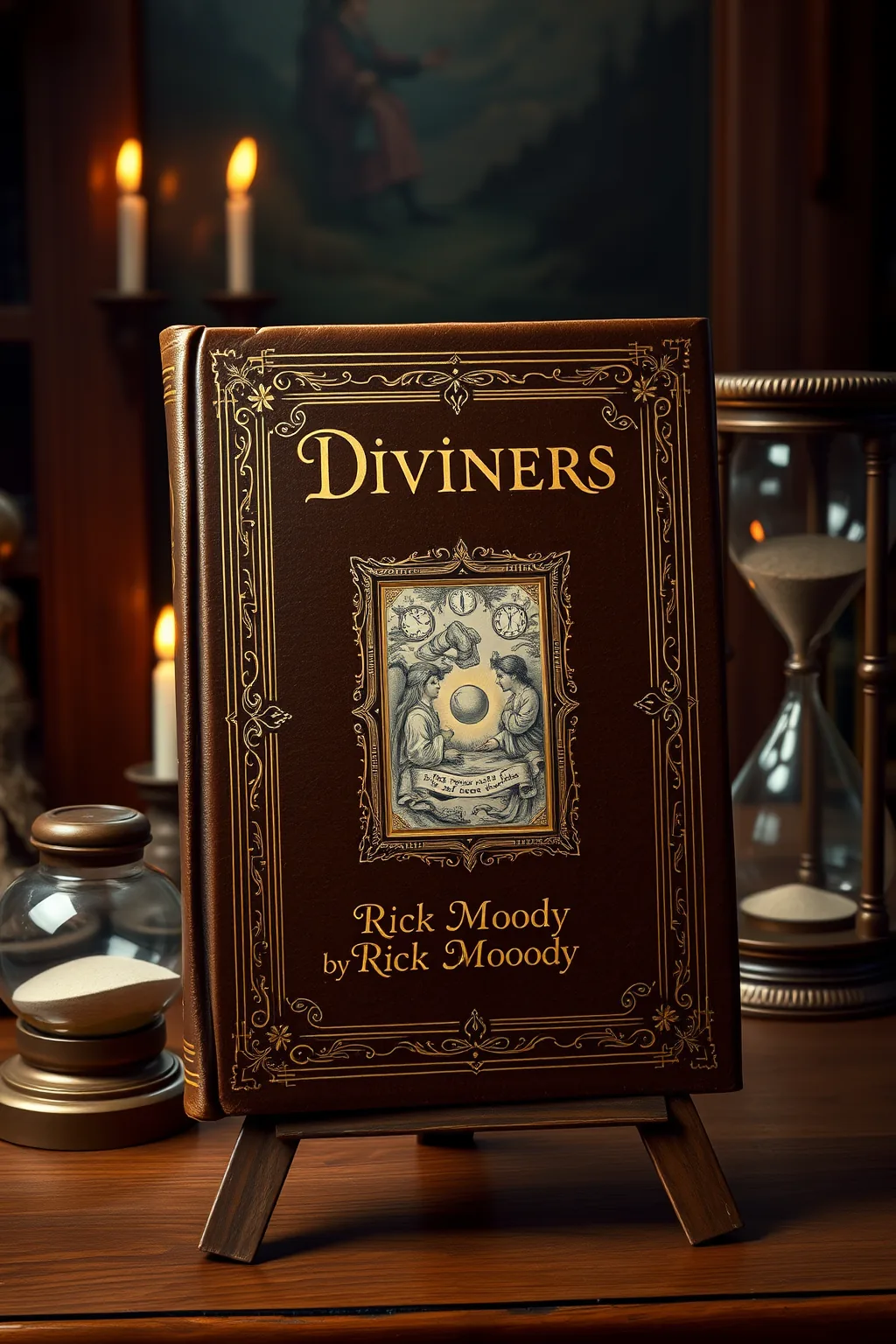
Diviners
 61
61

Diviners



Balthazar Finch (Senior Critic, Occult Philosophy) — Rick Moody's 'Diviners' is a masterful unveiling of the esoteric dimensions of intuition and foresight. Far from a mere compendium of divinatory techniques, the book serves as a profound meditation on the human yearning to connect with the unseen. Moody's prose, imbued with a rare intellectual rigor and spiritual depth, illuminates the intricate symbolism inherent in various divinatory practices, positioning them not as superstitious rituals, but as sophisticated systems of symbolic language. This work is essential reading for any serious student of the occult, offering lucid insights into the psychological and philosophical underpinnings of seeking knowledge beyond the mundane. Its strength lies in its ability to elevate the reader's understanding, transforming the act of divination into a profound act of self-discovery and cosmic communion.
📝 Description
61
Rick Moody's 'Diviners' was published in 2005, examining divination beyond simple prediction.
Rick Moody's 'Diviners' considers the practice of divination not as a tool for predicting specific future events, but as a framework for understanding the connections between past, present, and future. Moody approaches divination, from card readings to astrology, as a symbolic language that reveals underlying patterns in human experience. The book is less a how-to guide and more a philosophical reflection on fate, free will, and the concept of synchronicity.
It encourages readers to look for meaning in the perceived coincidences and subtle influences that shape lives. Moody's work suggests that by engaging with these practices, one can gain a richer perception of existence and its interconnectedness. The book aims to foster contemplation on the deeper mysteries of the universe, rather than offering concrete methods for fortune-telling.
Published in 2005, 'Diviners' engages with esoteric traditions that view patterns in nature and symbolic systems as keys to understanding the human condition. It connects with practices like cartomancy and astrology, not as predictive sciences, but as methods for interpreting the flow of time and human consciousness. The book positions these arts within a broader philosophical inquiry into destiny and the subjective experience of meaning, reflecting a modern engagement with ancient ideas about cosmic order and personal agency.
💡 Why Read This Book?
Embark on a transformative journey with 'Diviners' to unlock the hidden language of the universe. Ideal for seekers of esoteric wisdom, scholars of ancient practices, and practitioners yearning for a deeper philosophical grounding in divination. This book offers a profound perspective on synchronicity, intuition, and the interconnectedness of all things, enriching your understanding of the subtle forces at play in your life and the cosmos.
⭐ Reader Reviews
Honest opinions from readers who have explored this book.
❓ Frequently Asked Questions
What is the primary focus of Rick Moody's 'Diviners'?
'Diviners' primarily focuses on the philosophical and symbolic aspects of divination, exploring it as a method for understanding hidden knowledge and the interconnectedness of destiny, rather than a simple fortune-telling guide.
Is this book suitable for beginners in divination?
Yes, while rich in depth, 'Diviners' offers foundational insights and a philosophical framework that can be highly beneficial for beginners seeking a deeper understanding of the principles behind various divinatory arts.
What kind of esoteric themes are explored?
The book delves into themes of synchronicity, intuition, fate versus free will, the symbolic language of the cosmos, and the human quest for meaning through ancient practices.
Does the book teach specific divinatory techniques?
While it discusses various forms of divination, the emphasis is on their underlying principles and symbolic meanings rather than providing step-by-step instructions for specific methods.
Who would most benefit from reading 'Diviners'?
Scholars of esoteric traditions, individuals interested in philosophy and metaphysics, and practitioners of divination seeking a more profound and intellectual engagement with their craft will find great value.
🔮 Key Themes & Symbolism
The Language of Synchronicity
Moody masterfully unpacks the concept of synchronicity, portraying it not as mere coincidence but as the universe's subtle communication. He illustrates how divinatory practices act as a conduit, enabling us to perceive these meaningful alignments. The book encourages readers to attune themselves to the invisible threads that connect events, thoughts, and intuitions, revealing a deeper order underlying apparent chaos. This theme invites a shift in perspective, from viewing life as a series of random occurrences to recognizing an intricate web of interconnectedness, where every element holds symbolic weight and contributes to a grander design.
Symbolism as Cosmic Blueprint
At the heart of 'Diviners' lies the exploration of symbolism as the fundamental language of the cosmos. Moody posits that ancient divinatory systems, from Tarot to astrology, are not arbitrary but are built upon a universal symbolic grammar that reflects archetypal patterns of existence. He guides the reader in deciphering these intricate visual and conceptual languages, revealing how they serve as a blueprint for understanding the human condition and the forces that shape our reality. This theme encourages a profound engagement with symbols, moving beyond superficial interpretations to grasp their deeper, often occult, significance in revealing truth.
The Oracle Within: Intuition and Inner Knowing
Rick Moody emphasizes that true divination stems not solely from external tools but from cultivating the inner oracle – our innate intuition and capacity for inner knowing. The book explores how divinatory practices can serve as powerful catalysts for awakening and honing these dormant psychic faculties. It suggests that by engaging with symbolic systems, we learn to trust our gut feelings, interpret subtle energetic shifts, and access a wellspring of wisdom that resides within each individual. This theme empowers the reader, framing divination as a journey of self-discovery and the unlocking of one's own profound, intuitive intelligence.
💬 Memorable Quotes
Direct passages from the work, attributed to the author.
“Fate is not a chain, but a collection woven with threads of choice.”
— This highlights the interplay between destiny and free will, suggesting that while paths may be laid out, our decisions actively shape the final pattern of our lives.
“Within the chaos, a hidden order whispers.”
— This speaks to the essence of finding meaning and structure in seemingly random events, a fundamental pursuit within esoteric studies and divination.
“The cards do not predict, they reveal.”
— This distinguishes divination from mere prophecy, emphasizing its role in clear present circumstances and potential outcomes rather than dictating an unchangeable future.
“To know oneself is to glimpse the divine.”
— This links introspection and self-awareness to spiritual understanding, suggesting that inner exploration is a pathway to higher consciousness.
💡 Key Ideas
Editorial paraphrase of the work's core concepts — not direct quotes.
The universe speaks in riddles, and the diviner is its translator.
This quote expresses the core idea that divination is about deciphering the symbolic language of the cosmos, acting as an intermediary between the unseen and the understood.
🌙 Esoteric Significance
Tradition
Moody's work draws implicitly from Hermeticism, with its emphasis on the principle of 'As Above, So Below,' connecting the macrocosm and microcosm. It also speaks to Neoplatonic ideas concerning the emanation of divine intelligence and the symbolic representation of universal truths. Furthermore, it carries the Kabbalistic concept of divine order and the use of symbolic systems to understand creation. The book positions divination as a practical application of these ancient philosophical frameworks, aiming to unlock spiritual insight and cosmic understanding for the individual seeker.
Symbolism
The book examines the profound symbolic language inherent in divinatory tools, viewing them as archetypal representations of universal energies and human experiences. From the intricate imagery of Tarot cards to the celestial patterns of astrology, Moody interprets these symbols not as random icons but as keys to unlocking deeper truths about the self and the universe. The significance lies in understanding how these visual and conceptual metaphors serve as a bridge between the conscious mind and the subconscious, revealing hidden connections and offering useful insights into the human condition and our place within the cosmic order.
Modern Relevance
'Diviners' holds profound modern relevance by offering a counterpoint to the often overwhelming materialism and rationalism of contemporary society. In an age of information overload, Moody's work provides a framework for seeking deeper meaning, intuition, and connection to something larger than oneself. It validates the human need for introspection, symbolic understanding, and the exploration of inner landscapes. The book empowers individuals to cultivate their own inner guidance systems and to perceive the world through a more mystical and interconnected lens, fostering a sense of wonder and spiritual resilience in the face of modern complexities.
👥 Who Should Read This Book
This clear text is essential for the dedicated seeker of esoteric wisdom, offering a profound philosophical underpinning to their quest. Scholars of comparative religion, mythology, and occult history will find a rigorous analysis of divinatory systems and their symbolic languages. For practitioners of Tarot, astrology, or other forms of divination, 'Diviners' provides a deeper context, enhancing their understanding of the forces they engage with. Beginners curious about the nature of intuition, synchronicity, and the hidden patterns of life will discover a compelling and accessible introduction to these profound concepts, guiding them toward a more meaningful perception of reality.
📜 Historical Context
Rick Moody's 'Diviners' emerges from a rich lineage of esoteric thought that has ebbed and flowed throughout history. The modern resurgence of interest in divination, occultism, and metaphysical inquiry, particularly in the late 20th and early 21st centuries, provides a fertile ground for such a work. This period has seen a rejection of purely materialistic worldviews and a renewed embrace of ancient wisdom traditions, often reinterpreted through psychological and philosophical lenses. Moody's exploration of divination can be seen as a contemporary engagement with practices that have been integral to human spiritual and intellectual life for millennia, from ancient Mesopotamian augury to the Hermetic traditions of Europe and the rise of modern Tarot symbolism. The book taps into a zeitgeist that seeks meaning beyond empirical science, valuing intuition, symbolism, and the hidden architectures of reality.
📔 Journal Prompts
Reflect on a recent synchronistic event in your life. How might divination offer a new perspective on its meaning?
What personal symbols resonate most deeply with you, and how might they relate to the archetypal symbolism discussed in the book?
Consider a recurring pattern or challenge in your life. How could exploring the concept of 'fate' versus 'choice' offer new insights or agency?
If you were to create your own 'divinatory' practice, what elements or symbols would you incorporate, and why?
How does the idea of the universe 'speaking in riddles' influence your perception of everyday occurrences and your own intuition?
🗂️ Glossary
Synchronicity
Meaningful coincidences that appear to be causally unrelated but are perceived as having a significant connection by the observer. Often described as 'acausal connecting principle'.
Archetype
A universal, archaic pattern and image that derives from the collective unconscious and is universally present in the individual's psyche. These are fundamental symbolic structures.
Hermeticism
A philosophical and religious tradition based on the purported teachings of Hermes Trismegistus. It emphasizes the interconnectedness of all things and the pursuit of gnosis (spiritual knowledge).
Gnosis
Spiritual knowledge or insight, often referring to a direct, intuitive understanding of divine truths, particularly within Gnostic traditions.
Occult
Practices, traditions, and knowledge that are considered hidden, secret, or beyond the scope of ordinary understanding or scientific explanation. Often relates to mystical or magical disciplines.
This book appears in 3 collections
🔮 Readers Also Liked
Browse all →









More by Rick Moody
All books →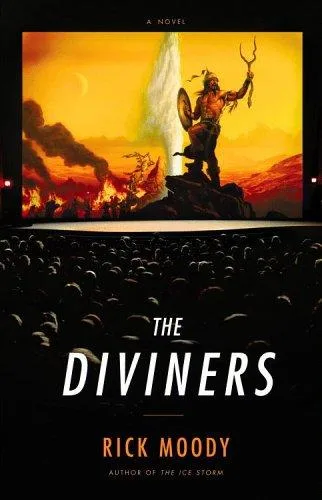
From the “Tarot” Collection
View all →









More Free Divination & Tarot Books
View all →