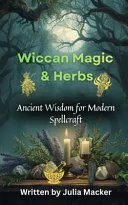
Wiccan Magic & Herbs
 74
74

Wiccan Magic & Herbs
Julia Macker’s Wiccan Magic & Herbs offers a refreshingly direct approach to beginner witchcraft, sidestepping the often overwhelming mystique that can surround the craft. Its strength lies in its practical, step-by-step guidance, particularly evident in the section detailing the construction of a personal Book of Shadows. Macker’s interpretation of herb correspondences, such as the detailed properties of rosemary for protection and clarity, feels grounded and immediately applicable. However, the book’s commitment to simplicity occasionally borders on brevity; more advanced practitioners might find the exploration of ritual structure or deity invocation somewhat superficial. A more nuanced discussion on ethical considerations in spellcasting would also have been beneficial. Despite these minor limitations, it serves as a solid, accessible entry point for the aspiring Wiccan, encouraging active participation from the outset.
📝 Description
74
Julia Macker's Wiccan Magic & Herbs, published in 2025, introduces modern Wicca to beginners.
This book serves as an introduction to modern Wicca, aimed at those new to the practice. It covers foundational spells, rituals, and guidance for creating a personal Book of Shadows. The material is presented to allow immediate engagement with magical work, while also supporting continued development for practitioners.
It is written for individuals with no prior knowledge of Wicca or witchcraft, offering clear explanations and simple spell instructions. Those with some experience may find it useful for refining their understanding or adding to their collection of straightforward magical techniques. The book emphasizes building a personal practice from the ground up.
The concepts focus on practical spellcraft, the significance of intention, and the use of natural elements. It details the personal Book of Shadows as a record of magical learning. Understanding herb correspondences and their energetic qualities for spellwork is also a key element, viewing magic as an interaction with nature and oneself.
Wicca emerged in the mid-20th century, with figures like Gerald Gardner shaping early covens and literature. Books like Macker's build on this lineage, aiming to make magical knowledge accessible. It connects to a modern interest in earth-based spirituality and personal empowerment, acting as an entry point into a tradition influenced by early 20th-century occult revival movements.
💡 Why Read This Book?
• Learn to craft foundational spells using common herbs like rosemary and lavender, drawing directly from the practical instructions provided for creating protective charms and calming rituals, as detailed in the chapter on herb correspondences. • Understand the essential role of a personal Book of Shadows as a living grimoire, inspired by Macker's emphasis on documenting one's own magical journey and spellwork, a concept central to chapter 2. • Gain confidence in initiating your own Wiccan practice by following the clear, beginner-focused guidance on ritual basics and intention setting, mirroring the accessible tone established in the book's initial sections.
⭐ Reader Reviews
Honest opinions from readers who have explored this book.
❓ Frequently Asked Questions
Is Wiccan Magic & Herbs suitable for someone with absolutely no prior knowledge of witchcraft?
Yes, the book is explicitly designed for beginners. It assumes no prior knowledge and provides clear, step-by-step instructions for fundamental spells, rituals, and understanding basic Wiccan concepts, making it an ideal starting point.
What kind of spells can I expect to find in this book?
You will find a collection of easy spells focused on common needs such as protection, healing, prosperity, and personal growth. The emphasis is on practical magic using readily available herbs and simple ritual structures.
Does the book explain how to create a Book of Shadows?
Absolutely. A significant portion of the book is dedicated to guiding readers on how to start and maintain a personal Book of Shadows, offering advice on what information to include and how to structure this essential magical journal.
What role do herbs play in the magic described?
Herbs are central to the magical practices presented. The book details the properties and correspondences of various common herbs, explaining how to incorporate them effectively into spells and rituals for specific magical aims.
When was Wiccan Magic & Herbs first published?
Wiccan Magic & Herbs was first published on December 2, 2025, making it a contemporary guide to Wiccan practice.
Does the book require any special equipment or ingredients?
The book focuses on accessible magic, primarily utilizing common household herbs and simple ritual elements. It aims to empower readers to begin practicing without needing to acquire specialized or expensive tools.
🔮 Key Themes & Symbolism
Personal Book of Shadows
The book emphasizes the Book of Shadows not as a static text, but as a dynamic, personal grimoire. It guides readers in creating their own, filling it with spells, rituals, and observations. This theme highlights the importance of individual experience and learning within the Wiccan tradition, positioning the Book of Shadows as a crucial tool for self-discovery and magical development. It encourages a record-keeping practice that evolves with the practitioner's journey.
Herb Magic and Correspondences
Central to the practice outlined is the use of herbs. The book explores the energetic properties and symbolic meanings of various common herbs, detailing how to select and utilize them in spellcraft. This focus connects magical practice to the natural world, suggesting that the earth's bounty offers potent tools for healing, protection, and manifestation. Understanding these correspondences is presented as a foundational skill for effective Wiccan work.
Beginner-Friendly Spellcraft
This theme focuses on making magical practice accessible to newcomers. The book provides easy-to-follow instructions for simple spells and rituals, explaining the process. It aims to empower individuals to engage directly with magic, fostering confidence and practical skill. The emphasis is on intention, personal energy, and the utilization of readily available resources, ensuring that the path of Wicca is approachable for all.
Foundational Wiccan Principles
The text introduces the core tenets of modern Wicca, such as the importance of ethical practice, the concept of the Craft, and the connection to nature. It serves as an initial primer, laying the groundwork for a deeper understanding of the tradition. This theme ensures that beginners are not only learning techniques but also grasping the underlying philosophy and worldview that informs Wiccan magic.
💬 Memorable Quotes
Direct passages from the work, attributed to the author.
“Every Wiccan needs a Book of Shadows as a practical tool for learning your craft.”
— This statement underscores the Book of Shadows' vital role, not just as a repository of spells, but as an active educational instrument in the development of a Wiccan practitioner's skills and understanding.
“Welcome, dedicated seeker, to the threshold of your personal magical journey.”
— This opening sets a welcoming and encouraging tone, positioning the book as a guide for those beginning their individual path into magical practice, emphasizing personal discovery.
“easy spells and essential hints designed specifically for the beginner Wiccan”
— This highlights the book's primary audience and purpose: to provide accessible, practical magical techniques and advice tailored for individuals new to the Wiccan tradition.
“the wisdom gathered here offers practical guidance that will continue to aid you as your practice becomes more advanced.”
— This suggests that the foundational knowledge presented is not merely a starting point, but contains enduring principles that will remain relevant and useful as the practitioner's skills and understanding deepen over time.
“Every Wiccan needs a Book of Shadows... a personal grimoire filled with spells and rituals, and magical information.”
— This reinforces the central importance of the Book of Shadows, defining it as a dynamic personal record containing practical magical workings and essential knowledge for the practitioner.
🌙 Esoteric Significance
Tradition
Wiccan Magic & Herbs aligns with the modern Wiccan tradition, a contemporary pagan religion that emerged in the mid-20th century. While not strictly Hermetic, Kabbalistic, or Gnostic, it draws eclectically from various esoteric streams, particularly nature-based spirituality, folk magic, and ceremonial elements popularized by figures like Gerald Gardner. This work fits within the lineage of accessible, practical guides intended to initiate new adherents into the Craft.
Symbolism
Key symbols often include the crescent moon, representing the Goddess and cyclical nature, and the pentagram, symbolizing the five elements (spirit, earth, air, fire, water) and protection. Herbs themselves carry symbolic weight; for instance, rosemary is often associated with remembrance, purification, and protection, while lavender signifies peace, healing, and clarity within the magical framework.
Modern Relevance
This book's approach to accessible, nature-focused magic appeals to contemporary movements emphasizing sustainability, self-sufficiency, and personal empowerment. It speaks to a growing segment of the population seeking spiritual paths outside traditional organized religions, particularly those interested in earth-based spirituality and practical, everyday magic. Its principles can be seen influencing modern cottage witchery and green witchcraft practices.
👥 Who Should Read This Book
• Aspiring Wiccans and witchcraft beginners seeking a clear, practical introduction to core concepts, spells, and ritual structure. • Individuals interested in learning about herb magic and their correspondences for use in personal spiritual practice or spellcraft. • Practitioners looking to establish or refine their personal Book of Shadows, understanding its significance as a magical journal and learning tool.
📜 Historical Context
Wicca emerged as a distinct religion in the mid-20th century, largely shaped by figures like Gerald Gardner, whose first coven was reportedly active in the 1950s. This period was marked by a broader interest in occultism and neo-paganism, partly as a reaction against the perceived rationalism of post-war society. Books aiming to explain witchcraft, like Julia Macker's Wiccan Magic & Herbs (2025), build upon this historical foundation. They democratize access to practices previously confined to small, often secretive, groups. While Gardner’s work drew from earlier occult traditions like Aleister Crowley’s Thelema and earlier ceremonial magic, popular guides like Macker’s focus on adapting these energies for contemporary practitioners. The reception of early Wiccan texts was often met with suspicion, reflecting the era's cultural anxieties about witchcraft, yet they laid the groundwork for the explosion of interest in paganism and earth-based spirituality seen in the late 20th and early 21st centuries.
📔 Journal Prompts
The foundational spells for protection mentioned in Chapter 3.
Your personal understanding of the Book of Shadows' role as a learning tool.
The specific properties of rosemary and lavender in spellcraft.
The concept of the 'threshold' in beginning a magical journey.
How intention shapes the outcome of the simple rituals described.
🗂️ Glossary
Book of Shadows
A personal grimoire or journal kept by a Wiccan or witch, containing spells, rituals, magical information, correspondences, and personal observations about their craft.
Correspondences
The symbolic associations between different elements, such as herbs, colors, planets, or crystals, used to enhance the focus and power of magical workings.
Spellcraft
The practice of creating and casting spells, involving focused intention, visualization, and often the use of magical tools, energies, and materials.
Ritual
A formalized sequence of actions or words performed during magical or religious ceremonies, intended to create a sacred space, invoke energies, or achieve a specific magical outcome.
Intention
The focused will and clear purpose behind a magical act; the desired outcome that directs the energy used in spellcasting.
Wicca
A contemporary Neopagan religion that emphasizes reverence for nature, the divine feminine and masculine principles, and the practice of magic, often tracing its origins to the mid-20th century.
Grimoire
A textbook of magic or witchcraft, typically containing instructions on how to create magical tools, perform rituals and spells, and invoke spirits.
This book appears in 1 collection
🔮 Readers Also Liked
Browse all →









From the “Spellcraft” Collection
View all →


More Free Occult Philosophy Books
View all →