The Seal of Sondemaal
 78
78

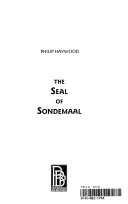
The Seal of Sondemaal
G. P. Haywood’s The Seal of Sondemaal offers a rare, unvarnished look into a particular current of esoteric thought. The book’s strength lies in its systematic presentation of a complex magical framework, particularly the detailed breakdown of the Sondemaal Seal’s components and their interrelations. Haywood avoids the common pitfall of overly romanticizing the subject, instead presenting his material with an almost academic rigor. However, the prose can become dense, and the lack of introductory material for absolute beginners might deter some. A passage detailing the 'Invocation of the Fourfold Gate' exemplifies the text's intricate, step-by-step approach, which is both its virtue and its challenge. The Seal of Sondemaal is a valuable, if demanding, addition to the library of serious occult students.
📝 Description
78
G. P. Haywood published The Seal of Sondemaal in 1997, detailing a specific branch of Western occultism.
This 1997 text by G. P. Haywood offers a detailed examination of a specific, often overlooked, branch of Western occultism. It unpacks a complex system of symbolic language and ritualistic practice, presenting it in a manner accessible to dedicated students of the hidden arts. The book does not offer superficial explanations but rather a rigorous approach to a particular magical framework. It is intended for serious practitioners and scholars of esoteric traditions who seek to expand their knowledge beyond commonly known systems. Readers interested in comparative occultism, the history of secret societies, and the practical application of archaic magical formulas will find substantial material here. The work is suited for those who appreciate detailed, systematic approaches to spiritual disciplines and engage with challenging conceptual material.
Published in the late 20th century, a time of renewed interest in esoteric subjects, The Seal of Sondemaal contributed to the literature by focusing on a niche tradition. Haywood's work offered a counterpoint to more widely disseminated Hermetic or Kabbalistic texts. Its detailed exposition of the Sondemaal system provided access to a previously unavailable body of knowledge. The core of the book revolves around its unique cosmology and associated practices. Central to the text is the concept of the 'Sondemaal Seal' itself, a complex diagram representing a microcosm of universal forces.
Published in 1997, The Seal of Sondemaal emerged during a period of resurgence in esoteric interests. G. P. Haywood's work is situated within a lineage of occult scholarship that sought to codify and disseminate magical knowledge, akin to figures consolidating earlier orders. Unlike broader works on Hermeticism or Kabbalah, Haywood's text focused on a specific, less documented tradition. This approach provided a counterpoint to more generalized occult literature and made a particular system of magic accessible to a wider audience.
💡 Why Read This Book?
• Gain a practical understanding of the Sondemaal system, a specific magical framework not widely documented elsewhere, enabling a deeper comparative study of occult traditions. • Learn about the esoteric significance of the 'Aetheric Currents' as described by Haywood, offering unique methods for energetic manipulation beyond conventional practices. • Explore the detailed symbolic language of the 'Sondemaal Seal' itself, providing concrete visual and conceptual tools for personal meditative or ritualistic work.
⭐ Reader Reviews
Honest opinions from readers who have explored this book.
❓ Frequently Asked Questions
What is the primary focus of The Seal of Sondemaal?
The book meticulously details the symbolic language, cosmology, and ritualistic practices associated with a specific esoteric system known as the Sondemaal tradition, first published in 1997.
Is The Seal of Sondemaal suitable for beginners in occultism?
While comprehensive, the text is quite dense and systematic. It is best suited for students with some prior exposure to esoteric concepts who are prepared for detailed study, rather than absolute novices.
What kind of rituals are described in the book?
The book outlines specific invocatory procedures and elemental manipulations tied to the central 'Sondemaal Seal' and its associated 'Aetheric Currents'.
Who was G. P. Haywood?
G. P. Haywood is the author of The Seal of Sondemaal, a significant work from the late 20th century that contributed to the literature on lesser-known Western occult traditions.
When was The Seal of Sondemaal first published?
The Seal of Sondemaal was first published in 1997, a period of renewed interest in esoteric studies.
Does the book explain how to create the Sondemaal Seal?
Yes, the text provides detailed instructions and symbolic correspondences for understanding and working with the 'Sondemaal Seal' as a complex diagram.
🔮 Key Themes & Symbolism
The Sondemaal Seal Diagram
Central to the work is the detailed exposition of the 'Sondemaal Seal,' presented not as a simple sigil but as a complex, multi-layered diagram. Haywood breaks down its geometric structure, elemental attributions, and the energetic correspondences it embodies. The Seal functions as a symbolic microcosm, reflecting the author's understanding of universal forces and their interplay within a specific occult framework. Its study is crucial for understanding the book's practical applications.
Aetheric Currents and Manipulation
The text elaborates on the concept of 'Aetheric Currents,' positing them as subtle energetic flows that permeate existence. Haywood outlines specific methods for perceiving and manipulating these currents through precise ritual actions and focused intent. This exploration offers a unique perspective on energetic work within occultism, distinct from more common theories of subtle bodies or chakras, emphasizing systematic interaction with these flows.
Systematic Ritual Practice
Unlike more intuitive or improvisational magical systems, The Seal of Sondemaal emphasizes a highly systematic and structured approach to ritual. The book provides detailed, step-by-step procedures for invocations and operations directly linked to the Sondemaal Seal. This focus on precision and methodical execution is a hallmark of the tradition explored, aiming for predictable results through disciplined application of its principles.
Comparative Occult Symbolism
By detailing a lesser-known esoteric tradition, Haywood’s work contributes to the broader field of comparative occultism. The book invites readers to analyze the unique symbolic language of the Sondemaal system against other known esoteric frameworks. Understanding its specific correspondences and conceptual architecture allows for a deeper appreciation of the diverse ways occultists have historically mapped and interacted with the unseen realms.
💬 Memorable Quotes
Direct passages from the work, attributed to the author.
“The Seal is the nexus where macrocosm meets microcosm.”
— This statement highlights the central role of the 'Sondemaal Seal' as a symbolic bridge, connecting the vastness of the universe to the individual practitioner's inner world and immediate surroundings.
“Precision in gesture and word unlocks the Gate.”
— This interpretation emphasizes the book's focus on the efficacy of exactitude in ritual, suggesting that specific movements and verbalizations are keys to accessing desired spiritual or energetic states.
“The geometry of power is inscribed within the Seal.”
— This phrase suggests that the visual structure and design of the 'Sondemaal Seal' are not arbitrary but contain inherent principles of energetic organization and influence.
“Sondemaal offers a distinct cartography of the unseen.”
— This interpretation positions the book as providing a unique map or guide to the hidden dimensions and forces, differing from other established esoteric cosmologies.
💡 Key Ideas
Editorial paraphrase of the work's core concepts — not direct quotes.
One must attune to the Aetheric Currents to effect change.
This paraphrased concept underscores the necessity of understanding and harmonizing with the subtle energetic flows described in the book before attempting any form of magical operation or transformation.
🌙 Esoteric Significance
Tradition
The Seal of Sondemaal can be situated within the broader stream of Western Esotericism, specifically drawing from traditions that emphasize symbolic cosmology and precise ritualistic application. While not strictly Hermetic or Kabbalistic, it shares a lineage with systems that employ diagrams, correspondences, and invocations to engage with spiritual forces. It represents an effort to articulate and practice a unique, potentially older, or independently developed magical system, offering an alternative to more widely known occult frameworks.
Symbolism
The primary symbol is the 'Sondemaal Seal' itself, a complex geometric construct representing a microcosm of universal forces and their interrelations. Secondary symbols likely include elemental glyphs, planetary or zodiacal attributions, and specific sigils associated with invocations. These symbols function as mnemonic devices and energetic anchors, facilitating the practitioner's focus and interaction with the described 'Aetheric Currents' and the forces they channel.
Modern Relevance
Contemporary practitioners interested in systems beyond the standard Western Esoteric canon find value in The Seal of Sondemaal. Its structured approach appeals to those seeking detailed frameworks for magical work, potentially influencing modern grimoire revivalists or ceremonial magicians looking for novel symbolic systems. Scholars of esoteric history also reference it when examining the diversity of occult traditions that emerged in the late 20th century.
👥 Who Should Read This Book
['• Students of comparative occultism: Those seeking to understand the breadth of esoteric traditions and how different systems map the unseen world will find the unique Sondemaal framework informative.', "• Practitioners of ceremonial magic: Individuals engaged in structured ritual work can benefit from the book's detailed procedures and symbolic system for energetic manipulation.", '• Researchers of late 20th-century esoteric literature: Scholars interested in the development and diversification of occult thought after the mid-20th century will find this a key text.']
📜 Historical Context
The Seal of Sondemaal, published in 1997, emerged during a period of significant academic and popular interest in Western esotericism, following the foundational work of scholars like Frances Yates and Antoine Faivre. The late 20th century saw a proliferation of texts attempting to systematize or re-present various occult traditions, often filling gaps left by earlier, less accessible works. Haywood's book distinguished itself by focusing on a specific, less-documented magical lineage, offering a detailed exposition that contrasted with the more generalized Hermetic or Kabbalistic introductions prevalent at the time. While figures like Manly P. Hall had previously explored broad occult symbolism, Haywood’s approach was more narrowly focused and practical. The book’s reception within niche esoteric circles was positive, appreciated for its systematic rigor, though it remained largely outside mainstream academic discourse, a common fate for specialized occult literature.
📔 Journal Prompts
The structure of the Sondemaal Seal, its geometric relationships, and elemental attributions.
Perceiving and interacting with the Aetheric Currents described by Haywood.
The role of precision in ritual as detailed in the Sondemaal system.
Comparing the symbolic language of the Sondemaal Seal to other known esoteric diagrams.
Potential applications of the Sondemaal approach in contemporary magical practice.
🗂️ Glossary
Sondemaal Seal
A complex symbolic diagram central to the text, representing a microcosm of universal forces and serving as a focus for ritual and esoteric understanding.
Aetheric Currents
Subtle energetic flows described in the book, which practitioners are taught to perceive and manipulate through specific ritualistic techniques.
Elemental Attributions
The assignment of specific elements (e.g., Fire, Water, Air, Earth) to different parts of the Sondemaal Seal or associated rituals, defining their energetic qualities.
Invocatory Procedures
Detailed, step-by-step methods outlined in the text for calling upon or invoking specific forces or intelligences, often linked to the Sondemaal Seal.
Microcosm
The concept that the human being or a specific symbol (like the Sondemaal Seal) contains a reflection or miniature representation of the entire universe (macrocosm).
Symbolic Language
The system of signs, sigils, and geometric forms used within the Sondemaal tradition to convey complex esoteric meanings and facilitate magical operations.
Esoteric Framework
A structured system of beliefs, symbols, and practices pertaining to hidden or mystical knowledge, such as the specific tradition detailed in The Seal of Sondemaal.
This book appears in 1 collection
🔮 Readers Also Liked
Browse all →









From the “Stone Circles” Collection
View all →







More Free Occult Philosophy Books
View all →





![BHAGAVAD GITA AS IT IS [NEPALI LANGUAGE].](/img/thumb/bhagavad-gita-as-it-is-nepali-language-ac-bhaktivedanta-swami-prabhupada-883290.webp)