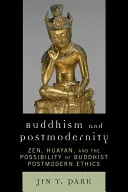
Buddhism and Postmodernity
 75
75

Buddhism and Postmodernity
Jin Y. Park’s "Buddhism and Postmodernity" offers a rigorous examination of the West's often-muddled engagement with Buddhist philosophy. The author astutely pinpoints the differing receptions of Buddhism in 19th-century Europe versus 20th-century America, a distinction frequently overlooked. Park’s critique of how Zen's radical egalitarianism can clash with its institutional structures is particularly sharp, challenging simplistic views of Eastern spirituality. While the dense academic prose might be a barrier for some, the clarity with which Park unpacks complex theoretical intersections, such as Buddhism and deconstruction, is commendable. The work's strength lies in its detailed historical tracing and its refusal to accept facile interpretations of Buddhist influence. It is a vital corrective for anyone seeking a nuanced understanding of this cross-cultural intellectual encounter.
📝 Description
75
Jin Y. Park's 2010 book examines Buddhism's encounter with postmodern philosophy.
Published in 2010, Jin Y. Park's "Buddhism and Postmodernity" investigates the complex relationship between Buddhist philosophies and the intellectual currents of postmodernism. Park analyzes how Buddhist traditions, particularly Zen, have been understood and transformed across various cultures and historical periods, from 19th-century Europe to 20th-century America and traditional Asian societies. The book addresses the divergence in how Buddhism was interpreted in Europe and America compared to its reception in Asia. It also considers the tension between the egalitarian ideals found in Zen and the hierarchical structures that often exist within Buddhist communities.
Park introduces the idea of "post-traditional Buddhism" to describe how contemporary Buddhist practices adapt to secular and globalized settings. This work emerged during a time of significant academic interest in East-West intellectual exchanges, engaging with thinkers like Derrida and Foucault. It questions earlier Western views of Buddhism, which were sometimes shaped by colonial perspectives or romantic notions, by re-evaluating them through postmodern theoretical lenses.
This book fits within a lineage of scholarship that explores the intersections of Eastern contemplative traditions and Western philosophical thought. It follows earlier attempts to bridge these worlds, often initiated by Western intellectuals engaging with Asian texts. Park's work, however, moves beyond simple comparisons, using postmodern critiques to re-examine how Buddhism has been adopted, adapted, and sometimes distorted in non-Asian contexts. It reflects a scholarly turn toward a more critical analysis of cross-cultural spiritual transmission, particularly in the early 21st century.
💡 Why Read This Book?
• Gain a nuanced understanding of how Buddhist traditions, particularly Zen, have been interpreted differently in 19th-century Europe versus 20th-century America, challenging simplistic Western perceptions. • Explore the tension between the egalitarian ideals of Zen Buddhism and its historical institutional structures, as analyzed by Park. • Grasp the concept of "post-traditional Buddhism" as it emerges from the intersection of Buddhist thought and Western postmodern philosophy.
⭐ Reader Reviews
Honest opinions from readers who have explored this book.
❓ Frequently Asked Questions
When was "Buddhism and Postmodernity" originally published?
The book "Buddhism and Postmodernity" by Jin Y. Park was first published on October 28, 2010.
What are the main questions Jin Y. Park addresses regarding Buddhism's encounter with the West?
Park addresses why interpretations of Buddhism differ significantly between 19th-century Europe, 20th-century America, and traditional Asia, and how Zen's egalitarian vision interacts with its social structures.
Which specific Buddhist tradition is a primary focus of the book?
Zen Buddhism is a central focus, particularly examining its philosophical underpinnings and its reception in Western contexts.
What intellectual movements does the book engage with besides Buddhism?
The book critically engages with Western philosophical movements, particularly postmodernism, and its various theoretical frameworks.
Who is the intended audience for "Buddhism and Postmodernity"?
The book is aimed at scholars of comparative philosophy, religious studies, cultural theory, and practitioners of Buddhism interested in its intellectual history.
What is the significance of the book's comparison between European and American reception of Buddhism?
It highlights distinct historical and cultural factors that shaped how Buddhism was understood and adopted in these different Western settings.
🔮 Key Themes & Symbolism
Divergent Western Interpretations
The work meticulously traces how Buddhism, particularly Zen, was received and interpreted differently in 19th-century Europe compared to 20th-century America. This divergence is not accidental but rooted in the specific intellectual currents and cultural anxieties of each era. For instance, European scholars might have viewed Buddhism through the lens of Romanticism or Orientalism, while American reception, especially post-WWII, often involved a more direct engagement with Zen practitioners and its perceived psychological benefits. Park questions the authenticity and accuracy of these varied receptions, highlighting how external frameworks shape the understanding of internal traditions.
Zen Egalitarianism and Hierarchy
A core tension explored is how Zen Buddhism, often lauded for its radical egalitarian vision, simultaneously maintains strong hierarchical structures. This includes the master-disciple relationship, the formal monastic orders, and the lineage transmission. Park interrogates this paradox, suggesting that it is not unique to Zen but reflects a broader dynamic in the institutionalization of any philosophy or spiritual practice. The book examines whether postmodern critiques of power and hierarchy can offer new ways to understand or reconfigure these inherent tensions within Buddhist institutions.
Buddhism in a Post-Traditional World
The book posits that Buddhism in the contemporary, globalized, and secularized West often exists in a 'post-traditional' form. This means it is increasingly detached from its original cultural moorings and rituals, focusing more on philosophical concepts, ethical frameworks, or therapeutic applications. Park explores how this transformation impacts the practice and understanding of Buddhism, raising questions about identity, authenticity, and the future of Buddhist traditions in dialogue with Western postmodern thought and scientific paradigms.
Postmodern Critique and Buddhist Philosophy
Park engages directly with key postmodern thinkers and concepts, such as deconstruction, post-structuralism, and critiques of essentialism. The work investigates how these Western philosophical tools can be used to analyze Buddhist texts and practices, and conversely, how Buddhist ideas might challenge or inform postmodern thought. This includes examining Buddhist concepts of emptiness (śūnyatā) and non-self (anātman) through a postmodern lens, questioning fixed meanings and stable identities.
💬 Memorable Quotes
Direct passages from the work, attributed to the author.
“Why are the interpretations and evaluations of Buddhism so different in Europe (in the nineteenth century), in the United States (in the twentieth century), and in traditional Asia?”
— This foundational question highlights the book's central aim: to dissect the varied historical and cultural lenses through which Buddhism has been viewed globally, moving beyond monolithic understandings.
“Why does Zen Buddhism, which offers a radically egalitarian vision, maintain a strongly authoritative structure?”
— This query probes the inherent paradox within Zen's institutional forms, questioning how seemingly contradictory elements of equality and authority coexist within its practice and transmission.
“Interpretation of Buddhism in the West is often shaped by the West's own intellectual and cultural preoccupations.”
— This interpretation suggests that Western engagement with Buddhism is not purely objective but is filtered through existing philosophical trends and societal needs, leading to diverse and sometimes skewed understandings.
“The encounter between Buddhism and postmodernity reveals challenges to traditional Buddhist authority and dogma.”
— This concept points to how postmodern philosophical tools, with their skepticism towards grand narratives and absolute truths, can unsettle established Buddhist doctrines and hierarchical systems.
💡 Key Ideas
Editorial paraphrase of the work's core concepts — not direct quotes.
Zen's institutional structures can present a complex interplay of egalitarian ideals and practical authority.
This paraphrase focuses on the practical manifestation of Zen's internal dynamics, acknowledging that the lived experience of its institutions involves navigating both its aspirational egalitarianism and its necessary forms of leadership.
🌙 Esoteric Significance
Tradition
While not strictly adhering to a single Western esoteric lineage like Hermeticism or Kabbalah, this work interfaces with traditions that have historically engaged with Eastern thought. It operates within the broader sphere of comparative mysticism and esoteric philosophy, where cross-cultural dialogues are fundamental. Its approach to analyzing Buddhist texts through Western philosophical lenses mirrors esoteric practices of allegorical interpretation and the search for universal truths across diverse traditions. It contributes to an understanding of how non-Western spiritual systems can be integrated or understood within a Western esoteric framework.
Symbolism
The book implicitly engages with the symbolism of emptiness (śūnyatā) within Buddhism, which, in esoteric traditions, can relate to concepts of the divine void or the ultimate ground of being. The master-disciple relationship, often depicted hierarchically, can be seen as a symbolic representation of the transmission of gnosis or hidden knowledge, a common motif in esoteric lineages. The paradox of egalitarianism within hierarchy can symbolize the esoteric principle of unity in diversity, where multiplicity arises from a singular source.
Modern Relevance
Contemporary scholars of religion and philosophy, particularly those interested in secular Buddhism, cognitive science of religion, and the globalization of spiritual practices, draw on Park's analysis. Thinkers exploring the intersection of contemplative practices and Western psychology, or those deconstructing religious authority in late modernity, find her examination of "post-traditional Buddhism" and the Zen paradox highly relevant. Her work provides a critical lens for understanding how ancient traditions adapt and transform in response to globalized, postmodern contexts.
👥 Who Should Read This Book
• Scholars of comparative religion and philosophy: Gain critical insights into the reception history of Buddhism in the West and its theoretical intersections with postmodernism. • Students of Zen Buddhism: Understand the historical and philosophical complexities surrounding Zen's egalitarian claims versus its institutional realities. • Cultural theorists and critical thinkers: Explore how Western intellectual frameworks have shaped the understanding and practice of non-Western spiritual traditions.
📜 Historical Context
Published in 2010, Jin Y. Park's "Buddhism and Postmodernity" arrived at a time when the academic discourse on religion and philosophy was increasingly globalized and interdisciplinary. The early 21st century saw significant scholarship on the reception of Eastern religions in the West, building upon earlier Orientalist studies and later critiques of globalization. Park's work engages with the legacy of thinkers like D.T. Suzuki, whose popularization of Zen in America in the mid-20th century profoundly influenced intellectual circles, including Beat Generation writers like Jack Kerouac. While Suzuki's interpretations were groundbreaking, they were also later subject to critical re-evaluation, a process Park's book continues by applying postmodern theoretical frameworks. The intellectual climate was also marked by ongoing debates surrounding post-structuralism and its implications for understanding subjective experience and cultural phenomena, providing the critical tools Park employs.
📔 Journal Prompts
The divergent interpretations of Buddhism in 19th-century Europe versus 20th-century America.
The paradox of Zen Buddhism's egalitarian vision and its authoritative structures.
How the concept of 'post-traditional Buddhism' applies to contemporary spiritual movements.
Reflecting on the influence of Western postmodern philosophy on Buddhist studies.
The role of the master-disciple relationship in Zen's transmission of knowledge.
🗂️ Glossary
Postmodernity
A philosophical and cultural condition characterized by skepticism towards grand narratives, objective truth, and universal reason, often emphasizing relativism, subjectivity, and the critique of power structures.
Zen Buddhism
A school of Mahayana Buddhism that originated in China, emphasizing meditation, intuitive understanding, and direct experience over scripture or dogma.
Egalitarianism
The belief that all people should have equal rights and opportunities; in the context of Zen, referring to its potential to challenge hierarchical distinctions.
Orientalism
A critical term describing the West's tendency to construct an exoticized and often inferior image of the East, reflecting Western biases and power dynamics.
Deconstruction
A philosophical approach, associated with Jacques Derrida, that analyzes the underlying assumptions and inherent contradictions within texts and concepts, revealing their instability.
Post-traditional Buddhism
A term describing Buddhist forms that have become detached from their original cultural contexts and traditional rituals, adapting to secular and globalized environments.
Śūnyatā (Emptiness)
A central concept in Mahayana Buddhism, signifying the lack of inherent existence or intrinsic self-nature in all phenomena.