Acupuncture
 71
71

Acupuncture
Felix Mann’s "Acupuncture" provides a crucial bridge between the ancient art of needle therapy and Western scientific inquiry. His rigorous approach, particularly in detailing the neurophysiological mechanisms, sets it apart from more purely philosophical texts. The book excels in presenting complex theories in a structured, accessible manner for medical practitioners. However, for readers solely seeking the spiritual or philosophical dimensions of acupuncture, the emphasis on biomechanics might feel somewhat reductive. A particularly striking section details how acupuncture stimulates endorphin release, offering a tangible explanation for its analgesic effects. Despite its clinical focus, Mann’s work remains essential for understanding the scientific underpinnings of this profound practice.
📝 Description
71
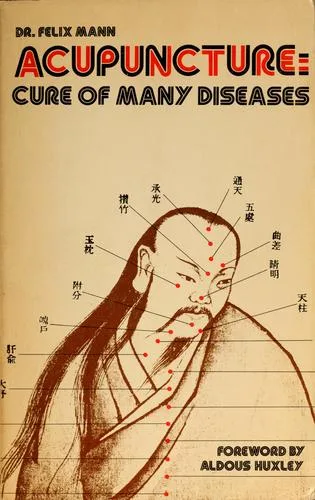
Felix Mann's 1973 book 'Acupuncture' offers a scientific rationale for an ancient practice.
First published in 1973, Felix Mann's "Acupuncture" provides a detailed examination of the practice from a Western medical viewpoint. This revised edition adds substantial new material that addresses the neurophysiological basis of acupuncture. The book seeks to connect traditional Eastern healing concepts with modern scientific understanding, laying out a clear method for its application.
This text is for medical practitioners, researchers, and students of complementary medicine who possess a basic knowledge of anatomy and physiology. Its goal is to furnish readers with the theoretical framework and practical insights necessary to incorporate acupuncture into their work. It appeals to those looking for a scientific explanation for energy-based healing approaches.
Mann, who led the Medical Acupuncture Society, was instrumental in bringing acupuncture into Western medical discussions. The book's focus on neurophysiology was intended to offer a scientific grounding for a practice often seen as mystical. It moves beyond purely traditional interpretations to provide a more empirical view.
Published in 1973, Mann's work arrived as Western interest in Eastern medicine grew, influenced by figures like Paul Nogier. His detailed neurophysiological explanations aimed to legitimize acupuncture by providing a scientific basis for what was frequently considered esoteric. Mann's position in the Medical Acupuncture Society highlights his role in integrating this practice into Western medical discourse, moving past solely traditional perspectives.
💡 Why Read This Book?
• Understand the neurophysiological basis of acupuncture, learning how the body's nervous system responds to needle insertion as detailed in the text's scientific explanations. • Grasp the concept of meridians and acupoints not just as traditional constructs, but as pathways and regulators of bioelectrical energy, as explored in the book's mechanistic approach. • Gain a scientifically grounded perspective on pain relief and healing through acupuncture, moving beyond anecdotal evidence to understand the mechanisms described by Dr. Felix Mann in his 1973 publication.
⭐ Reader Reviews
Honest opinions from readers who have explored this book.
❓ Frequently Asked Questions
What is the primary scientific explanation for how acupuncture works according to Felix Mann?
Felix Mann explains acupuncture's efficacy through neurophysiological mechanisms. He details how needle insertion stimulates the nervous system, influencing pain perception and triggering the release of natural pain-relieving substances like endorphins, as described in his 1973 work.
Is Felix Mann's 'Acupuncture' suitable for complete beginners with no medical background?
While the book aims for clarity, it assumes some familiarity with basic anatomy and physiology. It is best suited for practitioners or serious students seeking a scientific understanding, rather than a gentle introduction to the spiritual aspects of acupuncture.
When was Felix Mann's 'Acupuncture' first published, and what is significant about the 1973 edition?
Felix Mann's 'Acupuncture' was first published in 1973. This edition is significant because it represents a substantial revision, with over half of the content being entirely new material, including detailed scientific explanations of how acupuncture functions.
What role does the concept of 'Qi' play in Mann's scientific interpretation of acupuncture?
Mann interprets 'Qi' not as a mystical force, but as a measurable bioelectrical energy flowing through specific pathways (meridians) in the body, which can be influenced at acupoints to restore balance and promote healing.
Who was Felix Mann in the field of acupuncture?
Dr. Felix Mann was a prominent Western practitioner and President of the Medical Acupuncture Society. His work was instrumental in integrating and explaining acupuncture within Western medical frameworks, emphasizing scientific validation.
Does this book discuss the historical origins of acupuncture in China?
While the focus is on Western scientific interpretation, the book implicitly acknowledges the ancient Chinese origins by presenting a revised explanation of a practice that has been used for centuries in China.
🔮 Key Themes & Symbolism
Neurophysiological Mechanisms
This theme explores how the book clarifies acupuncture by grounding it in Western science. Mann meticulously details the stimulation of the nervous system, the role of endorphins, and the body's natural responses to needle insertion. It moves beyond traditional explanations of 'Qi' to present a biomechanical and neurological model, making the practice accessible to a medical audience seeking empirical validation for energetic therapies.
Bridging East and West
Mann's work represents a significant effort to reconcile ancient Chinese medical practices with contemporary Western scientific understanding. By translating concepts like meridians into physiological pathways and 'Qi' into bioelectrical energy, he facilitates a dialogue between traditions. This theme highlights the book's importance in introducing acupuncture to Western practitioners and researchers in a comprehensible and scientifically defensible manner.
Acupoints and Meridians as Systems
The book treats acupoints and meridians not as abstract concepts but as integral components of a functional physiological system. Mann describes them as specific neurological regulators and bioelectrical conduits. This perspective reframes traditional knowledge, allowing for systematic study and application within a clinical context, emphasizing the interconnectedness of the body's energetic and nervous systems.
Scientific Legitimation
A central theme is the scientific legitimation of acupuncture. Mann, as President of the Medical Acupuncture Society, sought to provide concrete, evidence-based explanations for acupuncture's effectiveness. The work explores how this approach aimed to overcome skepticism and integrate acupuncture into mainstream Western medicine by offering testable hypotheses and physiological correlates.
💬 Memorable Quotes
Direct passages from the work, attributed to the author.
“The body's own pain-killers are mobilized.”
— This concise statement expresses Mann's core argument regarding acupuncture's analgesic effects. It suggests that the therapeutic benefit comes not from external intervention alone, but from stimulating the body's intrinsic healing and pain-management systems.
“Acupuncture influences the neurophysiological mechanism.”
— This statement highlights the book's focus on the nervous system. It posits that the effectiveness of acupuncture lies in its ability to modulate complex biological processes, offering a scientific explanation for its therapeutic outcomes.
“The revision offers entirely new material on how acupuncture works.”
— This refers to the updated nature of the 1973 edition, emphasizing its contribution of novel scientific insights and explanations beyond the original 1962 publication.
💡 Key Ideas
Editorial paraphrase of the work's core concepts — not direct quotes.
Meridians are pathways for bioelectrical energy.
This paraphrased concept reframes the traditional notion of meridians. Mann translates the ancient concept into modern scientific terms, proposing that these channels carry measurable bioelectrical currents, akin to nerve impulses or other physiological signals.
Explaining pain relief through scientific principles.
This paraphrased concept reflects the book's objective to clarify acupuncture's pain-relieving properties. Mann aims to provide a rational, scientific basis for effects that might otherwise be attributed to placebo or superstition.
🌙 Esoteric Significance
Tradition
While rooted in a scientific interpretation, Mann's work engages with the esoteric concept of 'Qi' (vital energy). It bridges the gap between traditional Chinese medicine, which is deeply intertwined with Taoist philosophy and concepts of energetic balance, and Western physiological understanding. By translating 'Qi' into bioelectrical energy and meridians into neural pathways, Mann reinterprets esoteric principles through a scientific lens, making them accessible to a broader, empirically-minded audience.
Symbolism
The primary symbolic representation Mann engages with is the meridian system. Traditionally understood as invisible channels carrying vital energy ('Qi'), Mann reinterprets these as pathways for bioelectrical impulses or nerve signals. Acupoints, then, are not just symbolic locations but functional nodes within this physiological network, representing points of access to modulate the body's energetic and nervous systems for therapeutic effect.
Modern Relevance
Mann's approach continues to influence contemporary integrative medicine and pain management. Modern practitioners of acupuncture, particularly those in Western medical settings, often draw upon the neurophysiological explanations he helped popularize. His work laid groundwork for research into acupuncture's effects on the central nervous system, endorphin release, and placebo responses, remaining relevant for anyone seeking to understand the science behind this ancient healing art.
👥 Who Should Read This Book
• Medical professionals and acupuncturists seeking a scientific understanding of how acupuncture works, moving beyond traditional theories to explore neurophysiological mechanisms. • Researchers in pain management and neuroscience interested in the body's response to needle stimulation and the scientific validation of alternative therapies. • Students of comparative medicine and the history of healing who want to understand the Western integration of Eastern practices through empirical analysis.
📜 Historical Context
Felix Mann's "Acupuncture," first published in 1973, emerged during an important era of East-West cultural exchange and scientific inquiry into alternative medicine. The early 1970s saw increasing Western fascination with Eastern philosophies and healing practices, partly ignited by reports of acupuncture's success in China following President Nixon's visit in 1972. Mann's work distinguished itself by moving beyond anecdotal evidence and traditional explanations, offering a rigorous scientific framework. While contemporaries like Dr. Paul Nogier were exploring auriculotherapy, Mann focused on a comprehensive neurophysiological explanation for full-body acupuncture. The book aimed to legitimize acupuncture within the medical establishment, providing a scientific rationale that countered skepticism and the purely spiritual interpretations prevalent at the time. Its publication marked a significant step in integrating a once-esoteric practice into Western medical discourse.
📔 Journal Prompts
The neurophysiological mechanism of acupuncture as described by Mann.
Bioelectrical energy pathways and their relation to nervous system function.
Dr. Felix Mann's interpretation of 'Qi' versus traditional views.
The scientific validation of acupoints as functional regulators.
Reconciling ancient energetic concepts with modern biological understanding.
🗂️ Glossary
Qi
In traditional Chinese medicine, the vital life force or energy that flows through the body. Mann interprets this concept through a Western scientific lens, often relating it to bioelectrical energy or physiological signals.
Meridians
Channels or pathways through which Qi is believed to flow in traditional Chinese medicine. Mann's work suggests these may correspond to neurological pathways or bioelectrical circuits in the body.
Acupoints
Specific points on the body, located along meridians, where acupuncture needles are inserted. Mann views these as crucial points for influencing the body's physiological and neurological responses.
Neurophysiology
The study of the nervous system's structure and function. Mann extensively applies neurophysiological principles to explain how acupuncture affects the body, particularly in pain modulation.
Endorphins
Neurochemicals produced by the body that act as natural painkillers. Mann's work discusses how acupuncture can stimulate the release of endorphins, contributing to its analgesic effects.
Bioelectrical Energy
Electrical energy generated by biological processes. Mann uses this term to provide a scientific analogue for the traditional concept of 'Qi'.
Medical Acupuncture Society
An organization promoting the practice and study of acupuncture within a medical framework. Felix Mann served as its President, highlighting his role in Westernizing and legitimizing acupuncture.