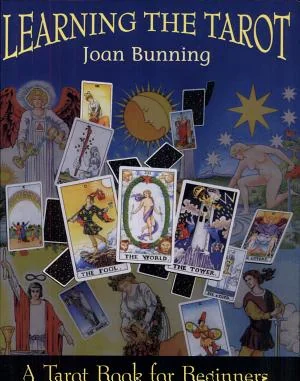
Learning the Tarot
 78
78

Learning the Tarot
Joan Bunning's Learning the Tarot is a commendable effort to demystify the Rider-Waite-Smith deck for novices. Its strength lies in its meticulously organized, 19-lesson structure, which systematically builds understanding. The book’s clarity on the basic meanings of each card is its greatest asset, providing a solid foundation. However, for those already familiar with esoteric symbolism or seeking deeper psychological interpretations, the approach can feel somewhat dry, lacking the evocative language or philosophical depth found in other texts. A particular strength is the clear explanation of court cards and their roles, often a stumbling block for beginners. While it covers essential spreads, it doesn't venture into more complex interpretive frameworks. Ultimately, Learning the Tarot serves as an excellent, no-nonsense primer for the absolute beginner.
📝 Description
78
Joan Bunning published 'Learning the Tarot' in 1998 as a structured guide to the Rider-Waite-Smith deck.
This book presents a progressive curriculum for learning the Rider-Waite-Smith tarot deck, first released in 1909. Joan Bunning structured the material into digestible lessons, moving from basic card interpretations to more complex applications. It is designed for individuals who prefer a systematic, step-by-step method for understanding tarot. The guide covers essential elements such as the Major and Minor Arcana, the significance of suits, and the archetypal meanings of each card.
Readers will find explanations of various spreads, starting with simple three-card layouts and progressing to more involved arrangements. Bunning also addresses ethical considerations for reading tarot. The approach aims to build knowledge incrementally, enabling students to synthesize individual card meanings into a cohesive narrative. This work serves as a clear introduction to card meanings, spreads, and responsible reading practices.
Published in the late 1990s, 'Learning the Tarot' arrived during a period of increased public interest in divination. The Rider-Waite-Smith deck, itself a significant development in Western tarot history since its 1909 debut, formed the basis of Bunning's modern framework. The book connects with traditions that view tarot as a symbolic system for personal insight, offering a methodical entry point into its study.
💡 Why Read This Book?
• You will learn a systematic, lesson-based method for memorizing card meanings and understanding their relationships, offering a structured alternative to more intuitive approaches. • You will gain a clear grasp of the foundational symbolism within the Rider-Waite-Smith deck, enabling you to build confidence in interpreting spreads from the ground up. • You will acquire practical skills in constructing and reading various tarot spreads, moving from simple to more complex layouts with guided instruction.
⭐ Reader Reviews
Honest opinions from readers who have explored this book.
❓ Frequently Asked Questions
Is Joan Bunning's Learning the Tarot suitable for someone completely new to tarot?
Absolutely. Learning the Tarot was specifically designed as a beginner's guide, featuring 19 lessons that systematically introduce the basics of the Rider-Waite-Smith deck. It starts with fundamental concepts and gradually progresses to more advanced material.
What tarot deck does Learning the Tarot focus on?
The book centers its instruction on the Rider-Waite-Smith tarot deck, which is one of the most widely used and influential decks in Western tarot traditions since its introduction in 1909.
How does Joan Bunning structure the learning process in this book?
Bunning structures the learning through a series of 19 progressive lessons. Each lesson builds upon the previous one, covering card meanings, suit associations, numerology, and basic spread interpretations.
Can I learn to read tarot professionally after using this book?
Learning the Tarot provides a strong foundational understanding, which is essential for professional reading. However, developing professional skill typically requires continued practice, deeper study, and personal experience beyond an introductory text.
Does the book cover advanced tarot techniques?
While the book progresses to more advanced concepts than basic card meanings, its primary focus remains on providing a thorough grounding for beginners. It introduces various spreads and interpretation methods suitable for those starting out.
What makes this book different from other tarot guides?
Its primary distinction is the structured, 19-lesson curriculum, offering a step-by-step pedagogical approach. This methodical format contrasts with books that might rely more heavily on anecdotal evidence or purely intuitive methods.
🔮 Key Themes & Symbolism
Systematic Card Interpretation
Learning the Tarot emphasizes a structured, analytical approach to understanding each card's meaning within the Rider-Waite-Smith system. Bunning breaks down the symbolism of the Majors and Minors, assigning core interpretations that serve as building blocks. This methodical breakdown allows students to construct a reliable framework for reading, moving beyond rote memorization to a deeper comprehension of how each card functions independently and in relation to others.
Progressive Learning Structure
The book's defining feature is its curriculum of 19 sequential lessons. This pedagogical design ensures that new information is introduced logically, building complexity gradually. It caters to learners who benefit from a clear, step-by-step progression, moving from basic concepts like suit associations and numerology to understanding full spreads and synthesizing multiple card meanings into a coherent narrative.
Rider-Waite-Smith Foundation
This guide is firmly rooted in the Rider-Waite-Smith tarot deck, first published in 1909. Bunning uses its iconic imagery and established symbolism as the primary reference point. By focusing on this widely recognized deck, the book provides a consistent foundation for students, enabling them to apply learned principles to a vast array of other decks that are derivatives or inspired by the original RWS design.
Practical Application of Spreads
Beyond individual card meanings, Learning the Tarot guides readers in applying their knowledge through various spreads. It systematically introduces common layouts, demonstrating how to position cards and interpret the resulting patterns. This practical focus helps students bridge the gap between knowing card meanings and actually performing a reading, fostering confidence in their ability to derive insights from the cards.
💬 Memorable Quotes
Direct passages from the work, attributed to the author.
“The Minor Arcana represent the everyday events and circumstances of life.”
— This concise statement highlights a fundamental distinction within the tarot deck, separating the worldly concerns of the Minor Arcana from the archetypal journeys of the Major Arcana.
“Each card has a range of meanings, from positive to negative.”
— This acknowledges the nuanced nature of tarot interpretation, emphasizing that no card is inherently 'good' or 'bad,' but rather carries potential meanings that depend on context and surrounding cards.
“Court cards can represent people, personality traits, or situations.”
— This interpretation points to the many-sided nature of the Court cards (Page, Knight, Queen, King), indicating they can symbolize actual individuals, specific characteristics, or broader life circumstances.
“Numerology plays a significant role in understanding the Minor Arcana.”
— This highlights the underlying structure of the numbered Minor Arcana cards, suggesting that their numerical value provides a key layer of meaning and symbolism to explore.
“The Fool is often seen as the beginning of a journey.”
— This interpretation captures the archetypal essence of The Fool card, frequently understood as representing new beginnings, leaps of faith, and the start of significant life paths.
🌙 Esoteric Significance
Tradition
While not explicitly tied to a single esoteric lineage like Hermeticism or Kabbalah, Bunning's work operates within the broad tradition of Western esoteric cartomancy, particularly as codified by Arthur Edward Waite and Pamela Colman Smith in their 1909 deck. It serves as a modern gateway to this established symbolic language, translating its archetypal and divinatory principles into a digestible format for contemporary learners.
Symbolism
The book meticulously unpacks the symbolism inherent in the Rider-Waite-Smith deck. Key motifs include the four suits (Wands, Cups, Swords, Pentacles), each representing fundamental elements and life domains. Numerology, from the Aces to the Tens, is presented as a crucial interpretive layer. The archetypal figures of the Court Cards (Page, Knight, Queen, King) are also central, symbolizing developmental stages and personality types within the human experience.
Modern Relevance
Learning the Tarot remains relevant today as a foundational text for beginners engaging with the Rider-Waite-Smith system. Its clear, structured approach provides an accessible entry point for countless individuals exploring tarot for personal insight or spiritual development. The principles taught here form the basis for understanding many contemporary tarot practices and resources that continue to reference or build upon the RWS imagery and interpretive frameworks.
👥 Who Should Read This Book
• Absolute beginners to tarot seeking a structured, step-by-step learning process to understand the Rider-Waite-Smith deck. • Individuals who prefer methodical instruction and clear explanations over purely intuitive or anecdotal teaching styles for esoteric subjects. • Aspiring tarot readers who want to build a solid, foundational knowledge base before exploring more complex or specialized interpretive methods.
📜 Historical Context
Joan Bunning's Learning the Tarot, first published in 1998, arrived during a significant resurgence of interest in esoteric subjects, including tarot, fueled by the burgeoning internet and New Age movements. The book anchored itself to the enduring legacy of the Rider-Waite-Smith deck, a central to Western tarot since its 1909 debut. This period saw a proliferation of tarot resources, yet Bunning's contribution stood out for its systematic, almost academic, approach to teaching. It offered a structured alternative to the more intuitive or magically-inclined texts prevalent at the time, providing a clear pedagogical path for a new generation of readers seeking accessible knowledge. Its methodical nature resonated with those who appreciated a curriculum-like structure for learning complex symbolic systems, differentiating it from more free-form guides.
📔 Journal Prompts
How does the concept of 'everyday events' for the Minor Arcana differ from your initial understanding?
Reflect on a time you experienced a 'new beginning'; which Major Arcana card might represent it?
Consider the four suits; which one feels most aligned with your current life circumstances and why?
How does understanding the numerology of a card add depth to its interpretation?
Describe a person you know using the archetypes of the Court Cards (Page, Knight, Queen, King).
🗂️ Glossary
Major Arcana
The set of 22 trump cards in a tarot deck, representing significant life lessons, archetypal themes, and spiritual journeys.
Minor Arcana
The 56 cards in a tarot deck divided into four suits, typically representing the mundane events, challenges, and circumstances of daily life.
Rider-Waite-Smith Deck
A highly influential tarot deck first published in 1909, known for its fully illustrated Minor Arcana and symbolic imagery, designed by Arthur Edward Waite and illustrated by Pamela Colman Smith.
Spread
A specific arrangement of tarot cards laid out in a pattern to address a particular question or aspect of a reading.
Court Cards
The four face cards within each suit of the Minor Arcana: Page, Knight, Queen, and King, often representing people, personality types, or situations.
Suits
The four divisions of the Minor Arcana (typically Wands, Cups, Swords, Pentacles), each associated with an element and specific areas of life experience.
Archetype
A universal, symbolic pattern or model of behavior, character, or image that recurs across cultures and time, often represented by the Major Arcana cards.
This book appears in 1 collection
🔮 Readers Also Liked
Browse all →









From the “Tarot” Collection
View all →






More Free Occult Philosophy Books
View all →