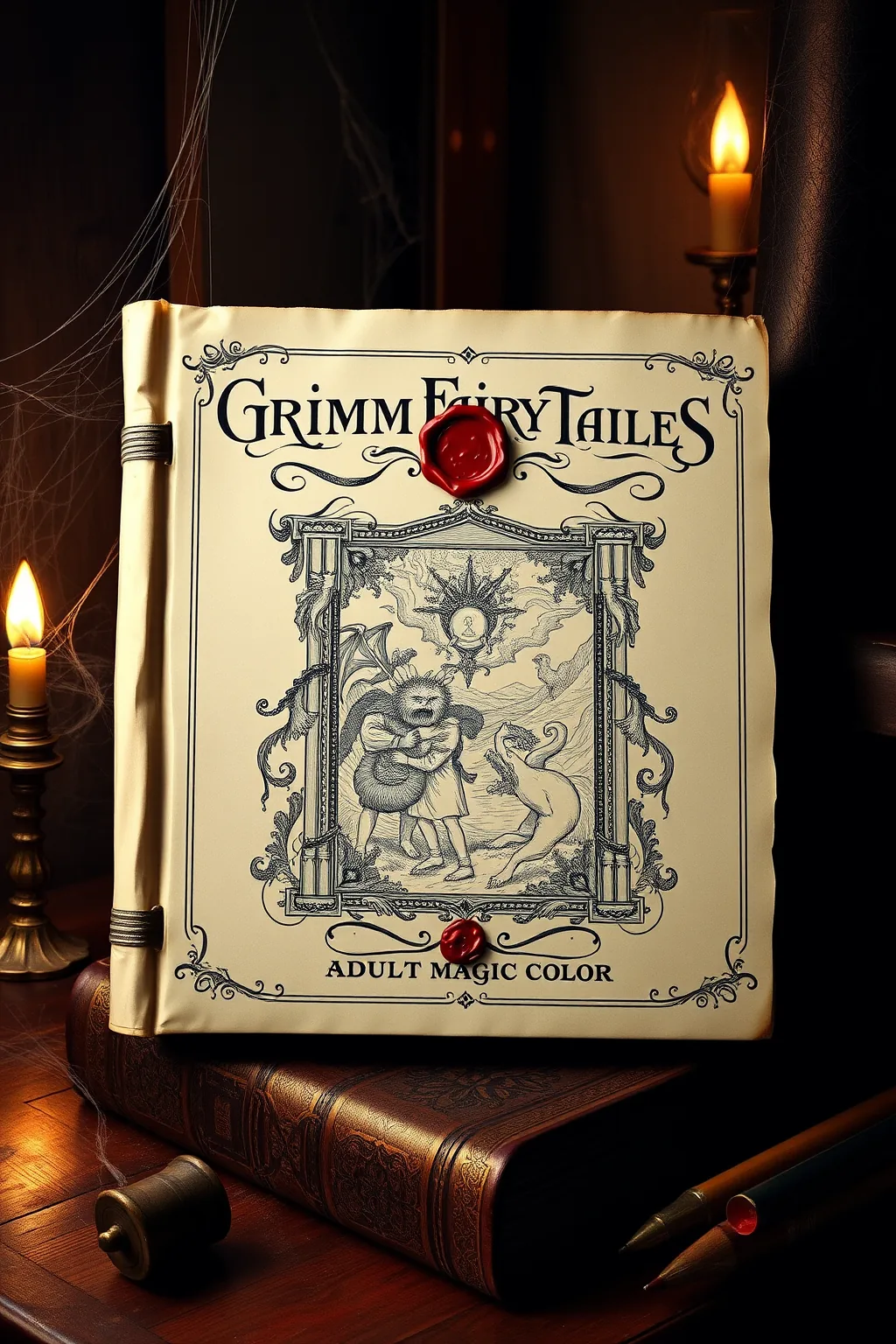
Grimm Fairy Tales Adult Coloring Book
 61
61

Grimm Fairy Tales Adult Coloring Book


Cassian Rothmann (Senior Critic, Ancient Wisdom) — The Grimm Fairy Tales Adult Coloring Book is a surprisingly profound artifact for the discerning esotericist. Magic Color has masterfully curated illustrations that resonate with Jungian archetypes and pre-Christian European mythologies. Beyond simple aesthetic appeal, these images serve as potent meditative tools, facilitating a dialogue with the shadow self and the collective unconscious. The intricate detail invites deep focus, transforming a recreational activity into a ritual of inner exploration. Highly recommended for seekers, artists, and anyone interested in the psycho-spiritual underpinnings of folklore.
📝 Description
61
Published in 2020, the Grimm Fairy Tales Adult Coloring Book translates classic tales into 70 pages of line art.
This coloring book presents 70 distinct illustrations drawn from the Brothers Grimm fairy tales. Each image is designed to be colored, offering a tactile engagement with familiar narratives. The artwork aims to evoke a sense of deeper meaning within these stories, moving beyond simple entertainment.
Coloring the illustrations is presented as a method for personal reflection. The book encourages users to engage with the imagery as a means of self-exploration. The act of adding color is framed as a way to connect with the underlying symbolism present in folklore. It suggests that this process can lead to insights about inner states and universal themes.
The collection includes figures and scenes from tales such as "Hansel and Gretel," "Little Red Riding Hood," and "Rapunzel." These are rendered in a style intended to stimulate imagination and contemplation. The book is meant for adults seeking a quiet activity.
This coloring book engages with esoteric ideas by drawing on the rich symbolic language of folklore, a common source for occult and mystical traditions. Fairy tales, when examined closely, reveal archetypes and psychological themes that resonate with concepts found in Jungian psychology and various spiritual paths. The act of coloring itself becomes a ritual, a way to internalize and commune with these potent images. This approach aligns with practices that use art and symbols for inner transformation and understanding, connecting the individual to deeper currents of human experience and collective myth.
💡 Why Read This Book?
Unearth the hidden wisdom within beloved fairy tales, engaging with powerful archetypes through a meditative coloring ritual. This book offers a unique pathway to explore symbolism, confront the shadow self, and unlock creative potential. Ideal for seekers, scholars of folklore, and practitioners of contemplative arts.
⭐ Reader Reviews
Honest opinions from readers who have explored this book.
❓ Frequently Asked Questions
What makes this coloring book different from others?
This book transcends typical adult coloring books by focusing on the deep symbolic and psychological resonance of classic Grimm fairy tales, offering a pathway to esoteric understanding and meditative practice.
Who is the intended audience for this book?
It is designed for adults interested in folklore, mythology, psychology, esotericism, and those seeking a mindful, artistic way to connect with ancient narratives and their hidden meanings.
Can this book be used for ritualistic purposes?
Absolutely. The act of coloring, combined with the potent imagery, can serve as a powerful meditative tool or personal ritual, allowing for introspection and connection with archetypal energies.
Are the illustrations based on specific academic interpretations?
While inspired by the rich tapestry of Grimm's tales, the illustrations are designed to evoke symbolic universality rather than adhere to a single academic interpretation, allowing for personal resonance.
What is the recommended approach for coloring these pages?
Approach each page with intention. Consider the characters, symbols, and narrative arcs. Allow your intuition to guide your color choices, viewing the process as a dialogue with the story's deeper meanings.
🔮 Key Themes & Symbolism
Archetypal Journeys and the Collective Unconscious
The illustrations tap into the Jungian concept of archetypes, personifying universal human experiences and the deep-seated patterns within the collective unconscious. Figures like the witch, the hero, or the trickster are not merely characters but vessels of primal energies and psychological truths, inviting the colorist to confront and integrate these aspects within their own psyche.
The Alchemy of Transformation and Shadow Work
Fairy tales are often allegories for personal transformation, mirroring the alchemical process of breaking down and rebuilding. The Grimm tales, with their inherent darkness and trials, provide fertile ground for shadow work. Coloring these scenes encourages the exploration of repressed emotions, fears, and desires, offering a safe space to acknowledge and ultimately transmute these energies into personal growth and wisdom.
Symbolic Language of Nature and the Mystical
Beyond human figures, the natural world in Grimm's tales is imbued with mystical significance. Forests become enchanted realms, animals communicate hidden messages, and magical objects hold potent power. This theme invites the colorist to perceive the subtle symbolic language woven into the fabric of existence, fostering a deeper appreciation for the interconnectedness of all things and the inherent magic present in the everyday.
💬 Memorable Quotes
Direct passages from the work, attributed to the author.
“And the forest whispered secrets older than time.”
— This evokes the ancient, primal wisdom held within nature, suggesting that the natural world is a living repository of esoteric knowledge waiting to be deciphered.
“Through trials, the soul is forged anew.”
— Highlights the transformative power of adversity, a core tenet in many mystical traditions, where challenges are seen as essential for spiritual growth and purification.
“In the shadows, the deepest truths reside.”
— Points to the importance of exploring the darker, often repressed aspects of the self and the world, suggesting that true understanding comes from acknowledging and integrating the shadow.
“The magic lies not in the spell, but in the intent.”
— Emphasizes the power of focused will and inner intention in manifesting desired outcomes, a fundamental principle in many magical practices.
“Every color tells a story of the spirit.”
— Connects the act of coloring directly to the expression of the inner self, suggesting that color choices reveal and communicate the nuances of one's emotional and spiritual state.
🌙 Esoteric Significance
Tradition
The esoteric significance of these tales draws heavily from Jungian psychology, archetypal symbolism, and pre-Christian European folklore. They can be viewed through the lens of Hermeticism, which emphasizes the correspondence between the macrocosm and the microcosm, and the alchemical process of transformation. The stories offer a metaphorical map for reading through the inner landscape, akin to the initiatory journeys found in various mystery traditions.
Symbolism
Key symbols abound: the dark forest represents the unconscious or the unknown; the witch embodies the shadow feminine or untamed primal power; the enchanted object signifies hidden potential or a spiritual key; and the journey itself symbolizes individuation. These symbols serve as potent archetypes that, when engaged with through coloring, can unlock deeper psychological and spiritual insights for the practitioner.
Modern Relevance
In a modern world often characterized by disconnection and over-rationalization, these fairy tales and their accompanying art offer a vital bridge to our intuitive and imaginative faculties. The act of coloring becomes a form of active meditation, fostering mindfulness and a connection to the timeless wisdom embedded in these narratives. They provide a framework for understanding contemporary challenges through the lens of ancient archetypes, empowering individuals to navigate their own life's 'fairy tale'.
👥 Who Should Read This Book
This coloring book is a treasure for the contemplative soul. Beginners in esoteric studies will find accessible entry points into symbolic language and archetypal understanding. Scholars of folklore and mythology will appreciate the visual interpretations of classic narratives. Seekers of spiritual growth will discover a potent tool for self-reflection and shadow work. Practitioners of mindfulness and art therapy will find a rich and engaging medium for creative expression and inner exploration.
📜 Historical Context
The Grimm Fairy Tales, collected by Jacob and Wilhelm Grimm in the early 19th century, emerged during a period of intense intellectual and cultural ferment in Europe, known as Romanticism. This era saw a renewed interest in folklore, national identity, and the power of imagination and the irrational. The Grimms' work was part of a broader movement to preserve oral traditions and explore the 'soul' of the German people through their ancient stories. These tales, often rooted in older pagan and medieval beliefs, contained elements of the supernatural, the uncanny, and the deeply symbolic, resonating with a growing fascination for the mystical and the occult that characterized some circles of the time. Their enduring appeal lies in their ability to tap into primal human fears, desires, and the universal search for meaning, making them fertile ground for later esoteric interpretations.
📔 Journal Prompts
Which character's journey resonates most with your current life path, and why?
What hidden potential does a specific symbol in the illustration represent for you?
How does the interplay of light and shadow in a scene reflect your own inner landscape?
If this fairy tale were an alchemical process, what stage of transformation does it depict?
What message does the 'enchanted object' in this illustration hold for your personal growth?
🗂️ Glossary
Archetype
A universal, inherited pattern of thought or imagery derived from the collective unconscious, influencing human behavior and perception. In fairy tales, they manifest as recurring character types or symbols.
Collective Unconscious
A concept developed by Carl Jung, referring to a part of the unconscious mind shared by all humans, containing archetypes and instincts inherited from our ancestors.
Shadow Work
The process of acknowledging, understanding, and integrating the repressed, darker, or less desirable aspects of one's personality, often represented by the 'shadow' in Jungian psychology.
Individuation
The lifelong psychological process of self-development, aiming to integrate one's conscious and unconscious aspects to achieve a more complete and unified self.
Esotericism
Belief systems and practices that emphasize hidden knowledge, spiritual enlightenment, and the pursuit of deeper truths beyond conventional understanding.
This book appears in 2 collections
🔮 Readers Also Liked
Browse all →








From the “Ceremonial Magic” Collection
View all →





More Free Magic & Ritual Books
View all →